If you've searched for a Zoox Las Vegas free ride, you're not alone. Amazon's autonomous vehicle subsidiary has been operating its purpose-built robotaxi on the Las Vegas Strip corridor since late 2023, and the service remains free to riders as of early 2026 — no fare, no surge pricing, no tip prompt. But "free" comes with boundaries: a tight geofence, limited hours, and a waitlist-driven rollout that controls who gets access and when.
This guide breaks down exactly how Zoox operates in Las Vegas today, what the vehicle actually is, how its safety record stacks up against human drivers, and what the real limitations are before you plan your trip expecting a driverless Uber.
Where Can You Use Zoox in Las Vegas Right Now?
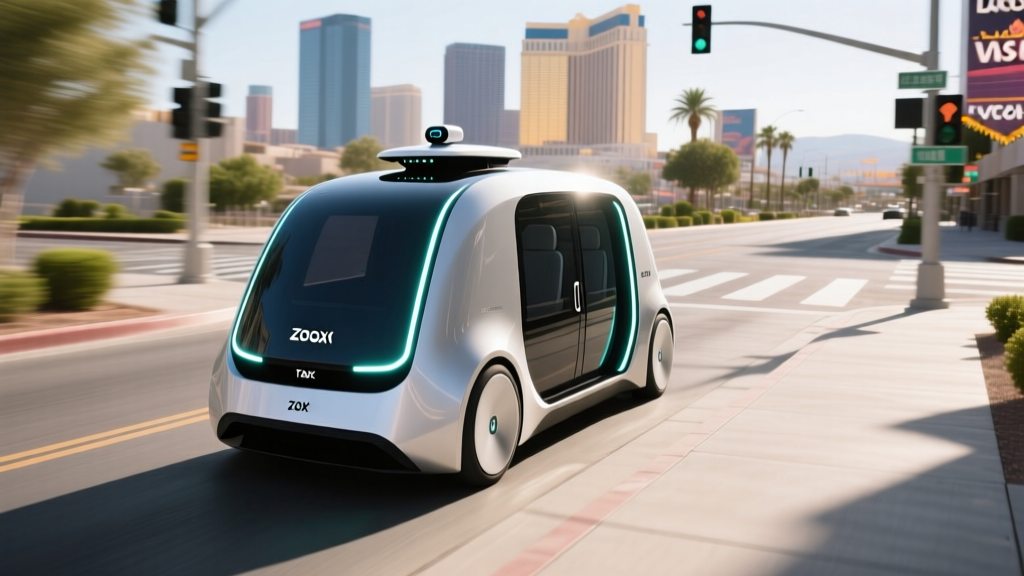
Zoox does not serve all of Las Vegas. The service operates within a defined geofence covering a roughly 12-square-mile zone that includes the Las Vegas Strip corridor, parts of downtown Las Vegas, and the surrounding area near the Las Vegas Convention Center. Key destinations within the zone include major Strip resorts, the Fashion Show Mall, and select off-Strip locations.
| City | Status (2026) | Service Area | Hours | Cost |
|---|---|---|---|---|
| Las Vegas, NV | Active — invite/waitlist | ~12 sq mi (Strip corridor + downtown fringe) | Approx. 8 AM – 10 PM daily | Free (promotional period) |
| Foster City, CA | Active — employee/invite | Limited suburban zone | Limited | Free |
| San Francisco, CA | Testing (not public) | N/A | N/A | N/A |
Access in Las Vegas is managed through the Zoox app, available on iOS and Android. New riders typically join a waitlist and receive an invitation when capacity expands. Once approved, you request a ride much like Uber or Lyft — set a pickup and drop-off within the geofence, and the nearest Zoox vehicle navigates to you. There is no option to hail one on the street.
What Exactly Is the Zoox Vehicle?
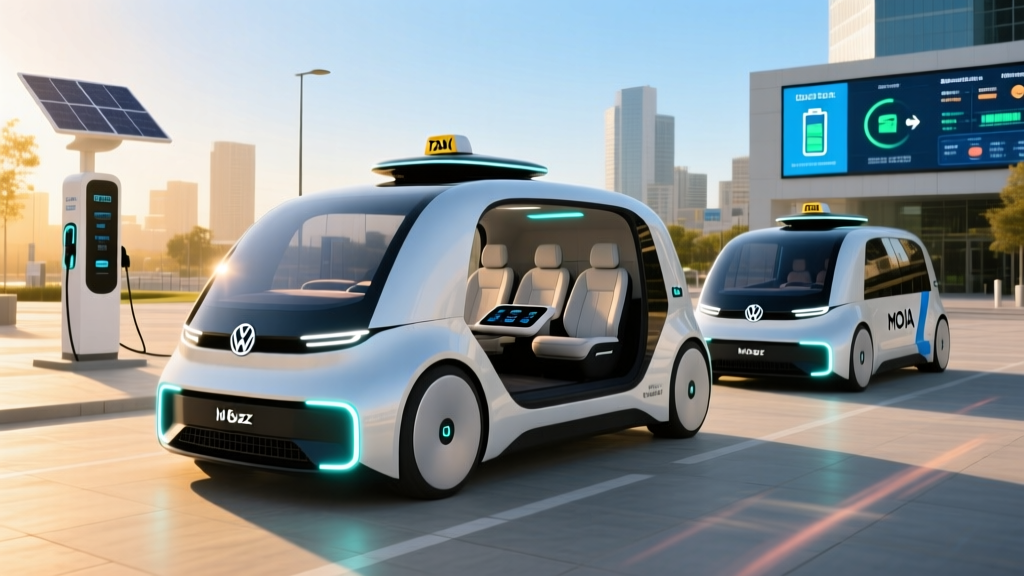
Zoox's robotaxi is not a retrofitted consumer car. It is a purpose-built, bidirectional electric vehicle with no steering wheel, no pedals, and no driver's seat. The cabin seats four passengers face-to-face in a carriage-style configuration. This is a fundamentally different approach from Waymo, which uses modified Jaguar I-PACE SUVs, or Cruise, which adapted the Chevrolet Bolt.
Zoox Vehicle & Technology Stack
- Vehicle type: Purpose-built symmetric EV, no manual driving controls
- Battery: ~75 kWh (estimated usable), lithium-ion
- Sensors: 360° lidar array, multiple radar units, surround camera system — redundant perception
- Compute: Custom onboard AI processing (NVIDIA-based)
- Navigation: HD-mapped geofenced routes with real-time perception overlay
- Connectivity: Cellular V2X with remote assistance fallback
- Top speed: ~75 mph (not relevant in current urban geofence)
The sensor suite is notably different from Tesla's camera-only FSD approach. Zoox uses lidar as a primary perception layer, supplemented by radar and cameras. This redundancy means the vehicle can maintain spatial awareness in conditions where cameras alone struggle — low light, direct sun glare, and partial occlusion. The trade-off is cost: each Zoox vehicle is estimated to carry $100,000+ in sensor and compute hardware, though Amazon's manufacturing scale aims to reduce this over time.
Is Zoox Truly Self-Driving? SAE Level Explained
Yes — Zoox operates at SAE Level 4 autonomy within its geofence. This is a critical distinction that gets confused constantly in EV media.
| SAE Level | Definition | Example |
|---|---|---|
| Level 2 | Driver-assist; human must monitor and intervene | Tesla Autopilot/FSD Supervised, GM Super Cruise, Ford BlueCruise |
| Level 3 | Conditional automation; human must be ready to take over | Mercedes DRIVE PILOT (limited conditions, Germany/CA/NV) |
| Level 4 | High automation; no human driver needed in defined ODD | Waymo One (Phoenix/SF/LA), Zoox (Las Vegas), Cruise (limited) |
| Level 5 | Full automation; no geographic or condition limits | Does not exist commercially |
Zoox's Level 4 designation means the vehicle handles all driving tasks within its Operational Design Domain (ODD) — the specific geofenced area, speed range, and weather conditions it's approved for — without any human behind the wheel. There is no steering wheel to grab. If the system encounters a scenario it cannot handle, it will execute a safe stop or pull over, and remote assistance operators can provide guidance. This is fundamentally different from Tesla's FSD (Supervised), which is Level 2 and requires an attentive driver at all times.
How Much Does Zoox Cost vs. Uber and Lyft?
As of early 2026, Zoox rides in Las Vegas are free. This is a deliberate strategy: Amazon is subsidizing the service to accumulate real-world passenger miles, refine the rider experience, and build public trust before introducing fares.
| Service | Typical 3-Mile Fare (LV Strip) | Surge Pricing | Tip Expected | Availability |
|---|---|---|---|---|
| Zoox | $0 (free promotional period) | No | No | Waitlist/invite only, geofenced |
| UberX | $10 – $18 | Yes (1.2x – 3x common) | Yes (15–20%) | Anywhere, 24/7 |
| Lyft | $9 – $17 | Yes | Yes (15–20%) | Anywhere, 24/7 |
| Waymo One | $8 – $15 (comparable to Uber) | Rarely | No (in-app option) | Phoenix, SF, LA — open to public |
For context, a typical UberX ride from the Bellagio to the Venetian (roughly 2.5 miles) costs $12–$16 before tip during normal demand, and can spike above $30 during convention-week surges. A Zoox ride covering the same distance costs nothing — but you need to be within the geofence, have an approved account, and accept that wait times can run 10–25 minutes depending on vehicle availability.
Zoox has not announced a long-term pricing model. Industry analysts expect fares comparable to Uber/Lyft once the service scales, with the cost advantage coming from eliminating the driver's share (typically 55–70% of a rideshare fare). Amazon's deep pockets allow it to sustain the free period longer than independent startups could.
How Safe Is Zoox? Real Data and Incident Record
Safety is the most legitimate question for any robotaxi, and it deserves concrete data rather than marketing claims.
Zoox Safety Record (as of early 2026)
- Public road testing miles: Over 1 million autonomous miles driven across test fleets (Nevada and California)
- At-fault collisions: Zero reported at-fault collisions involving passengers during public ride operations in Las Vegas
- Disengagement rate: Zoox reports fewer than 1 remote-assistance intervention per 5,000 miles in its Las Vegas ODD (improving quarterly)
- NHTSA Standing General Order: Zoox is required to report all crashes involving its ADS-equipped vehicles; reports are publicly filed and have been minimal relative to fleet size
- Regulatory approvals: Nevada DMV autonomous vehicle testing permit; NHTSA exemption for vehicle design (no steering wheel/pedals)
Sources: NHTSA AV Safety, Nevada DMV, Zoox public safety reports.
For comparison, the average U.S. driver experiences a police-reported crash roughly once every 500,000 miles (per IIHS fatality and crash data). Robotaxi fleets operate under far more scrutiny — every minor contact is reported — which can make their incident rates appear higher than they are relative to human drivers.
The Cruise suspension in late 2023 (after a pedestrian-dragging incident in San Francisco) was a cautionary event for the entire industry. Zoox has avoided similar incidents, partly due to its more conservative geofence and partly due to the sensor-redundant approach. But "no at-fault collisions" in a limited deployment area is not the same as proven safety at national scale. The data is encouraging but still early.
What Are the Current Limitations of Zoox?
Zoox is transparent about where its system cannot operate. These are not minor footnotes — they define the realistic use case.
Current Zoox Limitations
- Geofence: The vehicle will not drive outside its approved ~12 sq mi zone. You cannot take a Zoox to Harry Reid International Airport, Henderson, or the Hoover Dam.
- Weather: Service may be suspended or restricted during heavy rain, dust storms (common in Las Vegas monsoon season, July–September), or dense fog. The lidar/camera suite performs well in clear conditions but degrades in heavy particulate.
- Hours: Operations run roughly 8 AM to 10 PM. Late-night Strip runs at 2 AM are not available.
- Speed: The vehicle is optimized for urban speeds (25–45 mph corridors). It does not operate on freeways or highways within the current ODD.
- Accessibility: The vehicle accommodates standard wheelchairs but has limited space for oversized mobility devices. Service animals are permitted.
- No manual override: Passengers cannot steer, brake, or direct the vehicle. If you need to change your destination mid-ride, options are limited to in-app rerouting within the geofence.
- Wait times: Fleet size is limited. Expect 10–25 minute waits during peak hours, longer during conventions (CES, SEMA, etc.).
- Edge cases: Construction zones, temporary road closures, and unusual events (parades, protests) can cause the vehicle to stop and request remote assistance, adding delay.
Who Regulates Zoox and How Does Approval Work?
Robotaxi regulation in the U.S. is a patchwork of federal and state authority, and Zoox navigates both layers.
Federal (NHTSA): The National Highway Traffic Safety Administration sets vehicle safety standards (FMVSS). Because Zoox's vehicle has no steering wheel, mirrors, or pedals, it required a specific NHTSA exemption from certain standards — an exemption the agency granted after reviewing Zoox's safety case. NHTSA also mandates crash reporting through its Standing General Order for all ADS-equipped vehicles.
State (Nevada DMV): Nevada was one of the first states to pass autonomous vehicle legislation. The Nevada DMV issues autonomous vehicle testing and deployment permits. Zoox holds a valid Nevada permit and must maintain insurance, report incidents, and meet operational requirements. Nevada's framework is generally considered more permissive than California's, where the DMV and CPUC both exert regulatory control and where Cruise's permit was suspended in 2023.
Local: Clark County and the City of Las Vegas coordinate on road access and traffic management but do not independently approve or ban robotaxi operations — that authority rests at the state level.
Zoox vs. Waymo: How Do the Two Robotaxis Compare?
| Attribute | Zoox | Waymo One |
|---|---|---|
| Vehicle | Purpose-built (no steering wheel) | Jaguar I-PACE (modified SUV) |
| SAE Level | Level 4 | Level 4 |
| Primary sensors | Lidar + radar + camera | Lidar + radar + camera |
| Las Vegas availability | Yes (geofenced Strip area) | No (not in Las Vegas) |
| Other cities | Foster City, CA (limited) | Phoenix, San Francisco, Los Angeles, Austin |
| Public access | Waitlist/invite | Open to public (app download) |
| Pricing | Free (promotional) | Comparable to Uber/Lyft |
| Parent company | Amazon | Alphabet (Google) |
| Passenger capacity | 4 (face-to-face) | 4 (standard seating) |
| Freeway capable | Not currently | Limited freeway routes (Phoenix) |
The key takeaway: Waymo has broader geographic coverage and is open to the general public without a waitlist, but it does not operate in Las Vegas. Zoox is the only Level 4 robotaxi you can currently ride on the Las Vegas Strip, but access is limited and the geofence is tight. If you're visiting Las Vegas and want a robotaxi experience, Zoox is your option — if you can get off the waitlist.
How to Book Your Zoox Las Vegas Free Ride
- Download the Zoox app (iOS or Android) and create an account.
- Join the waitlist for Las Vegas. Approval times vary — some users report invitations within days, others wait weeks.
- Once approved, open the app while physically within the Las Vegas geofence.
- Set pickup and drop-off — both must be within the service area.
- Wait for your vehicle (10–25 minutes typical). The app shows the vehicle's approach in real time.
- Verify your ride — the vehicle displays a code or your name on an exterior screen.
- Board and ride. There is no driver. The vehicle handles everything from door-close to drop-off.
Pro tip: If you're visiting for a convention, request your ride well before you need to be somewhere. The limited fleet gets overwhelmed during peak convention traffic, and Zoox does not offer scheduling in advance the way Uber Reserve does.
Frequently Asked Questions
Is the Zoox Las Vegas free ride really free, or is there a catch?
It is genuinely free — no hidden fees, no credit card required for the ride itself. Zoox (and by extension Amazon) is subsidizing the service to build operational data and public trust. There is no announced end date for the free period, but it will not last indefinitely. Expect fare introduction once the service scales to a larger fleet and broader geofence.
Can I take a Zoox to the Las Vegas airport?
No. Harry Reid International Airport (LAS) is outside the current Zoox geofence. The vehicle will not navigate there. You'll need Uber, Lyft, a taxi, or the RTC bus for airport transfers.
What happens if the Zoox vehicle encounters a problem mid-ride?
The vehicle is designed to execute a minimal-risk condition — typically a controlled pullover or safe stop. Remote assistance operators can then evaluate the situation and either clear the vehicle to continue or dispatch support. Passengers have an in-app help button and an in-vehicle intercom for immediate communication.
Is Zoox safer than a human driver?
Zoox's reported safety data in Las Vegas shows zero at-fault passenger collisions and a low disengagement rate. However, the fleet operates in a limited, well-mapped urban zone at moderate speeds — conditions that are more forgiving than the full spectrum of driving scenarios. It is more accurate to say Zoox has performed safely within its current ODD than to make blanket comparisons to all human driving. The NHTSA continues to monitor all ADS operators through mandatory crash reporting.
How is Zoox different from Tesla's Full Self-Driving?
They are entirely different categories. Tesla FSD (Supervised) is an SAE Level 2 driver-assist system — it requires an attentive human driver behind a steering wheel at all times. Zoox is SAE Level 4 — there is no steering wheel, no pedals, and no driver. Tesla FSD can be used on any road; Zoox operates only within its approved geofence. Conflating the two is one of the most common errors in autonomous vehicle coverage.
Does Zoox operate in bad weather?
Zoox may suspend or restrict service during heavy rain, dust storms, or conditions that degrade sensor performance. Las Vegas's monsoon season (July–September) can bring sudden downpours and haboobs that affect lidar and camera visibility. On most clear days, which Las Vegas has in abundance, this is not an issue.
How many Zoox vehicles are on the road in Las Vegas?
Zoox has not disclosed an exact fleet count for Las Vegas. Based on observed wait times and coverage patterns, estimates place the active fleet in the low dozens — enough to serve the geofenced area but not enough to match Uber/Lyft availability. Fleet expansion is ongoing as Amazon scales manufacturing of the purpose-built vehicle.
The Zoox Las Vegas free ride is one of the few ways any consumer can experience a true Level 4 autonomous vehicle today — no steering wheel, no driver, no fare. It is limited in scope, constrained by geography and weather, and still building its safety resume at scale. But for anyone visiting the Strip with curiosity about where autonomous driving actually stands in 2026, it is the most accessible real-world demonstration available.