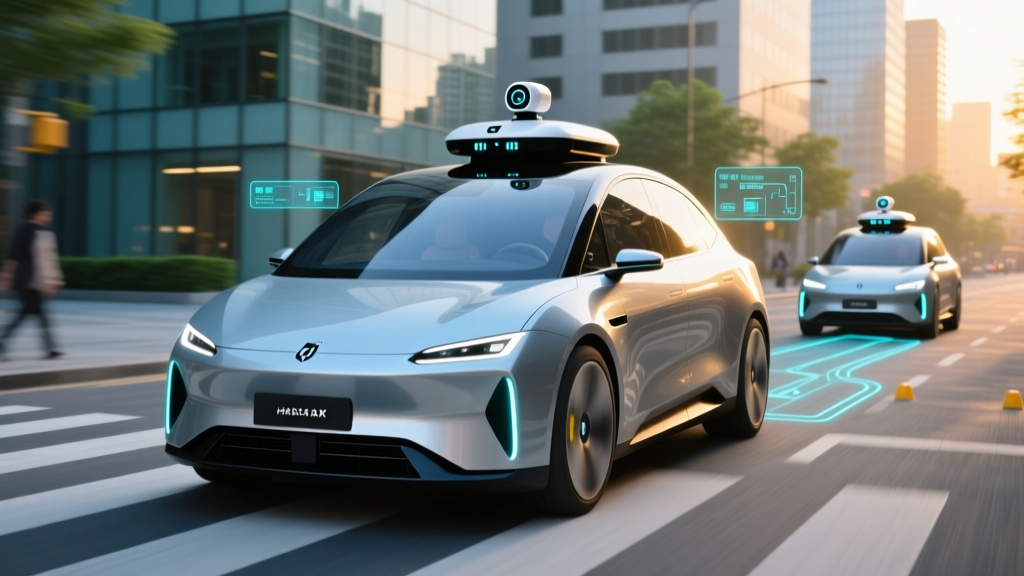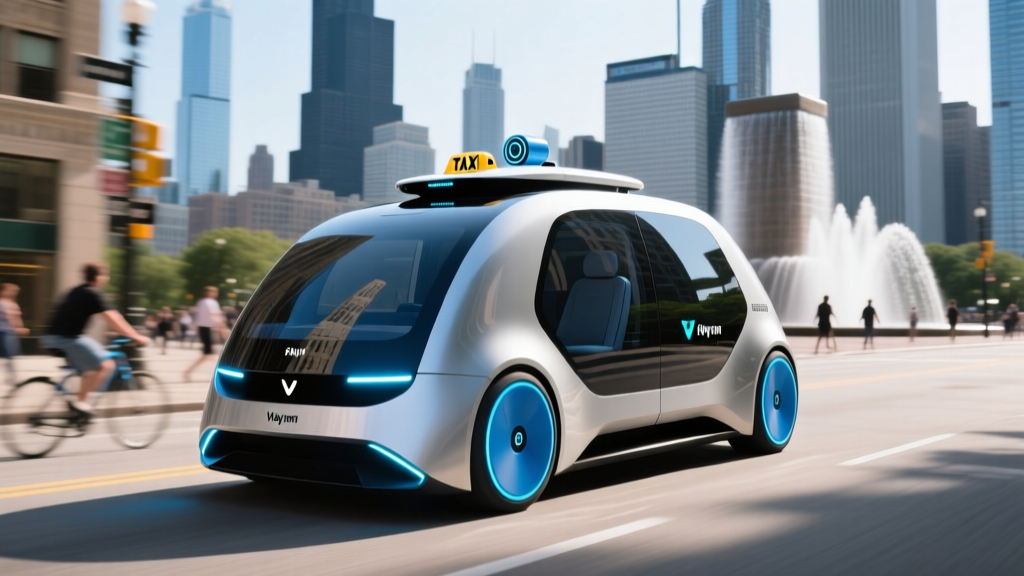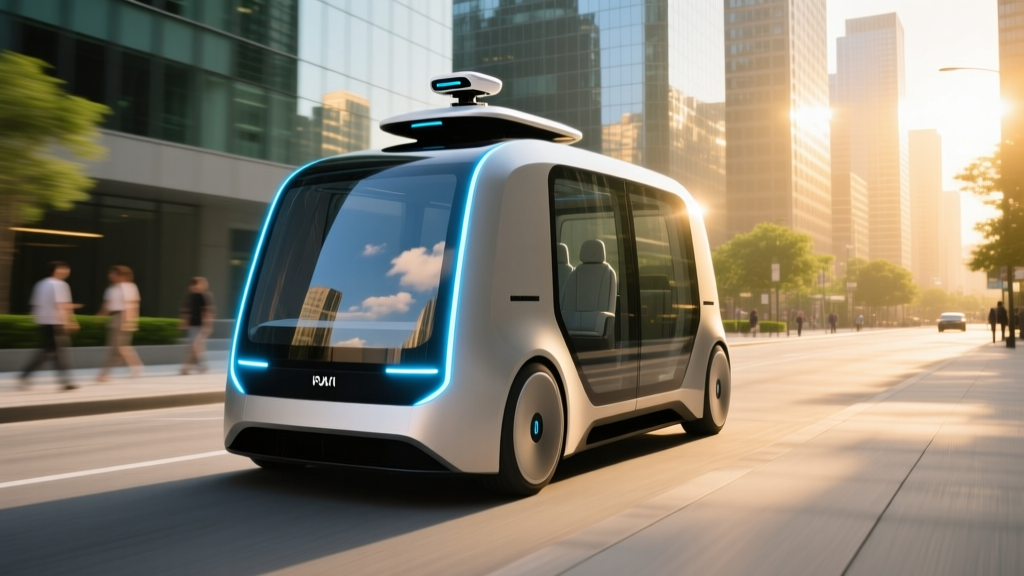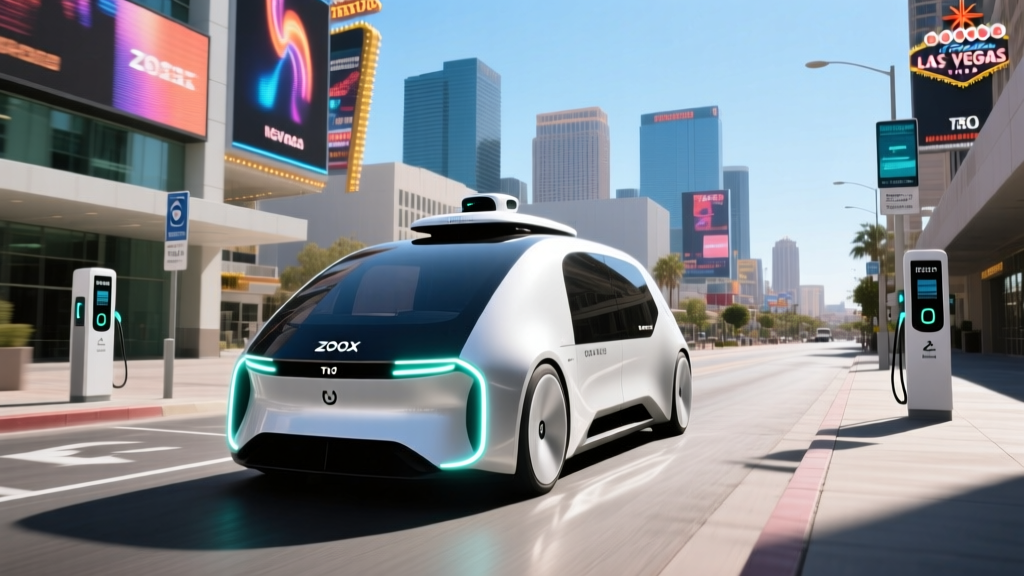
If you have been searching for zoox hours las vegas to figure out when and where you can actually hail one of Amazon's purpose-built robotaxis, you are not alone. Zoox has operated test fleets on Nevada roads for years, but the transition from paid-employee test mules to a genuine public ride-hail service has been gradual, geofenced, and tightly regulated. This guide breaks down exactly what is available right now in the Las Vegas Valley, what the technology can and cannot do, and how a Zoox ride compares to a standard Uber or Lyft trip on price, safety, and convenience.
Where Can You Actually Ride Zoox in Las Vegas?
Zoox's public-facing service in Las Vegas is not a city-wide ride-hail the way Uber is. It operates within a defined geofence that covers select corridors. As of early 2026, the active service area spans portions of the Las Vegas Strip corridor, parts of downtown Las Vegas, and specific routes connecting major resort properties and transit hubs. Zoox has historically tested on roads including South Las Vegas Boulevard, portions of Sahara Avenue, and streets near the Las Vegas Convention Center.
| City | Status | Service Area Notes |
|---|---|---|
| Las Vegas, NV | Operational (limited public access) | Strip corridor, downtown, convention center zone |
| San Francisco, CA | Operational | Select neighborhoods; expanded geofence since 2024 |
| Foster City, CA | Operational (employee + invited riders) | Suburban test area near Zoox HQ |
| Austin, TX | Testing / pre-commercial | Mapped corridors; limited public availability |
| Atlanta, GA | Testing | Early-stage mapping and validation |
Hours of operation in Las Vegas have expanded progressively. Zoox initially restricted rides to daytime and early-evening windows, but the fleet now operates across extended hours — typically from early morning through late night, seven days a week, within the active geofence. Exact pickup and drop-off zones are dictated by the app, which will only confirm a ride if both endpoints fall inside the approved service polygon. If your destination is outside the geofence, the app simply will not let you book.
To request a ride, users download the Zoox app (iOS/Android), create an account, and enter a destination. The app shows whether the trip is within the service zone, estimated pickup time, and fare. There is no steering wheel inside the Zoox vehicle — it is a purpose-built, bidirectional carriage-style pod seating up to four passengers face-to-face.
Is Zoox Truly Self-Driving? SAE Level 4 Explained
This is where consumer confusion runs rampant, so let us be precise. The Zoox vehicle operating in Las Vegas is a SAE Level 4 autonomous system. That means it performs the entire dynamic driving task — steering, braking, navigating, responding to traffic signals and pedestrians — without any human intervention, but only within its operational design domain (ODD). The ODD is defined by the geofence, mapped routes, weather conditions, and road types the system has been validated on.
| SAE Level | Name | Who Drives? | Real-World Example |
|---|---|---|---|
| Level 0 | No Automation | Human does everything | Basic car with no driver aids |
| Level 1 | Driver Assistance | Human drives; system assists steering OR speed | Adaptive cruise control, lane-keep assist |
| Level 2 | Partial Automation | Human drives and supervises; system can steer AND manage speed simultaneously | Tesla Autopilot, GM Super Cruise, Ford BlueCruise |
| Level 3 | Conditional Automation | System drives in specific conditions; human must take over when requested | Mercedes Drive Pilot (limited market/highway use) |
| Level 4 | High Automation | System drives fully within its ODD; no human needed inside the vehicle | Waymo One, Zoox (geofenced service areas) |
| Level 5 | Full Automation | System drives everywhere, all conditions, no human needed | Does not exist commercially today |
Critical distinction: Tesla's Full Self-Driving (Supervised), GM's Super Cruise, and Ford's BlueCruise are all SAE Level 2 systems. The driver must remain attentive and is legally responsible for the vehicle at all times. Zoox and Waymo robotaxis are Level 4 — there is no driver in the vehicle, and the company bears operational responsibility. Do not conflate these categories.
Zoox's Level 4 classification means there is no steering wheel, no pedals, and no driver's seat. The vehicle is designed from the ground up as a passenger carriage. If the system encounters a scenario it cannot handle — an unmapped construction zone, for instance — it will execute a minimal-risk maneuver (pull over safely) rather than handing control to a passenger who has no controls to receive.
How Much Does a Zoox Ride Cost vs. Uber or Lyft?
Zoox has taken a deliberate approach to pricing, particularly during its phased public rollout. In Las Vegas, early rider programs have offered free or heavily subsidized rides to build rider familiarity and collect operational data. As the service scales toward a commercial model, pricing is expected to compete directly with standard rideshare tiers.
| Service | Typical Fare | Surge Pricing? | Notes |
|---|---|---|---|
| Zoox (current promo period) | $0 – $5 | No | Promotional/free rides during expansion phase |
| Zoox (projected commercial) | $8 – $14 | Likely dynamic | Expected to undercut UberX on comparable routes |
| UberX | $10 – $18 | Yes | Varies by time of day, demand, and route |
| Lyft Standard | $10 – $17 | Yes | Comparable to UberX |
| Waymo One (where available) | $9 – $16 | Limited dynamic | Pricing comparable to UberX; no tipping |
One cost advantage robotaxis hold structurally: there is no driver to pay. Uber and Lyft drivers typically retain 50–70% of the fare after platform fees. Zoox, as a fleet operator, captures the full fare but must absorb vehicle cost, remote-assistance staffing, insurance, and fleet maintenance. Industry analysts project that once fleet utilization is high enough, robotaxi per-mile costs can undercut human-driven rideshare by 15–30% on standard routes. Tipping is not a factor — there is no driver to tip.
Zoox Safety Record: What the Data Actually Shows
Safety is the single most scrutinized dimension of any robotaxi operation, and rightly so. Zoox has accumulated millions of autonomous miles across its test and service fleets, though it publishes less granular public safety data than Waymo does. What we know from regulatory filings and company disclosures:
Zoox Safety Data Summary (through 2025 reporting)
- Autonomous miles driven: Multi-million mile cumulative fleet total (Las Vegas + California + other test markets)
- Disengagement rate: Reported to the California DMV as part of annual autonomous vehicle testing permits; Zoox has shown declining intervention rates year over year
- At-fault collisions: Zoox vehicles have been involved in minor incidents during testing phases, consistent with urban driving exposure; no catastrophic passenger injuries reported in public disclosures
- NHTSA Standing General Order: Zoox is required to report all crashes involving its ADS-equipped vehicles within specified timelines under NHTSA's Standing General Order
For context, Waymo — the most data-transparent robotaxi operator — has published peer-reviewed analyses showing its vehicles are involved in police-reported crashes at significantly lower rates than human benchmarks in comparable urban environments. Zoox has not yet released an equivalent independent study, though its California DMV disengagement reports are publicly accessible and show improving performance metrics over successive reporting periods.
The Zoox vehicle itself includes design features aimed at passive safety: four-wheel steering for tight maneuverability, a symmetric crash structure (since the vehicle is bidirectional), and a low center of gravity from its battery pack placement. The vehicle has been tested to FMVSS (Federal Motor Vehicle Safety Standards) requirements, though Zoox received specific NHTSA exemptions for its unconventional design that lacks traditional manual controls.
Under the Hood: Zoox Technology Stack
Zoox takes a fundamentally different sensor approach than Tesla's camera-only vision system. The Zoox vehicle uses a multi-modal sensor suite combining lidar, cameras, and radar to build a real-time 3D understanding of its surroundings. This redundancy is standard across Level 4 operators — Waymo uses a similar lidar-camera-radar stack.
| Component | Function | Details |
|---|---|---|
| Lidar array | 3D spatial mapping, object detection at range | Multiple roof- and body-mounted units providing 360° coverage; effective to 150+ meters |
| Camera system | Color/texture recognition, traffic-light state, signage | High-resolution cameras overlapping lidar fields of view |
| Radar | Velocity detection, adverse-weather penetration | Complements lidar in rain or low-visibility scenarios |
| Compute platform | Real-time perception, prediction, planning | Custom onboard computing; redundant systems for fail-operational safety |
| HD mapping | Prior knowledge of road geometry, lanes, signals | Centimeter-accurate maps of the geofenced service area, continuously updated |
| Remote assistance | Human-guided resolution of edge cases | Fleet operations center can provide high-level guidance (not remote driving) when the vehicle encounters novel scenarios |
The vehicle's bidirectional design means it can drive equally well in either direction — it has four-wheel steering and can execute maneuvers like pulling out of a dead-end without a multi-point turn. Its top speed is approximately 75 mph, though in Las Vegas service it operates at or below posted urban speed limits, typically 25–45 mph. The battery-electric powertrain is sized for all-day urban operation with opportunity charging between shifts.
Zoox's approach to remote assistance is worth noting: remote operators do not "joystick" the vehicle. Instead, they provide high-level guidance — for example, confirming that a flagged object is a plastic bag and not a child, or authorizing the vehicle to cross a double-yellow line to go around a parked delivery truck. The vehicle's local system still executes the maneuver.
Regulatory Landscape: Who Approves Zoox Operations?
Robotaxi operations in the United States sit at the intersection of federal vehicle safety regulation and state-level operational permitting. For Zoox in Las Vegas, multiple agencies are involved:
- Nevada DMV / Office of the Governor: Nevada was one of the first states to legislate autonomous vehicle testing and deployment. The state requires autonomous vehicle permits, insurance minimums, and compliance with reporting obligations. Nevada's framework allows driverless (no safety operator) commercial deployment once testing milestones are met.
- NHTSA (federal): Regulates vehicle safety standards (FMVSS). Zoox received a specific exemption from NHTSA to deploy its purpose-built vehicle, which lacks traditional controls like a steering wheel and mirrors. NHTSA also mandates crash reporting under its Standing General Order for all ADS-equipped vehicles.
- City of Las Vegas / Clark County: Local jurisdictions influence road access, pickup/drop-off zones, and coordination with first responders. Zoox works with local authorities on geofence boundaries and incident response protocols.
This layered regulatory structure means Zoox cannot simply expand its geofence at will. Each new corridor requires mapping, validation, regulatory notification, and often local government coordination. This is why robotaxi service areas grow incrementally — block by block, corridor by corridor — rather than flipping a switch for an entire city.
Current Limitations: What Zoox Cannot Do (Yet)
Being transparent about limitations is essential. Level 4 autonomy is powerful within its ODD, but the ODD has hard boundaries. Here is what constrains Zoox in Las Vegas today:
- Geofence boundaries: If your origin or destination falls outside the approved service polygon, you cannot book a ride. The app will not offer a workaround. Suburban Henderson, Summerlin, and the airport may fall outside the active zone depending on the current expansion phase.
- Weather constraints: While Las Vegas is largely dry, heavy monsoon rain or flash-flood conditions can trigger operational pauses. Lidar performance degrades in heavy precipitation, and the system may pull over or decline to dispatch if conditions exceed its validated ODD.
- Construction zones: Unmapped lane shifts, temporary barriers, and flaggers can confuse the system. Zoox vehicles may reroute or execute a minimal-risk stop rather than navigate an unfamiliar construction configuration.
- Special events: Massive crowd events (New Year's Eve on the Strip, major conventions) generate pedestrian densities and traffic patterns that may exceed the system's comfort threshold. Expect service restrictions or extended wait times during peak events.
- No highway operation: Zoox's Las Vegas service is designed for urban and arterial roads, not freeway driving. You cannot take a Zoox from the Strip to McCarran via I-15.
- Accessibility: The Zoox vehicle is designed with a low floor and wide doors, but wheelchair accommodation and specific ADA requirements vary. The company has stated accessibility goals, but real-world accommodation depends on the specific vehicle configuration in service.
- Pets and cargo: Unlike a personal Uber where a driver might accept a large dog or extra luggage, Zoox's passenger cabin is optimized for up to four seated humans with minimal carry-on space.
These are not theoretical limitations — they directly affect ride availability and trip planning. If you are visiting Las Vegas and hoping to use Zoox, treat it as a complement to Uber/Lyft, not a full replacement, at least during the current expansion phase.
How to Book a Zoox Ride in Las Vegas: Step by Step
- Download the Zoox app from the Apple App Store or Google Play.
- Create an account with your phone number and payment method (even during promotional free-ride periods, a payment method is typically required on file).
- Enter your pickup location. The app will confirm whether you are inside the service zone. If not, it will show the nearest available pickup point or inform you the ride cannot be fulfilled.
- Enter your destination. Same geofence check applies.
- Confirm the ride. You will see an estimated pickup time, vehicle description, and fare (or promotional rate).
- Meet the vehicle. The Zoox pod will arrive at the designated pickup point. The app identifies the specific vehicle via its exterior markings and license plate.
- Board and ride. Doors open via the app or vehicle exterior button. Inside, a touchscreen provides trip status, route visualization, and a "stop" button for passenger-initiated safe stops. Music and climate controls are accessible via the in-cabin interface.
The experience is deliberately simple. There is no driver to converse with, no tipping prompt, and no rating of a human behind the wheel. You are rating the ride quality, cleanliness, and system performance.
Zoox vs. Waymo: How the Two Robotaxi Leaders Compare
| Attribute | Zoox | Waymo One |
|---|---|---|
| Vehicle | Purpose-built Zoox pod (no steering wheel) | Jaguar I-PACE (modified), Zeekr RT (upcoming) |
| SAE Level | Level 4 (geofenced) | Level 4 (geofenced) |
| Primary sensor stack | Lidar + cameras + radar | Lidar + cameras + radar |
| Las Vegas availability | Operational (limited public access) | Not operational in Las Vegas as of Q1 2026 |
| Largest operational market | San Francisco | Phoenix, San Francisco, Los Angeles |
| Pricing model | Promotional / subsidized (transitioning) | Commercial fares comparable to UberX |
| Parent company | Amazon (acquired 2020) | Alphabet (Google parent) |
| Public safety data | CA DMV disengagement reports; NHTSA crash filings | Peer-reviewed safety studies; CA DMV reports; detailed public dashboards |
Waymo is further along in commercial scale and public data transparency. Zoox's advantage lies in its purpose-built vehicle — designed from scratch for autonomous ride-hailing rather than retrofitted from a consumer car. This gives Zoox more flexibility in cabin layout, sensor placement, and maneuverability, but it also means the vehicle must prove itself through a longer validation pipeline before reaching Waymo's deployment scale.
Frequently Asked Questions
What are the current Zoox hours in Las Vegas?
Zoox operates extended hours in Las Vegas, typically from early morning through late night, seven days a week. Exact availability depends on fleet size, demand, and operational conditions. The app will show real-time availability when you attempt to book.
Can I take a Zoox from the Las Vegas airport to my hotel?
As of early 2026, Harry Reid International Airport (LAS) is generally outside Zoox's active Las Vegas geofence. You would need to check the app for the latest service boundary, as airport connectivity is a high-priority expansion target for all robotaxi operators.
How safe are Zoox robotaxis compared to a human Uber driver?
Zoox vehicles operate under Level 4 autonomy with redundant sensor systems and remote assistance. They do not get tired, distracted, or impaired. However, they can struggle with edge cases like unmapped construction or extreme weather. NHTSA crash reporting data and California DMV disengagement reports provide the most objective safety benchmarks. Zoox's incident rate in controlled urban environments has been low, but direct statistical comparison to human Uber drivers in Las Vegas specifically is not yet available in published form.
Is there a driver inside the Zoox vehicle?
No. The Zoox vehicle has no steering wheel, no pedals, and no driver's seat. It is a fully driverless Level 4 robotaxi within its operational geofence. A remote operations team monitors the fleet and can provide high-level guidance, but no human is physically in the vehicle to drive it.
What happens if the Zoox vehicle encounters a problem during my ride?
The vehicle is programmed to execute a minimal-risk maneuver — typically a controlled pull-over to the side of the road — if it encounters a scenario it cannot safely navigate. Passengers can also initiate a safe stop via the in-cabin interface. Remote assistance operators monitor the fleet and can help resolve situations. Zoox maintains roadside-assistance protocols for mechanical or system issues.
Do I need to tip a Zoox driver?
There is no driver to tip. The Zoox experience is fully driverless. The app may prompt you to rate the ride, but gratuity is not part of the transaction.
Can I bring luggage or a pet in a Zoox vehicle?
The Zoox pod seats up to four passengers in a face-to-face configuration. Space for luggage is limited to what can be held on your lap or placed at your feet. Large suitcases, strollers, or pets may not be accommodated comfortably. Check the app or Zoox's rider guidelines for current policies before booking with extra cargo.
For the latest on Zoox operations, you can follow updates via the Zoox official site and monitor Nevada DMV autonomous vehicle permits. As the service expands its geofence and fleet size through 2026, expect pickup availability to improve and commercial pricing to replace the current promotional structure. For now, Zoox in Las Vegas is a real, rideable, Level 4 robotaxi experience — but one that works best when your trip stays inside its carefully mapped boundaries.