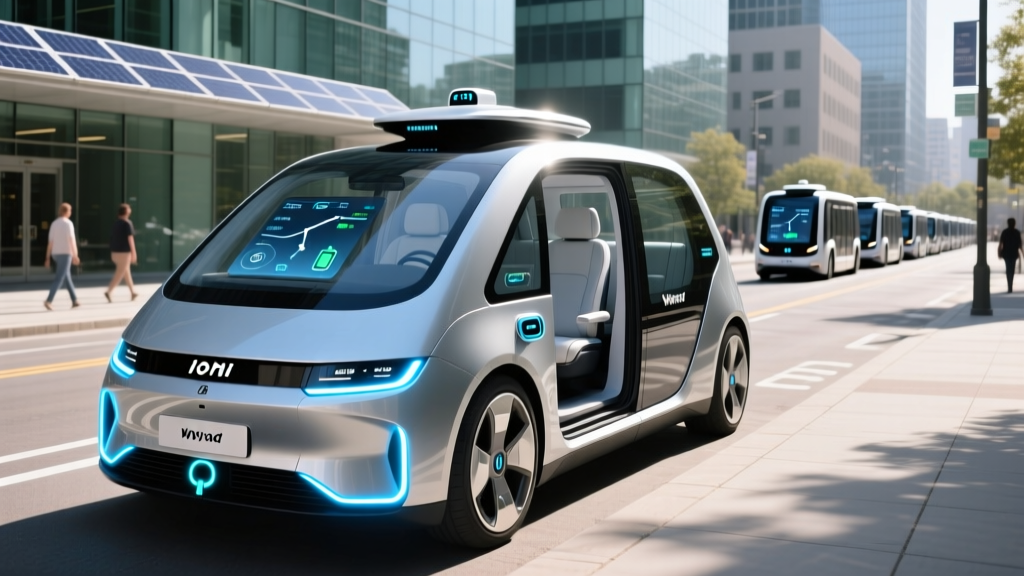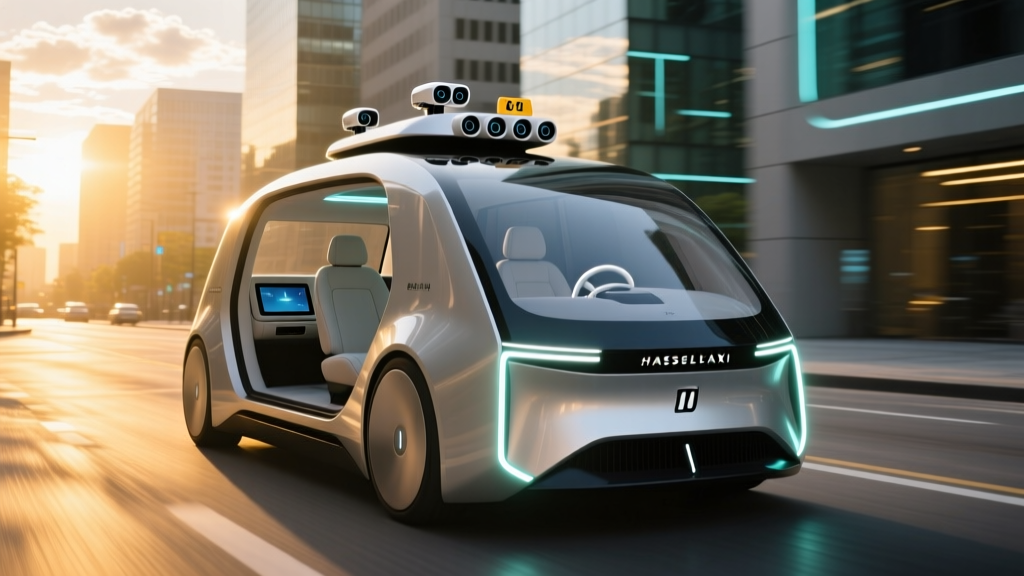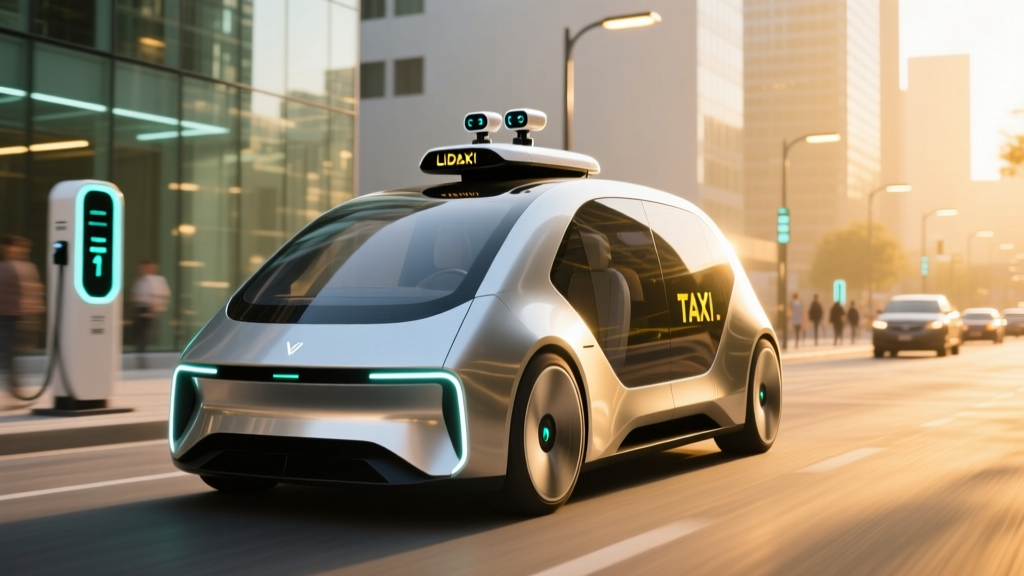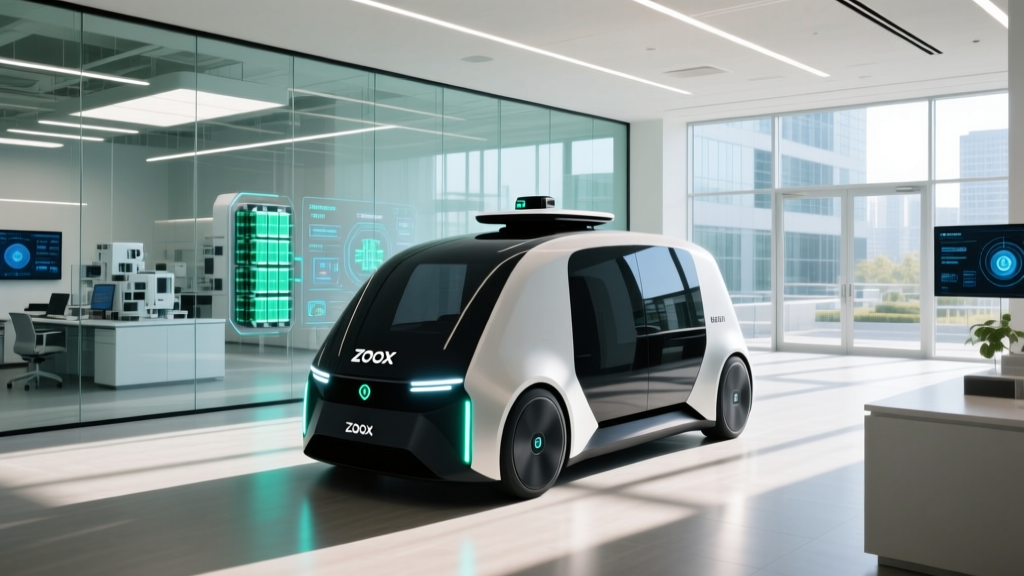
Search for zoox headquarters photos and you'll find a cluster of unassuming warehouse-style buildings in Foster City, California — the nerve center of Amazon's Level 4 robotaxi subsidiary. But behind those blank facades sits one of the most ambitious autonomous-vehicle programs in the world: a purpose-built, bidirectional, no-steering-wheel carriage that's now carrying paying passengers on public roads. This guide goes beyond the architecture to explain what Zoox actually does, where you can ride one, how safe the data says it is, and how it stacks up against Uber and Lyft in 2026.
Where Zoox Operates and Who Can Ride
Zoox is not available everywhere. The company has been methodically expanding its commercial footprint after receiving the necessary state approvals, and as of early 2026 the service operates in a handful of tightly geofenced urban zones. Here's the current availability:
| City / Region | Status | Operating Area | Access |
|---|---|---|---|
| Foster City, CA | Commercial service | Geofenced suburban corridors | Zoox app (open waitlist) |
| Las Vegas, NV | Commercial service | Las Vegas Blvd / resort corridor | Zoox app (open waitlist) |
| San Francisco, CA | Limited commercial | Select downtown neighborhoods | Invite-only beta expanding |
| Austin, TX | Testing / pre-commercial | Mapped urban routes | Employee + partner rides |
| Seattle, WA | Testing | South Lake Union area | Internal only |
Unlike Waymo, which has opened its app broadly in Phoenix and San Francisco, Zoox still gates access through waitlists and invite codes. If you're in Foster City or Las Vegas and want a ride, download the Zoox app, join the waitlist, and expect a wait of days to weeks depending on demand. The company has been scaling fleet size gradually rather than flooding a market all at once — a deliberate choice that prioritizes safety data collection over growth speed.
SAE Automation Level: What "Level 4" Actually Means Here
The Zoox vehicle has no steering wheel, no pedals, and no driver seat. A remote human operator monitors the fleet but does not actively drive the vehicle under normal conditions. The system handles all driving tasks within its approved Operational Design Domain (ODD) — defined geofenced areas under specific weather and road conditions. If the vehicle encounters a situation it cannot handle, it is designed to execute a minimal-risk maneuver (pull over safely) rather than hand control to a passenger. This is fundamentally different from Tesla FSD (Supervised) or GM Super Cruise, which are SAE Level 2 systems requiring constant driver attention.
| Level | Name | Who Drives | Examples |
|---|---|---|---|
| 0 | No Automation | Human | Conventional vehicles |
| 1 | Driver Assistance | Human (system assists) | Adaptive cruise, lane-keep |
| 2 | Partial Automation | Human (must supervise) | Tesla Autopilot/FSD, BlueCruise, Super Cruise |
| 3 | Conditional Automation | System (human on standby) | Mercedes Drive Pilot (limited markets) |
| 4 | High Automation | System (no human needed in ODD) | Waymo One, Zoox, Cruise (pre-suspension) |
| 5 | Full Automation | System (all conditions) | Does not exist commercially |
The critical distinction: when you step into a Zoox carriage, there is nobody in the front seat. You are the cargo, not the backup driver.
Behind the Headquarters: The Zoox Tech Stack
Those Foster City headquarters photos show a campus optimized for one thing — integrating hardware and software under a single roof. Zoox designs its own vehicle from scratch rather than retrofitting an existing car, which gives it engineering control that competitors bolting sensors onto Jaguar I-PACEs or Chrysler Pacificas simply don't have. Here's the technology stack:
Sensor Suite
- Lidar: Multiple solid-state and spinning lidar units providing 360° 3D point clouds — Zoox does not rely on camera-only perception like Tesla
- Cameras: High-resolution camera array covering all directions for object classification, traffic-light recognition, and sign reading
- Radar: Long- and short-range radar for velocity detection and adverse-weather redundancy
- Audio sensors: External microphones to detect sirens, horns, and construction noise
Vehicle Platform
- Bidirectional: Identical front and rear — the carriage can drive equally well in either direction, eliminating three-point turns
- Four-wheel steering: All four wheels steer, enabling a 17-foot turning radius and crab-like lateral movement
- Battery: ~75 kWh (estimated) lithium-ion pack, designed for depot charging between rides rather than public DC fast charging
- Top speed: 75 mph (electronically limited)
- Passenger capacity: 4 passengers, facing each other in a carriage-style cabin
Software & Mapping
- HD maps with centimeter-level precision for every operational road
- Prediction models for pedestrian, cyclist, and vehicle behavior
- Remote guidance: human operators can provide high-level routing instructions when the vehicle encounters ambiguity, but do not joystick-drive
The sensor-redundancy philosophy is the key differentiator. Where Tesla's FSD relies on cameras and neural networks alone (a bet that vision is sufficient), Zoox layers lidar, radar, cameras, and audio to cross-validate every perception. This makes the system more expensive per vehicle but more robust in edge cases — low sun angles, heavy rain, construction-zone cones, and partially occluded pedestrians.
How to Ride and What It Costs vs. Uber and Lyft
If you're in an active service zone, the experience is closer to Waymo than to a traditional rideshare. Open the Zoox app, enter your pickup and dropoff (both must be within the geofenced zone), confirm the ride, and the carriage arrives — typically within 3–8 minutes during operating hours. There's no driver to rate, no tip prompt, and no surge pricing in the traditional sense.
| Metric | Zoox | Waymo One | UberX | Lyft Standard |
|---|---|---|---|---|
| Base fare (3-mile trip) | ~$8–12 | ~$10–15 | ~$12–18 | ~$11–17 |
| Per-mile rate | ~$1.50–2.00 | ~$1.75–2.50 | ~$1.80–2.80 | ~$1.70–2.60 |
| Surge pricing | None currently | Limited | Yes (can 2–3x) | Yes (can 2–3x) |
| Tip expected | No | No | Yes (~15–20%) | Yes (~15–20%) |
| Average wait time | 3–8 min | 3–10 min | 4–12 min | 4–12 min |
| Availability | Geofenced zones only | Broader metro areas | Widespread | Widespread |
Zoox has been pricing rides competitively — often slightly below Waymo and traditional rideshare — as part of its market-entry strategy backed by Amazon's capital. The company has offered promotional free-ride periods in new markets to build ridership data. Expect pricing to gradually rise as the service matures, but the structural advantage of no driver payout means robotaxi economics can eventually undercut human-driven rideshare significantly at scale.
Safety Record: What the Data Actually Shows
- Testing miles accumulated: Millions of autonomous miles across California, Nevada, and other test states (per California DMV disengagement reports)
- Disengagement rate: Zoox has reported fewer than 1 disengagement per 1,000+ autonomous miles in recent California filings — a benchmark metric tracking how often a human safety operator (during testing phases) had to take over
- At-fault collisions: As of early 2026, Zoox has reported no at-fault collisions involving pedestrians or cyclists during commercial operations
- NHTSA Standing General Order: All Level 4 operators must report crashes within 24 hours; Zoox filings are publicly searchable via NHTSA's database
Note: Disengagement metrics are imperfect — they depend on testing conditions, route difficulty, and operator training. They should not be compared 1:1 across companies without context. The most meaningful safety signal is at-fault collision rate per million miles in commercial (driverless) operation.
For context, the Insurance Institute for Highway Safety (IIHS) and academic researchers have noted that robotaxi services in Phoenix and San Francisco have demonstrated collision rates lower than human benchmarks in comparable urban environments — but the sample sizes remain small relative to the billions of miles humans drive annually. Zoox's more cautious, slower expansion strategy means less public data but also less exposure to high-risk edge cases.
Regulatory Landscape: Who Approves Robotaxi Operations
Robotaxi deployment in the United States is not governed by a single federal license. Instead, operators must navigate a patchwork of state and local approvals:
- California (CPUC + DMV): The California Public Utilities Commission issues commercial passenger-service permits; the DMV issues testing and deployment permits. Zoox holds both.
- Nevada (DMV + local authorities): Nevada has been more permissive, allowing commercial robotaxi operations with state DMV authorization. Las Vegas has been a key early market for Zoox.
- Federal (NHTSA): NHTSA does not currently "approve" autonomous vehicles for sale but enforces safety standards, issues crash-reporting orders, and can investigate and recall. Zoox received a notable NHTSA exemption to deploy its steering-wheel-free vehicle, since FMVSS standards assume a human driver position.
- Texas (TxDOT + local): Austin testing operates under state autonomous-vehicle legislation that allows testing without a special permit, though commercial service requires additional local coordination.
The regulatory environment remains fluid. After Cruise's October 2023 incident in San Francisco (a pedestrian was dragged after being struck by a human-driven vehicle, then run over by the Cruise robotaxi), several states tightened scrutiny on all operators. Zoox benefited from its more cautious posture — it was not subject to the same suspensions — but the regulatory lesson is clear: a single serious incident can shut down an entire company's operations overnight.
Current Limitations: What Zoox Cannot Do
Zoox Robotaxi — Known Limitations (2026)
- Geofencing: The vehicle will not operate outside its pre-mapped zone. You cannot hail a Zoox to take you from Foster City to Tahoe.
- Weather restrictions: Heavy rain, fog, and snow degrade lidar and camera performance. Zoox reduces operations or suspends service during severe weather — don't count on it during a downpour.
- Construction zones: While the system handles minor lane shifts, major unplanned construction with flaggers or temporary signals may trigger a remote-guidance intervention or a safe pullover.
- No highway driving: Zoox currently operates on surface streets only. Highway-speed merging and high-density freeway driving are not yet in the commercial ODD.
- Accessibility: The carriage design accommodates standard wheelchairs but may not fit all mobility devices; confirm via the app before requesting.
- Luggage / cargo: The 4-passenger cabin has limited storage. This is a people-mover, not an airport hauler for a family of four with suitcases.
- Operating hours: Service is not 24/7 in all markets; late-night availability varies.
These limitations are not unique to Zoox — every Level 4 operator today works within a constrained Operational Design Domain. The gap between Level 4 (driverless in specific conditions) and Level 5 (driverless everywhere, always) remains enormous, and no company has a credible timeline for bridging it.
The Zoox Vehicle vs. Competitor Platforms
| Attribute | Zoox Carriage | Waymo (Jaguar I-PACE) | Cruise Origin (suspended) |
|---|---|---|---|
| Purpose-built AV | Yes — ground up | No — modified I-PACE | Yes — ground up |
| Steering wheel | None | Yes (removed in some configs) | None |
| Bidirectional | Yes | No | Yes |
| Primary sensors | Lidar + camera + radar + audio | Lidar + camera + radar | Lidar + camera + radar |
| Passenger capacity | 4 | 3–4 | 6 |
| Commercial status (2026) | Active (limited cities) | Active (multiple cities) | Suspended / restructuring |
| Parent company | Amazon | Alphabet | GM (majority) |
Zoox's purpose-built carriage gives it engineering advantages — symmetric driving, tighter turning, and a cabin designed for passengers rather than converted from a driver-oriented layout. But Waymo's head start in commercial miles, fleet size, and city coverage means it remains the dominant robotaxi service by volume. The Cruise Origin's suspension in late 2023 and subsequent restructuring underscored that having a great vehicle means nothing without consistent safety execution.
Frequently Asked Questions
Is Zoox truly self-driving, or is it like Tesla Autopilot?
Zoox is SAE Level 4 — fully driverless within its geofenced service area. There is no steering wheel, no pedals, and no human in the vehicle. This is categorically different from Tesla Autopilot or FSD (Supervised), which are SAE Level 2 driver-assist systems requiring the human driver to remain attentive and in control at all times. Zoox handles the entire driving task; you are a passenger.
Where can I use the Zoox robotaxi service right now?
As of early 2026, commercial Zoox rides are available in Foster City, CA and Las Vegas, NV, with limited commercial access expanding in San Francisco. Testing is underway in Austin and Seattle, but those markets are not yet open to the public. Access requires the Zoox app and waitlist approval.
How much does a Zoox ride cost compared to Uber or Lyft?
Zoox prices a typical 3-mile urban trip at roughly $8–12, which is competitive with or slightly below UberX and Lyft Standard fares in the same markets. There is no surge pricing and no tip expectation. At scale, the absence of driver compensation gives robotaxi operators a structural cost advantage, though current pricing reflects market-entry subsidies.
How safe are Zoox robotaxis — is there real data?
Zoox reports disengagement rates below 1 per 1,000+ autonomous miles in California DMV filings and has reported no at-fault collisions involving pedestrians or cyclists during commercial operations. All incidents are reported to NHTSA under the Standing General Order. However, total commercial miles remain in the low millions — far less than Waymo's tens of millions — so statistical confidence is still building. The data so far is encouraging but not yet definitive at population scale.
What are the current limitations of the Zoox service?
Zoox operates only within geofenced urban zones, does not drive on highways, reduces or suspends service in heavy rain or fog, has limited cargo space, and is not available 24/7 in all markets. These are standard Level 4 constraints shared by all current robotaxi operators. The system is designed to pull over safely rather than attempt maneuvers outside its capability envelope.
Can I visit or tour Zoox headquarters in Foster City?
Zoox headquarters is not open for public tours. The Foster City campus is an active engineering and operations facility. Occasional media and partner visits have been documented (which is where most publicly available headquarters photos originate), but there is no visitor center or public showroom. The best way to experience Zoox technology firsthand is to request a ride through the app in an active service city.
Zoox represents a bet that purpose-built hardware, sensor redundancy, and cautious geographic expansion will win the robotaxi race — even if it means trailing Waymo on city count in the near term. The Foster City headquarters may not be photogenic from the outside, but the carriage it produces is one of the most technically distinct autonomous vehicles on any public road in 2026. If you're in a service zone, the ride is worth requesting — if only to experience what a vehicle designed from day one without a driver actually feels like.