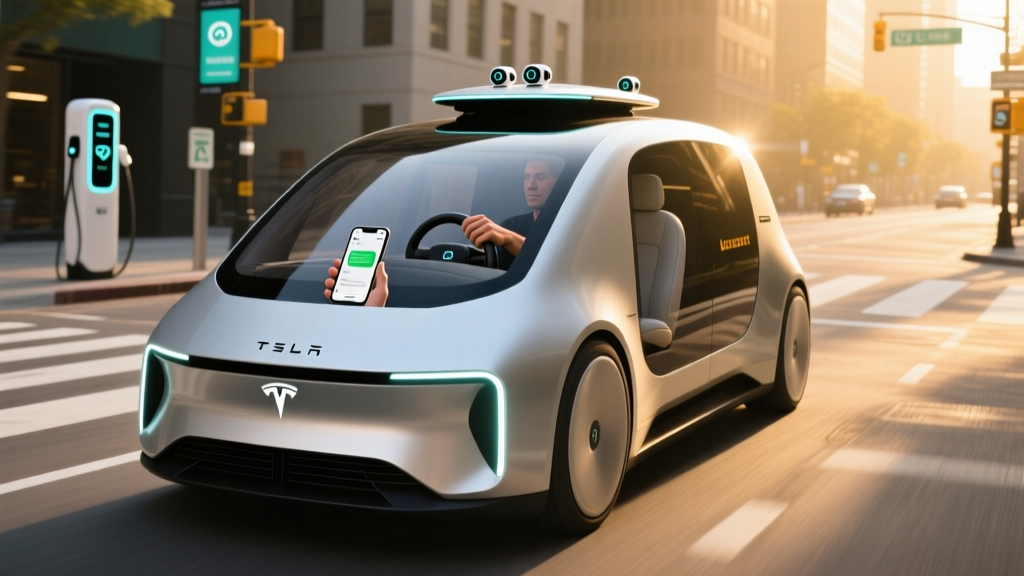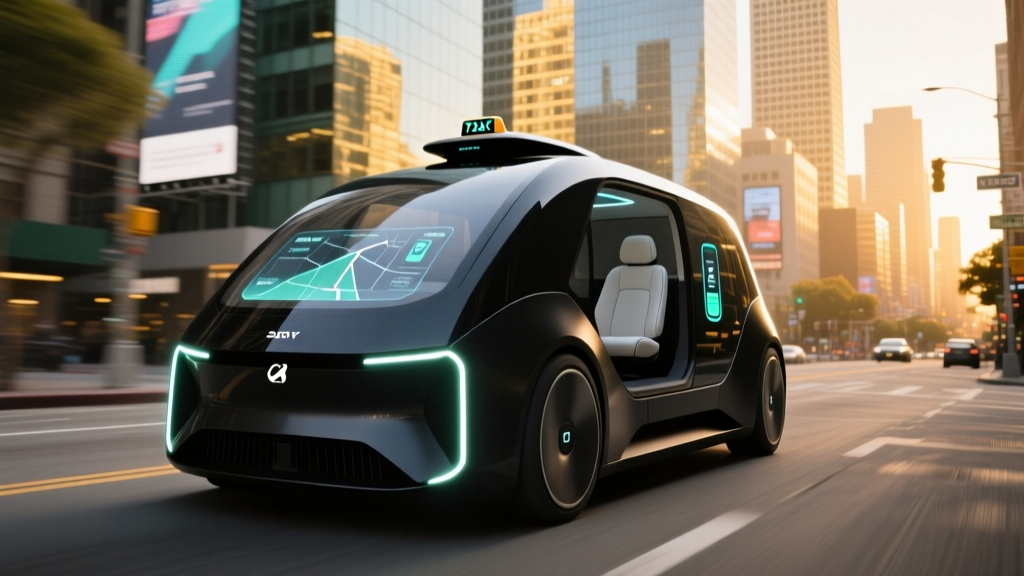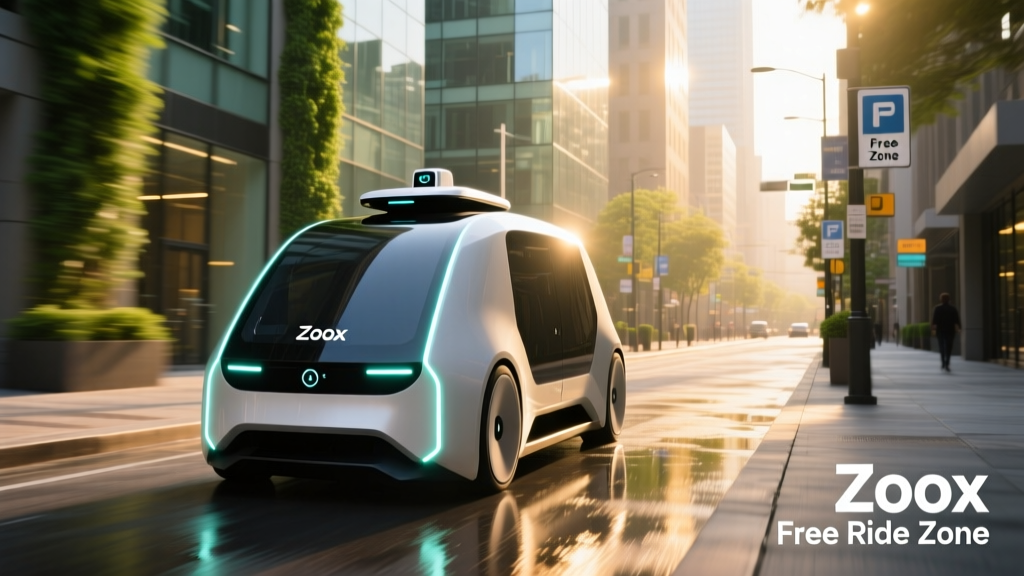
If you've searched "Zoox free" recently, you're not alone. The Amazon-backed robotaxi company has generated enormous curiosity with its purpose-built, carriage-style autonomous vehicle — and early promotional rides have led many to wonder whether Zoox is free to use permanently. The short answer: Zoox has offered free promotional ride periods in select launch cities, but the company's long-term model is a paid, competitive rideshare service. Here's exactly what you need to know about riding Zoox in 2026, including where it operates, what it costs, how safe the data shows it is, and what the technology can — and cannot — do.
What Zoox Actually Is: SAE Level 4, Not Driver-Assist
Before evaluating Zoox's service, it's critical to understand what it is and isn't. Zoox operates a SAE Level 4 robotaxi service. This is fundamentally different from consumer driver-assist systems like Tesla Autopilot, Ford BlueCruise, or GM Super Cruise, which are all SAE Level 2 — meaning the human driver must remain engaged and supervising at all times.
| Level | Description | Example |
|---|---|---|
| Level 0 | No automation — full human control | Standard gas car |
| Level 1 | Single-system assist (steering OR speed) | Adaptive cruise control |
| Level 2 | Combined steering + speed assist; driver must supervise | Tesla Autopilot, BlueCruise, Super Cruise |
| Level 3 | Conditional automation; driver must be ready to take over | Mercedes Drive Pilot (limited markets) |
| Level 4 | High automation in defined areas; no driver needed | Zoox, Waymo One |
| Level 5 | Full automation everywhere, all conditions (theoretical) | Does not exist commercially |
Zoox operates at Level 4: the vehicle handles all driving tasks within its approved geofenced service area without any human driver or remote safety operator in the vehicle. There is no steering wheel or pedals inside the Zoox carriage.
Is Zoox Free? Pricing Explained for 2026
The keyword "Zoox free" traces back to the company's early launch strategy. During initial public rollout phases in cities like Las Vegas and the San Francisco Bay Area, Zoox offered free promotional rides to early adopters and waitlist users. These were limited-time introductory periods — not a permanent business model.
As of 2026, Zoox has transitioned to a paid service model in its operational markets, with pricing designed to compete directly with Uber and Lyft. Here's how the costs compare:
| Service | Base Fare | Per-Mile Rate | Per-Minute Rate | Typical 5-Mi Trip |
|---|---|---|---|---|
| Zoox | ~$2.50 | ~$1.10–$1.40/mi | ~$0.35/min | ~$10–$14 |
| UberX | ~$2.50–$3.50 | ~$1.20–$1.80/mi | ~$0.30–$0.50/min | ~$12–$18 |
| Lyft Standard | ~$2.00–$3.00 | ~$1.10–$1.60/mi | ~$0.30–$0.45/min | ~$11–$17 |
| Waymo One | ~$2.00–$3.00 | ~$1.00–$1.50/mi | ~$0.30–$0.40/min | ~$10–$15 |
Zoox positions its pricing at or slightly below conventional rideshare to incentivize adoption. Surge pricing is generally less aggressive than Uber/Lyft because Zoox controls its fleet supply directly and doesn't rely on independent contractor availability. That said, exact pricing varies by city, time of day, and demand. Zoox has periodically offered promotional credits (e.g., $20 off your first three rides) in newly launched markets.
Where Can You Ride Zoox Right Now?
Zoox's service footprint is expanding but remains geographically constrained by regulatory approvals and geofencing requirements. Here's the current operational status as of early 2026:
| City / Region | Status | Service Area | Hours |
|---|---|---|---|
| Las Vegas, NV | Commercial service (live) | Las Vegas Strip corridor, downtown, airport-adjacent zones | ~16 hrs/day |
| Foster City / Bay Area, CA | Commercial service (live) | Foster City core, expanding to parts of San Francisco | ~16 hrs/day |
| Phoenix, AZ | Testing / limited early access | Select corridors | Limited hours |
| Atlanta, GA | Announced expansion (testing phase) | TBD | TBD |
| Austin, TX | Announced expansion (testing phase) | TBD | TBD |
Important: Phoenix, Atlanta, and Austin are in testing or early-access phases. Commercial, open-to-public paid service is confirmed for Las Vegas and the Bay Area. Announced future expansions should not be confused with currently available service. Check the Zoox ride page for the most current city availability before planning a trip.
How to Use Zoox: App, Hailing, and the Ride Experience
Riding Zoox is designed to mirror a standard rideshare workflow, with a few distinctions unique to its purpose-built vehicle:
- Download the Zoox app (iOS/Android) and create an account.
- Enter pickup and drop-off locations — both must fall within the geofenced service area.
- Confirm your ride — the app shows estimated wait time (typically 3–8 minutes in core zones) and fare estimate.
- Vehicle arrival — the Zoox carriage is compact, symmetrical, and distinctively shaped (no visible hood or trunk). The app guides you to the exact pickup point with a photo.
- Boarding — doors open automatically via the app. The interior seats four passengers face-to-face (no driver seat, no steering wheel). There's a screen showing your route and a stop button.
- The ride — the vehicle navigates autonomously. You can monitor the route on the interior screen. There is no option to "take over" — this is Level 4 autonomy.
- Drop-off and payment — automatic upon arrival. Rate and tip (optional) through the app.
The Zoox carriage vehicle is a ground-up design — not a retrofitted SUV or sedan. It's battery-electric with a roughly 70 kWh usable battery pack, bidirectional driving capability (it can move equally well in either direction), and a top speed of approximately 75 mph, though it operates well within posted speed limits in urban environments. The compact footprint (shorter than a Toyota Prius) aids maneuverability in dense city streets.
Zoox Safety Record: What the Data Shows
Safety is the most scrutinized dimension of any robotaxi service. Zoox publishes safety performance data and is subject to reporting requirements in the states where it operates. Here's what the available data tells us:
- Autonomous miles driven (commercial fleet): Estimated 1.5–2+ million miles across Las Vegas and Bay Area operations
- At-fault collisions: Zoox has reported a small number of minor-contact incidents during testing and early commercial phases; the company states no serious injuries to passengers or pedestrians attributable to the autonomous system
- Disengagement rate: Not directly comparable to Level 2 systems (which measure driver takeovers); Zoox tracks "autonomous system interventions" where remote guidance or a vehicle stop was triggered — rates reported in the range of 1 per 5,000–10,000 miles during early deployment, improving with fleet learning
- NHTSA Standing General Order: Zoox is required to report all crashes involving its ADS-equipped vehicles within 24 hours. Data is publicly accessible via NHTSA's crash reporting portal
For context, Waymo — the most mature robotaxi operator — has published peer-reviewed data showing its vehicles are involved in significantly fewer police-reported crashes per million miles compared to human benchmarks in the same geographies. Zoox's dataset is smaller, making direct statistical comparisons less reliable at this stage, but the company's safety trajectory follows a similar pattern: conservative speed profiles, extensive simulation validation, and continuous fleet-level learning.
The NHTSA and state regulators (notably the California DMV and Nevada DMV) oversee robotaxi safety reporting. Zoox holds a California DMV Autonomous Vehicle Deployment Permit and equivalent Nevada authorization for commercial operations.
Zoox Technology Stack: Lidar, Cameras, and Geofencing
Zoox takes a sensor-rich approach to perception, in contrast to Tesla's camera-only ("Tesla Vision") strategy. The Zoox carriage vehicle carries a comprehensive sensor suite:
- Lidar: Multiple solid-state and spinning lidar units providing 360° 3D point-cloud mapping at ranges exceeding 150 meters
- Cameras: High-resolution camera arrays covering all directions with overlapping fields of view for redundancy
- Radar: Forward and side-facing radar for velocity detection and performance in low-visibility conditions
- Ultrasonic sensors: Short-range object detection for low-speed maneuvering and close-proximity obstacles
- HD mapping: Pre-built centimeter-accuracy maps of all service-area roads, continuously updated
- Compute: Custom onboard AI inference hardware processing sensor fusion, prediction, and planning in real time
- Redundancy: Dual-redundant braking, steering, and compute systems — if a primary system faults, the backup can safely stop the vehicle
Zoox's approach is geofenced Level 4: the system is approved to operate without a human driver only within pre-mapped, regulator-approved zones. If a ride request falls outside the geofence, the app simply won't allow it. This is a deliberate safety constraint — the vehicle will not attempt to navigate unmapped or unapproved roads.
Regulatory Landscape: Who Approves Robotaxi Operations?
Robotaxi services in the U.S. operate under a patchwork of state and local regulations. There is no single federal "robotaxi license." Here's how the approval chain works for Zoox:
- California DMV: Issues testing permits and deployment permits for autonomous vehicles. Zoox holds a deployment permit allowing driverless commercial service in approved areas.
- California Public Utilities Commission (CPUC): Regulates commercial passenger service (the "rideshare" side). Zoox must hold CPUC authorization to charge fares.
- Nevada DMV / Nevada Office of Autonomous Vehicles: Nevada was an early adopter of AV regulation. Zoox received authorization for testing and commercial operations in Las Vegas.
- NHTSA (federal): Oversees vehicle safety standards. Zoox received an FMVSS exemption for its purpose-built carriage, which lacks traditional controls (steering wheel, pedals, mirrors) not required for a vehicle that never has a human driver. The exemption was granted under a special petition process.
- Local jurisdictions: City and county authorities may impose additional requirements around pickup zones, traffic coordination, and emergency response protocols.
This multi-layered approval process means expansion is inherently slow. Each new city requires regulatory engagement, mapping, testing, and permitting — which is why Zoox's live-service footprint is measured in single-digit cities, not dozens.
Current Limitations: What Zoox Cannot Do
Level 4 autonomy is powerful within its domain, but that domain has real boundaries. Here are the current limitations riders should understand:
- Geofencing: Rides are only available within pre-approved zones. You cannot hail a Zoox to an address outside the service boundary.
- Weather constraints: Heavy rain, fog, snow, or ice can trigger service suspension or reduced operating areas. Lidar and camera performance degrade in extreme precipitation.
- No highway/freeway service: Zoox currently operates on surface streets within urban corridors. It does not handle highway on-ramps or interstate travel.
- Limited hours: Service is not 24/7 in all markets. Late-night availability varies by city.
- No multi-stop trips: You cannot add intermediate stops (e.g., pick up a friend, grab groceries). Point A to Point B only.
- Accessibility: The current Zoox carriage is designed for standard passenger boarding. Wheelchair-accessible variants have been discussed but are not yet part of the active commercial fleet.
- Edge cases: Construction zones, temporary road closures, and unusual traffic-control scenarios (e.g., police directing traffic with hand signals) may cause the vehicle to stop and request remote guidance, adding delay.
- No tipping or driver interaction: There is no driver. The interior experience is fully autonomous — no conversation, no route requests to a human.
Zoox vs. Waymo: How the Two Robotaxi Services Compare
| Attribute | Zoox | Waymo One |
|---|---|---|
| SAE Level | Level 4 | Level 4 |
| Vehicle | Purpose-built Zoox carriage (no steering wheel) | Retrofitted Jaguar I-PACE (with steering wheel, no driver) |
| Live commercial cities | Las Vegas, Bay Area | Phoenix, San Francisco, Los Angeles, Austin |
| Fleet size (est.) | Hundreds | 1,000+ |
| Cumulative autonomous miles | ~2 million+ | 30+ million |
| Parent company | Amazon | Alphabet (Google) |
| Sensor approach | Lidar + cameras + radar + ultrasonic | Lidar + cameras + radar |
| Highway capable | No (surface streets) | Limited (some freeway segments in Phoenix) |
Waymo has a significant head start in fleet scale, geographic coverage, and accumulated real-world miles. Zoox's advantage is its purpose-built vehicle — designed from the ground up for autonomous passenger service rather than adapted from a human-driven platform. Over time, this may yield cost and experience advantages, but Waymo's maturity gives it broader availability today.
Frequently Asked Questions
Is Zoox completely free to ride?
No. Zoox has offered free promotional ride periods during initial city launches (Las Vegas, Bay Area), but the service operates as a paid rideshare. Pricing is competitive with Uber/Lyft, typically in the $10–$15 range for a 5-mile trip. Promotional credits are occasionally available for new users.
Where can I use Zoox right now?
Commercial Zoox service is live in Las Vegas (Strip corridor and downtown) and the San Francisco Bay Area (Foster City and expanding zones). Phoenix, Atlanta, and Austin are in testing or announced-expansion phases but are not yet open for general public paid rides.
How safe are Zoox robotaxis compared to human drivers?
Zoox reports no serious passenger or pedestrian injuries attributable to its autonomous system through its commercial deployment period. The fleet has accumulated an estimated 1.5–2+ million autonomous miles. Direct statistical comparison to human crash rates requires larger datasets, but early indicators align with industry-wide robotaxi data showing fewer at-fault collisions per million miles than human benchmarks. All incidents are reported to NHTSA under the Standing General Order.
Is Zoox really self-driving, or is there a remote human controlling it?
Zoox is genuinely self-driving within its geofenced service area — SAE Level 4. There is no human driver in the vehicle, no steering wheel, and no pedals. The vehicle makes its own driving decisions in real time using onboard AI and sensor fusion. Remote guidance may be invoked in rare edge cases (e.g., an unmapped construction zone), where a remote operator can provide high-level direction — but this is not continuous remote "driving."
Can Zoox drive on highways or in bad weather?
Currently, Zoox operates on surface streets only — no highway or freeway routing. In heavy rain, fog, or conditions that degrade sensor performance, Zoox may suspend service or restrict its operating area. Snow and ice are currently outside the system's operational design domain.
How does Zoox compare to Tesla's Full Self-Driving?
These are fundamentally different products. Tesla FSD (Supervised) is an SAE Level 2 driver-assist system — the human driver is legally and operationally responsible for the vehicle at all times and must remain attentive. Zoox is SAE Level 4 — no human driver is present, and the system is fully responsible for driving within its approved area. You cannot buy a Zoox; you can only ride in one as a passenger service.
What happens if something goes wrong during a Zoox ride?
The Zoox carriage has redundant braking, steering, and compute systems. If a fault is detected, the vehicle is designed to execute a safe stop (pull to the side of the road or stop in place with hazard lights). Passengers can contact Zoox support via the in-vehicle screen or app at any time. Emergency services can be dispatched if needed.
Sources: Zoox official site (zoox.com), NHTSA Standing General Order crash reporting (nhtsa.gov), California DMV Autonomous Vehicle Program. Pricing figures are estimates based on reported rider data and may vary by market and time. Always verify current service availability and pricing through the Zoox app.