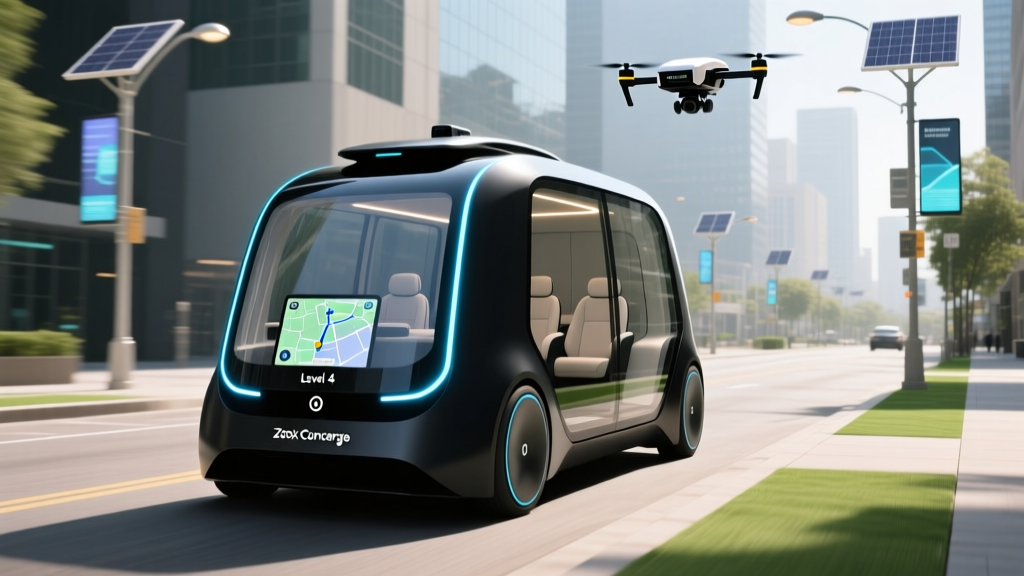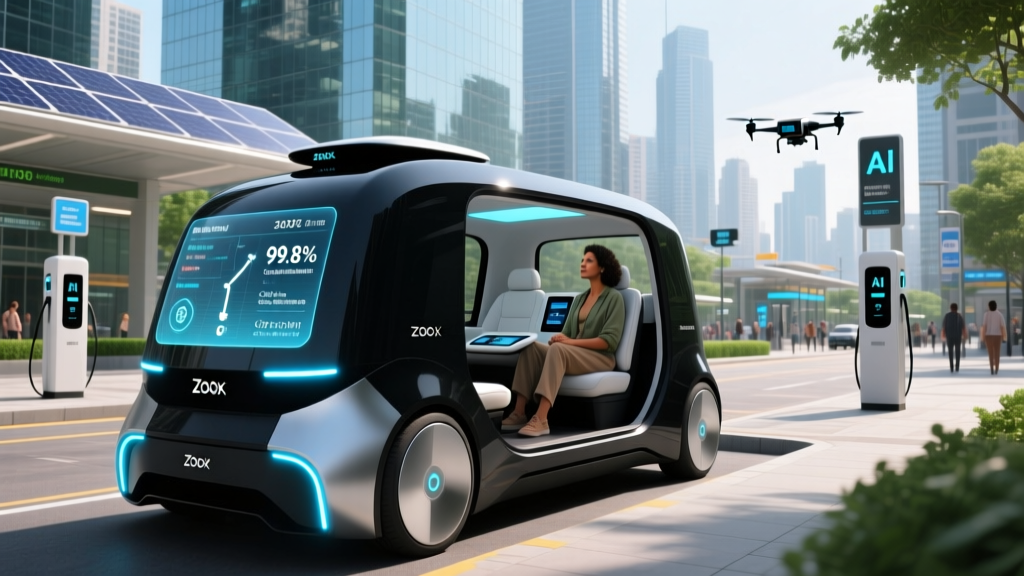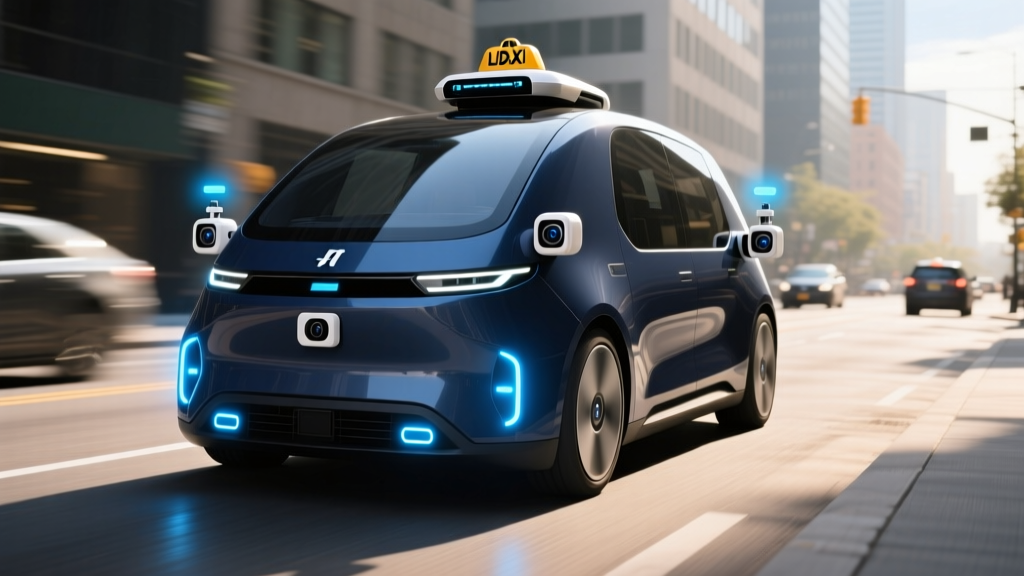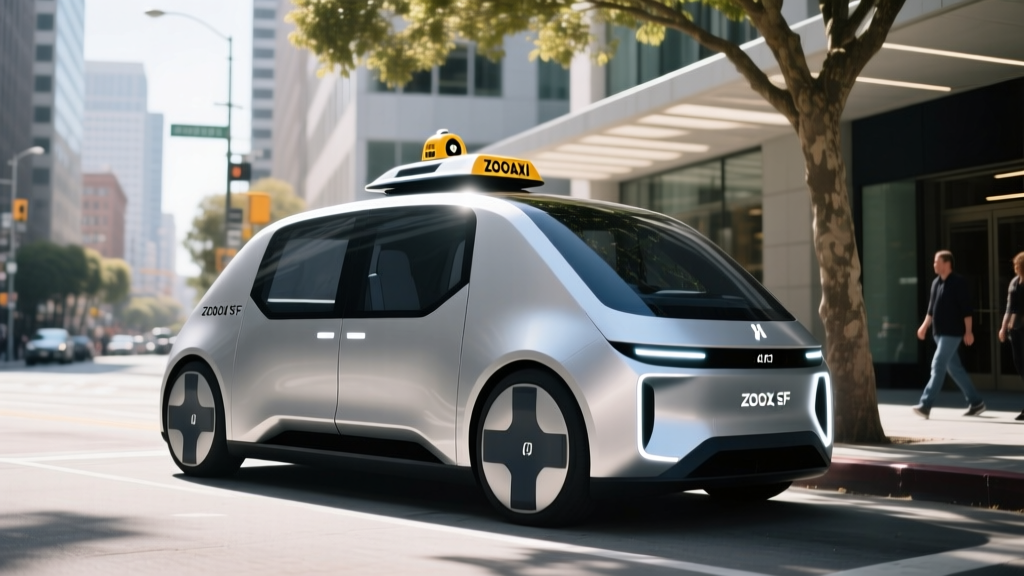
If you have searched for zoox car sf, you are likely trying to figure out whether Amazon-backed Zoox actually operates a rideable service in San Francisco, what the vehicle looks like, how safe it is, and how pricing stacks up against Uber or Lyft. Zoox is one of the few companies that has built a purpose-built robotaxi from the ground up — a bidirectional, carriage-style EV with no steering wheel — and San Francisco is its primary proving ground. Here is what you need to know in 2026.
What Zoox Actually Is (and What Autonomy Level It Runs)
Zoox is a Level 4 autonomous vehicle company, not a driver-assist system. That distinction is critical and often blurred in automotive media.
| Level | Description | Examples |
|---|---|---|
| Level 2 | Driver assist — human must supervise at all times | Tesla Autopilot/FSD Supervised, GM Super Cruise, Ford BlueCruise |
| Level 3 | Conditional automation — driver can disengage in limited scenarios | Mercedes Drive Pilot (limited markets/conditions) |
| Level 4 | High automation — no driver needed within geofenced ODD | Waymo, Zoox, Cruise (pre-suspension) |
| Level 5 | Full automation — any road, any condition (not yet achieved) | None commercially available |
Zoox operates at SAE Level 4: fully driverless within its approved operational design domain (ODD). There is no human behind the wheel, no steering column, and no pedals. The vehicle handles all driving tasks within its geofenced service area. If the system encounters a scenario it cannot resolve, it pulls over safely rather than handing control to a passenger.
Where Can I Ride a Zoox Car in SF Right Now?
Zoox's commercial robotaxi service is live in San Francisco and Las Vegas as of early 2026. The San Francisco service area has expanded incrementally since its initial employee-only testing phase.
| City | Status | Service Area Notes | Access |
|---|---|---|---|
| San Francisco | Commercial service active | Select neighborhoods; expanding geofence | Zoox app (waitlist may apply) |
| Las Vegas | Commercial service active | Las Vegas Strip corridor and surrounding areas | Zoox app |
| Foster City, CA | Testing (non-commercial) | Near Zoox HQ; employee/invite rides | Not publicly available |
| Austin, TX | Testing (announced) | Early mapping and validation phase | Not publicly available |
In San Francisco, the Zoox geofence covers portions of the city including the SoMa, Mission, and downtown corridors. The exact boundaries shift as Zoox receives additional permits from the California Public Utilities Commission (CPUC), which regulates commercial robotaxi operations in the state. Riders request pickup and drop-off within the approved zone via the Zoox mobile app.
The Zoox Vehicle: Purpose-Built EV Specs
The Zoox robotaxi is not a retrofitted consumer car. It was designed from scratch as a symmetric, bidirectional vehicle — it can drive equally well in either direction, which simplifies maneuvers like three-point turns. Here are the known specifications:
| Specification | Detail |
|---|---|
| Vehicle type | Purpose-built robotaxi (no steering wheel or pedals) |
| Seating | 4 passengers (facing each other, carriage-style) |
| Powertrain | Battery electric, dual-motor AWD |
| Battery | Estimated ~75 kWh usable (NMC chemistry) |
| Top speed | 75 mph (electronically limited) |
| Bidirectional driving | Yes — symmetric design, drives forward or backward identically |
| Crash safety | Designed to meet FMVSS; airbags for all four seats |
| Availability | Not for consumer purchase — ride-hail only |
The bidirectional design is more than a novelty. In tight urban environments, the ability to reverse out of a dead-end as efficiently as driving forward reduces the complexity of route planning and eliminates multi-point turns that confuse passengers and block traffic.
Tech Stack: How Zoox Sees the Road
Sensor Suite
Unlike Tesla's camera-only approach, Zoox uses a multi-modal sensor stack combining lidar, radar, and cameras for redundancy:
- Lidar: Multiple solid-state and spinning lidar units provide a 360-degree, high-resolution 3D point cloud out to 150+ meters. Lidar is unaffected by lighting conditions — critical for nighttime and high-contrast scenarios.
- Cameras: A surround camera array handles lane-line detection, traffic-light state recognition, sign reading, and object classification.
- Radar: Long-range radar supplements lidar for velocity estimation of distant objects and performs reliably in rain and fog where lidar scattering can degrade performance.
- HD Maps: Zoox relies on centimeter-accurate pre-built maps of its service area, which are continuously updated. The vehicle localizes itself within these maps in real time.
Compute: Custom onboard computing hardware processes sensor fusion, prediction, and planning in real time. Zoox designs its own compute stack rather than relying on off-the-shelf solutions.
Geofencing: The system operates only within a pre-mapped, regulator-approved operational design domain (ODD). If the vehicle approaches the geofence boundary, it will not proceed — it reroutes or requests remote assistance.
This sensor-redundant approach contrasts sharply with Tesla's vision-only FSD, which relies on neural networks interpreting camera feeds without lidar or radar. Both approaches have trade-offs: lidar adds cost and hardware complexity but provides deterministic distance measurements that cameras must infer. For a Level 4 system carrying paying passengers with no human fallback, most industry engineers consider lidar essential.
How Safe Are Zoox Robotaxis? The Data
Safety is the most scrutinized aspect of any robotaxi operation. Here is what we know from public filings and regulatory disclosures.
- Disengagement reports: Zoox files periodic disengagement and collision reports with the California DMV. Disengagement rates (miles per human-safety-driver intervention during testing) have trended downward year-over-year, indicating system maturation.
- Collision reports: Like all AV operators in California, Zoox is required to report any collision involving its vehicles to the DMV within 10 business days. Most reported incidents in the AV industry involve other human-driven vehicles striking the robotaxi (rear-end collisions at stops, sideswipes in merging scenarios), not the robotaxi causing the event.
- No fatalities: As of this writing, no Zoox vehicle has been involved in a fatal collision during testing or commercial operations.
- Remote assistance: Zoox uses a remote-guidance model where the vehicle can pause and request input from a human operator for novel scenarios (e.g., an unusual construction zone). This is not remote driving — the remote operator suggests a path or confirms a maneuver, and the vehicle executes it autonomously.
Sources: CA DMV Autonomous Vehicle Program, NHTSA AV safety resources.
It is important to contextualize robotaxi safety data. Waymo, the industry leader, has published peer-reviewed research showing its vehicles are involved in fewer injury-causing crashes per million miles than human benchmarks in comparable urban environments. Zoox has not published equivalent large-scale comparative studies, largely because its fleet and mileage are smaller. As Zoox scales, expect more granular safety data to become publicly available.
Pricing: Zoox vs. Uber vs. Lyft in SF
During its initial commercial launch phases, Zoox has offered rides at no cost to riders or at heavily subsidized promotional rates as it builds ridership and operational data. This is typical of robotaxi rollouts — Waymo's early rider program in Phoenix was also free before transitioning to standard pricing.
| Service | Typical SF Fare (3-mile trip) | Surge Pricing | Driver Tips |
|---|---|---|---|
| Zoox | Free / promotional (as of early 2026) | None currently | No driver to tip |
| UberX | $12–$22 | Yes — can 1.5x–3x during peaks | Expected ($2–$5) |
| Lyft Standard | $11–$20 | Yes — prime-time pricing | Expected ($2–$5) |
| Waymo (SF) | $10–$18 (comparable to UberX) | Limited dynamic pricing | Optional in-app |
The long-term pricing model for Zoox is expected to undercut traditional rideshare by eliminating the driver cost, which typically accounts for 60–75% of a rideshare fare. Amazon, Zoox's parent company, has the balance sheet to subsidize aggressive pricing during the scaling phase. Expect Zoox to transition to paid fares once its service area and fleet size reach commercial viability thresholds — likely competitive with or slightly below UberX/Lyft rates.
Current Limitations: What Zoox Cannot Do
Level 4 autonomy is impressive within its domain, but the domain has hard edges. Here are the real-world constraints riders encounter:
- Geofence boundaries: You cannot request a ride outside the approved service area. If your destination falls outside the geofence, the app will not let you book the trip.
- Heavy weather: Dense fog (common in SF, especially in the Sunset and Richmond districts), heavy rain, and atmospheric river events can degrade lidar and camera performance. Zoox may restrict service or reduce the operational area during these conditions.
- Construction zones: Unexpected, un-mapped construction can force the vehicle to stop and request remote guidance, adding delay to your trip.
- No highway driving (yet): Zoox's current SF operations are on surface streets. Highway merging at 65+ mph represents a different ODD that requires separate validation and regulatory approval.
- Pickup/drop-off precision: The vehicle may not pull up to the exact front door of a large complex. It uses designated pull-over points, which might mean a short walk from a building lobby.
- Limited cargo: The carriage-style seating for four leaves minimal trunk space. This is not the service for airport runs with four suitcases.
- Wait times: Fleet size is still limited compared to Uber/Lyft. During peak hours, wait times can exceed 10–15 minutes depending on your location within the geofence.
- Accessibility: While the vehicle is designed with level-floor entry, riders should confirm wheelchair accommodation through the app, as not all configurations may be available on every vehicle.
These limitations are not unique to Zoox — they apply broadly to all current Level 4 robotaxi services, including Waymo. The difference is in how each company manages edge cases. Zoox's remote-guidance model means the vehicle will pause and seek help rather than attempt a maneuver it is uncertain about, which prioritizes safety over trip speed.
Regulatory Landscape: Who Approves Zoox in SF?
Operating a commercial robotaxi in California requires navigating a layered regulatory framework:
- California DMV — Testing Permit: The DMV issues Autonomous Vehicle Testing Permits. Zoox has held a testing permit for years and reports disengagement and collision data as required. The DMV's AV program page publishes these reports.
- CPUC — Commercial Deployment: The California Public Utilities Commission regulates the commercial passenger service side. In 2024–2025, the CPUC expanded its framework for driverless commercial robotaxi permits, allowing companies like Waymo and Zoox to charge fares within approved service areas. CPUC approval defines operating hours, geofence boundaries, and fleet size caps.
- SFMTA — Local Operations: The San Francisco Municipal Transportation Agency has input on where robotaxis can operate, stop, and pick up passengers within city limits. SFMTA and the SF County Transportation Authority have at times pushed for slower expansion, citing concerns about traffic congestion and emergency-vehicle interactions.
- NHTSA — Federal Vehicle Safety: At the federal level, the National Highway Traffic Safety Administration sets Federal Motor Vehicle Safety Standards (FMVSS). Zoox's purpose-built vehicle required an FMVSS exemption petition for certain design elements (e.g., the lack of a traditional steering wheel and mirrors), which was granted with conditions.
This regulatory complexity is why robotaxi expansion is slow and city-by-city. Each new market requires local and state approval, mapping, testing, and public comment periods. Zoox's Las Vegas operations, for example, required separate approval from Nevada regulators.
Frequently Asked Questions
Is the Zoox car truly self-driving, or is there a human driver?
Truly self-driving within its service area. The Zoox vehicle has no steering wheel, no pedals, and no human driver onboard. It operates at SAE Level 4, meaning the system handles all driving tasks within its geofenced operational design domain. Remote guidance operators can assist with novel scenarios, but they do not drive the vehicle in real time.
How do I request a Zoox ride in San Francisco?
Download the Zoox app (available on iOS and Android), create an account, and request a ride within the active service area. Depending on demand and fleet availability, you may be placed on a waitlist before gaining full access. Pickup and drop-off must both fall within the approved geofence.
How much does a Zoox ride cost compared to Uber?
As of early 2026, Zoox rides in SF are free or heavily subsidized during the commercial launch phase. When Zoox transitions to standard pricing, fares are expected to be competitive with or below UberX/Lyft — potentially $8–$15 for a typical 3-mile urban trip — because there is no driver to pay. For context, a 3-mile UberX trip in SF currently runs $12–$22 before tip.
How safe are Zoox robotaxis compared to human drivers?
Zoox reports collision data to the California DMV as required by law. Most reported AV collisions industry-wide involve other human-driven vehicles striking the robotaxi, not the reverse. Zoox has not published a large-scale comparative safety study (as Waymo has), but its disengagement rates during testing have improved over successive reporting periods. No Zoox vehicle has been involved in a fatality.
Can I ride Zoox to SFO or Oakland Airport?
Not currently. Airport routes fall outside the approved San Francisco geofence, and highway driving is not yet part of Zoox's operational domain in SF. For airport trips, Uber, Lyft, Waymo (on approved routes), or BART remain the practical options.
What happens if the Zoox car encounters something it cannot handle?
The vehicle will stop safely and request remote guidance from a Zoox operations specialist. The specialist reviews the situation via the vehicle's sensor feeds and suggests a resolution — the vehicle then executes the maneuver autonomously. This process typically adds a few minutes of delay but avoids the vehicle attempting an uncertain maneuver.
Is Zoox available in other cities besides SF and Las Vegas?
As of 2026, San Francisco and Las Vegas are the only cities with active commercial Zoox service. Testing is underway in other markets including Austin, TX, but commercial launch dates for new cities have not been announced. Regulatory approval is required for each new market.