What Is Zoox and How Does It Work in Austin?
Zoox, the Amazon-owned autonomous vehicle company, has been expanding its driverless robotaxi footprint beyond its initial San Francisco and Las Vegas operations. For riders searching for Zoox Austin, TX service, here's what you need to know about availability, vehicle capabilities, pricing, and the real-world experience of hailing a ride with no one behind the wheel.
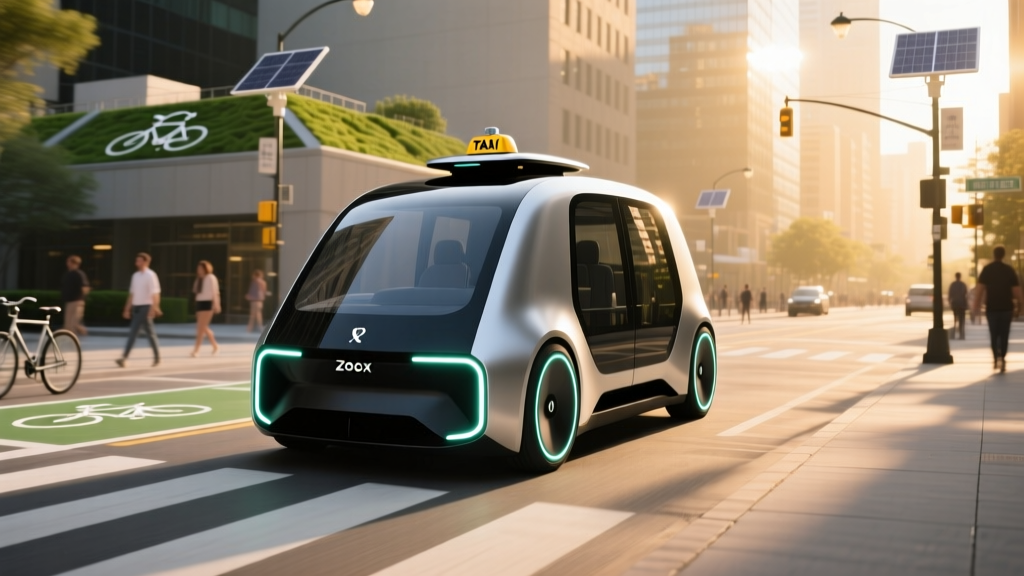
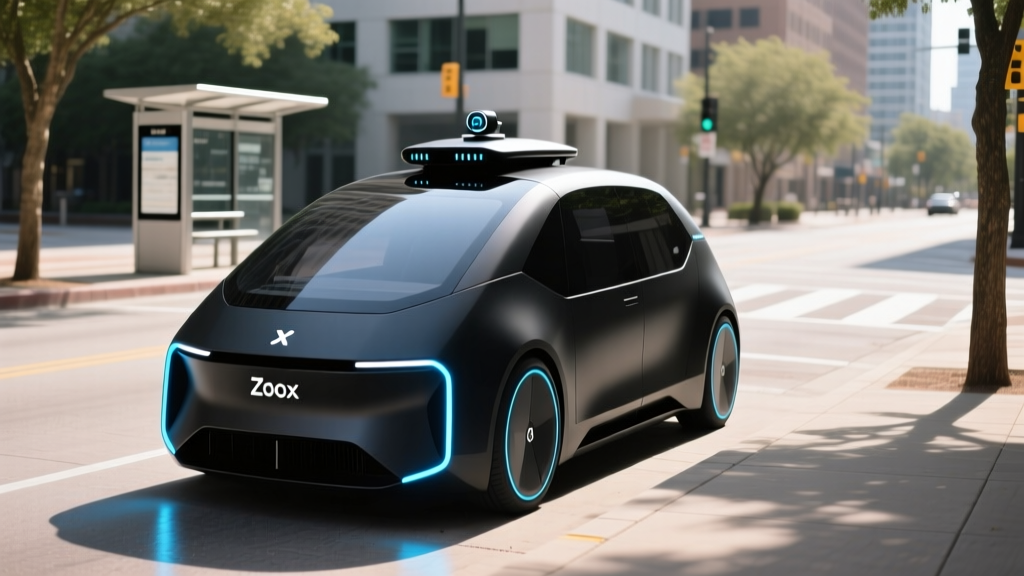
Zoox operates a purpose-built, carriage-style vehicle — not a retrofitted production car. The Zoox robotaxi is a bidirectional, four-passenger pod with no steering wheel, no pedals, and no driver's seat. It's designed from the ground up as a Level 4 autonomous vehicle, meaning it handles all driving tasks within its defined operational domain without any human intervention or fallback.
Zoox operates at SAE Level 4, meaning the vehicle performs all driving tasks within its geofenced service area without human input. There is no steering wheel or driver seat. This is fundamentally different from Level 2 systems like Tesla Autopilot or GM Super Cruise, which require continuous driver supervision. If a Zoox vehicle encounters a scenario outside its capability, it pulls over safely rather than handing control to a passenger.
Where Can You Ride a Zoox Robotaxi in Austin, TX?
Zoox's Austin operations have been in testing and phased rollout. As of early 2026, Zoox has been conducting driverless testing on public roads in Austin, with service availability expanding incrementally. The company typically starts with employee-only and invite-only rider programs before opening to the general public.
| City | Status | Access Type | Service Area Notes |
|---|---|---|---|
| San Francisco, CA | Active | Public (app-based) | Downtown, SoMa, Mission, expanded zones |
| Las Vegas, NV | Active | Public (app-based) | Las Vegas Strip corridor, downtown |
| Austin, TX | Testing / Phased Rollout | Invite-only / Early Access | Select central Austin corridors |
| Foster City, CA | Testing | Employee / limited | HQ testing zone |
Key point for Austin riders: Check the Zoox ride page or download the Zoox app to see if public access has opened in your specific area. Zoox typically geofences its service to specific neighborhoods and corridors, and availability expands over time as regulatory approvals and operational validation progress.
How to Use Zoox in Austin and What It Costs
Where Zoox has launched public service, the experience is app-based and straightforward:
- Download the Zoox app (iOS/Android) and create an account.
- Enter your pickup and dropoff — both must be within the active geofenced zone.
- Confirm your ride — the app shows estimated wait time and vehicle approach.
- Board the vehicle — the carriage-style pod has facing bench seats for up to four passengers. Doors open automatically when the vehicle arrives and verifies your identity.
- Ride — screens inside show your route, speed, and what the vehicle's sensors are detecting in real time.
- Exit at your destination — no tipping, no interaction with a driver.
Pricing: Zoox vs. Uber and Lyft
In markets where Zoox has opened commercial service, the company has historically offered rides at competitive rates — and during early access phases, rides have been free or heavily subsidized to build ridership and gather feedback. Here's how pricing compares in active markets:
| Service | Estimated Fare | Surge Pricing? | Notes |
|---|---|---|---|
| Zoox (early access) | Free – $5 | No | Subsidized during rollout phase |
| Waymo One | $8 – $15 | Limited | Comparable to UberX in most markets |
| UberX | $10 – $18 | Yes | Varies heavily by demand/time |
| Lyft | $10 – $17 | Yes | Similar to UberX |
Once Zoox moves past its subsidized early-access phase in Austin, expect pricing in the range of conventional rideshare — the long-term business model relies on eliminating driver costs, which represent the majority of each Uber/Lyft fare. Zoox has not published long-term Austin pricing as of early 2026.
The Zoox Vehicle: Technology Stack and Sensor Suite
Zoox's purpose-built vehicle is one of the few robotaxis not derived from an existing production car (unlike Waymo's use of the Jaguar I-PACE or Cruise's Chevy Bolt origin). This gives Zoox unique engineering flexibility.
Zoox Robotaxi Tech Stack Overview
- Sensor suite: Multi-modal — combines lidar, cameras, and radar in a redundant array covering 360 degrees with overlapping fields of view. Zoox uses a lidar-first approach, unlike Tesla's camera-only FSD system.
- Lidar: Roof-mounted and corner-positioned lidar units provide precise 3D point-cloud mapping of the environment in all lighting conditions, including darkness and glare.
- Cameras: High-resolution cameras handle object classification, traffic signal recognition, and lane detection.
- Radar: Provides velocity data on moving objects and performs reliably in rain and fog where lidar and cameras can degrade.
- Compute: Custom onboard computing platform processes sensor fusion in real time. The system runs Zoox's proprietary prediction, planning, and control software.
- HD Maps: Zoox relies on pre-built high-definition maps of its geofenced service area, which the vehicle cross-references with live sensor data for localization.
- Bidirectional driving: The vehicle is symmetrical — it can drive equally well in either direction, eliminating the need for three-point turns or backing up in tight urban scenarios.
- Four-wheel steering: Enables tight turning radii and crab-like lateral movements useful in congested city streets.
The vehicle's battery pack and electric powertrain specifications have not been published in full detail by Zoox, but the pod is fully electric with a target operational range designed for all-day urban duty cycles. Top speed is governed to approximately 75 mph, though urban operations rarely exceed 35-45 mph.
Safety Record: What the Data Shows
Safety is the single most important question for prospective robotaxi riders. Here's what we know from publicly available data and regulatory filings:
Zoox Safety Data Snapshot
- Driverless testing miles: Zoox has accumulated hundreds of thousands of driverless miles across San Francisco, Las Vegas, and other test cities. The company reports to the California DMV and NHTSA as required.
- Disengagement reports (California): In California, autonomous vehicle operators must file annual disengagement reports. Zoox's reported disengagement rates (interventions per 1,000 miles) have improved year-over-year as software matures. Specific figures are published in California DMV disengagement reports.
- Collision reports: Like all AV operators, Zoox is required to report collisions to NHTSA under Standing General Order 2021-01. Most reported incidents across the AV industry involve low-speed contacts where the robotaxi was rear-ended or sideswiped by human-driven vehicles — not at-fault high-severity crashes.
- No fatalities: As of early 2026, Zoox has not reported any passenger or pedestrian fatalities in its driverless operations.
Context for comparison: Human drivers in the U.S. experience approximately 1.35 fatalities per 100 million vehicle miles traveled, according to NHTSA. Robotaxi operators collectively have driven tens of millions of autonomous miles with zero or near-zero fatality rates, though the sample size is still far smaller than the trillions of human-driven miles annually. Direct statistical equivalence is not yet possible — but the available data does not show robotaxis as more dangerous than human drivers in their operational domains.
Regulatory Landscape: Who Approves Zoox Operations?
Robotaxi deployment in the U.S. involves a patchwork of state and local approvals. Zoox cannot simply launch in any city — it must navigate specific regulatory frameworks:
- California (CPUC & DMV): The California Public Utilities Commission issues permits for commercial passenger service. The DMV issues testing and deployment permits. Zoox holds both.
- Nevada: Nevada's regulatory framework for autonomous vehicles is comparatively permissive. The Nevada DMV issues testing permits, and commercial operations require coordination with local authorities.
- Texas (Austin): Texas passed autonomous vehicle legislation (HB 3573 in 2017) that allows AVs to operate on public roads without a human driver, provided the vehicle is properly registered and insured. Texas does not require a state-level AV operating permit in the way California does, which makes Austin a more permissive environment for deployment. However, local coordination with the City of Austin and CapArea Rural Transportation (CART) or other transit authorities may apply for specific corridors.
- Federal (NHTSA): NHTSA sets Federal Motor Vehicle Safety Standards (FMVSS). Zoox received a notable exemption from NHTSA in 2024 allowing its purpose-built vehicle — which lacks a steering wheel and mirrors — to operate on public roads. This FMVSS exemption was a critical regulatory milestone that no other AV company had achieved for a fully driverless production vehicle at the time.
Current Limitations of Zoox Robotaxis
Level 4 autonomy is powerful but constrained. Here's what Zoox cannot do today:
What Zoox Cannot Do (Yet)
- Geofence boundaries: Zoox vehicles operate only within mapped, approved service areas. Requesting a ride outside the geofence is not possible. In Austin, this means service is limited to specific neighborhoods and corridors — you cannot take a Zoox to the airport, suburbs, or rural areas unless those zones are explicitly included.
- Severe weather: Heavy rain, flooding, ice, and fog can degrade sensor performance. Zoox vehicles will pull over or refuse to dispatch if conditions exceed the system's validated operational envelope. Austin's occasional flash-flood events and ice storms could trigger service suspensions.
- Construction zones: Unmapped road changes, temporary lane shifts, and complex construction zones may cause the vehicle to stop and wait or route around the obstacle. This can add time to your trip.
- Highway driving: Zoox's current operational design domain focuses on urban surface streets. Highway merging, high-speed lane changes, and interstate travel are not part of the service.
- Unstructured environments: Private driveways, parking garages, dirt roads, and unpaved areas are outside the operational domain. Pickups and dropoffs happen at curb-side locations on mapped streets.
- Accessibility: While the Zoox vehicle is designed with a low floor and wide doors, specific ADA compliance details and wheelchair accommodation capabilities should be confirmed with Zoox directly before relying on the service for mobility-impaired riders.
Should You Try Zoox in Austin?
Choose Zoox If:
- You're within the active Austin geofence and want a novel, driverless ride experience
- You value not having to interact with or tip a driver
- You're interested in experiencing true Level 4 autonomy firsthand
- Your trip is relatively short and within mapped urban corridors
Stick With Uber/Lyft If:
- You need airport service, suburban trips, or routes outside the geofence
- You're traveling during severe weather
- You need guaranteed on-demand availability at any hour (robotaxi fleets are smaller than rideshare networks)
- You require child car seats or special accommodations not supported by the Zoox vehicle
The Austin robotaxi market is evolving rapidly. Waymo has also signaled interest in Austin expansion, which could create a competitive multi-operator environment similar to what San Francisco riders experience today. For Austin residents and visitors, the arrival of Zoox represents a tangible step toward on-demand autonomous transportation — but one that's still bounded by geography, weather, and regulatory timelines.
Frequently Asked Questions
Is Zoox truly self-driving, or is there a remote driver?
Zoox operates at SAE Level 4 with no human driver in the vehicle — no steering wheel, no pedals, no driver seat. The vehicle handles all driving tasks autonomously within its geofenced area. Zoox does employ remote assistance operators who can provide guidance in unusual situations (like an unexpected road closure), but these operators do not "drive" the vehicle in real time. The car's AI makes all driving decisions.
How much does a Zoox ride cost compared to Uber?
During early access phases, Zoox rides are typically free or very low-cost (under $5). Once commercial pricing is established, expect fares comparable to UberX — roughly $8-$15 for a short urban trip — without surge pricing. The long-term advantage for robotaxi operators is eliminating the driver's share of each fare, which could eventually make robotaxis cheaper than human-driven rideshare.
How safe are Zoox robotaxis in real-world operation?
Zoox has accumulated extensive driverless testing miles with no reported fatalities. Like all AV operators, the company reports disengagement data to the California DMV and collision data to NHTSA. Most reported AV incidents industry-wide involve low-speed contacts initiated by human-driven vehicles. The safety record is encouraging but the total mileage sample remains far smaller than human driving statistics.
Can I take a Zoox from Austin-Bergstrom International Airport?
Airport service depends on whether the airport is within Zoox's active geofence and whether airport authorities have approved robotaxi pickups. As of early 2026, airport service has not been confirmed for Austin. Check the Zoox app for current pickup zones.
What happens if the Zoox vehicle encounters something it can't handle?
If the vehicle encounters a scenario outside its operational capability — an unmapped detour, a severe weather event, or an unusual obstruction — it is programmed to slow down, pull over safely, and stop. It will not hand control to a passenger (there are no controls to hand over). Remote assistance may guide the vehicle through the situation, or the ride may be terminated and an alternative arranged.
Is Zoox owned by Amazon?
Yes. Amazon acquired Zoox in June 2020 for approximately $1.3 billion. Zoox operates as an independent subsidiary. Amazon's interest includes potential last-mile delivery applications, though Zoox's current focus is passenger robotaxi service.