What Zoox Is and Why Amazon Bought It
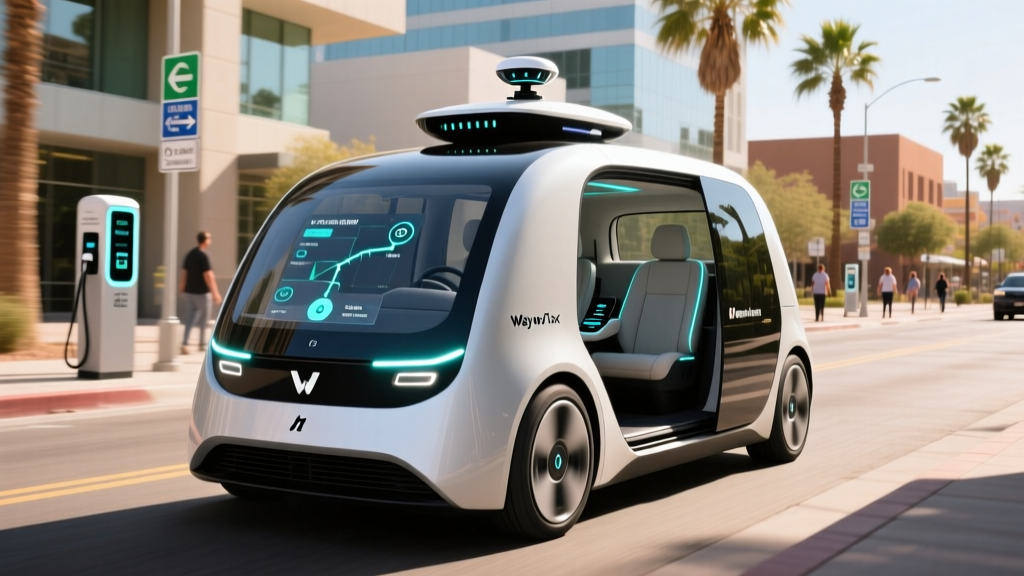
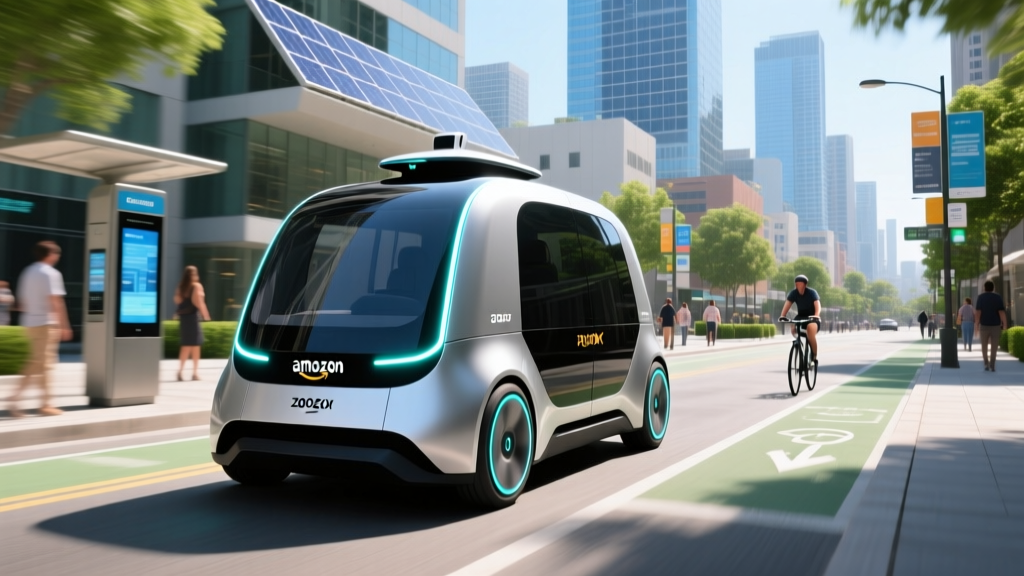
Amazon acquired Zoox in June 2020 for roughly $1.3 billion, making the Foster City, California startup one of the best-funded autonomous-vehicle projects in the world. Unlike most robotaxi developers that retrofit existing cars with sensor kits, Zoox designed a purpose-built, bidirectional electric vehicle from the ground up — a compact, carriage-style pod with no steering wheel, no pedals, and no driver's seat. That distinction matters: it means the vehicle was engineered for Level 4 autonomy from day one, not adapted from a human-driven platform.
As of early 2026, Zoox operates paid and free ride services in select U.S. cities and is actively expanding its fleet of Gen 3 vehicles. The company remains a subsidiary of Amazon, which uses Zoox's technology for both passenger robotaxi ambitions and potential last-mile delivery applications.
SAE Automation Level: Where Zoox Actually Sits
Zoox vehicles operate at SAE Level 4: the system performs all driving tasks within a defined operational design domain (ODD) — specific geofenced areas under approved conditions — with no human driver required. If the system encounters a situation it cannot handle, it is designed to bring the vehicle to a safe stop rather than hand control to a passenger. This is fundamentally different from Level 2 systems like Tesla Autopilot or GM Super Cruise, which require continuous driver supervision. Zoox riders are passengers, not drivers.
| Level | Name | Who Drives? | Example |
|---|---|---|---|
| Level 2 | Partial Automation | Human (always) | Tesla Autopilot, Ford BlueCruise, GM Super Cruise |
| Level 3 | Conditional Automation | System (limited), human on standby | Mercedes Drive Pilot (selected markets) |
| Level 4 | High Automation | System (geofenced area) | Zoox, Waymo One, Cruise (pre-suspension) |
| Level 5 | Full Automation | System (everywhere, all conditions) | Does not exist commercially |
Where Can You Ride a Zoox Robotaxi Right Now?
Zoox has been methodical about its rollout — slower than Waymo's aggressive expansion, but with a vehicle built specifically for the task. Here is the current operational footprint as of early 2026:
| City | Status | Access Type | Notes |
|---|---|---|---|
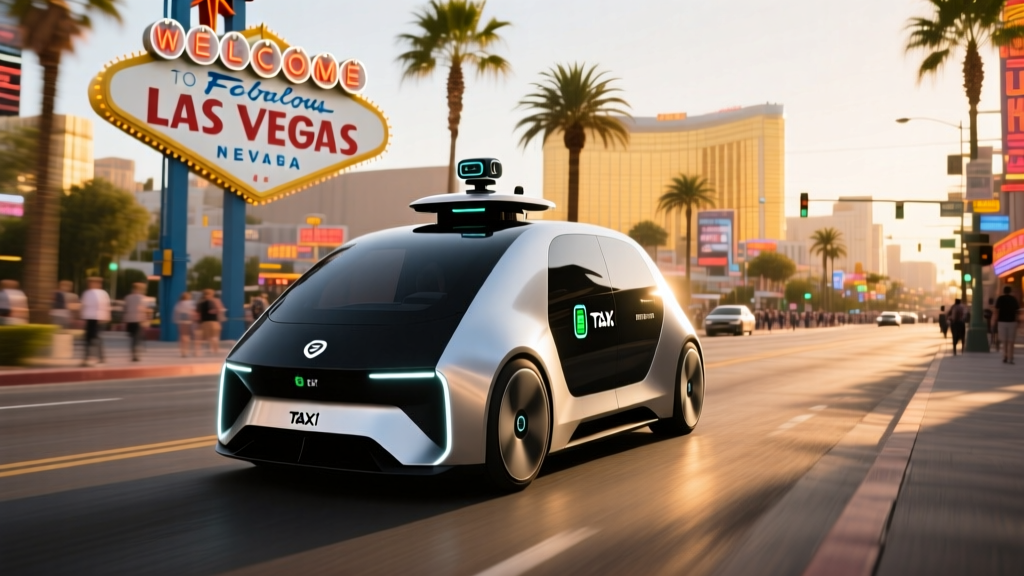
| Las Vegas, NV | ✅ Active | Public rides (free promotional periods) | Las Vegas Strip corridor and surrounding areas; primary public testing ground |
| San Francisco, CA | ✅ Active | Employee + invited riders; expanding public access | Dense urban environment; limited geofence zones |
| Foster City, CA | ✅ Active | Employee + early-access riders | Zoox HQ suburb; lower-complexity testing zone |
| Austin, TX | ⚠️ Testing / Limited | Internal testing, select invitees | Announced expansion market; not yet open to general public |
| Seattle, WA | ⚠️ Announced | Future market | Amazon HQ proximity; timeline TBD |
Key distinction: Unlike Waymo One, which is broadly available to the public in Phoenix, San Francisco, and Los Angeles, Zoox access is still partially gated. Las Vegas is the most accessible city for general riders. If you're planning a trip specifically to ride Zoox, check the Zoox ride page for current availability before booking.
The Zoox Vehicle: Purpose-Built EV Specs
Zoox's Gen 3 vehicle is unlike anything else on the road. It's a compact, symmetrical pod that can drive equally well in either direction — no "front" or "back." Four passengers sit face-to-face in a carriage configuration.
| Specification | Detail |
|---|---|
| Vehicle Type | Purpose-built robotaxi (no steering wheel/pedals) |
| Seating | 4 passengers (facing each other) |
| Drivetrain | Dual-motor AWD, fully electric |
| Battery | Estimated ~75–85 kWh usable (NMC chemistry) |
| Top Speed | 75 mph (electronically limited) |
| Bidirectional Driving | Yes — symmetrical design, no traditional front/rear |
| Crash Safety | FMVSS exemption petition filed; purpose-built crumple zones |
| Accessibility | Wheelchair-accessible variant in development |
The bidirectional design is more than a novelty. It allows the vehicle to navigate tight urban spaces and dead-end situations without performing multi-point turns — a practical advantage in dense city environments where robotaxis operate.
Technology Stack: How Zoox Sees the World
Sensor Suite — Multi-Modal Redundancy
Zoox uses a lidar-first, multi-sensor approach, which contrasts sharply with Tesla's camera-only ("Tesla Vision") strategy. The Gen 3 vehicle carries:
- LiDAR: Multiple solid-state and spinning lidar units providing 360° 3D point-cloud mapping out to ~150+ meters
- Cameras: Dozen+ high-resolution cameras covering 360° for object classification, traffic-light reading, and sign recognition
- Radar: Multiple radar units for velocity detection and performance in rain/fog where lidar degrades
- Microphones: External audio sensors to detect emergency vehicle sirens
Geofencing: Zoox operates within a predefined Operational Design Domain (ODD). The vehicle has HD maps of every street it drives and will not operate outside its approved zone. If GPS or localization confidence drops, the vehicle safely pulls over.
Compute: Custom onboard AI compute platform running Zoox's proprietary perception, prediction, and planning stack — no reliance on remote teleoperators for real-time driving decisions, though remote assistance is available for edge-case resolution.
The lidar-versus-camera debate is one of the most contentious in autonomous driving. Zoox's position — shared by Waymo and most robotaxi developers — is that lidar's precise depth measurement provides a safety-critical redundancy that cameras alone cannot match, especially in low-light conditions. Tesla remains the notable outlier with its vision-only approach for FSD (Supervised), which operates at Level 2 and requires driver attention.
Pricing: Zoox vs. Uber, Lyft, and Waymo
As Zoox scales its public service, pricing strategy is a key competitive lever. Here's how robotaxi fares compare to traditional rideshare in the markets where they overlap:
| Service | Base Fare | Per-Mile Rate | Typical 5-Mile Ride | Notes |
|---|---|---|---|---|
| Zoox | Free (promotional) / TBD | $0 (promotional periods) | $0–$15 est. | Zoox has offered free rides during launch phases; long-term pricing unannounced |
| Waymo One | ~$5–8 | ~$1.50–2.50/mi | $12–20 | Comparable to UberX; surge pricing less common |
| UberX | ~$3–5 | ~$1.25–2.00/mi | $10–15 | Varies heavily by city, time, and demand |
| Lyft | ~$3–5 | ~$1.20–1.90/mi | $9–14 | Similar variability to Uber |
What to expect long-term: Robotaxi operators have publicly stated their goal is to undercut rideshare pricing once they achieve sufficient fleet density and remove the human-driver cost (which represents roughly 60–75% of an Uber/Lyft fare). Zoox, backed by Amazon's deep pockets and logistics expertise, is positioned to compete aggressively on price — but sustainable per-ride economics at scale remain unproven across the industry.
Safety Record: What the Data Actually Shows
⚠️ Robotaxi Safety — Context Matters
Autonomous vehicle safety data is reported differently by each operator and state. California's DMV requires annual disengagement reports (how often a human safety operator had to take over), while NHTSA mandates crash reporting for vehicles with automated driving systems. Direct comparisons between operators require careful normalization.
Here is what is publicly known about Zoox's safety performance:
- Testing miles: Zoox has accumulated hundreds of thousands of autonomous miles across its test fleet in California and Nevada, though it trails Waymo's 30+ million driverless miles by a wide margin.
- Disengagement rate: In California DMV disengagement reports, Zoox has reported improving rates year over year, though the company's total autonomous miles in California are smaller than Waymo's or Cruise's historical figures, making direct rate comparisons less statistically meaningful.
- Crash incidents: As of early 2026, Zoox has not been involved in a publicly reported serious-injury crash during autonomous operations. Minor low-speed contact incidents during testing have been reported to NHTSA as required — typical for any fleet accumulating urban test miles.
- No driver, no distraction: A key safety argument for Level 4 robotaxis is the elimination of human-driver impairment, fatigue, and distraction — factors in roughly 94% of crashes according to NHTSA data.
Honest caveat: Zoox's fleet is smaller and has driven fewer public miles than Waymo. That means its safety dataset is less statistically robust. A clean record over 200,000 miles is encouraging but not equivalent to Waymo's record over 30 million miles. As Zoox scales, its safety data will become more meaningful — and more scrutinized.
Regulatory Landscape: Who Approves Robotaxi Operations?
Robotaxi deployment in the United States is governed by a patchwork of state and local regulations — there is no single federal "robotaxi license." Here's how the approval chain works:
- California (CPUC + DMV): The California Public Utilities Commission issues permits for passenger-carrying robotaxi services, while the DMV handles testing permits and disengagement reporting. Zoox holds both testing and limited commercial permits.
- Nevada (DMV + local authorities): Nevada was one of the first states to pass autonomous-vehicle legislation. Las Vegas and Clark County coordinate with operators on geofence boundaries and operational rules.
- Federal (NHTSA): The National Highway Traffic Safety Administration sets Federal Motor Vehicle Safety Standards (FMVSS). Because the Zoox vehicle has no steering wheel, Zoox petitioned NHTSSA for an FMVSS exemption — a necessary step for any purpose-built driverless vehicle. NHTSA also mandates crash and incident reporting for all ADS-equipped vehicles via its Standing General Order.
- Texas, Washington, and expansion states: Each state has its own legislative framework. Texas has relatively permissive AV laws, while other states require new legislation before commercial robotaxi service can begin.
The regulatory environment is evolving. The Zoox FMVSS exemption petition is a landmark case — its approval or conditions will set precedent for every future purpose-built robotaxi.
Current Limitations: What Zoox Cannot Do
🚫 Operational Limitations — Non-Negotiable Realities
Level 4 autonomy is powerful but bounded. Here is what Zoox currently cannot do:
- Geofence boundaries: The vehicle will not drive outside its mapped, approved operational area. Request a ride outside the zone, and the app simply won't offer it.
- Severe weather: Heavy rain, fog, or snow degrades lidar and camera performance. Zoox, like other robotaxi operators, may suspend service or restrict operations during adverse weather. The vehicle will pull over safely if conditions deteriorate mid-ride.
- Construction zones: Unmapped lane closures, temporary barriers, and flaggers remain challenging. The vehicle may reroute or stop and request remote assistance.
- Highway driving: Most current robotaxi geofences are limited to surface streets. Zoox's 75 mph top speed supports some faster corridors, but full freeway operation in dense traffic is a higher-complexity challenge that expands gradually.
- Pick-up/drop-off precision: The vehicle uses designated or mapped stop locations. It cannot pull into an unmapped driveway or navigate a private parking garage.
- No human override: There are no steering wheels or pedals. If you need to change the route mid-ride, you do so through the in-vehicle interface or customer support — you cannot "take over."
Zoox vs. Waymo: The Robotaxi Landscape in 2026
Zoox is not the only player. Understanding how it compares to the market leader helps set realistic expectations:
| Attribute | Zoox (Amazon) | Waymo (Alphabet) |
|---|---|---|
| Vehicle | Purpose-built bidirectional pod | Retrofitted Jaguar I-PACE (Geely partnership for next-gen) |
| SAE Level | Level 4 (geofenced) | Level 4 (geofenced) |
| Public Cities (2026) | Las Vegas (primary), SF (expanding) | Phoenix, San Francisco, Los Angeles, Austin (expanding) |
| Fleet Size | Hundreds of vehicles | 1,000+ vehicles |
| Driverless Miles | Hundreds of thousands | 30+ million |
| Pricing | Free/promotional; TBD long-term | Comparable to UberX |
| Parent Company | Amazon | Alphabet (Google) |
| Sensor Approach | LiDAR + cameras + radar | LiDAR + cameras + radar |
The bottom line: Waymo is further ahead in commercial scale, fleet miles, and geographic coverage. Zoox's advantage is its purpose-built vehicle — designed from scratch for driverless operation rather than adapted from a human-driven car. If Amazon's logistics expertise and capital can accelerate Zoox's fleet scaling, the competitive gap could narrow. But as of 2026, Waymo is the robotaxi you're most likely to actually ride.
Frequently Asked Questions
Is Zoox truly self-driving or is there a human driver?
Zoox operates at SAE Level 4 — fully driverless within its geofenced service area. There is no steering wheel, no pedals, and no human safety driver on board. Remote support staff can assist with edge-case resolution but do not "drive" the vehicle in real time.
How much does a Zoox ride cost compared to Uber?
During promotional launch periods, Zoox has offered free rides. Long-term pricing has not been publicly announced. Industry analysts expect robotaxi fares to eventually undercut UberX by 20–40% once operators achieve fleet density and eliminate driver costs, but sustainable unit economics remain unproven across the sector.
Where can I ride a Zoox robotaxi today?
Las Vegas is the most accessible city for public Zoox rides. San Francisco and Foster City have limited access primarily for employees and invited riders. Austin and Seattle are announced expansion markets but are not yet open to the general public. Check zoox.com for the latest availability.
How safe are Zoox robotaxis?
Zoox has not been involved in a publicly reported serious-injury crash during autonomous operations. However, its fleet has driven far fewer public miles than Waymo, making its safety dataset less statistically robust. All incidents are reported to NHTSA as required. The broader safety case for Level 4 robotaxis rests on eliminating human impairment and distraction — factors in the vast majority of crashes.
What happens if the Zoox vehicle encounters a situation it can't handle?
The vehicle is programmed to bring itself to a safe stop (pull over or stop in place) rather than hand control to a passenger. Remote support can then assess the situation and either guide the vehicle through the scenario or dispatch assistance.
Can I use Zoox in bad weather?
Heavy rain, fog, or snow can degrade sensor performance. Like other robotaxi operators, Zoox may restrict or suspend service during adverse weather. If conditions worsen during a ride, the vehicle will safely pull over.
Will Amazon use Zoox for delivery?
Amazon has not publicly detailed delivery-specific plans for the Zoox vehicle platform, but the strategic overlap with Amazon's last-mile logistics network is widely analyzed. The purpose-built vehicle architecture could theoretically be adapted for cargo, though passenger robotaxi service remains the primary focus as of 2026.