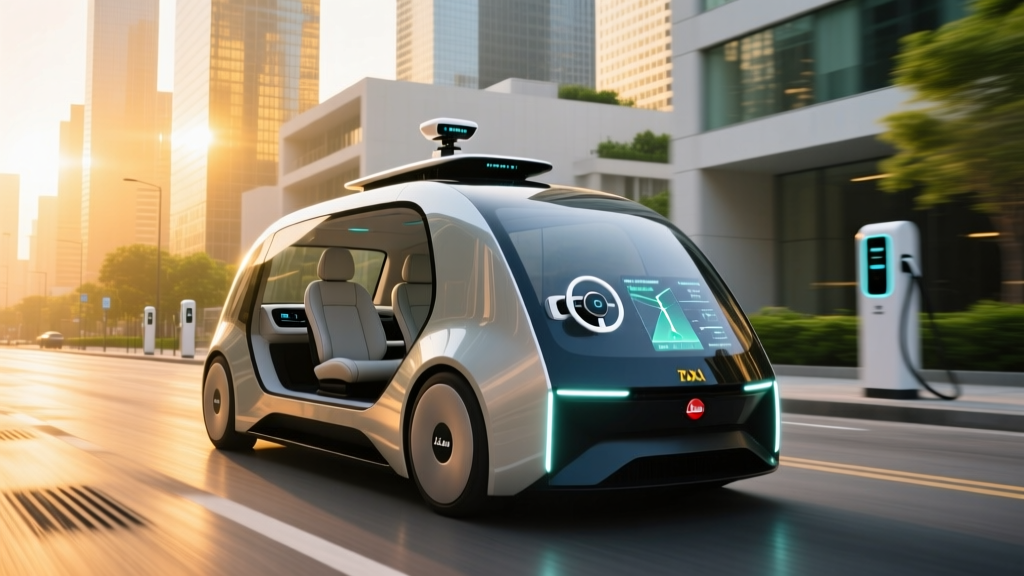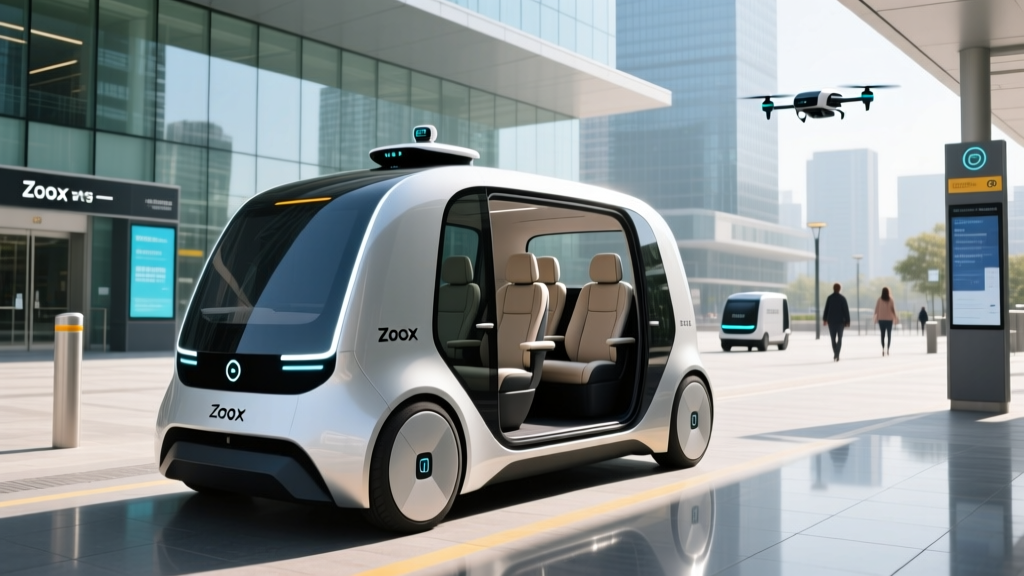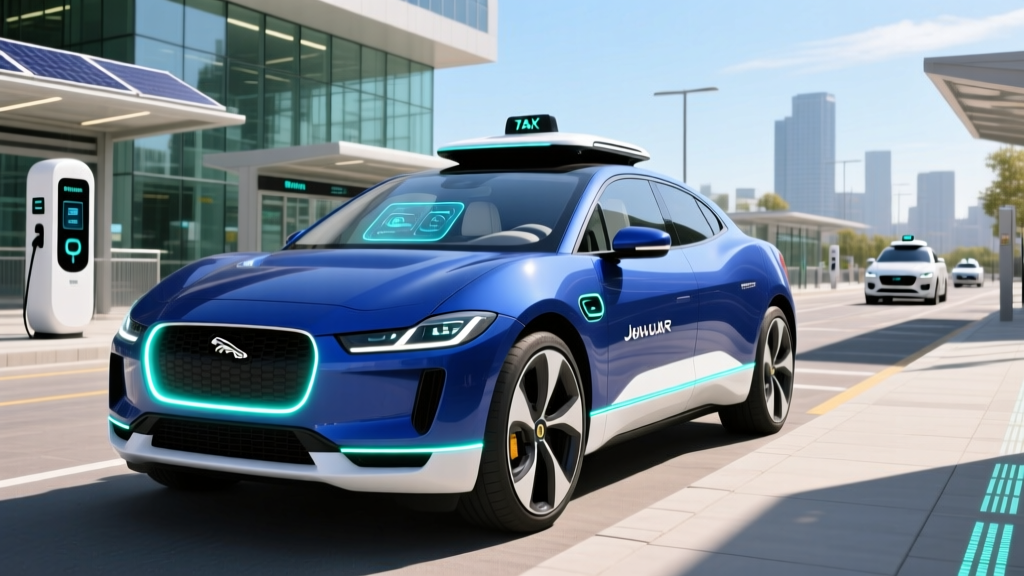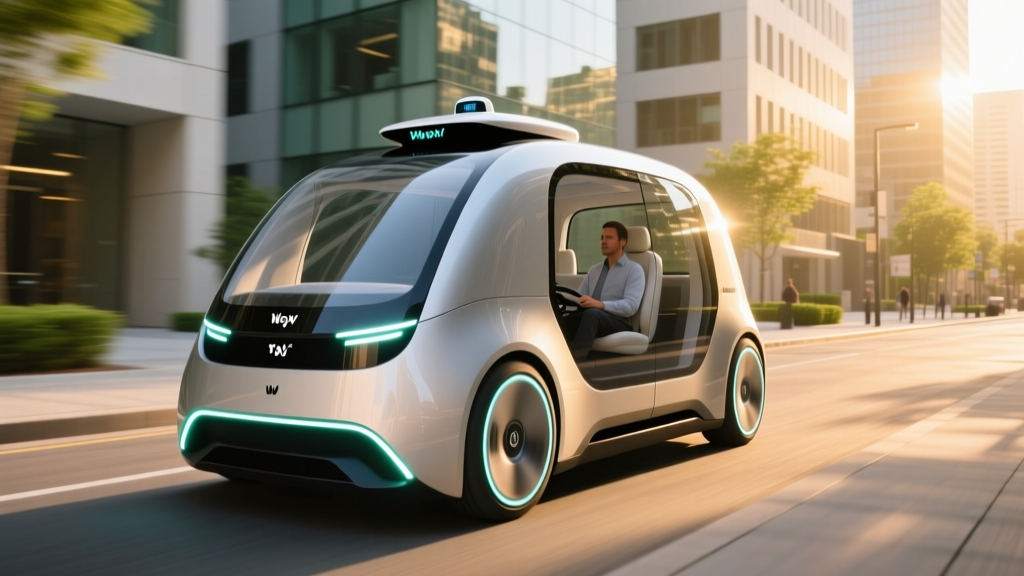
The question surfaces in every EV and mobility discussion: will Waymo replace Uber? Alphabet's autonomous vehicle division has logged millions of driverless miles across several U.S. cities, and its expansion roadmap stretches into 2026 and beyond. But replacing a global rideshare network that completes roughly 25 million trips per day requires more than impressive technology — it demands unit economics, regulatory clearance, and operational scale that no robotaxi company has yet achieved.
This analysis breaks down Waymo's current footprint, real safety data, pricing versus Uber and Lyft, the technology stack that makes Level 4 autonomy possible, and the hard limitations that keep the "replace Uber" scenario firmly in the future. If you're weighing whether robotaxis are a viable daily alternative or still a novelty, the numbers below tell the real story.
SAE Automation Levels: Why Waymo Is Fundamentally Different From Tesla FSD
Before comparing Waymo to Uber, we need to establish what Waymo actually is — because the autonomy conversation is plagued by conflated terminology. The Society of Automotive Engineers (SAE) defines six levels of driving automation, and the gap between Level 2 and Level 4 is not incremental; it's categorical.
| Level | Name | Who Drives | Examples |
|---|---|---|---|
| 0 | No Automation | Human | Legacy vehicles |
| 1 | Driver Assistance | Human | Adaptive cruise control |
| 2 | Partial Automation | Human (must supervise) | Tesla Autopilot, GM Super Cruise, Ford BlueCruise |
| 3 | Conditional Automation | System (human fallback) | Mercedes DRIVE PILOT (limited markets) |
| 4 | High Automation | System (no driver needed in ODD) | Waymo One, Zoox |
| 5 | Full Automation | System (all conditions) | Does not exist commercially |
Waymo operates at SAE Level 4. This means the vehicle handles all driving tasks within its Operational Design Domain (ODD) — a defined geographic and environmental envelope — with no human driver present and no expectation of human intervention. If the system encounters a scenario it cannot handle, it executes a minimal-risk maneuver (pulling over safely) rather than handing control to a passenger.
Tesla's Full Self-Driving (Supervised), GM's Super Cruise, and Ford's BlueCruise are all SAE Level 2 systems. The driver must remain attentive and is legally responsible for the vehicle at all times. Calling these "self-driving" is both technically incorrect and dangerous. Waymo's vehicles have no steering wheel accessible to passengers. The distinction is not semantics — it defines liability, regulatory oversight, and what you as a rider actually experience.
Where Can You Actually Ride a Waymo Robotaxi Right Now?
Waymo's commercial service, Waymo One, is not a nationwide network. It operates within tightly defined geofenced zones in specific cities. As of early 2026, here is the operational landscape:
| City | Status | Service Area Notes |
|---|---|---|
| Phoenix, AZ (Metro) | Fully commercial, open to public | Largest coverage area; includes Chandler, Tempe, Mesa, Scottsdale, and expanding Phoenix proper zones. Airport service (PHX) available. |
| San Francisco, CA | Fully commercial, open to public | Most of the city covered; highway driving enabled on select corridors. SFO airport trips available. |
| Los Angeles, CA | Fully commercial, open to public | Downtown LA, Hollywood, Santa Monica, Westside, and expanding. LAX airport service launched. |
| Austin, TX | Commercial service launched | Initial geofence covers central Austin and select suburban corridors. Expansion ongoing through 2026. |
| Atlanta, GA | Announced / early rollout | Partnership with Uber for initial availability. Limited geofence at launch. |
Waymo has announced intentions to expand to additional cities, but announced expansion is not live service. If you're outside these metro areas, Waymo One is not an option today. Compare this to Uber, which operates in over 10,000 cities globally. The scale gap is enormous and is the single biggest reason Waymo will not replace Uber in any near-term scenario.
How Much Does Waymo Cost vs. Uber and Lyft?
Robotaxi pricing has evolved as Waymo moved from free promotional rides to sustainable commercial rates. Here's how Waymo One fares compare to equivalent Uber and Lyft rides in the same markets, based on typical 2026 pricing:
| Route Example | Waymo One | UberX | Lyft Standard |
|---|---|---|---|
| 5-mile urban trip (SF) | $12–$16 | $11–$18 | $10–$17 |
| 10-mile trip (Phoenix) | $18–$25 | $16–$24 | $15–$22 |
| Airport run (LAX, 15 mi) | $30–$42 | $28–$45 | $26–$40 |
| Surge pricing | No surge multipliers | 1.5x–3.0x common | 1.3x–2.5x common |
The key takeaway: Waymo's base fares are competitive with standard UberX and Lyft rides — sometimes slightly higher, sometimes slightly lower depending on the market and time of day. Where Waymo wins is surge pricing predictability. Because Waymo doesn't rely on human drivers who go home during peak demand, it doesn't apply the 2x or 3x surge multipliers that Uber and Lyft use to incentivize driver availability. During high-demand periods (bar close, rainstorms, major events), a Waymo can be significantly cheaper.
However, Waymo's fleet size is a fraction of Uber's driver pool. Wait times in Waymo markets typically range from 5 to 15 minutes — sometimes longer during peak periods when vehicle supply is exhausted. Uber and Lyft can usually deliver a car in 2–7 minutes in the same areas. You trade surge pricing for availability constraints.
How Safe Are Robotaxis? The Real Data
Safety is the most scrutinized and most misrepresented aspect of autonomous vehicles. Marketing claims of "safer than humans" require context. Here's what the data actually shows.
Waymo Safety Record — Key Data Points
- Total fully autonomous miles driven: Over 40 million driverless miles as of early 2026 (source: Waymo Safety Report).
- Injury-causing crash rate: Waymo's driverless vehicles showed approximately 85% fewer injury-causing crashes per million miles compared to human benchmarks in comparable urban environments, per Waymo's published analysis reviewed against NHTSA data.
- Contact rate: Waymo vehicles make contact with objects or other vehicles at roughly 5.5 times less frequently than human drivers in the same operating domains, according to Waymo's comparison methodology.
- Notable incidents: Waymo vehicles have been involved in minor collisions (typically low-speed, other-party-at-fault in urban traffic), and a small number of incidents involving construction zones, illegally parked vehicles, and pedestrian edge cases have been reported to NHTSA under standing General Orders.
These numbers are encouraging but require nuance. Waymo operates in geofenced, mapped urban environments with favorable weather (Phoenix is dry and sunny; San Francisco is mild). The comparison baseline — human drivers — includes a wide range of impairment, distraction, and inexperience. Waymo's advantage is consistency: it never texts, never drinks, never fatigues. But it also encounters scenarios that confuse it in ways a human would not — a police officer using hand signals, an unusual construction detour, or a child darting between parked cars in fog.
The NHTSA Standing General Order requires all companies testing or deploying automated driving systems to report crashes involving their vehicles. This data is publicly available and is the most reliable source for incident tracking. Waymo's report rate per million miles is lower than human benchmarks, but the sample size (tens of millions of miles vs. trillions of human-driven miles annually) means statistical confidence intervals remain wide.
The Technology Stack: Lidar, Cameras, and Why Tesla's Approach Differs
Waymo's sixth-generation autonomous driving system, deployed on the Zeekr RT (a purpose-built electric van) and retrofitted Jaguar I-PACE vehicles, uses a multi-sensor fusion approach:
Waymo's Sensor Suite (6th-Gen)
- Lidar: Multiple roof-mounted and side-mounted lidar units providing 360° high-resolution 3D point clouds. Lidar excels at precise distance measurement regardless of lighting conditions.
- Cameras: High-resolution camera array covering all directions, used for lane detection, traffic signal recognition, pedestrian classification, and reading signs.
- Radar: Imaging radar units for velocity detection of moving objects, performance in rain and fog where lidar and cameras degrade.
- Audio sensors: External microphones that detect sirens from emergency vehicles approaching from any direction.
- HD Maps: Pre-built centimeter-accurate maps of every operational zone. The vehicle localizes itself within these maps in real-time.
This is fundamentally different from Tesla's camera-only approach (sometimes called "Tesla Vision"). Tesla argues that cameras plus neural networks can replicate human vision sufficiently for autonomy. Waymo's position — shared by Zoox, Cruise (now paused), and most commercial robotaxi operators — is that sensor redundancy is essential for safety-critical systems. If a camera is blinded by sun glare, lidar still sees. If rain scatters lidar returns, radar still tracks the car ahead.
The trade-off is cost. Waymo's sensor suite on each vehicle is estimated to add $30,000–$50,000+ in hardware (declining with each generation), plus the expense of building and maintaining HD maps for every city. Tesla's camera-only hardware costs a fraction of that. This cost difference is central to the scalability question: Waymo needs each vehicle to generate significant daily revenue to justify the capital expenditure, while Tesla's approach — if it ever reaches Level 4 reliability — could theoretically scale faster at lower per-unit cost.
Regulatory Landscape: Who Decides Where Robotaxis Can Operate?
Robotaxi deployment in the United States is governed by a patchwork of state and local regulations. There is no single federal license to operate a driverless commercial service nationwide.
- California: The California Public Utilities Commission (CPUC) and the California DMV both regulate autonomous vehicle operations. Waymo holds a CPUC permit for commercial passenger service and a DMV deployment permit. San Francisco oversight involves the SF Municipal Transportation Agency (SFMTA) for street operations.
- Arizona: Arizona has been the most permissive state for AV testing and deployment. Waymo operates under a relatively light regulatory framework with executive-order-level support from the governor's office.
- Texas: Austin and other Texas cities allow AV operations under state law (HB 3167), with local coordination for geofencing and traffic integration.
- Federal (NHTSA): The National Highway Traffic Safety Administration sets vehicle safety standards and requires crash reporting but does not currently issue operational permits for robotaxi services. Federal legislation for a unified AV framework has stalled repeatedly in Congress.
The practical effect: Waymo must negotiate entry into each new city individually, working with state regulators, local transportation authorities, and sometimes city councils. This is a slow, political process — not a software update. Uber, by contrast, enters new markets by onboarding local drivers and navigating a much simpler licensing process. The regulatory moat is a major structural barrier to Waymo scaling at Uber's pace.
Current Limitations: What Waymo Cannot Do
Understanding what robotaxis can't do is as important as knowing what they can. Waymo's Level 4 system operates within a defined ODD, and stepping outside that envelope is not an option.
Operational Limitations of Waymo One (2026)
- Geofencing: You can only request rides within the mapped service area. A trip from downtown San Francisco to Tahoe? Not possible. The vehicle will not drive outside its ODD.
- Weather restrictions: Heavy rain, dense fog, snow, and ice degrade sensor performance. Waymo reduces service or suspends operations in severe weather. Phoenix's dry climate is an advantage; expanding to Chicago or Minneapolis would require solving winter driving.
- Construction zones: While Waymo handles many construction scenarios, major unplanned detours, temporary lane closures not yet in the HD map, and flaggers with hand signals remain challenging edge cases.
- No intercity or highway (limited): Waymo has enabled highway driving on select corridors (e.g., portions of I-280 in SF, I-10 in Phoenix), but long-distance highway routes are not part of the service model. This is an urban and suburban last-mile solution.
- Accessibility gaps: Waymo's current vehicles (Jaguar I-PACE, Zeekr RT) have limitations for wheelchair users and passengers requiring assistance. The company has stated accessibility is a priority, but current fleet options are not fully ADA-compliant for all disability types.
- Fleet capacity: With a few thousand vehicles across all markets, Waymo cannot match the on-demand availability of Uber's millions of gig-economy drivers. Peak demand means longer waits or unavailability.
- No stops or multi-destination trips: Unlike Uber, you generally cannot add intermediate stops (pick up a friend, grab food). The ride is point A to point B.
The Unit Economics: Can Waymo Actually Make Money?
This is the question that determines whether Waymo replaces Uber or remains a niche service. The economics of robotaxis involve a fundamental trade-off:
Waymo's advantages: No driver pay (the largest cost in rideshare — Uber pays roughly 70–80% of each fare to the driver). Vehicles can operate 20+ hours per day with only charging and maintenance downtime. No surge pricing needed to attract supply.
Waymo's costs: Vehicle hardware ($50,000–$80,000+ per unit including sensors). Remote assistance operators (Waymo employs fleet monitors who can intervene or advise vehicles remotely). HD map creation and maintenance per city. Sensor calibration and specialized maintenance. Insurance and liability reserves. Charging infrastructure for fleet vehicles.
Industry analysts estimate that Waymo needs each vehicle to complete roughly 15–25 rides per day to reach profitability, depending on average ride length and pricing. In Phoenix and San Francisco, high-utilization vehicles are reportedly approaching or exceeding this threshold. But this is in the most favorable markets with the most mature operations.
Uber's model, while unprofitable for years, has reached operating profitability by keeping capital expenditure low — drivers own and maintain their own vehicles. Waymo owns the entire stack. Scaling to 50,000 vehicles across 20 cities would require tens of billions in capital. Alphabet has the balance sheet to fund this, but the return timeline stretches well into the 2030s.
So — Will Waymo Replace Uber?
The honest answer: not in the foreseeable future, but it doesn't need to.
Waymo and Uber are increasingly partners rather than competitors. In late 2024 and into 2025–2026, Waymo began integrating with the Uber app in select markets — meaning you can request a Waymo robotaxi through Uber's platform. This hybrid model lets Uber offer autonomous rides where available while maintaining its human-driver network everywhere else. Waymo benefits from Uber's massive user base and demand-generation engine without building its own rider acquisition funnel from scratch.
The realistic trajectory for 2026–2030 is a layered mobility ecosystem: Waymo and other robotaxi operators (Zoox, potentially a revived Cruise, and Chinese operators like Baidu Apollo) serve dense urban cores in favorable-weather cities. Uber and Lyft continue to handle suburbs, intercity trips, bad-weather days, and the vast geographic areas where robotaxis don't operate. The two models coexist, with the robotaxi share growing gradually as technology improves, costs decline, and regulatory frameworks mature.
For riders in Phoenix, San Francisco, Los Angeles, and Austin, Waymo is already a viable alternative to Uber for many trips — often at comparable prices, with no surge multipliers, and a genuinely novel experience. For everyone else, Uber isn't going anywhere.
Frequently Asked Questions
Is Waymo truly self-driving, or is there a remote human driver?
Waymo vehicles are truly driverless — there is no human behind the wheel, and no remote operator "driving" the car in real-time. Remote assistance operators monitor the fleet and can provide guidance in unusual situations (e.g., confirming it's safe to proceed past a complex construction zone), but they do not steer, accelerate, or brake the vehicle. The onboard AI system makes all real-time driving decisions. This is what distinguishes SAE Level 4 from teleoperation.
Can I use Waymo if I'm visiting from out of town?
Yes. Waymo One is open to the public in its operational cities. You download the Waymo app (or use Uber's app in integrated markets), create an account, and request a ride within the geofenced service area. No waitlist is required in most markets as of 2026, though some zones may have limited availability during peak times.
What electric vehicles does Waymo use?
Waymo's current fleet consists primarily of the Jaguar I-PACE (a battery-electric SUV with a 90 kWh battery and EPA range of approximately 234 miles) and the newer Zeekr RT, a purpose-built electric robotaxi van designed in partnership with Geely's Zeekr brand. The Zeekr RT features a lower floor, wider doors, and no driver's seat, optimizing for rider comfort and accessibility. Both vehicles use the NACS connector standard for DC fast charging at Waymo's depot chargers.
How does Waymo handle accidents or emergencies?
If a Waymo vehicle is involved in a collision, it automatically contacts Waymo's fleet response team and, when appropriate, emergency services. The vehicle pulls over safely if able. Riders can communicate with a live support agent through the in-vehicle screen at any time. All incidents are reported to NHTSA under the Standing General Order for automated vehicle crash reporting. Waymo's insurance covers rider liability — you are not responsible for damages to the vehicle.
Is Waymo cheaper than Uber at night or during events?
Often yes. Waymo does not use surge pricing, so a ride at 2 AM or during a concert costs roughly the same as midday. Uber and Lyft frequently apply 1.5x to 3.0x multipliers during these periods. However, Waymo's smaller fleet means you may wait longer or find no vehicles available during extreme demand spikes.
Will Waymo expand to my city?
Waymo has announced expansion plans through 2026 and beyond, with additional U.S. cities in evaluation. International expansion has not been announced. Cities with favorable weather, grid-like street layouts, and supportive regulatory environments are prioritized. Check Waymo's official site for the latest service area updates.