The Real Reason Waymo Rides Cost More Than Rideshare
If you've opened the Waymo One app in Phoenix, San Francisco, or Los Angeles and compared a quote to Uber or Lyft, you've likely noticed: Waymo rides often run 20–50% higher for the same route. A 5-mile trip that costs $14 on UberX might ring up at $19–$22 on Waymo. For a technology company promising to democratize transportation, that premium raises a fair question — why is Waymo so expensive?
The answer isn't simple price gouging. Waymo's pricing reflects the staggering capital cost of Level 4 autonomous vehicle infrastructure, sensor hardware, remote fleet operations, and regulatory compliance that no conventional rideshare platform carries. This article breaks down exactly where the money goes, how Waymo's fares compare to Uber and Lyft in real cities, and whether the premium is worth it.
Understanding Waymo's Autonomy Level: SAE Level 4, Not Driver-Assist
Before evaluating cost, it's essential to understand what you're paying for. Waymo operates a fully driverless commercial robotaxi service — meaning no human behind the wheel, no remote teleoperator steering the vehicle in real time. This is a fundamentally different technology class from Tesla's FSD (Supervised), GM's Super Cruise, or Ford's BlueCruise.
SAE Automation Levels: Where Waymo Sits
| SAE Level | Name | Driver Required? | Examples |
|---|---|---|---|
| Level 2 | Partial Automation | Yes — hands on or eyes on at all times | Tesla Autopilot, FSD (Supervised), GM Super Cruise, Ford BlueCruise |
| Level 3 | Conditional Automation | Yes — but can disengage in limited conditions | Mercedes DRIVE PILOT (limited markets, under 40 mph) |
| Level 4 | High Automation | No — within a defined operational design domain (ODD) | Waymo One, Zoox (pilot programs) |
| Level 5 | Full Automation | No — anywhere, any condition | Does not yet exist commercially |
Waymo operates at SAE Level 4: fully autonomous within a geofenced operational design domain (specific mapped areas, specific weather conditions, specific speeds). The vehicle handles all driving tasks without a human fallback. This is the critical distinction — Level 2 systems like Tesla FSD still require an attentive driver and are not robotaxis, regardless of marketing language.
Where Can You Actually Use Waymo Right Now?
Waymo's service footprint has expanded steadily but remains limited to specific metro areas. As of early 2026, here's where Waymo One operates commercially:
| City | Service Area | Status | Approximate Coverage |
|---|---|---|---|
| Phoenix, AZ | Greater Phoenix metro (Chandler, Tempe, Mesa, Scottsdale, parts of downtown Phoenix) | Fully commercial, open to public | ~300+ sq mi |
| San Francisco, CA | Most of SF proper, expanding into parts of Daly City and South Bay | Fully commercial, open to public | ~100+ sq mi |
| Los Angeles, CA | Santa Monica, Beverly Hills, Hollywood, downtown LA, LAX airport service | Fully commercial, open to public | ~80+ sq mi |
| Austin, TX | Limited pilot zones (announced expansion) | Early rider / limited commercial | Expanding |
Outside these geofenced zones, Waymo vehicles will not accept ride requests. The vehicles rely on high-definition pre-mapped routes, and the operational design domain (ODD) is strictly enforced. If your destination falls outside the mapped area, the app won't let you book.
Waymo vs. Uber vs. Lyft: Real Pricing Comparison
To answer the core question — why is Waymo so expensive — we need to compare actual fares. Below is a representative pricing snapshot based on typical rides in Waymo's primary markets. Note that all rideshare and robotaxi pricing fluctuates with demand, time of day, and route specifics.
| Route (Approximate) | Distance | UberX | Lyft Standard | Waymo One |
|---|---|---|---|---|
| SF: Mission District → Fisherman's Wharf | ~5 mi | $14–$18 | $13–$17 | $19–$25 |
| Phoenix: Chandler → Sky Harbor Airport | ~15 mi | $28–$35 | $26–$33 | $38–$48 |
| LA: Santa Monica → LAX | ~8 mi | $20–$26 | $19–$25 | $27–$35 |
| SF: Sunset → Downtown (off-peak) | ~7 mi | $16–$21 | $15–$20 | $22–$29 |
The Waymo premium typically falls in the 30–50% range over standard UberX or Lyft rides. During rideshare surge pricing, the gap sometimes narrows — Waymo does not implement traditional surge multipliers the way Uber and Lyft do, which can make it comparatively cheaper during extreme demand spikes (New Year's Eve, major events). But for routine rides at normal times, Waymo costs more.
What's Driving the Higher Fare?
Several cost layers unique to robotaxi operations explain the premium:
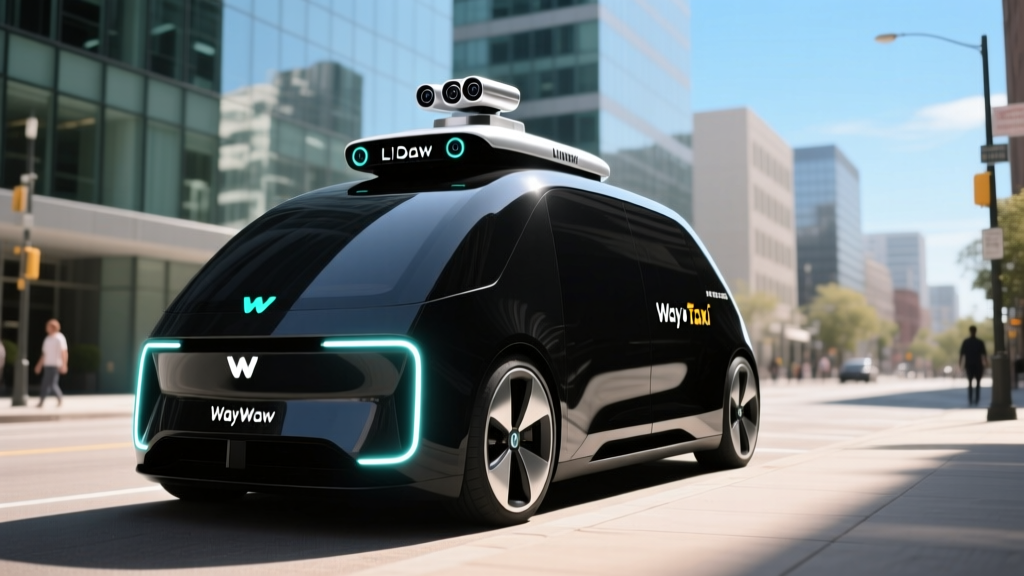
- Vehicle hardware: Each Waymo 6th-generation Jaguar I-PACE is equipped with a sensor suite that adds an estimated $30,000–$50,000+ in hardware above the base vehicle cost. That includes custom lidar units, radar arrays, cameras, and redundant computing systems.
- Fleet operations: Waymo employs remote fleet responders (not steering the car, but monitoring and resolving edge cases), field technicians for sensor calibration and maintenance, and specialized cleaning/disinfection crews between rides.
- HD mapping infrastructure: Every mile of Waymo's service area is pre-mapped at centimeter-level precision using lidar scans. Maintaining and updating these maps as construction, lane changes, and signage evolve is an ongoing cost.
- Insurance and liability: As the entity responsible for all driving decisions, Waymo carries full liability insurance for every ride — a cost that Uber and Lyft partially offload to the driver's personal and commercial policies.
- R&D amortization: Alphabet has invested an estimated $30+ billion in Waymo since the project began as Google's self-driving car initiative in 2009. Current fares do not yet reflect a fully profitable operation.
The Technology Stack: What You're Actually Paying For
Waymo's cost structure is inseparable from its technology approach. Unlike Tesla's camera-only vision system, Waymo uses a multi-sensor fusion architecture:
Waymo 6th-Generation Sensor Suite (Jaguar I-PACE Platform)
- Lidar: Multiple custom-built lidar units providing 360° 3D point-cloud mapping at up to 500+ meter range. Lidar works independently of ambient light, critical for night driving and detecting objects camera systems may miss.
- Cameras: High-resolution camera array covering 360° with overlapping fields of view for redundancy, traffic light detection, sign reading, and lane marking identification.
- Radar: Multiple radar units for velocity detection of moving objects, performance in rain and fog where lidar and cameras degrade.
- Audio detection: External microphones to detect emergency vehicle sirens and adjust behavior accordingly.
- Redundant compute: Dual redundant onboard computing platforms — if one fails, the other can safely pull the vehicle over.
- GPS + IMU + HD maps: Precise localization combining GPS, inertial measurement units, and centimeter-accurate pre-built maps.
This sensor-heavy approach is more expensive per vehicle than camera-only systems, but it provides redundancy that regulators and safety engineers consider essential for driverless operation. Each lidar unit alone can cost thousands of dollars, though costs have been declining with each generation.
Waymo's Safety Record: What the Data Shows
The safety question is central to whether Waymo's premium is justified. Waymo has published safety data and has been subject to NHTSA scrutiny and academic analysis. Here's what the numbers indicate:
Waymo Safety Data (Through 2025)
- Total autonomous miles driven: Over 50 million fully driverless miles across all markets (cumulative through end of 2025).
- Police-reported crash rate: A NHTSA standing general order requires all ADS operators to report crashes. Waymo's reported crash rate per million miles has been lower than the human benchmark for comparable urban driving environments, according to studies by the Insurance Institute for Highway Safety (IIHS) and independent researchers.
- Injury severity: The majority of Waymo-involved incidents have been low-speed, minor-contact events (e.g., being rear-ended at a stop, minor scraping with stationary objects) — not high-speed collisions.
- Contact rate: Waymo publishes periodic safety reports showing contact rates (any physical contact with another object) that are below human benchmarks for urban driving in the same cities.
However, context matters. Waymo operates in geofenced, pre-mapped urban areas with speed limits typically under 45 mph. The system does not yet handle high-speed freeway merging at 70+ mph in all markets, severe weather, or unmapped rural roads. Comparing Waymo's safety record to human drivers on rural highways or in blizzards would be misleading — the operational domains are different.
Notable incidents have occurred: Waymo vehicles have been documented making unnecessary emergency stops in traffic, briefly entering construction zones incorrectly, and in rare cases making contact with towed vehicles or stationary trucks. NHTSA has opened investigations into specific incidents, as it does with all ADS operators. No robotaxi technology is incident-free, and Waymo's record should be evaluated against the specific conditions in which it operates.
Regulatory Landscape: Who Approves Robotaxi Operations?
Robotaxi operations in the United States are not governed by a single federal license. Instead, a patchwork of state and local authorities grants permission:
- California (CPUC + DMV): The California Public Utilities Commission (CPUC) issues permits for commercial passenger service, while the California DMV issues autonomous vehicle testing and deployment permits. Waymo holds both.
- Arizona: Arizona has taken a permissive regulatory stance since 2015, with minimal state-level barriers to autonomous vehicle testing and commercial operation. The Arizona Department of Transportation oversees the program.
- Federal (NHTSA): The National Highway Traffic Safety Administration sets vehicle safety standards and requires crash reporting via Standing General Orders, but does not currently "approve" ADS software. NHTSA can investigate and order recalls of ADS systems.
- Local municipalities: Cities often negotiate directly with operators on issues like curb management, emergency response protocols, and accessibility requirements.
This fragmented regulatory environment adds cost. Waymo must maintain compliance teams, legal staff, and government affairs operations in each jurisdiction — overhead that Uber and Lyft don't carry at the same level per city.
Current Limitations: What Waymo Still Cannot Do
Despite being the most commercially deployed Level 4 robotaxi in the U.S., Waymo has significant operational constraints that riders should understand before paying the premium:
Known Limitations
- Geofencing: You cannot ride outside the pre-mapped service area. If your trip crosses the boundary, the app won't allow booking.
- Weather restrictions: Heavy rain, fog, and snow degrade lidar and camera performance. Waymo may suspend or limit service during severe weather — unlike a human Uber driver who might attempt the trip.
- Freeway driving: Waymo has been expanding freeway capability (e.g., Phoenix freeway routes to the airport), but this is not available in all markets or on all routes. Many rides are surface-street only.
- Complex construction zones: While Waymo handles many construction zones, novel or rapidly changing road work can cause the vehicle to stop, reroute, or request remote assistance.
- No rural or unmapped roads: Waymo is an urban/suburban service. You cannot take it to a remote trailhead or an unmapped private driveway.
- Accessibility: Waymo has been deploying wheelchair-accessible vehicles (WAVs) in select markets, but availability is limited compared to Uber WAV or Lyft Access.
- Pickup/dropoff precision: The vehicle may stop slightly away from your exact pin, particularly in areas with bus lanes, fire hydrants, or restricted curb zones.
- Pets and extra cargo: Policies vary by market, but robotaxis generally have stricter rules about animals and large items than a human driver who can make judgment calls.
Is the Premium Worth It? A Practical Decision Framework
Whether Waymo's higher fare is justified depends on what you value:
Choose Waymo If:
- You want a consistent, predictable ride experience without variability from human driver behavior, mood, or skill.
- You prefer not to interact with a driver (no conversation, no shared space with a stranger behind the wheel).
- You're traveling during predictable demand periods when the premium over Uber/Lyft is manageable (typically 30–50%).
- You value the novelty and technological experience of a fully driverless ride.
Choose Uber/Lyft If:
- Cost is your primary concern and you want the lowest fare available.
- You need to travel outside Waymo's geofenced service area.
- You're traveling in severe weather where Waymo may be suspended but human drivers are still operating.
- You need flexibility for unusual requests (extra stops, large cargo, specific pickup instructions).
- You need freeway travel in a market where Waymo's freeway capability isn't yet enabled.
For routine point-A-to-point-B urban rides within Waymo's service area, the premium buys you a consistently clean, quiet, climate-controlled vehicle with no driver interaction. Whether that's worth an extra $5–$12 per ride is a personal calculus — but the price difference reflects real hardware, operations, and liability costs, not arbitrary markup.
Frequently Asked Questions
Why is Waymo so expensive compared to Uber?
Waymo's fares are typically 30–50% higher than UberX because each vehicle carries $30,000–$50,000+ in sensor hardware (lidar, radar, cameras), requires specialized fleet maintenance and HD map updates, carries full liability insurance (no driver to share costs), and is still amortizing billions in R&D investment. Uber and Lyft shift vehicle ownership, fuel, and partial insurance costs to independent contractors.
Does Waymo ever cost less than Uber?
Yes — during extreme surge pricing events on Uber and Lyft (major holidays, concerts, airport rushes), Waymo's non-surging fares can be cheaper. Waymo does not apply traditional surge multipliers, though it does use modest demand-based pricing adjustments. If UberX is surging 2.5x, Waymo may be the better deal.
Is Waymo truly self-driving or is there a human watching?
Waymo is SAE Level 4 — fully driverless within its operational domain. There is no human in the vehicle. Remote fleet responders monitor the fleet and can assist with edge cases (e.g., authorizing a maneuver in an unusual construction zone), but they do not steer or control the vehicle in real time. This is fundamentally different from Level 2 driver-assist systems like Tesla FSD (Supervised), which require an attentive human driver.
How safe is Waymo compared to a human Uber driver?
Waymo's published data and independent analyses suggest its police-reported crash rate per million miles is lower than the human benchmark for comparable urban driving environments. However, Waymo operates in restricted, pre-mapped, lower-speed urban areas and suspends service in severe weather — conditions where human crash rates also tend to be lower. Direct comparison to all human driving (including highways, rural roads, and bad weather) is not apples-to-apples.
Can I use Waymo at the airport?
Waymo offers airport service in select markets. Phoenix Sky Harbor (PHX) and Los Angeles International (LAX) have Waymo pickup and dropoff capability. San Francisco International (SFO) service availability depends on current operational permits and geofence boundaries. Always check the Waymo One app for real-time airport availability.
Will Waymo prices come down over time?
Waymo's leadership has indicated that scaling fleet size, reducing per-unit sensor costs with each hardware generation, and improving operational efficiency are expected to bring costs down over time. However, the company has not published a specific timeline for price parity with rideshare. Each new sensor generation has reduced hardware costs, but the full cost stack (mapping, fleet ops, insurance, R&D) means meaningful fare reductions will take years of scale.