If you've seen a vehicle navigating city streets without anyone behind the wheel, you've probably wondered: who owns robotaxi services, and how did they get permission to operate? The driverless ride-hailing landscape is shaped by a handful of well-funded technology companies, legacy automakers, and startups — each with distinct ownership structures, technology approaches, and regulatory approvals.
This guide breaks down the major robotaxi operators active in 2026, who funds and controls them, where you can actually hail a ride, what it costs, and what the safety data really shows.
Understanding Robotaxi Autonomy: SAE Levels Explained
Before mapping ownership, it's essential to distinguish robotaxis from consumer driver-assist systems. Vehicles like Tesla's FSD (Supervised) and Ford's BlueCruise are SAE Level 2 systems — the driver must remain engaged and is legally responsible. Robotaxis operating without a human driver are SAE Level 4 — they handle all driving tasks within a defined operational design domain (ODD) with no human fallback required.
| Level | Name | Who Drives? | Example |
|---|---|---|---|
| Level 2 | Partial Automation | Human (supervised) | Tesla Autopilot, GM Super Cruise |
| Level 3 | Conditional Automation | System (human on standby) | Mercedes Drive Pilot (limited markets) |
| Level 4 | High Automation | System (no human needed in ODD) | Waymo, Zoox, Baidu Apollo |
| Level 5 | Full Automation | System (everywhere, all conditions) | Does not exist yet |
Source: SAE International J3016
No Level 5 system exists. Every operational robotaxi today is Level 4 — meaning it operates without a driver but only within geofenced areas and specific conditions approved by regulators.
Who Owns the Major Robotaxi Companies?
The robotaxi sector is dominated by subsidiaries of tech giants, automaker-backed ventures, and a few independent startups. Here's the ownership landscape as of 2026:
Waymo — Owned by Alphabet (Google)
Waymo is a wholly owned subsidiary of Alphabet Inc., the parent company of Google. Originally born from Google's Self-Driving Car Project in 2009, Waymo spun out as a standalone Alphabet company in December 2016. Alphabet has invested over $30 billion in Waymo through multiple funding rounds, including external capital from investors like Andreessen Horowitz and Silver Lake. Waymo operates the largest commercial robotaxi fleet in the United States.
Cruise — Majority-Owned by General Motors
General Motors holds a majority stake in Cruise, having acquired the San Francisco-based startup in 2016 for approximately $1 billion. Honda invested $2.75 billion in Cruise between 2018 and 2020, holding a significant minority share. After a serious pedestrian incident in San Francisco in late 2023, Cruise suspended operations nationwide and underwent a major restructuring. By mid-2024, GM had increased its ownership to roughly 90% after buying out several investors, and Cruise relaunched with safety drivers before transitioning back to driverless operations in select cities through 2025 and 2026.
Zoox — Owned by Amazon
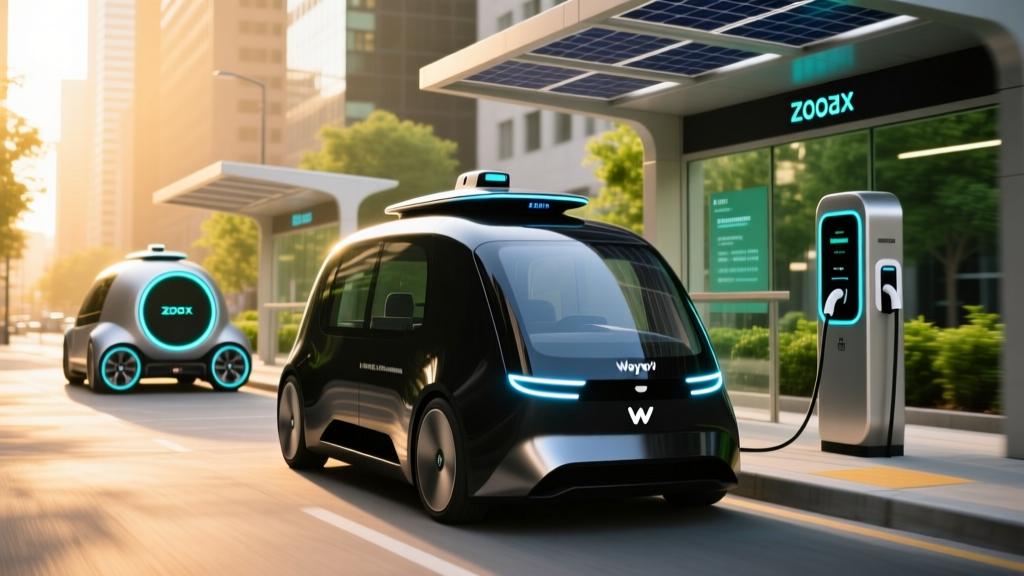
Amazon acquired Zoox in June 2020 for approximately $1.2 billion. Zoox operates as an independent subsidiary and is unique in developing a purpose-built robotaxi vehicle — a bidirectional, carriage-style EV with no steering wheel or pedals. Zoox has been conducting limited driverless operations in Las Vegas and Foster City, California, and began expanding its commercial service footprint in 2025.
Motional — Joint Venture (Hyundai & Aptiv)
Motional is a 50/50 joint venture between Hyundai Motor Group and automotive technology supplier Aptiv, formed in 2020. The company operates Ioniq 5-based robotaxis and has partnered with Uber and Lyft for integration into their ride-hailing platforms. Motional has focused on Las Vegas and has been gradually expanding its operational footprint.
Baidu Apollo Go — Owned by Baidu
Apollo Go is the robotaxi arm of Chinese tech giant Baidu. It operates the world's largest robotaxi fleet by ride volume, with millions of cumulative rides completed across multiple Chinese cities including Wuhan, Beijing, Shanghai, and Guangzhou. Baidu has publicly stated ambitions for profitability in its Apollo Go division and has been aggressively expanding its fleet size.
Pony.ai — Independent (Publicly Traded)
Pony.ai is an independent autonomous driving company that went public via IPO. Founded in 2016, it operates robotaxi services in several Chinese cities and has tested in the United States. Toyota is a strategic investor, having invested $400 million in 2020.
Tesla Robotaxi (Announced)
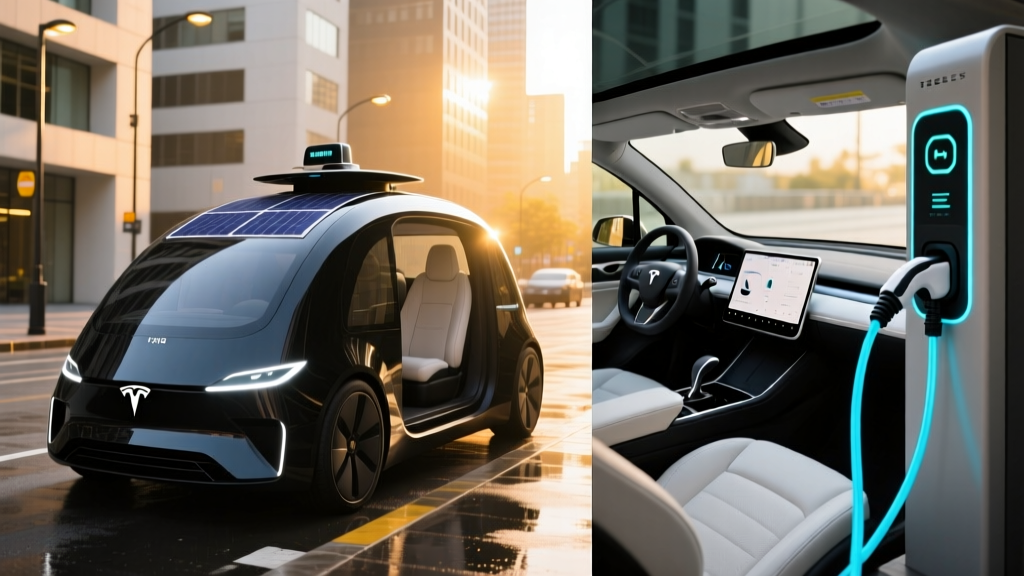
Tesla has announced plans for a robotaxi service using its Cybercab concept vehicle, leveraging a camera-only (no lidar) approach. As of early 2026, Tesla's robotaxi service remains in announced/preliminary status — no commercial driverless rides are available to the public. Tesla's current FSD (Supervised) is a Level 2 driver-assist system requiring active driver engagement, not a Level 4 robotaxi.
Where Can You Use a Robotaxi Right Now?
Robotaxi availability is strictly limited by geography, regulatory approval, and operational hours. Here's where commercial driverless services are live in 2026:
| Operator | Live Cities (Driverless) | Hours | How to Ride |
|---|---|---|---|
| Waymo | Phoenix, San Francisco, Los Angeles, Austin (expanding) | 24/7 in most cities | Waymo One app |
| Cruise | Phoenix, Houston, Dallas (phased relaunch) | Limited hours (expanding) | Cruise app |
| Zoox | Las Vegas (limited area), Foster City, CA | Limited hours | Zoox app (invite/waitlist) |
| Motional | Las Vegas (via Uber/Lyft) | Select hours | Uber/Lyft app (matched) |
| Baidu Apollo Go | Wuhan, Beijing, Shanghai, Guangzhou, Shenzhen, Chongqing (China) | Extended hours, some 24/7 | Apollo Go app (China only) |
| Pony.ai | Beijing, Guangzhou, Shenzhen (China) | Select hours | PonyPilot+ app (China) |
Key caveat: Even within "live" cities, robotaxis operate inside geofenced boundaries. A Waymo in San Francisco, for instance, will not drive you to Marin County or across the Golden Gate Bridge — its ODD is mapped and restricted to approved streets. Always check the app for pickup/dropoff availability in your specific area.
Robotaxi Pricing: How Does It Compare to Uber and Lyft?
Robotaxi pricing varies by operator and market, but the general pattern is competitive with — and sometimes cheaper than — conventional rideshare, particularly for shorter trips.
| Service | Typical Fare (3-mile trip) | Pricing Model | Surge Pricing? |
|---|---|---|---|
| Waymo | $8–$14 | Per-mile + per-minute, similar to UberX | Yes, demand-based |
| Cruise | $8–$12 | Per-mile + per-minute | Limited |
| UberX (human driver) | $10–$18 | Base + per-mile + per-minute | Yes, frequent |
| Lyft (human driver) | $10–$17 | Base + per-mile + per-minute | Yes, frequent |
| Baidu Apollo Go | ¥4–¥10 (~$0.55–$1.40 USD) | Heavily subsidized promotional pricing | Minimal |
Waymo's pricing is broadly competitive with UberX in the same markets, and often cheaper during surge periods because Waymo's pricing algorithm tends to be less volatile. Baidu Apollo Go fares in China are heavily subsidized as Baidu pursues market share — the company has acknowledged that current pricing is below operating cost.
Important: Robotaxi fares do not include tips (there's no driver), which effectively reduces the total cost compared to a rideshare trip where a 15–20% tip is customary.
Robotaxi Safety: What the Data Actually Shows
Safety is the most scrutinized aspect of robotaxi operations. Regulators, researchers, and the public demand concrete evidence — not marketing claims. Here's what we know from public data and regulatory filings.
- Waymo: Over 50 million fully driverless miles completed across its commercial fleet. Waymo's published safety data indicates a 57% reduction in police-reported crash rates compared to human benchmarks in comparable urban driving environments.
- Cruise: Accumulated millions of driverless miles prior to its October 2023 suspension, where a Cruise vehicle struck and dragged a pedestrian who had been thrown into its path by a human-driven vehicle. The NHTSA investigated the incident. Cruise subsequently restructured its safety protocols and relaunched with enhanced monitoring.
- Baidu Apollo Go: Reports over 100 million cumulative autonomous kilometers (roughly 62 million miles) across its fleet, with no reported fatalities attributed to the autonomous system as of late 2025.
- Disengagement rates: California DMV disengagement reports (which only apply to testing, not commercial operations) show leading operators achieving thousands of miles between required human interventions. However, disengagement data is self-reported and varies in methodology — treat it as directional, not definitive.
The most rigorous independent analysis has come from research institutions comparing robotaxi crash rates to human driver baselines. A study by the Insurance Institute for Highway Safety (IIHS) and affiliated researchers has examined whether the types of crashes robotaxis experience differ from human drivers — finding that robotaxis tend to avoid high-speed collisions but may be involved in low-speed incidents related to overly cautious stopping behavior.
The honest assessment: Robotaxis have demonstrated strong safety performance in their approved operating domains, but the total miles driven remain a fraction of human driving. The Cruise pedestrian incident demonstrated that edge cases — particularly scenarios involving multiple actors and unpredictable human behavior — remain challenging. No robotaxi operator claims zero incidents, and the industry's safety case rests on statistical comparison to human drivers, not perfection.
Technology Stack: Lidar, Cameras, and Sensor Fusion
Robotaxi companies take fundamentally different approaches to perception and decision-making. The technology choices affect cost, capability, and the conditions under which the vehicle can operate.
| Component | Lidar-Based (Waymo, Cruise, Zoox, Baidu) | Camera-Only (Tesla approach) |
|---|---|---|
| Primary sensors | Lidar + cameras + radar + ultrasonic | Cameras only (8+ cameras) |
| Depth perception | Direct lidar measurement (centimeter-level accuracy) | Inferred via neural network from 2D images |
| Low-light/night | Lidar provides active illumination — strong night performance | Relies on ambient light and camera sensitivity |
| Adverse weather | Lidar degraded by heavy rain, fog, snow — systems rely on camera/radar fallback | Cameras also degraded — no redundant depth sensor |
| Hardware cost per vehicle | $20,000–$50,000+ in sensor suite | Significantly lower ($1,000–$3,000 estimated) |
| HD mapping | Extensive pre-mapped geofences required | Tesla claims map-light approach (unproven for L4) |
Every currently operational Level 4 robotaxi uses lidar as a core sensor. Waymo's fifth-generation and sixth-generation "Driver" systems use a combination of custom-designed lidar units, cameras, and imaging radar to build a 360-degree, three-dimensional understanding of the environment in real time. Cruise uses a similar multi-sensor approach on its Chevrolet Bolt-based and upcoming Origin vehicles.
Tesla's camera-only approach is a philosophical bet that advanced neural networks can extract sufficient depth and semantic information from camera images alone. While Tesla's FSD (Supervised) has improved substantially, it remains a Level 2 system. No camera-only platform has been approved for Level 4 commercial robotaxi operations as of 2026.
The Regulatory Landscape: Who Approves Robotaxi Operations?
Robotaxi deployment in the United States is governed by a patchwork of state and local regulations — there is no single federal license that permits nationwide operation.
Key regulatory bodies:
- California Public Utilities Commission (CPUC): Issues permits for commercial robotaxi service in California. Operators must first receive testing permits from the California DMV, then apply for CPUC deployment permits to carry paying passengers.
- California DMV: Issues testing permits and collects disengagement reports. The DMV can suspend permits — as it did with Cruise in October 2023.
- State legislatures: Arizona, Texas, and Nevada have passed laws explicitly permitting driverless vehicle operations, generally with fewer regulatory hurdles than California.
- NHTSA (federal): Oversees vehicle safety standards and investigates crashes. NHTSA can issue standing general orders requiring crash reporting from ADS-equipped vehicles.
- Local municipalities: Cities can impose additional restrictions on robotaxi operations, including speed limits, geographic boundaries, and hours of operation.
In China, regulatory approval flows from municipal governments in coordination with national-level guidelines from the Ministry of Transport. Cities like Wuhan and Beijing have issued commercial robotaxi licenses to Baidu and Pony.ai, often with strong local government support as part of China's autonomous driving industrial policy.
Current Limitations: What Robotaxis Cannot Do
Despite impressive capabilities, Level 4 robotaxis in 2026 face significant operational constraints. Understanding these limitations is essential for setting expectations.
- Geofencing: Vehicles operate only within pre-mapped, regulator-approved boundaries. You cannot take a Waymo from San Francisco to Sacramento.
- Weather restrictions: Heavy rain, snow, fog, and ice can trigger service suspension. Waymo operates in light rain in Phoenix but may restrict service in severe conditions. Snow-covered roads remain a hard no-go for all current operators.
- Construction zones: Major road construction with shifted lanes, temporary barriers, or flaggers can exceed the system's ODD, requiring remote assistance or trip cancellation.
- Unprotected left turns: Some operators still restrict unprotected left turns at complex intersections — one of the hardest maneuvers for autonomous systems.
- Highway driving: Most robotaxi services avoid limited-access highways, operating primarily on surface streets at speeds under 45 mph. Waymo has begun incorporating some highway segments in Phoenix and Austin.
- Parking/stop precision: Robotaxis pull to the curb but cannot navigate parking garages, driveways, or private property. Drop-off is always curbside.
- No rider assistance: There is no driver to help with luggage, child seats, wheelchair loading, or route preferences. Passengers must be self-sufficient.
- Edge-case stalls: When the system encounters a scenario it cannot resolve, the vehicle may stop and wait for remote guidance, potentially blocking traffic temporarily.
Is This Truly Self-Driving or Just Driver-Assist?
This is the most important distinction in the autonomous vehicle space, and it's frequently blurred in media coverage.
Commercial robotaxis from Waymo, Cruise, Zoox, Motional, and Baidu Apollo Go are genuinely driverless — SAE Level 4. There is no human in the driver's seat. No one is holding a steering wheel. The vehicle makes all driving decisions within its approved operational domain. A remote operations team monitors the fleet and can provide guidance in unusual situations, but they do not "drive" the vehicle in real time.
Consumer systems like Tesla FSD (Supervised), GM Super Cruise, Ford BlueCruise, and Mercedes Drive Pilot are NOT robotaxis. Tesla FSD and similar Level 2 systems require the human driver to remain attentive and are legally responsible for the vehicle's operation at all times. Mercedes Drive Pilot is Level 3 but only approved for specific low-speed highway conditions in limited markets, and the system will request the driver to resume control.
If a company's vehicle has a steering wheel and a human in the driver's seat, it is not a robotaxi — regardless of marketing language.
The Business Case: Ownership and Investment Scale
Building a robotaxi operation requires extraordinary capital. Here's the approximate investment scale behind each major player:
- Waymo (Alphabet): Over $30 billion in cumulative investment from Alphabet and external investors. Waymo is the best-funded autonomous driving company in history.
- Cruise (GM): Over $10 billion invested by GM, Honda, and other investors before the 2023 restructuring. GM subsequently consolidated ownership and reduced burn rate.
- Zoox (Amazon): Acquired for ~$1.2 billion; Amazon has invested additional capital for vehicle development and fleet operations.
- Baidu Apollo Go: Part of Baidu's broader autonomous driving division, which has received over $10 billion in cumulative R&D investment.
- Motional: Backed by Hyundai and Aptiv, each committing billions in capital and technology contributions.
The capital intensity explains why most robotaxi operators are owned by large technology or automotive companies — the investment horizon spans a decade or more before profitability, a timeline that startups cannot sustain without deep-pocketed parent companies.
Frequently Asked Questions
Can I buy stock in Waymo directly?
No. Waymo is not a publicly traded company — it is a subsidiary of Alphabet Inc. (NASDAQ: GOOGL / GOOG). Investing in Alphabet stock gives you indirect exposure to Waymo, alongside Google's core search, cloud, and advertising businesses.
Are robotaxis available in my city?
As of 2026, commercial driverless robotaxi service in the U.S. is available in Phoenix, San Francisco, Los Angeles, Austin, Houston, Dallas, and Las Vegas — with specific geographic and operational restrictions in each. International availability is concentrated in Chinese cities including Wuhan, Beijing, and Shanghai. Expansion to additional U.S. cities is ongoing but moves slowly due to regulatory requirements.
How much does a robotaxi ride cost compared to Uber?
Waymo fares are generally comparable to UberX, typically $8–$14 for a 3-mile urban trip. Robotaxis do not have surge pricing as aggressive as Uber/Lyft, and there is no driver to tip, which can make them cheaper overall. Baidu Apollo Go in China is heavily subsidized, with fares as low as $0.50–$1.40 USD.
What happens if a robotaxi gets into an accident?
The robotaxi operator carries commercial liability insurance. In California, the CPUC requires operators to maintain minimum insurance coverage (typically $7.5 million or more). Passengers can report incidents through the app, and the operator's safety team responds. NHTSA requires crash reporting for ADS-equipped vehicles through its Standing General Order.
Will robotaxis replace Uber and Lyft drivers?
Not in the near term. Robotaxi fleets are small (Waymo operates roughly 1,000–1,500 vehicles across its cities), geofenced, and weather-limited. Uber and Lyft have millions of human drivers covering areas where robotaxis cannot operate. Both Uber and Lyft have partnered with robotaxi companies — Uber integrates Waymo and Motional rides into its app — suggesting a hybrid future rather than full replacement.
Is Tesla's robotaxi service available now?
No. As of early 2026, Tesla's robotaxi service remains in announced/preliminary status. Tesla's current Full Self-Driving (Supervised) is a Level 2 driver-assist system that requires an attentive human driver at all times. It is not a driverless robotaxi service, and no date for commercial driverless operations has been confirmed.
Editorial note: Robotaxi availability, pricing, and regulatory status change frequently. This article reflects conditions as of early 2026. Always verify current service status through the operator's official app and your local transportation authority.