Quick Answer: Every New Tesla Ships FSD-Capable
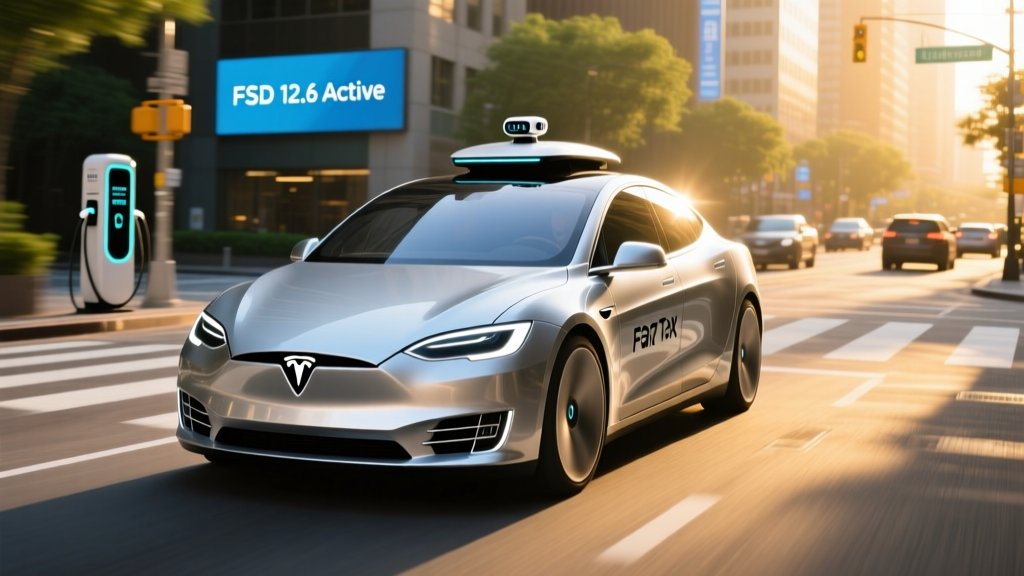
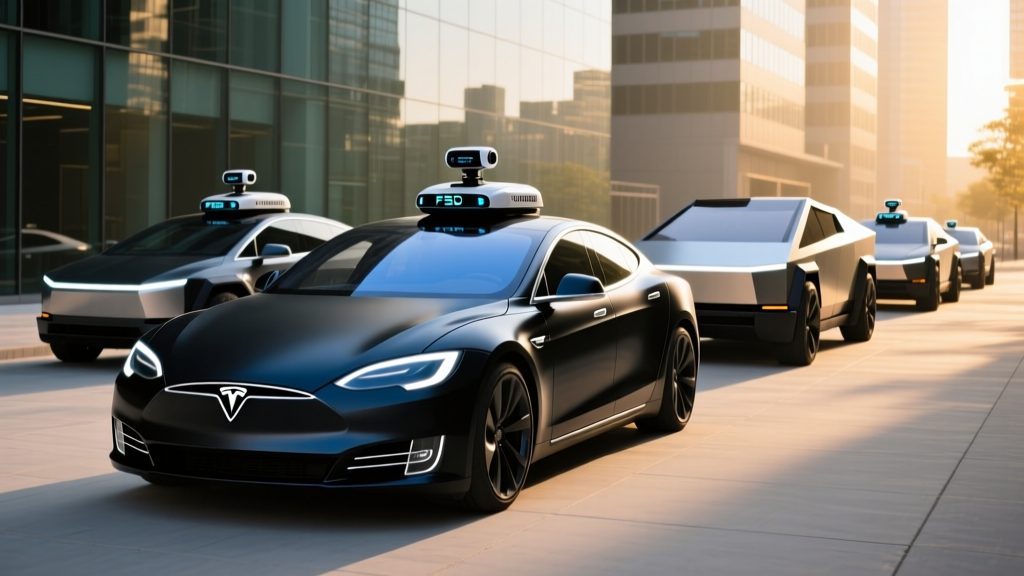
If you're asking which Teslas have FSD, the short answer is straightforward: every new Tesla sold today — Model S, Model 3, Model X, Model Y, and Cybertruck — ships with the hardware required to run Full Self-Driving (Supervised). However, having the hardware and having the active software are two different things. FSD (Supervised) is not standard; it requires either a one-time purchase or a monthly subscription on top of the vehicle's base price.
This guide breaks down exactly what FSD does, what it costs on each model, the hardware generations that matter, and the real-world limitations every buyer should understand before paying for it.
Tesla's Full Self-Driving (Supervised) is classified as SAE Level 2 driver-assistance. This means the system can control steering, acceleration, and braking simultaneously, but the driver must remain fully attentive, keep hands on the wheel, and be prepared to take over instantly. It is not autonomous. Only Level 4 services like Waymo operate without a human driver. Tesla's own branding of "Full Self-Driving" is a feature name, not a description of its SAE automation level.
What Does Tesla FSD (Supervised) Actually Do?
Tesla's FSD (Supervised) builds on the base Autopilot system that comes standard with every new Tesla. Where Autopilot handles lane centering and adaptive cruise control on highways, FSD adds capabilities intended for broader use:
| Feature | Included with Base Autopilot | Requires FSD (Supervised) |
|---|---|---|
| Adaptive Cruise Control | ✅ Yes | — |
| Lane Centering (Autosteer) | ✅ Yes | — |
| Auto Lane Change | ❌ No | ✅ Yes |
| Navigate on Autopilot (on/off-ramps) | ❌ No | ✅ Yes |
| Traffic Light & Stop Sign Control | ❌ No | ✅ Yes |
| City Street Autosteer | ❌ No | ✅ Yes |
| Smart Summon (parking lot) | ❌ No | ✅ Yes |
| Autopark | ❌ No | ✅ Yes |
The headline feature is City Street Autosteer — the ability for the car to navigate intersections, make turns, and respond to traffic signals on surface streets, not just divided highways. Tesla transitioned its FSD stack to an end-to-end neural network approach (dubbed FSD v12 and subsequent iterations), replacing much of its legacy C++ heuristic code with learned driving behavior from video training data. In practice, this means the system handles more scenarios more fluidly than earlier rule-based versions, but it still requires constant supervision.
Hardware Generations: HW3 vs. HW4 (AI4)
Not all FSD-capable Teslas are identical under the skin. Tesla has deployed two primary hardware generations relevant to current buyers:
- Hardware 3 (HW3): Found in vehicles built from roughly April 2019 through early-to-mid 2023 (varies by model). Uses 8 cameras and a custom Tesla FSD chip. Still receives FSD (Supervised) updates, but with lower camera resolution and older processing hardware.
- Hardware 4 / AI4 (HW4): Introduced starting in 2023 on Model S/X, then Model Y, Model 3 Highland, and Cybertruck. Features higher-resolution cameras, a wider field of view, and a more powerful inference computer. Tesla has stated HW4 provides a "superset" of HW3's capabilities.
Every new 2026 Tesla now ships with HW4/AI4. If you're buying used, confirming whether the car has HW3 or HW4 matters for long-term software support. Tesla has not committed to feature parity between the two indefinitely, though as of early 2026, both receive active FSD updates.
Notably, Tesla removed ultrasonic sensors (USS) and radar from new vehicles starting in 2022–2023, relying entirely on its camera-only "Tesla Vision" approach. This means parking assistance and close-proximity detection depend on neural-network-processed camera data rather than direct distance sensors.
FSD Pricing: Purchase vs. Subscription (2026)
Tesla has adjusted FSD pricing multiple times. As of 2026, here's what buyers can expect:
| Option | Cost | Notes |
|---|---|---|
| FSD (Supervised) — One-Time Purchase | $8,000 | Transfers with the vehicle; non-refundable. Does not transfer to your next Tesla unless Tesla offers a promotional transfer period. |
| FSD (Supervised) — Monthly Subscription | $99/month | Cancel anytime. Best for buyers who want to evaluate before committing or who don't drive enough to justify the lump sum. |
| Base Autopilot | Included (free) | Standard on every new Tesla. Includes adaptive cruise + lane centering on highways. |
Breakeven math: At $99/month, the subscription surpasses the $8,000 purchase price at roughly 81 months (~6.75 years). If you plan to keep the car longer than that, the one-time purchase is cheaper. But if you sell or trade within 3–4 years, the subscription saves you thousands — and you avoid the reality that FSD does not meaningfully boost resale value proportionally.
Important: FSD is not eligible for the federal §30D EV tax credit. The credit applies to the vehicle itself (subject to MSRP caps, income limits, and battery-sourcing requirements per IRS guidelines), not to standalone software purchases.
Which Tesla Models Include FSD Hardware in 2026?
| Model | Base MSRP (2026) | HW Generation | FSD Available? | Camera Count |
|---|---|---|---|---|
| Model 3 (Highland refresh) | ~$38,990 | HW4 (AI4) | ✅ Purchase or subscribe | 8 |
| Model Y (Juniper refresh) | ~$44,990 | HW4 (AI4) | ✅ Purchase or subscribe | 8 |
| Model S | ~$79,990 | HW4 (AI4) | ✅ Purchase or subscribe | 8 |
| Model X | ~$84,990 | HW4 (AI4) | ✅ Purchase or subscribe | 8 |
| Cybertruck | ~$79,990 | HW4 (AI4) | ✅ Purchase or subscribe | 8 |
Key takeaway: There is no Tesla trim level that comes with FSD (Supervised) software included in the base price. Every model requires the additional $8,000 purchase or $99/month subscription regardless of which trim you choose. Performance and Long Range variants don't bundle FSD — it's always an add-on.
Real-World Capabilities and Honest Limitations
After extensive use across multiple Tesla models, here's what FSD (Supervised) handles well and where it still falls short:
Where FSD Performs Well
- Highway driving: Lane changes, on/off-ramp navigation, and speed adjustment in moderate traffic are the system's strongest suit. It's genuinely useful on long interstate trips.
- Simple suburban streets: Well-marked roads with clear lane lines, moderate traffic, and straightforward intersections are handled competently most of the time.
- Stop sign and red light recognition: The system generally identifies and responds to traffic controls correctly in normal conditions.
Where FSD Struggles
- Construction zones: Temporary lane shifts, cones, and altered road geometry frequently confuse the system. Expect to take over.
- Heavy rain, snow, or fog: Camera-only Tesla Vision degrades significantly in low-visibility conditions. The system may disengage or issue a "camera obscured" warning.
- Unprotected left turns: Complex multi-lane intersections with oncoming traffic and pedestrians remain challenging. The system can be hesitant or make unexpected decisions.
- Faded or missing lane markings: Rural roads, older urban streets, and areas with inconsistent road maintenance produce unreliable performance.
- Edge cases: Emergency vehicles stopped in travel lanes, unusual road debris, flaggers, and non-standard traffic patterns require immediate human intervention.
- Low sun / camera glare: Direct sunrise or sunset into forward cameras can cause temporary performance degradation.
Tesla's own documentation and NHTSA guidance on automated driving systems make clear: the driver is responsible for the vehicle at all times. FSD (Supervised) does not eliminate the need for attention — it redistributes some of the workload under favorable conditions.
FSD vs. Competing ADAS Systems
Tesla's FSD doesn't exist in a vacuum. Here's how it compares to the other major Level 2 systems available in 2026:
| System | Brand | SAE Level | Hands-Off Allowed? | City Streets? | Annual Cost |
|---|---|---|---|---|---|
| FSD (Supervised) | Tesla | Level 2 | No | Yes (supervised) | $1,188/yr ($99/mo) |
| Super Cruise | GM (Cadillac, Chevy) | Level 2 | Yes (mapped roads) | Limited (mapped only) | ~$25/yr (after trial) |
| BlueCruise | Ford / Lincoln | Level 2 | Yes (mapped roads) | No | ~$750–$825/yr |
| ProPILOT Assist 2.0 | Nissan / Infiniti | Level 2 | Yes (highway) | No | Included or ~$2,500 pkg |
The key distinction: GM's Super Cruise and Ford's BlueCruise allow hands-off driving on pre-mapped divided highways (with driver monitoring cameras ensuring you're still watching the road). Tesla's FSD covers more road types — including city streets — but requires hands on the wheel at all times. Neither approach is "self-driving"; they represent different philosophies of Level 2 assistance.
For pure highway comfort on long commutes, Super Cruise's hands-off capability on 400,000+ miles of mapped roads is arguably more relaxing. For broader coverage on varied roads, Tesla's FSD is more ambitious — but demands more from the driver.
Should You Buy or Subscribe to FSD?
Here's a practical decision framework based on how you'll actually use the car:
Subscribe ($99/month) if:
- You want to try FSD for a few months before committing $8,000
- You plan to keep the car less than 5–6 years
- You primarily drive in cities where FSD's city-street feature gets regular use
- You're unsure whether the system's current capabilities justify the price
Purchase ($8,000) if:
- You plan to keep the car 7+ years
- You take frequent long highway road trips where Navigate on Autopilot adds value
- You want to avoid recurring monthly charges
- Tesla is running a promotional FSD transfer offer (allowing you to move FSD to your next Tesla)
Skip FSD entirely if:
- Base Autopilot (standard) already covers your highway commuting needs
- You drive mostly in severe weather, construction-heavy, or poorly marked areas
- You're uncomfortable supervising an imperfect system and would rather drive manually
Frequently Asked Questions
Is Tesla FSD actually self-driving?
No. Tesla Full Self-Driving (Supervised) is an SAE Level 2 driver-assistance system. The driver must remain fully attentive, keep hands on the steering wheel, and be ready to take control at any moment. The "Full Self-Driving" name is Tesla's product branding, not a description of the system's automation level. Only Level 4 robotaxi services like Waymo operate without a human driver.
Can I add FSD to a used Tesla that didn't come with it?
Yes, as long as the vehicle has HW3 or HW4 hardware (most Teslas built after April 2019). You can purchase or subscribe to FSD (Supervised) through the Tesla app or your Tesla account. Teslas built before HW3 (HW2 or HW2.5, roughly 2016–early 2019) cannot run current FSD without a hardware retrofit, which Tesla has offered at varying prices and availability.
Does FSD transfer if I sell my Tesla?
FSD purchased as a one-time license stays with the vehicle — it does not transfer to you or a new car you buy. The next owner gets it. This is why FSD adds limited resale value (typically $2,000–$4,000 of the $8,000 original cost, based on market data). Tesla occasionally runs limited-time promotions allowing FSD transfers to a new Tesla purchase — watch for these if you're planning to upgrade.
Does FSD work in bad weather?
Tesla Vision (camera-only) degrades in heavy rain, snow, fog, and low-visibility conditions. The system may issue warnings, reduce functionality, or disengage entirely. Unlike systems that supplement cameras with radar or lidar, Tesla has no fallback sensor for obscured camera views. Plan to drive manually in adverse weather.
How does FSD handle insurance and liability?
Because FSD (Supervised) is a Level 2 system, the driver remains legally responsible for the vehicle's operation at all times. If a crash occurs while FSD is active, the driver — not Tesla — is liable. Some insurers offer discounts for ADAS-equipped vehicles, but Tesla-specific insurance premiums tend to be above average due to repair costs. Check with your insurer before purchasing.
What's the difference between Autopilot and FSD?
Base Autopilot (standard on all new Teslas) provides adaptive cruise control and lane centering, primarily for highway use. FSD (Supervised) adds auto lane changes, navigate on autopilot (interchanges), traffic light/stop sign control, city street steering, and Smart Summon. Think of Autopilot as highway cruise assistance and FSD as a broader (but still supervised) driving assistant.
Sources: Tesla official specifications (tesla.com/autopilot), NHTSA Automated Driving Systems, IRS §30D Clean Vehicle Credits. Pricing and feature availability current as of early 2026; confirm with Tesla before purchasing.