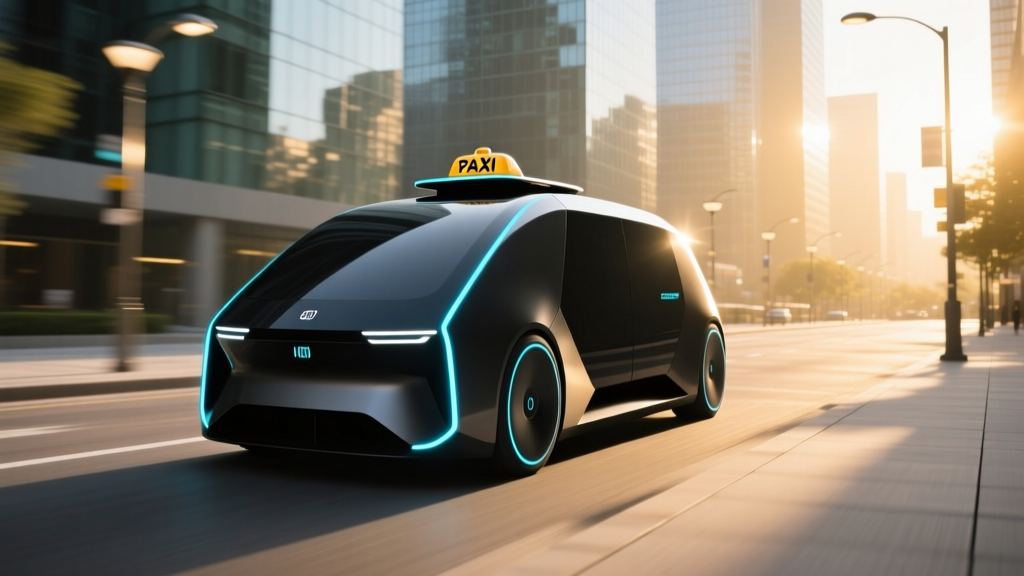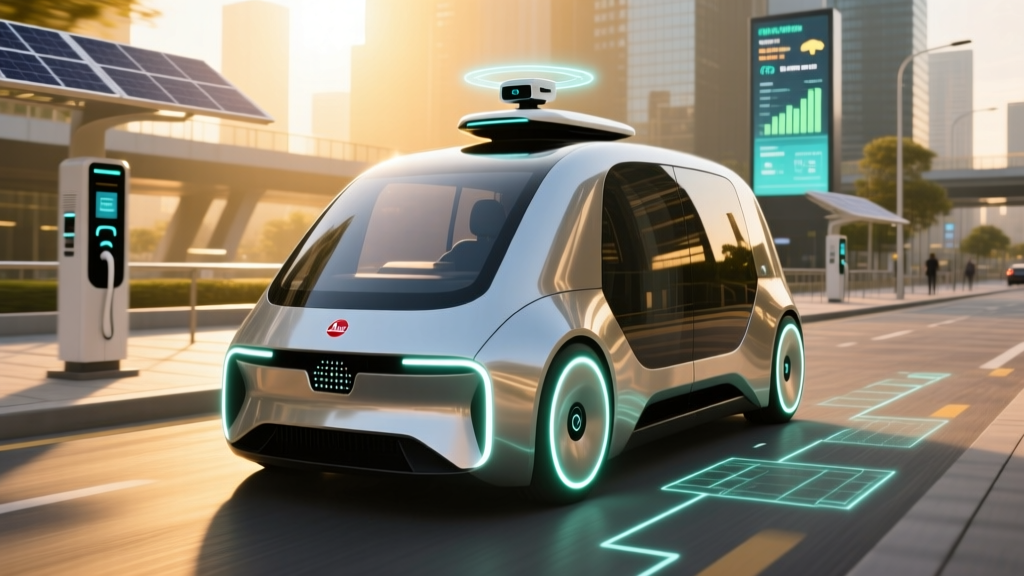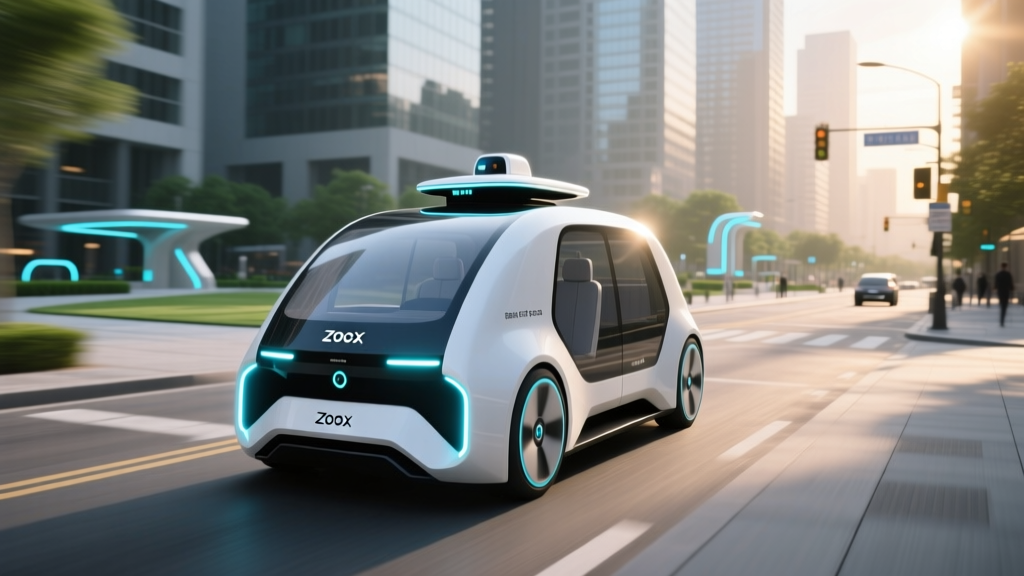
If you've searched "where is Zoox available" hoping to hail one today, the honest answer depends on which city you're standing in. Zoox — the Amazon-owned autonomous vehicle company — operates a purpose-built, steering-wheel-free robotaxi that is fundamentally different from the retrofitted SUVs and sedans you see from competitors. But its geographic footprint remains narrow, and the service is not something you can summon through a conventional rideshare app in most of the country.
Below, we map every live Zoox operating zone as of early 2026, explain the SAE Level 4 technology under the hood, compare pricing against Uber and Lyft, and pull real safety data so you know exactly what you're getting into — or when you'll have to wait.
SAE Automation Level: What Zoox Actually Is
| Level | Name | Driver Required? | Example |
|---|---|---|---|
| 0 | No Automation | Yes — full time | Conventional gas car |
| 1 | Driver Assistance | Yes | Adaptive cruise control |
| 2 | Partial Automation | Yes — must supervise | Tesla FSD (Supervised), BlueCruise |
| 3 | Conditional Automation | Sometimes — must be ready to take over | Mercedes Drive Pilot (limited markets) |
| 4 | High Automation | No — within geofence | Zoox, Waymo One |
| 5 | Full Automation | No — anywhere | Does not exist commercially |
The distinction matters for buyers and riders evaluating any "autonomous" vehicle. A Level 2 system like Tesla's FSD (Supervised) still legally and practically requires you to watch the road and keep your hands available. Zoox's Level 4 service removes the human driver entirely — but only within tightly defined geographic and operational boundaries.
Where Can I Ride Zoox Right Now?
Zoox's commercial service footprint is deliberately limited. Unlike Waymo, which has expanded across multiple metros, Zoox has focused on proving out its custom vehicle in a small number of controlled environments before scaling.
| City | Status | Service Area Notes |
|---|---|---|
| Las Vegas, NV | Live — invite-only / employee-adjacent riders | Las Vegas Strip corridor, downtown, airport-adjacent zones |
| Foster City / Bay Area, CA | Testing with public riders (limited) | San Mateo County corridors; not full citywide coverage |
| Phoenix, AZ | Announced — testing phase | Not yet open to general public rides |
| Atlanta, GA | Announced — testing phase | Early mapping and validation; no public service |
The bottom line: If you are a member of the general public, Las Vegas is the most realistic city where you might access a Zoox ride in 2026, and even there, access has primarily been through waitlists, employee-plus-one programs, or promotional invitations. Foster City offers limited public rider access as Zoox validates its California operations under the state's CPUC autonomous vehicle permits. Phoenix and Atlanta remain in testing — do not expect to hail a ride there yet.
Zoox has not published a public-facing app on iOS or Android app stores as of this writing. Rides are arranged through the Zoox rider program, and availability is controlled. This is not a service you can pull up on demand the way you'd open Uber.
The Zoox Vehicle and Technology Stack
Zoox doesn't retrofit existing cars. Its purpose-built vehicle — often called the "Zoox carriage" — is a symmetric, bidirectional pod designed from the ground up for autonomous operation. Here's what makes it technically distinct:
Sensor Suite
- LiDAR: Multiple roof- and corner-mounted LiDAR units providing a 360° point cloud. Zoox uses LiDAR as a primary sensor, unlike Tesla's camera-only approach.
- Cameras: A full surround camera array for object classification, traffic-light recognition, and redundancy.
- Radar: Forward- and corner-facing radar for velocity detection and poor-weather performance.
- Microphones: External audio sensors to detect emergency vehicle sirens and other acoustic cues.
Compute and Redundancy
The vehicle runs dual-redundant compute stacks — if one system fails, the backup can execute a safe stop. The steering, braking, and powertrain systems are also duplicated. This is a baseline requirement for SAE Level 4 operation with no human fallback.
Vehicle Specs
- Seating: 4 passengers, face-to-face configuration (no front row)
- Top speed: ~75 mph (electronically limited)
- Battery: Electric powertrain; exact kWh not publicly disclosed, estimated 60–80 kWh usable based on vehicle class
- Charging: Depot-based DC fast charging between shifts
- Dimensions: Compact footprint — shorter than a Toyota Camry — designed for dense urban environments
The carriage design means Zoox doesn't have to solve the "driver monitoring" problem that plagues Level 2 and Level 3 systems. There's no steering wheel to grab, no driver to watch. The system either handles the scenario or it doesn't — and if it doesn't, the vehicle stops safely on its own.
Pricing: Zoox vs. Uber and Lyft
Because Zoox has not launched a full commercial fare structure open to the general public, exact per-mile pricing is not yet published in the way Uber and Lyft display surge pricing in-app. Here's what we know from rider reports and Zoox's stated intent:
| Service | Base Fare | Per-Mile Rate | Surge Pricing | Notes |
|---|---|---|---|---|
| Zoox | Free (promotional) / TBD commercial | TBD — expected competitive with rideshare | None (fixed pricing expected) | Currently invite-only; no surge model announced |
| Waymo One | ~$1.50–$2.50 | ~$1.50–$2.50/mi | Limited surge | Commercial service in Phoenix, SF, LA |
| UberX | ~$2.00–$3.50 | ~$1.20–$2.00/mi | Yes — can 2–3× | Varies heavily by city and time |
| Lyft Standard | ~$2.00–$3.00 | ~$1.10–$1.80/mi | Yes — Prime Time | Similar variability to Uber |
Zoox's long-term pricing strategy is expected to undercut traditional rideshare on a per-mile basis by eliminating the driver's share of the fare (which typically represents 60–75% of what you pay on Uber/Lyft). Amazon's backing also means Zoox can afford a longer runway of subsidized rides to build adoption. However, until a commercial fare structure is published, this remains projected rather than confirmed.
Safety Record: What the Data Shows
Zoox Safety Data Snapshot
- Testing miles: Zoox has logged hundreds of thousands of autonomous miles across its test fleet in Las Vegas, the Bay Area, and other validation cities. Exact cumulative mileage has not been publicly reported in the same detail as Waymo's monthly California DMV disengagement reports.
- Disengagement rate: In California DMV filings, Zoox has reported disengagement rates (miles between human safety-driver interventions during testing) in the range of hundreds to low thousands of miles — improving over successive reporting periods but not yet at Waymo's scale of tens of thousands of miles per disengagement.
- At-fault collisions: As of early 2026, Zoox has not been involved in a publicly reported at-fault collision with its purpose-built carriage vehicle during autonomous operation. Its retrofitted test vehicles (Toyota Highlanders) have been involved in minor incidents typical of urban testing fleets.
- NHTSA standing: Zoox is subject to NHTSA's Standing General Order requiring crash reporting for all Level 2+ and ADS-equipped vehicles. No major enforcement actions have been publicized against Zoox.
Context matters here. Waymo has operated millions of fully driverless miles in Phoenix and San Francisco and has the most mature public safety dataset in the industry. Zoox's sample size is smaller, and its purpose-built vehicle has been on public roads for a shorter duration. The absence of at-fault collisions is encouraging but not yet statistically definitive at the scale needed for actuarial confidence.
For comparison, the IIHS and NHTSA data consistently show that human drivers cause approximately 1.1 fatalities per 100 million vehicle miles traveled. Robotaxi operators need to demonstrate performance at least an order of magnitude better to justify the removal of the human driver — and the industry is still building the dataset to prove that at scale.
Regulatory Landscape: Who Approves Robotaxi Operations?
Robotaxi deployment in the United States is not federally pre-empted. Instead, it's governed by a patchwork of state and local approvals:
- California: The California DMV issues testing permits (with and without safety drivers). The California Public Utilities Commission (CPUC) issues commercial deployment permits for passenger-carrying service. Zoox holds both.
- Nevada: The Nevada DMV and state legislature created an autonomous vehicle framework that allows testing and limited deployment. Las Vegas is Zoox's primary live-ride city.
- Arizona: The state has taken a permissive approach via executive orders, allowing testing and commercial operations with relatively light oversight. Waymo's Phoenix operations benefit from this.
- Federal (NHTSA): NHTSA regulates vehicle safety standards (FMVSS). Zoox's carriage received a notable exemption from certain FMVSS requirements (like steering wheels and mirrors) because the vehicle was designed without them. NHTSA also mandates crash reporting under its Standing General Order.
For riders, the practical implication is that Zoox cannot simply "turn on" service in a new city. Each jurisdiction requires permits, insurance verification, first-responder coordination, and geofence mapping. This is why expansion is measured in years, not months.
Current Limitations: Where Zoox Cannot Operate
Operational Constraints You Should Know
- Geofencing: Zoox vehicles operate only within pre-mapped zones. Request a ride outside the geofence and the system will decline. You cannot take a Zoox to an unmapped suburb or rural area.
- Weather: Heavy rain, fog, snow, and dust degrade LiDAR and camera performance. Zoox, like all robotaxi operators, restricts or suspends service during severe weather events. Las Vegas's dry climate is one reason it was chosen as a launch city.
- Construction zones: Unexpected lane closures, temporary signage, and shifting road geometry remain challenging. Zoox vehicles may slow significantly, reroute, or stop in complex construction scenarios.
- No highway operation: Current robotaxi services, including Zoox, operate primarily on surface streets. Interstate and highway driving at 70+ mph is not part of the current service ODD.
- Pickup/dropoff precision: The vehicle must be able to identify a safe, legal stop. If your requested location is in a loading zone, fire lane, or ambiguous spot, the ride may be redirected to the nearest valid stop.
- Accessibility: The Zoox carriage is designed with a low floor and wide opening, but wheelchair-accessible vehicle (WAV) availability in robotaxi fleets remains an industry-wide gap. Zoox has not yet deployed a WAV variant at scale.
- No pets or unaccompanied minors: Current service terms restrict riders to adults. Pets and cargo policies are more restrictive than typical rideshare.
These limitations aren't unique to Zoox — every Level 4 robotaxi operator faces the same edge cases. But they are the reason you cannot yet rely on a robotaxi as a complete replacement for personal vehicle ownership or conventional rideshare.
How to Get a Zoox Ride (If You're in a Live City)
- Check your location: Confirm you're within a Zoox operating zone (currently Las Vegas or Foster City for the most accessible rides).
- Join the rider program: Visit the Zoox website and sign up for their rider waitlist or early-access program. There is no public app store download.
- Accept an invitation: Zoox onboards riders in waves. You may receive an invitation with specific hours and zones where rides are available.
- Request a ride: Through the Zoox rider interface, enter your pickup and dropoff. The system will confirm whether the route is within its ODD.
- Ride: The vehicle arrives with no driver. You board, confirm your destination on the in-cabin screen, and the vehicle departs. You can monitor the route in real time.
Frequently Asked Questions
Is Zoox truly self-driving, or is there a hidden driver?
Zoox is SAE Level 4 — truly driverless within its geofenced service area. There is no steering wheel, no pedals, and no human driver on board or remotely piloting the vehicle. The system handles all driving tasks autonomously. This is fundamentally different from Level 2 systems like Tesla FSD (Supervised), which require continuous human attention.
How much does a Zoox ride cost compared to Uber?
As of 2026, Zoox rides available through the rider program have been offered at no charge (promotional/invitational). When Zoox launches commercial fares, the per-mile cost is expected to be competitive with or below UberX, since there is no driver to pay. UberX averages $1.20–$2.00 per mile depending on city and surge conditions.
Can I use Zoox in Los Angeles, New York, or Chicago?
No. Zoox is not currently available in LA, New York, Chicago, or any city outside its active operating zones (Las Vegas and limited Bay Area access). Phoenix and Atlanta are in testing but not open to the general public.
What happens if the Zoox vehicle encounters a problem mid-ride?
The vehicle is designed to execute a minimal-risk maneuver — typically pulling over to a safe stop at the nearest legal location. Zoox also maintains a remote assistance team that can provide guidance to the vehicle's planning system (though they do not "drive" the vehicle remotely via joystick). Passengers can contact support through the in-cabin interface at any time.
Is Zoox safer than a human driver?
Zoox's purpose-built carriage has not been involved in a publicly reported at-fault collision during autonomous operation. However, the total miles driven are not yet large enough to make a statistically definitive comparison against the human baseline of ~1.1 fatalities per 100 million miles (NHTSA). The safety case for robotaxis is promising but still being built.
Will Zoox expand to more cities in 2026?
Zoox has announced testing in Phoenix and Atlanta, which are prerequisites for future commercial service. However, the timeline from testing to public rides typically spans 12–24 months per city, given regulatory approval, mapping, and validation requirements. Do not expect same-year commercial launches in newly announced cities.
Does Zoox use Tesla-style cameras only, or LiDAR?
Zoox uses a multi-sensor stack including LiDAR, cameras, radar, and external microphones. This is a fundamentally different approach from Tesla's camera-only FSD system. The LiDAR provides precise 3D depth mapping that is not dependent on lighting conditions, which is considered a safety advantage for driverless (Level 4) operation by most industry engineers.