Where Do Waymos Go at Night? The Short Answer
If you've ever watched a white Jaguar I-PACE or the newer Zeekr RT vanish down a side street after dropping off a late-night passenger, you might wonder: where do Waymos go at night? The answer is a network of dedicated fleet depots scattered across each operating city — industrial-yard facilities where the vehicles plug into high-power Level 2 chargers, undergo automated sensor cleaning and calibration checks, and stage for the next morning's demand surge.
But the deeper truth is that a significant portion of Waymo's fleet doesn't go anywhere at night. In cities like Phoenix and Los Angeles, Waymo operates 24/7, meaning vehicles cycle between revenue trips and depot pit stops around the clock. The question isn't really "where do they sleep" — it's how a fleet of over 1,000 Level 4 autonomous vehicles manages continuous operations, charging logistics, and maintenance without a single human behind the wheel.
SAE Automation Level: What Waymo Actually Is
Waymo's robotaxi service operates at SAE Level 4 — high automation within a defined operational design domain (ODD). This means the vehicle handles all driving tasks without a human driver inside, but only within its geofenced service area under approved conditions. This is fundamentally different from SAE Level 2 systems like Tesla Autopilot, GM Super Cruise, or Ford BlueCruise, which require an attentive human driver at all times. Waymo has no steering wheel accessible to passengers and no expectation of human takeover.
Waymo's Service Availability in 2026: Where You Can Ride Right Now
Before understanding fleet logistics, it helps to know where Waymo's vehicles are actually deployed. As of early 2026, Waymo One — the company's commercial ride-hailing service — operates in the following metro areas:
| City | Service Area Coverage | Hours | Vehicle Platform |
|---|---|---|---|
| Phoenix, AZ | ~315 sq mi (Metro Phoenix including Tempe, Scottsdale, Mesa, Chandler) | 24/7 | Jaguar I-PACE / Zeekr RT |
| San Francisco, CA | ~50 sq mi (city core, expanding south) | 24/7 | Jaguar I-PACE / Zeekr RT |
| Los Angeles, CA | ~80 sq mi (Downtown, Hollywood, Santa Monica, Westside) | 24/7 | Jaguar I-PACE / Zeekr RT |
| Austin, TX | ~45 sq mi (Downtown, South Austin, airport corridor) | Limited hours expanding | Zeekr RT |
Waymo has also announced plans for expansion into additional cities, but those are not yet live for paid public rides. Phoenix remains the largest and most mature deployment, with the broadest geofence and longest operational history dating back to the early Chandler pilot.
The Depot Network: Where Waymos Charge, Clean, and Stage
Waymo's fleet depots are the unsung backbone of robotaxi operations. These are not glamorous showrooms — they're functional industrial facilities, typically located in warehouse districts or near freeway interchanges for quick deployment into the service area.
What Happens at a Waymo Depot
When a Waymo vehicle completes a trip and its battery state of charge (SoC) drops below a threshold — typically around 20-25% — the fleet management system autonomously dispatches it to the nearest depot. Here's the sequence:
- Autonomous return: The vehicle navigates itself to the depot entrance using its standard sensor suite and HD maps.
- Staging and queuing: An automated yard management system directs the car to an available charging stall or a holding lane if all chargers are occupied.
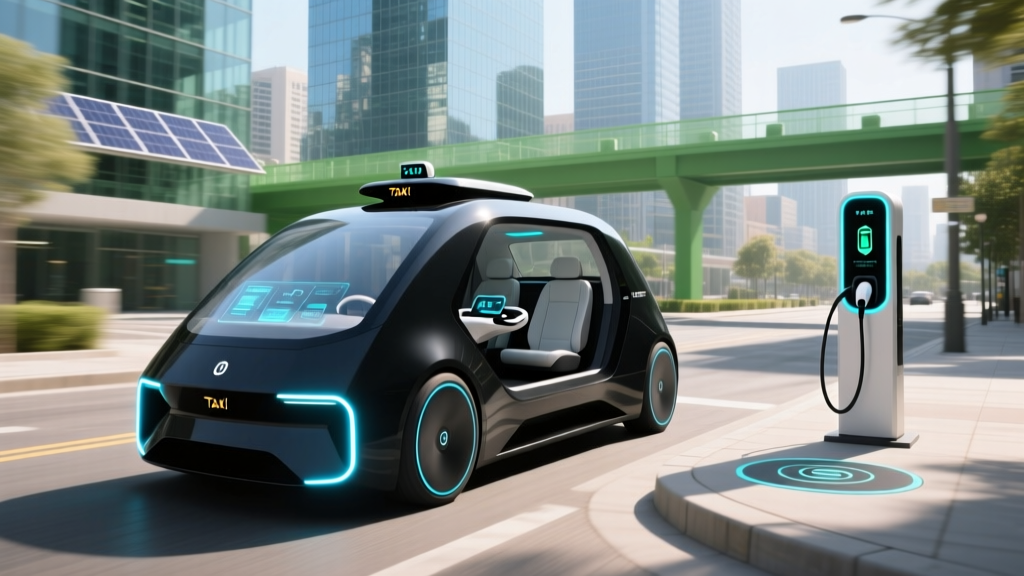
- Plug-in: At most current depots, a human attendant plugs in the CCS1 or NACS connector. Waymo has tested automated robotic plug-in systems, but manual connection remains the standard as of 2026.
- Level 2 charging: Vehicles charge at 19.2 kW AC (the Jaguar I-PACE's onboard charger max), adding roughly 55-65 miles of range per hour. A full charge from 20% to 100% takes approximately 3.5 to 4 hours given the I-PACE's 90 kWh battery pack.
- Sensor cleaning and inspection: Automated wash systems clean the roof-mounted lidar domes, cameras, and radar units. Diagnostics run to verify sensor calibration and flag any hardware faults.
- Software updates: Overnight is the primary window for over-the-air (OTA) software pushes — new driving behavior models, map updates, and safety patches.
- Deployment: As morning demand ramps up, the fleet management system dispatches fully charged vehicles back into the service area, positioning them near predicted demand hotspots.
Why Not DC Fast Charge?
You might wonder why Waymo relies on Level 2 AC charging rather than DC fast charging. The answer is battery longevity. These vehicles accumulate 50,000-80,000+ miles per year — far more than a personal EV. Repeated DC fast charging at 50-150 kW accelerates lithium-ion battery degradation through elevated cell temperatures and lithium plating risk. By using slower 19.2 kW Level 2 charging during off-peak hours, Waymo preserves battery state of health (SoH) across a multi-year fleet lifecycle. The vehicles don't need a 20-minute fast charge because they have hours of downtime between shifts.
How to Use Waymo One and What It Costs vs. Uber/Lyft
Booking a Waymo is straightforward: download the Waymo One app, enter your pickup and dropoff, and the system dispatches the nearest available vehicle. There's no driver to rate, no surge pricing in the traditional rideshare sense, and no tipping.
| Factor | Waymo One | UberX / Lyft |
|---|---|---|
| Base fare (typical 5-mile trip) | $10–$16 | $12–$22 (varies with surge) |
| Surge / dynamic pricing | Not currently applied | 1.5x–3x during peak demand |
| Tipping | Not applicable | $2–$5 customary |
| Wait time (avg) | 3–7 minutes in core zones | 2–8 minutes |
| Per-mile cost (approx.) | $1.15–$1.50/mi | $1.25–$2.00/mi |
| Availability at 2 AM | Yes (Phoenix, SF, LA) | Yes, but limited drivers |
In practice, Waymo pricing tends to be competitive with UberX during normal demand and significantly cheaper during surge periods. A Friday-night bar-hop in downtown Phoenix that might trigger 2.5x Uber surge pricing will cost the same on Waymo at 1 AM as it does at 2 PM on a Tuesday. This is where the robotaxi economics become compelling for riders — and where the fleet's 24/7 operation pays off.
Safety Record: What the Data Actually Shows
Waymo's safety performance is the most scrutinized aspect of robotaxi operations, and the company has published more transparency reports than any competitor. Here's what the numbers say:
Waymo Safety Data (Through 2025)
- Total autonomous miles driven: Over 40 million fully driverless miles across all cities (Waymo Safety Reports)
- Injury-causing crash rate: Waymo vehicles involved in injury-causing crashes at approximately 85% lower rate than human drivers in comparable urban environments (per Waymo's peer-reviewed analysis using SHRP2 naturalistic driving data as baseline)
- Police-reported crash rate: Approximately 60% lower than human benchmark
- Contact rate: The vast majority of Waymo-involved incidents are low-speed contacts (under 10 mph), often with vehicles that ran red lights or pedestrians stepping into the roadway — scenarios where the Waymo vehicle was typically the one struck, not the striking party
- NHTSA Standing General Order data: Waymo files all incident reports per federal requirement; the raw numbers appear high partly because Waymo reports comprehensively while many human drivers do not report minor contacts
Source: NHTSA Standing General Order and Waymo Safety Transparency Reports.
The data is encouraging but requires context. Waymo operates in dense urban environments at relatively low speeds (most trips average 25-35 mph). The comparison to human drivers is valid for similar conditions, but Waymo does not yet operate in high-speed freeway corridors at 75+ mph or in rural environments where many fatal crashes occur.
The Technology Stack: Lidar, Cameras, and the Geofence
Waymo's 6th-generation "Waymo Driver" system represents a significant hardware evolution from the Firefly prototypes and early Chrysler Pacifica minivans. Here's what's on the roof and behind the body panels:
Waymo 6th-Gen Sensor Suite
- Lidar: Multiple roof-mounted units providing 360° high-resolution 3D point clouds. Waymo uses custom-built lidar (not off-the-shelf), with improved range and resolution over the 5th-gen system — capable of detecting objects at 500+ meters in clear conditions.
- Cameras: A surround array of high-dynamic-range cameras covering 360° at varying focal lengths — wide-angle for near-field detection and telephoto for traffic-light state reading and distant object classification.
- Radar: Imaging radar units for velocity detection and all-weather object tracking, particularly useful in rain and fog where camera and lidar performance degrade.
- Audio detection: External microphones to detect emergency vehicle sirens and trigger appropriate pull-over behavior.
- Compute: Custom-designed autonomous driving computer mounted in the vehicle, processing sensor fusion, perception, prediction, and planning in real time.
The key philosophical difference between Waymo and competitors like Tesla's FSD (Supervised) is the lidar-first approach. Tesla relies on a camera-only "Tesla Vision" system, arguing that cameras plus neural networks are sufficient. Waymo treats lidar as a non-negotiable safety layer — an independent depth-sensing modality that doesn't depend on lighting conditions or learned visual patterns. This is why Waymo can operate safely at night in unlit areas where camera-only systems struggle.
Geofencing is the other critical technology. Waymo vehicles operate only within a pre-mapped and extensively tested Operational Design Domain (ODD). Every street in the service area has been driven thousands of times by mapping vehicles, and the HD map includes lane geometry, traffic signal locations, speed limits, construction-zone patterns, and known edge cases. If a Waymo vehicle approaches the geofence boundary, it will not cross — it will either reroute or, if necessary, pull over and contact remote assistance.
Regulatory Landscape: Who Approves Robotaxi Operations
Robotaxi deployment in the United States is governed by a patchwork of state and local regulations — there is no single federal "robotaxi license." Here's how the approval chain works:
- California (CPUC and DMV): Waymo holds a Driverless Testing Permit from the California DMV and a TCP (Transportation Charter Party) permit from the California Public Utilities Commission (CPUC), which authorizes commercial passenger service. The CPUC requires regular safety reporting and incident disclosure. (CPUC Autonomous Vehicle Programs)
- Arizona: Arizona has taken a permissive approach since Governor Doug Ducey's 2015 executive order opening the state to autonomous vehicle testing. Waymo's Phoenix operations are authorized under state law with minimal additional local permitting.
- Texas: Austin operations require compliance with both state autonomous vehicle statutes and city-level transportation permits.
- Federal (NHTSA): The National Highway Traffic Safety Administration sets vehicle safety standards (FMVSS) and requires crash reporting under the Standing General Order, but does not directly approve or disapprove robotaxi services — that authority rests with states.
Current Limitations: What Waymo Cannot Do
Despite the impressive technology, Waymo's Level 4 system has real-world constraints that riders should understand:
Known Operational Limitations (2026)
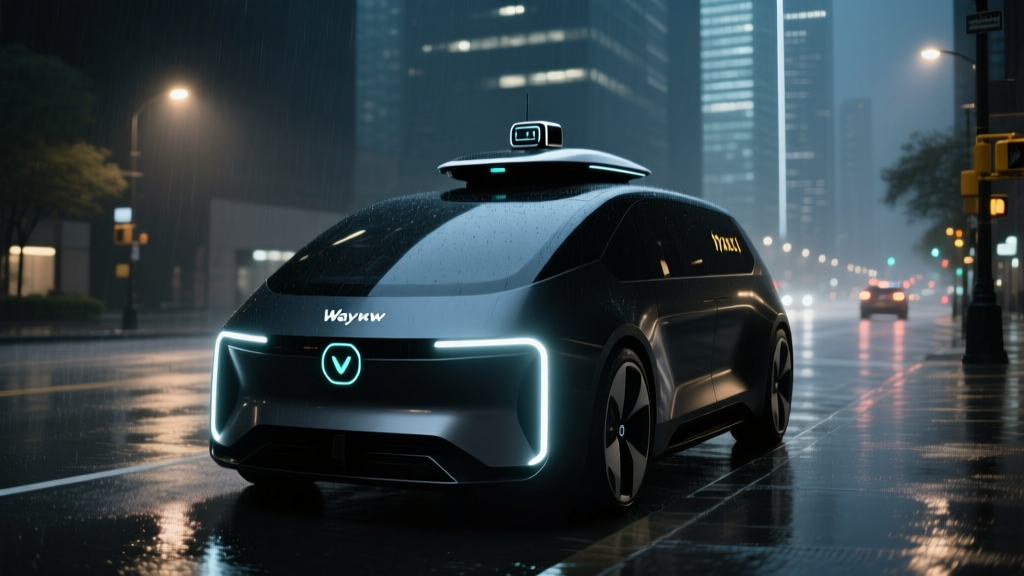
- Heavy rain and flooding: In severe downpours, lidar scattering and camera occlusion can force Waymo vehicles to pull over or decline trips. Phoenix's monsoon season and San Francisco's atmospheric rivers periodically cause service interruptions.
- Dense fog: Similar sensor degradation applies. Waymo vehicles will reduce speed or stop if visibility drops below safe thresholds.
- Snow and ice: Waymo does not currently operate in snow-belt cities. Snow accumulation on sensors, obscured lane markings, and reduced traction are outside the current ODD.
- Unmapped areas: If a destination falls outside the geofence, the app simply won't let you book the trip. No manual override is possible.
- Construction zones: While Waymo handles routine construction rerouting, complex multi-stage construction with temporary signals and flaggers can cause the vehicle to stop and request remote guidance.
- Emergency scenarios: Waymo vehicles are programmed to pull over and yield to emergency vehicles, but they cannot make the nuanced judgment calls a human first responder might — such as driving onto a sidewalk to clear a path for an ambulance in gridlock.
- Pets and unusual cargo: Service animals are permitted, but pets in carriers, oversized items, or open food containers are at the rider's risk — there's no driver to enforce policies.
- Accessibility: The Jaguar I-PACE is not wheelchair-accessible. Waymo has indicated that future vehicle platforms (including the Zeekr RT) will address this, but current fleet accessibility is limited.
So, Where Exactly Do Waymos Go at Night?
To circle back to the question that brought you here: Waymos go to depots, and those depots are unremarkable industrial yards you'd drive past without a second glance. In Phoenix, they're scattered across the East Valley warehouse corridors near Tempe and Mesa. In San Francisco, depot locations are in the industrial southern neighborhoods near the Bayview and Potrero Hill areas. In Los Angeles, facilities sit in the industrial zones east of downtown.
But the more interesting answer is that "at night" is a misleading concept for a 24/7 fleet. At any given moment between midnight and 6 AM in Phoenix, hundreds of Waymo vehicles are actively completing trips — airport runs, bar-closing rides, shift-change commutes for healthcare workers. Another batch is cycling through depot charging and cleaning. The fleet is a continuous loop, managed by algorithms that balance battery state of charge, predicted demand, vehicle maintenance schedules, and geographic positioning.
The next time you see a Waymo Jaguar pull away from a curb at 1 AM and disappear into the night, it's likely heading to a charger — or to its next passenger. Either way, there's no driver going home.
Frequently Asked Questions
Can I request a Waymo at 3 AM?
Yes, in Phoenix, San Francisco, and Los Angeles — Waymo One operates 24 hours a day, 7 days a week. Wait times may be slightly longer in the early morning hours due to lower fleet density, but the service does not shut down overnight.
What happens if a Waymo's battery dies mid-trip?
It doesn't. The fleet management system monitors every vehicle's state of charge in real time and will not dispatch a car for a trip it cannot complete with a comfortable buffer. If SoC drops unexpectedly (due to detours or climate control demand), the vehicle will complete the current trip and then autonomously route to a depot rather than accepting another passenger.
Are Waymos electric?
Yes. The current fleet is built on the Jaguar I-PACE platform — a fully electric SUV with a 90 kWh NMC battery pack, EPA-rated at 246 miles of range. The incoming Zeekr RT is also a purpose-built electric platform designed specifically for autonomous ride-hailing, with a lower floor and wider doors for easier passenger entry.
Is Waymo truly self-driving, or is someone watching remotely?
Waymo is genuinely driverless — there is no human in the vehicle, and no remote "teleoperator" driving the car in real time. However, Waymo employs remote fleet assistance: if a vehicle encounters an ambiguous scenario (an unusual construction setup, for example), it can pause and request guidance from a remote agent who may confirm a safe path. The remote agent does not steer or control the vehicle directly — the car's own systems still execute all driving actions.
How does Waymo compare to Tesla's Full Self-Driving?
They are fundamentally different systems at different SAE levels. Waymo is SAE Level 4: no driver present, geofenced to specific cities, commercially available as a ride-hailing service. Tesla FSD (Supervised) is SAE Level 2: a driver-assistance system that requires a licensed, attentive human driver behind the wheel at all times, available on any road but not autonomous. Comparing them directly is like comparing a city bus route to a very good cruise control system — they solve different problems.
How many Waymo vehicles are on the road?
Waymo has not published an exact fleet count, but industry estimates and regulatory filings suggest over 1,000 vehicles across all operating cities as of early 2026, with Phoenix hosting the largest single-city fleet. The company has been scaling production with the Zeekr RT platform to expand capacity.