Where Can You Actually Ride a Waymo Robotaxi Right Now?
The short answer to "when will Waymo expand to my city" depends on where you live — and how quickly local regulators move. As of early 2026, Alphabet's Waymo operates fully driverless commercial robotaxi service (branded Waymo One) in a growing but still limited set of metro areas. Here is the current operational footprint:
| Metro Area | Status | Service Area Notes | Geofence Size (approx.) |
|---|---|---|---|
| Phoenix, AZ (East Valley) | Live — 24/7 | Chandler, Tempe, Mesa, Gilbert, Scottsdale; airport service added 2024 | ~225 sq mi |
| San Francisco, CA | Live — 24/7 | Full city coverage; SFO airport rides launched late 2024 | ~55 sq mi |
| Los Angeles, CA | Live — expanding | Downtown LA, Hollywood, Santa Monica, Westside; LAX not yet served | ~80+ sq mi (growing) |
| Austin, TX | Live (limited) | Initial geofenced zone; Uber app integration announced | ~40+ sq mi |
| Mountain View, CA | Live (employee + public beta) | Headquarters city; smaller zone | ~20 sq mi |
| Atlanta, GA | Announced / testing | Uber partnership; commercial launch expected 2026–2027 | — |
| Miami, FL | Announced / testing | Mapping and validation phase; no public launch date | — |
| Tokyo, Japan | Testing / partnership | Nihon Kotsu taxi partnership; limited pilot, not public Waymo One | — |
If your city isn't on this list, you're looking at a 2027 or later timeline at best. Waymo's expansion pace is governed less by technology and more by regulatory approval, mapping, and fleet logistics — a reality we'll unpack below.
SAE Automation Levels: Why Waymo Is Not the Same as Tesla FSD
Before discussing expansion, it's essential to clarify what Waymo actually is — because the term "self-driving" gets abused across the industry.
Waymo One operates at SAE Level 4 — high automation within a defined Operational Design Domain (ODD). There is no human driver in the vehicle, no steering wheel interaction required, and no passenger supervision expected. If the system encounters a scenario it cannot handle, it executes a Minimal Risk Condition (safe pullover).
This is fundamentally different from SAE Level 2 systems like Tesla Autopilot, FSD (Supervised), GM Super Cruise, and Ford BlueCruise — all of which require an attentive, licensed driver behind the wheel at all times. Conflating Level 2 driver-assist with Level 4 robotaxi service is a common and dangerous error in EV/autonomy coverage.
| Level | Name | Who Drives? | Examples |
|---|---|---|---|
| 0 | No Automation | Human | Basic cruise control |
| 1 | Driver Assistance | Human (system assists steering OR speed) | Adaptive cruise, lane-keep |
| 2 | Partial Automation | Human (must supervise at all times) | Tesla FSD Supervised, BlueCruise, Super Cruise |
| 3 | Conditional Automation | System (human must take over on request) | Mercedes Drive Pilot (limited markets/speeds) |
| 4 | High Automation | System (within geofenced ODD; no driver needed) | Waymo One, Zoox, Cruise (pre-suspension) |
| 5 | Full Automation | System (anywhere, any condition) | Does not exist commercially |
Waymo has never claimed Level 5. The vehicles operate within a geofenced ODD — meaning they won't drive outside mapped boundaries, and they have operational limits around severe weather and certain road configurations.
How to Use Waymo One and What It Costs vs. Uber/Lyft
Riding in a Waymo is straightforward but requires app setup in advance:
- Download the Waymo One app (iOS/Android) and create an account.
- Verify your service area — the app shows the live geofence boundary on a map.
- Request a ride — enter pickup and dropoff within the zone. Wait times average 3–8 minutes in Phoenix and SF during peak hours.
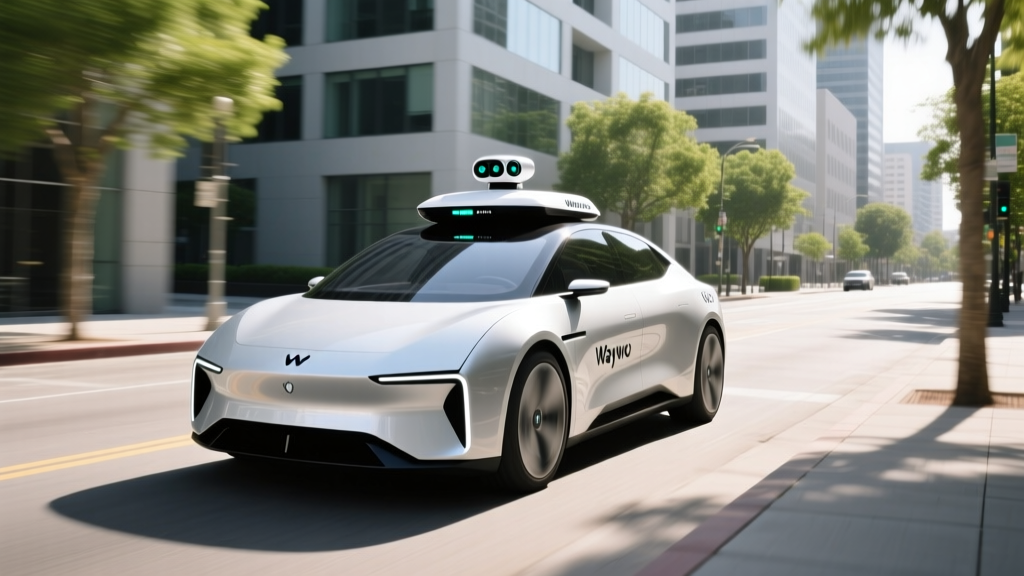
- Unlock and ride — the app unlocks the vehicle (currently a Jaguar I-PACE EV or the newer Zeekr RT custom robotaxi in select markets). No driver is present. You sit in the back; a screen shows your route and a "pull over" button.
- Pay automatically — charged to your linked card at ride end.
In some cities (notably Austin and Atlanta via partnership), Waymo rides can also be requested through the Uber app, broadening access without a separate Waymo account.
| Route Example | Waymo One | UberX (est.) | Lyft (est.) |
|---|---|---|---|
| 5-mile urban trip (SF: SoMa → Marina) | $14–$19 | $13–$18 | $12–$17 |
| 10-mile trip (Phoenix: Chandler → Tempe) | $18–$26 | $17–$24 | $16–$23 |
| Airport run (SFO → Downtown SF, ~15 mi) | $35–$48 | $32–$45 | $30–$42 |
| Short hop (2 miles, downtown LA) | $8–$12 | $9–$13 | $8–$12 |
Waymo's pricing is broadly competitive with UberX and Lyft — not cheaper, not dramatically more expensive. Surge pricing applies during peak demand, though Waymo's surge behavior tends to be less aggressive than Uber's. The key value proposition is consistency and privacy (no driver interaction, no conversation, predictable routing).
Waymo's Safety Record: What the Data Actually Shows
Safety is the single most scrutinized aspect of robotaxi operations, and Waymo has published more concrete data than any competitor. As of late 2025, Waymo reported exceeding 30 million fully driverless miles across its commercial fleet.
- 30M+ driverless miles completed as of late 2025 (Waymo Safety Report).
- ~85% fewer police-reported injury crashes per million miles compared to human drivers in the same operating cities (Waymo's analysis, validated by independent researchers at the IIHS and Virginia Tech Transportation Institute).
- ~57% fewer property-damage-only crashes per million miles vs. human benchmarks.
- Contact rate (any physical contact, including minor scrapes): significantly lower than human fleet averages, with most incidents involving other human drivers rear-ending or sideswiping the Waymo vehicle.
The data isn't perfect — Waymo operates primarily in favorable urban conditions, in daylight-heavy service windows (though 24/7 service is now active in Phoenix and SF), and in geofenced zones chosen partly for lower complexity. But the numbers are directionally strong and have been cross-referenced against NHTSA crash data.
Notable incidents have occurred: a 2023 San Francisco incident where a Waymo vehicle was struck by a human-driven pickup truck that then fled, leading to a secondary contact with a pedestrian, drew scrutiny. Waymo's response included software updates to improve post-collision behavior. The NHTSA monitors all ADS-equipped vehicles through its Standing General Order, and Waymo's incident rate per million miles remains well below human averages.
Technology Stack: Lidar, Cameras, and the Geofence Advantage
Waymo's approach to perception is sensor-fusion heavy — a deliberate contrast to Tesla's camera-only FSD architecture. The current-generation 6th-generation Waymo Driver hardware suite includes:
- Lidar: Multiple high-resolution units providing 360° 3D point-cloud mapping, effective to ~500m. Lidar is the backbone of Waymo's object detection and does not depend on ambient light.
- Cameras: 29+ high-dynamic-range cameras covering all directions, used for traffic-light state detection, signage, and fine-grained object classification.
- Radar: 6+ imaging radar units for velocity detection and performance in rain/fog where lidar and cameras degrade.
- External audio receivers: Detect sirens from emergency vehicles.
- HD Maps + Geofencing: Centimeter-accurate maps of every road in the service area. The vehicle will not operate outside these mapped zones.
This redundancy is why Waymo can operate without a human driver — the system doesn't rely on a single sensor modality. The tradeoff is cost: each Waymo-equipped Jaguar I-PACE carries an estimated $100,000+ in sensor hardware (though the 6th-gen system has reduced this substantially and is designed for cheaper integration with the Zeekr RT platform).
The geofence is both a strength and a limitation. Within the mapped zone, the vehicle has extraordinary situational awareness. Outside it, the vehicle simply will not drive — there's no fallback to human supervision because there is no human driver.
The Regulatory Landscape: Who Approves Waymo's Expansion?
Waymo cannot simply decide to launch in a new city. Expansion requires navigating a patchwork of state and local approvals:
- California (CPUC + DMV): Waymo holds a Driverless Pilot Permit and a Deployment Permit from the California DMV, plus a TCP (Transportation Charter Party) permit from the California Public Utilities Commission. Each expansion within CA (e.g., adding LAX or freeway segments) requires updated filings and approval.
- Arizona: Among the most permissive regulatory environments. Waymo has operated commercially in Phoenix since 2020 with minimal state-level friction. The Arizona Department of Transportation requires basic reporting but does not impose the same permit structure as California.
- Texas: Austin approved Waymo testing and limited commercial operations under the state's 2017 autonomous vehicle law (HB 3932), which preempts local bans but requires insurance and registration.
- Federal (NHTSA): NHTSA does not "approve" robotaxi services — it regulates vehicle safety standards and investigates crashes. However, the Waymo-Zeekr vehicle required an NHTSA exemption petition for its lack of a steering wheel and pedals, a process that took years.
This regulatory fragmentation is the primary bottleneck for expansion. Each new city requires mapping (weeks to months), regulatory engagement (months to years), fleet staging, and local partnership development. It is not a technology problem — it is a governance problem.
Current Limitations: What Waymo Cannot Do
Waymo One is a Level 4 service operating within strict boundaries. Do not expect it to replace a personal vehicle for all use cases. The following limitations are real and ongoing:
- Geofence boundaries: If your origin or destination is outside the mapped zone, Waymo will not serve the ride. In LA, this means many suburban areas remain uncovered.
- Heavy rain and fog: While the 6th-gen sensor suite handles moderate rain, severe weather can trigger operational slowdowns, route restrictions, or service pauses. Phoenix's dry climate is a natural advantage; Miami's tropical storms will be a harder test.
- Construction zones: Major, unmapped road construction can confuse the system. Waymo vehicles will conservatively pull over or reroute rather than navigate an unfamiliar lane closure.
- No highway driving (most markets): As of early 2026, Waymo has begun limited freeway operations in Phoenix (approved 2024) and is testing highway segments in SF and LA, but most rides remain surface-street only.
- Airport access is limited: SFO and Phoenix Sky Harbor are served, but LAX, Austin-Bergstrom, and most other airports are not yet available due to airport-authority negotiations and geofence complexity.
- No intercity or rural driving: Waymo is strictly a metro-area, point-to-point urban service.
- Accessibility: The Jaguar I-PACE fleet is not wheelchair-accessible. The Zeekr RT vehicle is designed with a lower floor and wider door, but widespread accessibility-compliant deployment is still in progress.
- Passenger behavior: No eating, smoking, or open alcohol. The in-cabin camera monitors for safety and policy compliance — a privacy tradeoff some riders find uncomfortable.
When Will Waymo Expand Further? Realistic Timeline Assessment
Based on Waymo's public announcements, regulatory filings, and hiring patterns, here is a realistic expansion outlook:
- 2026: Austin scales to full commercial service. Atlanta likely launches (Uber partnership, testing underway). Miami testing continues with possible late-2026 launch. Existing cities (SF, LA, Phoenix) expand geofence coverage and add freeway segments.
- 2027–2028: Likely additions include Washington D.C. (mapping observed), Las Vegas (tourism-friendly regulatory environment), and possibly a second international market beyond Tokyo. The Zeekr RT fleet ramps up, lowering per-vehicle cost.
- 2029+: Broader national rollout depends on unit economics. Waymo must prove the business model is sustainable at scale — sensor costs, fleet maintenance, remote-assistance staffing, and insurance all factor in.
The honest answer to "when will Waymo expand to [your city]" is: not before 2027 at the earliest for most US metros, and likely later for cities without proactive AV regulation or favorable weather. Waymo is scaling deliberately — prioritizing safety metrics and regulatory relationships over speed of expansion.
Frequently Asked Questions
Is Waymo truly self-driving, or is there a remote human operator?
Waymo vehicles are SAE Level 4 — fully driverless with no human in the vehicle. However, Waymo employs remote fleet assistance (not remote driving). If a vehicle encounters an unusual scenario, a remote agent can confirm a plan or provide guidance, but they do not steer or control the vehicle in real time. This distinction matters: the vehicle's driving decisions are made onboard.
How much does a Waymo ride cost compared to owning a car?
At $14–$26 for typical urban trips, Waymo is comparable to rideshare. For daily commuters, it is more expensive than personal EV ownership (where home charging at ~$0.13/kWh yields fuel costs of ~$0.04/mile). Waymo makes economic sense for occasional trips, airport runs, and car-free urban living — not as a full replacement for a personal vehicle in most cases.
Can I request a Waymo ride outside the geofence?
No. The app will not allow you to set a pickup or dropoff outside the mapped service area. The geofence boundary is visible in the app. Expansion of these boundaries happens incrementally as Waymo maps and validates new streets.
What happens if a Waymo vehicle gets into an accident?
Waymo carries commercial insurance for all rides. In the event of a collision, the vehicle executes a safe stop, contacts emergency services if needed, and Waymo support reaches out to the passenger. NHTSA's Standing General Order requires reporting of all crashes involving ADS-equipped vehicles.
Will Waymo ever come to rural areas or small towns?
Not in any foreseeable timeline. The Level 4 model depends on HD mapping, sensor redundancy, and fleet logistics that only make economic sense in dense urban environments. Rural and small-town autonomy remains an unsolved challenge for the entire industry.
How does Waymo compare to Tesla's robotaxi plans?
Tesla has announced a purpose-built "Cybercab" robotaxi concept, but as of early 2026, Tesla does not operate a commercial driverless ride-hail service anywhere. Tesla's FSD (Supervised) remains an SAE Level 2 driver-assist system requiring an attentive human driver. Waymo is the only company operating a scaled, commercial Level 4 robotaxi service in multiple US cities. Comparing the two as equivalent is inaccurate.