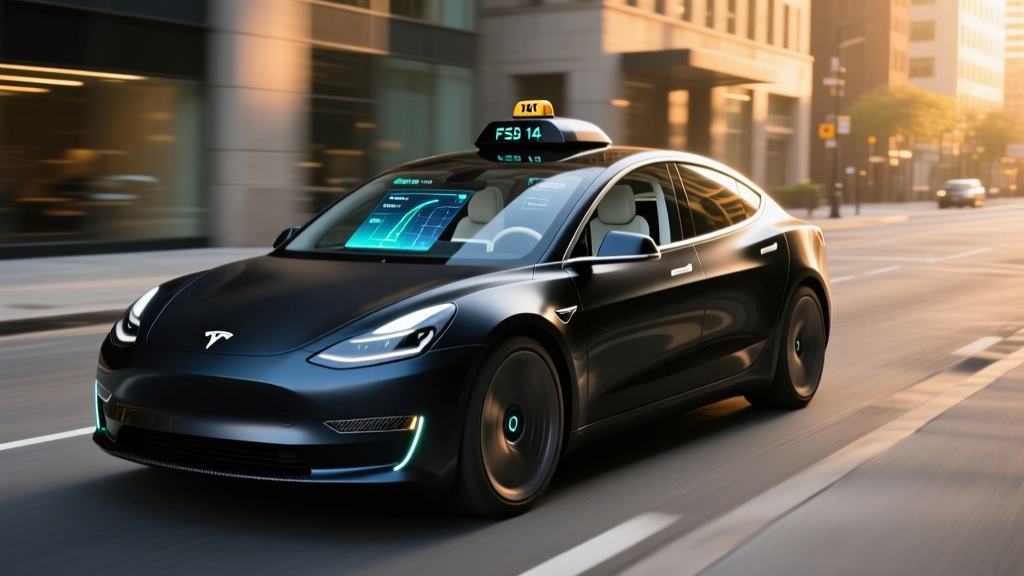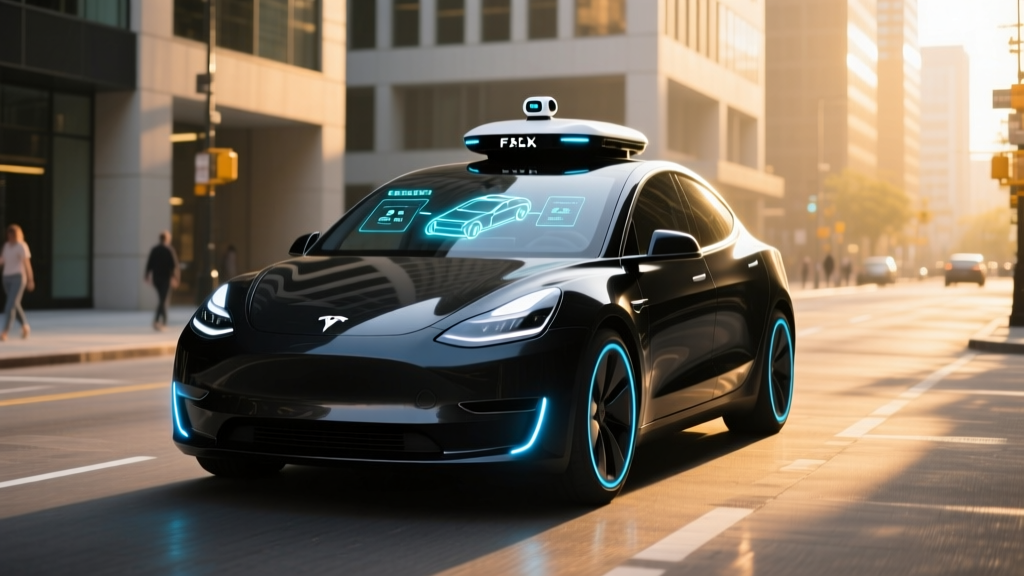
Tesla's Full Self-Driving (FSD) system generates more debate than almost any other feature in the electric-vehicle market. The name implies a car that drives itself — but does it? If you've been searching for a clear answer to what level is Tesla FSD on the SAE automation scale, the short answer is SAE Level 2. That means the driver must remain fully engaged, hands on or near the wheel, and eyes on the road at all times.
That reality doesn't mean FSD is unimpressive. It's one of the most capable consumer driver-assistance suites available in 2026, handling complex urban intersections, highway lane changes, and stoplight recognition. But understanding exactly what it can do, what it cannot do, and what you're paying for is essential before you subscribe or buy.
Understanding the SAE Automation Scale
The Society of Automotive Engineers (SAE) defines six levels of driving automation, from Level 0 (no automation) to Level 5 (full automation in all conditions). This framework, detailed in the SAE J3016 standard, is the globally accepted benchmark for classifying driver-assist and autonomous systems.
- Level 0: No automation — warnings only (blind-spot alerts, forward collision warning)
- Level 1: Driver assistance — one function automated at a time (adaptive cruise OR lane centering)
- Level 2: Partial automation — steering AND acceleration/braking automated simultaneously; driver must supervise continuously
- Level 3: Conditional automation — system drives in limited scenarios; driver must take over when requested
- Level 4: High automation — system drives without human input in defined operational domains (e.g., Waymo robotaxis in mapped city zones)
- Level 5: Full automation — system drives everywhere, in all conditions, with no human backup needed (does not exist commercially in 2026)
Tesla FSD (Supervised) operates at Level 2 because it combines longitudinal control (acceleration and braking) with lateral control (steering) — but requires the driver to monitor the environment and intervene at any moment. The "Supervised" label Tesla added to the product name in late 2024 reinforces this legal and technical reality.
The critical distinction: at Level 2, you are the fallback. At Level 4, the system is the fallback. Tesla FSD has not been certified at Level 3 or above by any regulatory body, including NHTSA.
How Tesla FSD (Supervised) Works Technically
Tesla's approach to FSD is distinct from competitors in one fundamental way: it relies exclusively on cameras. Since 2022, Tesla has removed radar and ultrasonic sensors from all new vehicles, betting entirely on its "Tesla Vision" camera-only architecture. In 2026, new Tesla vehicles ship with the Hardware 4 (HW4) suite, which includes:
- 8 cameras providing 360-degree visibility (forward-facing main + narrow, two forward side-looking, two rear side-looking, one rear-view)
- HW4 neural processing chip capable of processing camera feeds in real time with significantly higher resolution than HW3
- End-to-end neural network architecture (introduced in FSD v12 and refined through v13) that replaces hand-coded rules with learned driving behavior from billions of miles of fleet data
The end-to-end neural net approach is a significant technical shift. Rather than programming explicit rules ("stop at red lights," "yield to pedestrians"), the system learned driving patterns from massive real-world video datasets. This makes FSD's behavior more fluid and human-like — but also less predictable and harder to audit when failures occur.
By contrast, competitors like GM's Super Cruise and Ford's BlueCruise use a combination of cameras, radar, and LiDAR-mapped HD road data, restricting hands-off operation to pre-mapped divided highways. Tesla's approach aims for broader geographic coverage but demands stricter driver supervision because the system encounters more unpredictable scenarios.
What Tesla FSD Actually Does in the Real World
FSD (Supervised) encompasses several sub-features that work together across different driving contexts:
| Feature | What It Does | Environment |
|---|---|---|
| Traffic-Aware Cruise Control | Maintains set speed, adjusts for vehicles ahead | All roads |
| Autosteer | Centers vehicle in lane, handles curves | Highways and city streets |
| Auto Lane Change | Initiates and completes lane changes based on navigation route or driver confirmation | Highways |
| Traffic Light & Stop Sign Control | Detects and responds to traffic signals and stop signs | City streets |
| Navigate on Autopilot | Handles highway on/off-ramps, interchanges, and overtaking | Highways |
| Smart Summon / Actually Smart Summon | Navigates parking lots to reach the driver at a specified location | Parking lots (private property) |
| Autopark | Identifies parking spaces and parks the vehicle (parallel or perpendicular) | Parking lots and streets |
In real-world use on 2025–2026 software builds, FSD handles most highway driving with minimal intervention. City street performance has improved substantially with the v12/v13 neural-net architecture — the car navigates unprotected left turns, construction zones, and multi-lane roundabouts more smoothly than earlier rule-based versions. However, you should expect to take over at least once or twice per 30–50 miles of complex urban driving, and more frequently in adverse conditions.
Real-World Limitations: Where FSD Falls Short
FSD is not a self-driving system. The following scenarios require heightened driver attention and frequent manual takeover:
- Heavy rain, snow, or fog: Camera-only vision degrades significantly when lenses are obscured. The system may disengage abruptly.
- Faded or missing lane markings: Rural roads and construction zones with conflicting temporary markings confuse the system.
- Complex unprotected intersections: Multi-lane intersections with turning vehicles, pedestrians, and cyclists require constant supervision.
- Sun glare and low-visibility conditions: Direct sun into forward cameras can blind the system temporarily.
- Emergency vehicles: While FSD attempts to detect and yield to emergency vehicles, response is not guaranteed.
- Road debris and unusual obstacles: The system may not recognize fallen objects, animals, or unconventional road hazards.
Bottom line: You are the driver. NHTSA has investigated multiple crashes involving Tesla Autopilot/FSD where driver inattention was a contributing factor. Never use FSD while fatigued, distracted, or impaired.
Cold weather introduces an additional layer of complexity. Camera lenses can accumulate ice or road salt spray, and the system may issue a "camera visibility reduced" warning and limit or disable FSD features. Keeping cameras clean and using the preconditioning feature before winter drives helps, but it's not a complete solution.
Tesla FSD Cost: Purchase vs. Subscription in 2026
Tesla offers FSD (Supervised) through two payment models. The costs have shifted over the years — here's the current structure as of 2026:
| Option | Cost | Notes |
|---|---|---|
| FSD (Supervised) — One-Time Purchase | $8,000 | Tied to the vehicle; transfers if you sell the car. Not transferable between your vehicles. |
| FSD (Supervised) — Monthly Subscription | $99/month | Cancel anytime. Ideal for testing or seasonal use. Requires HW3 or HW4. |
| Basic Autopilot (standard) | Included | Traffic-aware cruise control + Autosteer on highways. No city-street driving or auto lane change. |
| Enhanced Autopilot | $6,000 (one-time) | Adds Navigate on Autopilot, Auto Lane Change, Autopark, Summon. No city-street traffic light control. |
The subscription model makes financial sense unless you plan to keep the vehicle for more than ~6.7 years (80 months × $99 ≈ $8,000). For buyers who trade vehicles every 3–5 years, the monthly subscription avoids tying $8,000 to a depreciating asset. Note that FSD purchase does not transfer to a new Tesla — it stays with the original VIN.
Neither Basic Autopilot nor FSD qualifies as an autonomous-driving feature for the purposes of the federal §30D tax credit. The credit applies to the vehicle itself based on battery sourcing and MSRP caps, not software add-ons.
Which Tesla Models Include FSD?
FSD (Supervised) is available as a purchase or subscription on every current-production Tesla vehicle. It is never included as standard equipment — you always pay extra. Here's the breakdown by model for 2026:
- Model 3 (Highland refresh): All trims (Standard Range, Long Range, Performance) support FSD with HW4. Base MSRP starts at ~$38,990; FSD adds $8,000 or $99/mo.
- Model Y (Juniper refresh): All trims support FSD with HW4. Base MSRP starts at ~$44,990.
- Model S: All trims (Long Range, Plaid) support FSD. Base MSRP starts at ~$79,990.
- Model X: All trims (Long Range, Plaid) support FSD. Base MSRP starts at ~$84,990.
- Cybertruck: All trims support FSD with HW4. Base MSRP starts at ~$79,990 (AWD).
All new Teslas ship with HW4 hardware as standard. Owners of older vehicles with HW3 may need to confirm compatibility — Tesla has offered HW3-to-HW4 upgrades in some cases, but availability varies.
How Tesla FSD Compares to Competing Systems
Tesla isn't the only player in advanced driver assistance. Here's how FSD stacks up against other major Level 2 systems available in 2026:
| System | Brand | SAE Level | Hands-Off? | Coverage Area | Cost |
|---|---|---|---|---|---|
| FSD (Supervised) | Tesla | Level 2 | No — hands-on/eyes-on | All roads (city + highway) | $8,000 or $99/mo |
| Super Cruise | GM (Cadillac, Chevy, GMC) | Level 2 | Yes — on mapped highways | 750,000+ mi of mapped divided highways | Included on select trims; $2,500 add-on otherwise |
| BlueCruise | Ford / Lincoln | Level 2 | Yes — on mapped highways | 130,000+ mi of mapped divided highways | $2,100 (2-yr) or $75/mo subscription |
| ProPILOT Assist 2.0 | Nissan | Level 2 | Yes — on mapped highways (eyes-off) | Mapped divided highways | Included on select trims |
| Autopilot (Basic) | Tesla | Level 2 | No — hands-on | All roads (highway-focused) | Included standard |
The key tradeoff: Tesla FSD covers the broadest geographic area (any road, not just pre-mapped highways), but requires the most driver engagement (hands-on, eyes-on at all times). GM Super Cruise and Ford BlueCruise cover fewer roads but permit hands-off, eyes-off operation within those mapped corridors — which many drivers find less fatiguing on long highway trips.
Neither approach is Level 3 or above. In every case, you remain the responsible driver. IIHS research has consistently shown that drivers using Level 2 systems can develop over-reliance, leading to delayed reaction times when takeover is needed. Pairing any of these systems with attentive driving habits is essential.
Is Tesla FSD Worth It in 2026?
Whether FSD justifies its cost depends entirely on your driving profile and expectations:
- You drive 15,000+ miles/year in varied conditions and want the most comprehensive Level 2 suite available
- You value receiving continuous software improvements via OTA updates
- You're comfortable with a camera-only approach and accept its weather limitations
- You understand you are paying for advanced driver assistance, not autonomy
FSD Does Not Make Sense If:
- You primarily drive on well-mapped highways — Super Cruise or BlueCruise offer hands-off convenience at lower cost
- You expect a self-driving car that lets you read, sleep, or use your phone — that technology does not exist in consumer vehicles in 2026
- You live in an area with frequent heavy snow, fog, or rain that degrades camera visibility
- You trade vehicles every 2–3 years — the $8,000 purchase doesn't transfer, and the subscription savings are modest over short ownership
The $99/month subscription is the lowest-risk way to evaluate FSD. Activate it before a road trip or during a month of heavy commuting, then cancel if it doesn't meet your needs. This approach costs less than $600 over six months — far less than the $8,000 one-time commitment.
Frequently Asked Questions
Is Tesla FSD actually self-driving?
No. Tesla FSD (Supervised) is an SAE Level 2 driver-assistance system. The driver must remain fully attentive, keep hands on or near the steering wheel, and be prepared to take over at any moment. No consumer vehicle sold in the United States in 2026 is self-driving. Only Level 4 robotaxi services like Waymo operate without a human driver, and they are limited to specific geofenced areas.
Can Tesla FSD drive me home if I'm tired or had a drink?
Absolutely not. Using FSD while impaired, fatigued, or unable to take over is dangerous and illegal. You are the driver of the vehicle at all times, and law enforcement treats FSD-related incidents the same as any other driving offense. NHTSA has investigated multiple fatal crashes where Autopilot or FSD was engaged and the driver was not attentive.
Does FSD work in winter weather?
FSD performance degrades in snow, heavy rain, fog, and icy conditions. Camera lenses can become obscured by road salt spray, snow buildup, or condensation. The system may issue visibility warnings and limit functionality. In these conditions, expect to take over more frequently and drive with heightened caution. Preconditioning the vehicle and cleaning cameras before departure helps but does not eliminate the issue.
Will FSD eventually become Level 3 or Level 4?
Tesla has stated ambitions to achieve unsupervised autonomous driving, but as of 2026, no regulatory body has certified FSD at Level 3 or above. Achieving higher automation levels requires not just technical capability but regulatory approval, liability frameworks, and demonstrated safety data across diverse conditions. The timeline remains uncertain, and Tesla's promises of imminent full autonomy have been repeatedly delayed since 2016.
Does the FSD purchase transfer if I buy a new Tesla?
Generally, no. The $8,000 FSD purchase is tied to the original vehicle's VIN. If you trade in or sell your Tesla, the FSD license stays with that car. Tesla has occasionally offered limited-time FSD transfer promotions for existing owners purchasing a new vehicle, but these are exceptions, not policy. The $99/month subscription is tied to your Tesla account and can be applied to any compatible Tesla you own or lease.
What's the difference between Autopilot, Enhanced Autopilot, and FSD?
Basic Autopilot (included on all Teslas) provides traffic-aware cruise control and lane centering, primarily for highway use. Enhanced Autopilot ($6,000) adds Navigate on Autopilot (highway on/off-ramps), Auto Lane Change, Autopark, and Summon. FSD (Supervised) ($8,000 or $99/mo) includes everything in Enhanced Autopilot plus Traffic Light and Stop Sign Control and city-street Autosteer — the most comprehensive package.