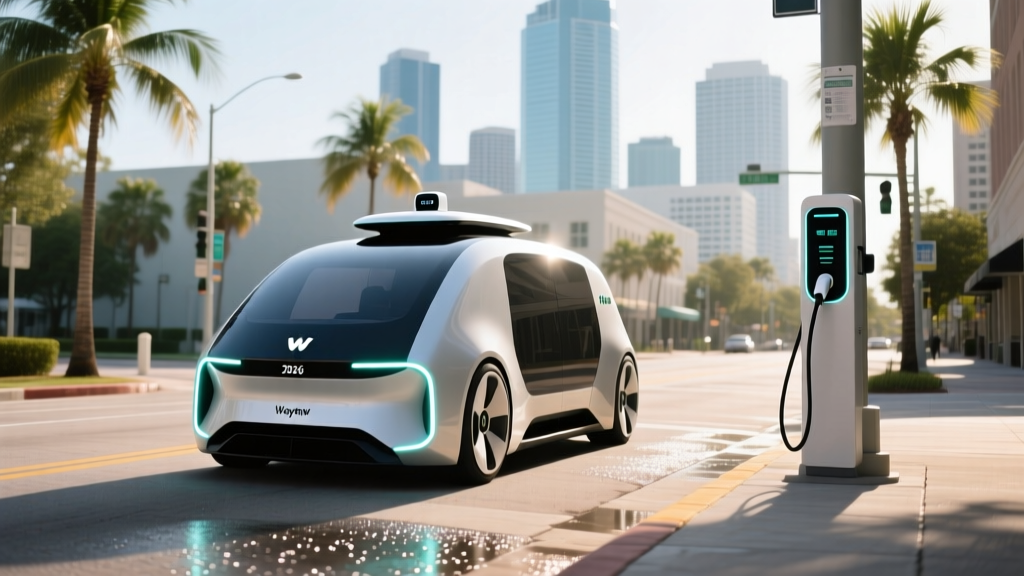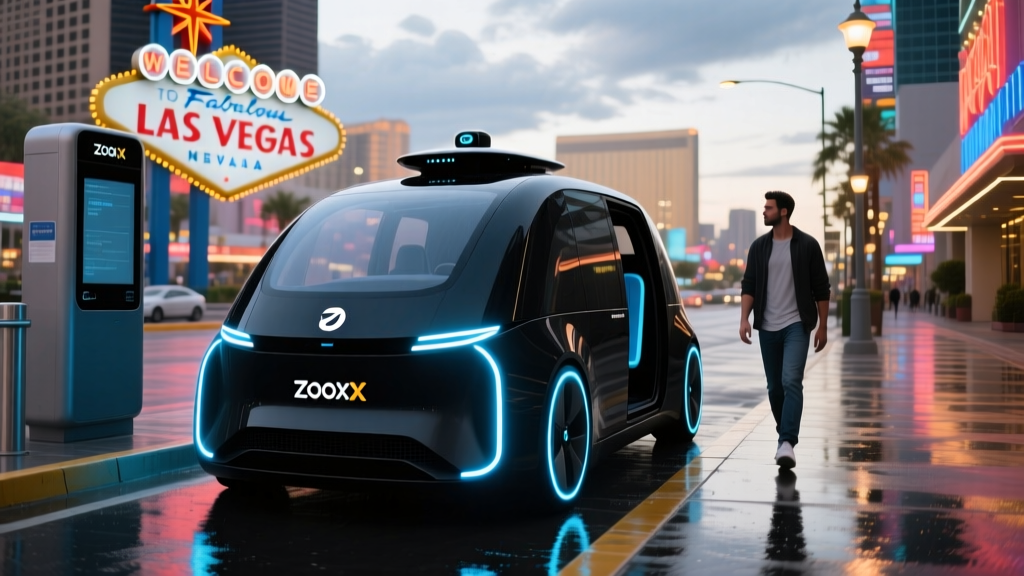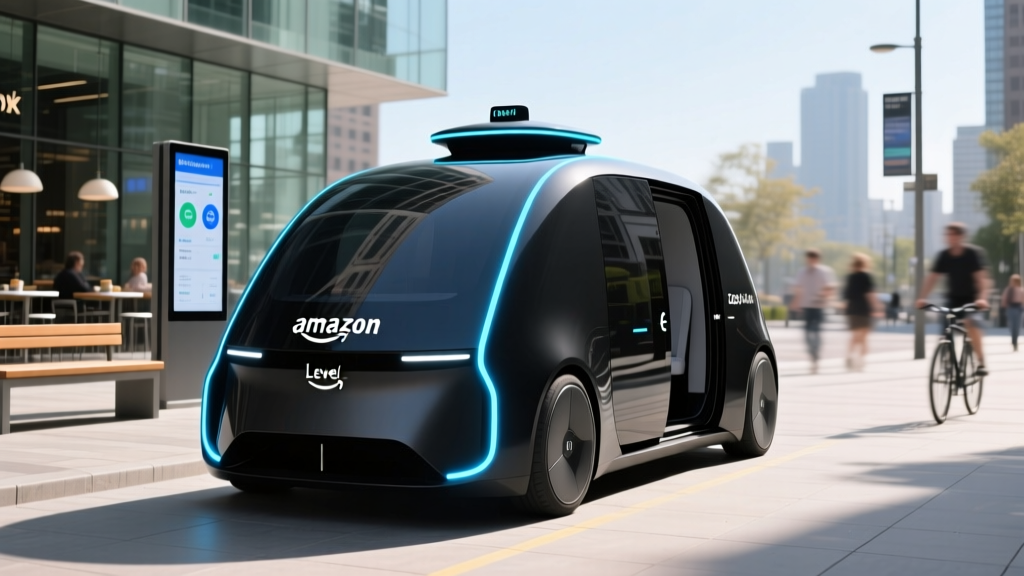
If you've seen a boxy, carriage-shaped vehicle gliding through city streets with no one behind the wheel, you've probably asked: what is a Zoox car? Unlike retrofitted rideshare vehicles bolted with sensors, the Zoox robotaxi was designed from the ground up as a fully autonomous, bidirectional electric vehicle — no steering wheel, no pedals, no driver's seat. Backed by Amazon since its 2020 acquisition, Zoox represents one of only a handful of Level 4 robotaxi services operating on public roads in the United States.
This guide covers everything a prospective rider or EV-curious observer needs to know: the vehicle's specs and technology stack, where you can hail one today, how pricing compares to Uber and Lyft, what the safety data actually shows, and the hard limitations that still constrain robotaxi operations in 2026.
Zoox Vehicle Specs: The Purpose-Built Robotaxi
The Zoox vehicle is not a modified consumer car. It is a symmetric, bidirectional battery-electric platform built specifically for autonomous urban mobility. The vehicle can travel in either direction without turning around — a design choice that simplifies routing in tight urban corridors and dead-end streets.
| Attribute | Specification |
|---|---|
| Vehicle Type | Purpose-built bidirectional BEV robotaxi |
| Seating Capacity | 4 passengers (face-to-face configuration) |
| Battery Chemistry | NMC (Nickel Manganese Cobalt) lithium-ion |
| Battery Capacity | ~133 kWh (estimated total pack) |
| EPA Range | ~150–180 miles (estimated; urban duty cycle) |
| Top Speed | 75 mph |
| Steering / Pedals | None — fully driverless design |
| Drive Configuration | Dual-motor AWD, four-wheel steering |
| Charging | DC fast charge capable (depot-based) |
| Autonomy Level | SAE Level 4 (geofenced driverless) |
The Zoox robotaxi operates at SAE Level 4: High Automation. This means the vehicle handles all driving tasks within its defined operational design domain (specific geofenced areas, certain weather and road conditions) without any human driver present. There is no steering wheel and no expectation of human takeover. This is fundamentally different from consumer Level 2 systems like Tesla Autopilot, GM Super Cruise, or Ford BlueCruise, which require an attentive driver at all times. Zoox and Waymo are Level 4; your personal car's driver-assist is Level 2.
Where Can You Ride a Zoox Robotaxi Right Now?
Zoox has been methodically expanding its commercial service footprint, but availability remains limited to specific geofenced zones within select cities. As of early 2026, here is where Zoox robotaxi service is live or in advanced public pilot stages:
| City | Status | Service Area Notes |
|---|---|---|
| Las Vegas, NV | Commercial service (paid rides) | Las Vegas Strip corridor and surrounding areas; expanded geofence since 2024 launch |
| San Francisco, CA | Commercial service (paid rides) | Select zones; phased expansion ongoing per CPUC permits |
| Foster City, CA | Testing / limited pilot | Suburban testing zone near Zoox headquarters |
| Austin, TX | Testing / pre-commercial | Mapping and validation phase; no public rides yet |
| Atlanta, GA | Testing | Early-stage road testing; regulatory approval pending |
Las Vegas was Zoox's first commercial launch market, chosen for its structured urban grid, predictable tourist corridors, and cooperative regulatory environment. San Francisco followed under permits from the California Public Utilities Commission (CPUC), which oversees autonomous vehicle passenger service in the state.
Key constraint: You cannot hail a Zoox outside its approved geofence. If you're visiting Las Vegas and your destination falls outside the operational zone, the app simply won't let you book that trip.
How to Use Zoox and What It Costs vs. Uber/Lyft
Riding in a Zoox robotaxi is app-based, similar to traditional rideshare. You download the Zoox app (available in active service cities), set your pickup and dropoff within the geofenced zone, and a vehicle arrives — with no one inside.
Because Zoox is a carriage-style vehicle with face-to-face seating for four, the ride experience differs noticeably from sitting in the back of a Prius or Model Y. The interior features bench seating, large glass panels for visibility, and an in-ride display showing the vehicle's perception of its surroundings.
| Factor | Zoox Robotaxi | UberX / Lyft (Human Driver) |
|---|---|---|
| Base Fare | Comparable or slightly lower | Standard market rate |
| Per-Mile Rate | ~$1.00–$1.50/mi (estimated) | ~$1.25–$2.00/mi (varies by demand) |
| Surge Pricing | Limited / introductory pricing in some markets | Dynamic surge during peak hours |
| Tips | Not applicable (no driver) | Expected (~15–20%) |
| Average 5-Mile Trip | ~$8–$14 (estimated) | ~$12–$22 (with tip, pre-surge) |
Zoox's pricing strategy has been aggressive in its launch markets, undercutting traditional rideshare to build ridership and gather feedback. The absence of a driver means no tip, which alone saves riders 15–20% on every trip. However, availability constraints and geofence limits mean Zoox won't replace Uber for airport runs or cross-town trips outside its zones.
During early commercial phases, Zoox has offered promotional and discounted fares. As the service matures and fleet scales, pricing is expected to normalize — though the structural cost advantage of removing the driver should keep Zoox competitive on a per-mile basis long term.
Safety Data: What the Numbers Actually Show
Safety is the single most scrutinized aspect of any robotaxi operation. Zoox, like Waymo and Cruise (now restructured), is required to report disengagement data, collision reports, and operational metrics to state regulators. Here is what we know from publicly available data and regulatory filings:
- Miles driven autonomously: Zoox has logged millions of autonomous miles across its testing and commercial fleets in California, Nevada, and other test markets. Exact cumulative figures are reported to the NHTSA and California DMV.
- Disengagement rate: Zoox reports disengagement metrics (instances where a remote operator must intervene) to the California DMV. Rates have improved significantly year-over-year as the system's perception and planning software matures.
- Collision reports: Zoox has reported minor incidents consistent with urban robotaxi operations — primarily low-speed contact events. No fatalities involving a Zoox robotaxi in autonomous mode have been publicly reported as of early 2026.
- Remote assistance: Zoox uses a remote guidance model where off-site operators can assist the vehicle in complex scenarios (construction zones, unusual obstacles) without directly "driving" the car in real time.
For context, the NHTSA Standing General Order requires all Level 4 operators to report crashes involving their ADS-equipped vehicles. This data is publicly searchable and provides the most objective incident record available.
It's worth noting that robotaxi safety data must be interpreted carefully. These vehicles operate in dense urban environments at relatively low speeds, where minor contact incidents (a scraped bumper at a four-way stop, for instance) are statistically more likely but far less severe than highway collisions. Zoox's conservative driving behavior — yielding frequently, maintaining generous following distances — reduces severe incident risk but can frustrate human drivers sharing the road.
Technology Stack: Sensors, Compute, and the Bidirectional Advantage
Zoox's sensor suite is designed for 360-degree perception with redundancy across multiple modalities. Unlike Tesla's camera-only approach, Zoox employs a sensor-fusion stack combining lidar, radar, and cameras.
- Lidar: Multiple roof-mounted and corner-mounted lidar units provide high-resolution 3D point clouds for object detection and distance measurement at range. Lidar is critical for reliable performance in low-light and high-glare conditions where cameras alone struggle.
- Cameras: A surround-camera array covers the full 360-degree field of view, providing color, texture, and semantic information (traffic light state, signage text, lane markings).
- Radar: Forward and corner radar units contribute velocity data for moving objects and perform reliably in rain, fog, and dust — conditions that degrade lidar and camera performance.
- Compute platform: Custom high-performance computing hardware processes sensor data in real time, running Zoox's proprietary perception, prediction, and planning algorithms.
- HD maps: Zoox relies on pre-built high-definition maps of its operational areas, which provide lane geometry, traffic control devices, and known infrastructure. The vehicle localizes against these maps in real time.
- Bidirectional driving: Because the vehicle is symmetric, it can legally and physically travel in either direction. This eliminates three-point turns and U-turns in dead-end situations — a meaningful safety and efficiency advantage in dense urban routing.
The reliance on HD maps and geofencing is both a strength and a limitation. Within mapped zones, the vehicle has extraordinary situational awareness. Outside those zones, it cannot operate. This is why Zoox (and all current Level 4 operators) cannot simply "drive anywhere" — each new city requires extensive mapping, validation, and regulatory approval before a single passenger is carried.
Current Limitations: What Zoox Cannot Do
For all its sophistication, the Zoox robotaxi operates under significant constraints that define the current reality of Level 4 autonomy:
- Geofence restriction: The vehicle can only operate within pre-mapped, regulator-approved zones. A trip that crosses the geofence boundary cannot be booked.
- Weather constraints: Heavy rain, snow, dense fog, and ice can degrade sensor performance. Zoox may restrict or suspend service during severe weather events. Las Vegas's dry climate is a strategic advantage here; expanding to cities with harsh winters presents engineering and safety challenges.
- Highway driving: Current Zoox operations are primarily urban and suburban. High-speed highway merging and sustained travel above ~45–50 mph within the geofence may be restricted depending on the operational design domain.
- Construction zones and edge cases: Unmapped road changes, temporary lane closures, and unusual obstacles (fallen trees, accident debris) may require remote assistance or route replanning, adding delay.
- Pickup/dropoff precision: The vehicle may not pull up to the exact curb spot you want — it selects safe, legal stopping points that might be slightly offset from your pin.
- No trunk access for passengers: The carriage design prioritizes interior seating. Luggage capacity for airport-style trips is limited compared to a conventional rideshare sedan or SUV.
- Accessibility: While Zoox has stated ADA compliance goals, wheelchair-accessible variants and full accessibility integration remain ongoing challenges across the robotaxi industry.
These limitations are not unique to Zoox — they apply broadly to every Level 4 operator in 2026, including Waymo. The technology excels within its defined domain but cannot yet replicate the go-anywhere flexibility of a human driver.
Regulatory Landscape: Who Approves Robotaxi Operations?
Robotaxi deployment in the United States is governed by a patchwork of state and federal regulations, with no single national framework for autonomous vehicle passenger service.
- California (CPUC & DMV): The California Public Utilities Commission issues permits for driverless passenger service. The California DMV manages testing permits and disengagement reporting. Zoox holds permits for both testing and commercial deployment in approved zones.
- Nevada: Nevada's regulatory framework has been comparatively permissive, enabling Zoox's Las Vegas commercial launch. The Nevada DMV and state legislature have established autonomous vehicle testing and deployment rules.
- Federal (NHTSA): The National Highway Traffic Safety Administration sets vehicle safety standards and requires crash reporting via its Standing General Order. NHTSA does not currently "approve" robotaxi services but can investigate and issue recalls for ADS-equipped vehicles.
- Other states: Texas, Arizona, Georgia, and others have varying frameworks. Some require minimal notification; others have not yet established clear pathways for commercial driverless service.
This regulatory fragmentation means that expanding to a new city is not merely a technical challenge — it is a legal and political process that can take months or years. Zoox's expansion pace reflects this reality, not just engineering readiness.
Zoox vs. Waymo: How the Two Level 4 Services Compare
Zoox is not the only Level 4 robotaxi on American roads. Waymo (Alphabet/Google) is the other major player, and the two take meaningfully different approaches:
| Factor | Zoox | Waymo |
|---|---|---|
| Vehicle | Purpose-built bidirectional carriage (no steering wheel) | Retrofitted Jaguar I-PACE; next-gen Zeekr vehicle in pipeline |
| Autonomy Level | SAE Level 4 | SAE Level 4 |
| Primary Markets | Las Vegas, San Francisco | Phoenix, San Francisco, Los Angeles, Austin (expanding) |
| Fleet Size | Smaller; scaling | Larger; hundreds of vehicles in operation |
| Sensor Approach | Lidar + radar + cameras (sensor fusion) | Lidar + radar + cameras (sensor fusion) |
| Parent Company | Amazon | Alphabet (Google) |
| Wait Times | Longer in current markets (smaller fleet) | Shorter in mature markets (larger fleet) |
| Highway Capability | Limited urban/suburban focus | Some highway segments approved (e.g., Phoenix freeways) |
Waymo currently has a significant lead in fleet scale, geographic coverage, and cumulative rider volume. Zoox's advantage lies in its purpose-built vehicle — optimized entirely for autonomous passenger service rather than adapted from a consumer car. Over time, that design advantage may yield lower per-vehicle operating costs and a more distinctive rider experience, but Waymo's head start in market presence is substantial.
Frequently Asked Questions
Is the Zoox car truly self-driving or is there a safety driver?
There is no safety driver inside the Zoox robotaxi during commercial service. The vehicle is SAE Level 4 — fully driverless within its operational domain. Remote operators can provide guidance in unusual scenarios, but they do not steer or brake the vehicle in real time. This is categorically different from Level 2 consumer systems like Tesla FSD (Supervised), which require an alert human behind the wheel.
Can I buy a Zoox car for personal use?
No. Zoox does not sell its vehicles to consumers. The Zoox robotaxi is operated exclusively as a fleet-based mobility service owned and maintained by Zoox/Amazon. There are no announced plans for a consumer variant.
How does Zoox handle emergencies or accidents?
The vehicle is equipped with emergency communication systems, and riders can contact Zoox support at any time via the in-vehicle interface. In the event of a collision, the vehicle is designed to stop safely, and Zoox's operations center is notified immediately. Zoox reports all incidents to NHTSA and relevant state regulators as required by law.
What happens if the Zoox vehicle gets confused or stuck?
Zoox uses a remote assistance model. If the vehicle encounters an unusual scenario — an unmapped construction zone, an ambiguous four-way stop with conflicting signals — it can pause and request guidance from a remote operator. The operator helps the vehicle resolve the situation and proceed, but does not "drive" the car directly. This may add a minute or two to your trip.
Will Zoox expand to more cities in 2026?
Zoox has announced testing in Austin and Atlanta, with additional cities under evaluation. However, commercial passenger service requires regulatory approval in each jurisdiction, so expansion timelines depend on both technical readiness and the permitting process. Announced testing does not equal available rides — always check the Zoox app for current service availability in your city.
How does the Zoox robotaxi charge?
Zoox vehicles charge at dedicated depot facilities using DC fast charging. Riders will never see the vehicle plugged in during a trip — fleet management handles charging between rides, typically during off-peak hours or when battery state of charge drops below operational thresholds. The ~133 kWh battery pack supports a full shift of urban driving before requiring a charge cycle.
Is riding in a Zoox robotaxi safe compared to a human-driven rideshare?
Available data suggests that Level 4 robotaxis like Zoox and Waymo have competitive or better safety records than human drivers in comparable urban environments, particularly for severe collisions. Robotaxis don't speed, don't drive impaired, and maintain consistent following distances. However, their conservative driving style can cause minor traffic disruptions, and the total mileage base is still far smaller than the human-driving population, making statistical comparisons imprecise. Check NHTSA's ADS crash reporting data for the most current incident records.