You've likely seen videos of white Jaguar I-PACEs gliding through Phoenix intersections with no one behind the wheel, or heard that Alphabet's Waymo now completes over 150,000 paid rides per week across a handful of U.S. cities. But strip away the hype and the question remains practical: what is a robotaxi, exactly, and can you actually hail one today?
A robotaxi is a fully driverless ride-hailing vehicle — no safety operator, no remote teleoperator gripping a joystick — dispatched on demand through a smartphone app, much like Uber or Lyft. Unlike Tesla's Full Self-Driving (Supervised) or GM's Super Cruise, which are Level 2 driver-assist systems requiring an attentive human, robotaxis operate at SAE Level 4: the vehicle handles all driving tasks within a defined operational domain, and the passenger is never expected to intervene.
This guide breaks down what robotaxis actually are in 2026, where you can ride one, what the safety record shows, how pricing compares to traditional rideshare, and the hard limitations that still constrain the technology.
SAE Automation Levels: Where Robotaxis Actually Sit
Before evaluating any autonomous service, you need the SAE J3016 framework. Marketing departments blur these levels constantly; the distinctions matter for liability, insurance, and what you're legally allowed to do in the back seat.
| Level | Name | Who Drives? | Example (2026) | Can You Sleep? |
|---|---|---|---|---|
| 0 | No Automation | Human | Any conventional car | No |
| 1 | Driver Assistance | Human + system assists | Adaptive cruise, lane centering | No |
| 2 | Partial Automation | Human (hands-on or eyes-on) | Tesla Autopilot, FSD Supervised, BlueCruise, Super Cruise | No |
| 3 | Conditional Automation | System in narrow ODD; human must take over on request | Mercedes Drive Pilot (limited, discontinued in U.S.) | Eyes off, brain on |
| 4 | High Automation | System fully, within geofence/ODD | Waymo One, Zoox, Cruise (post-relaunch) | Yes, in-domain |
| 5 | Full Automation | System everywhere, all conditions | Does not yet exist commercially | Yes, anywhere |
Where Can You Actually Hail a Robotaxi Right Now?
As of early 2026, fully driverless commercial robotaxi service in the United States is limited to a handful of metro areas, each approved by state regulators. Expansion announcements are frequent, but only these services are live and bookable today:
| Operator | Vehicle Platform | Live Cities | Hours | Geofence Notes |
|---|---|---|---|---|
| Waymo One | Jaguar I-PACE (custom 5th-gen sensor suite); Zeekr RT (limited rollout) | Phoenix (metro-wide), San Francisco, Los Angeles, Austin | 24/7 in Phoenix & SF; limited overnight elsewhere | Defined ODD polygons; excludes some freeways in LA |
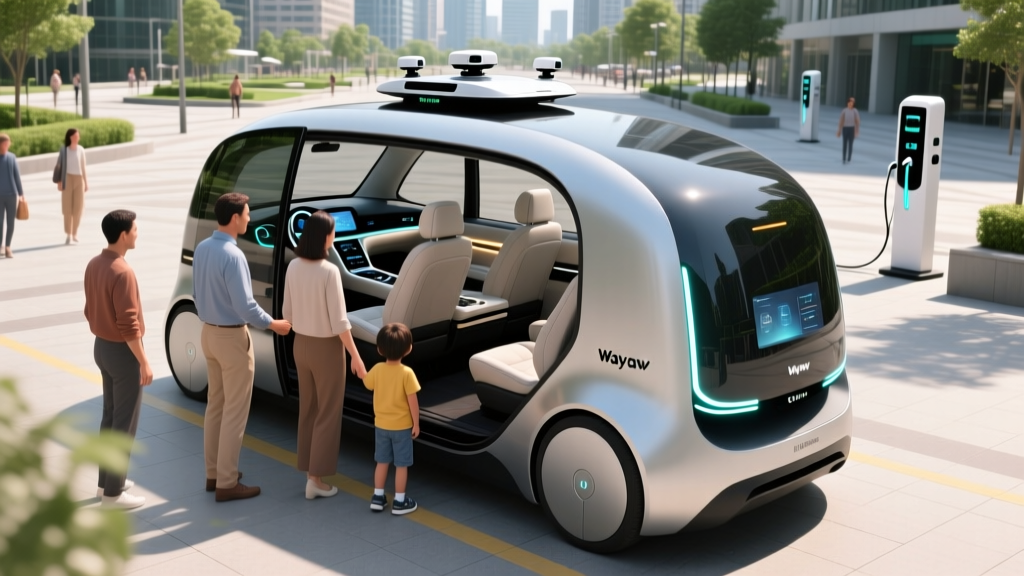
| Zoox | Zoox purpose-built carriage (no steering wheel) | Las Vegas Strip corridor, Foster City (CA) pilot | Limited hours, invitation/expansion phases | Dense urban corridors; low-speed focus |
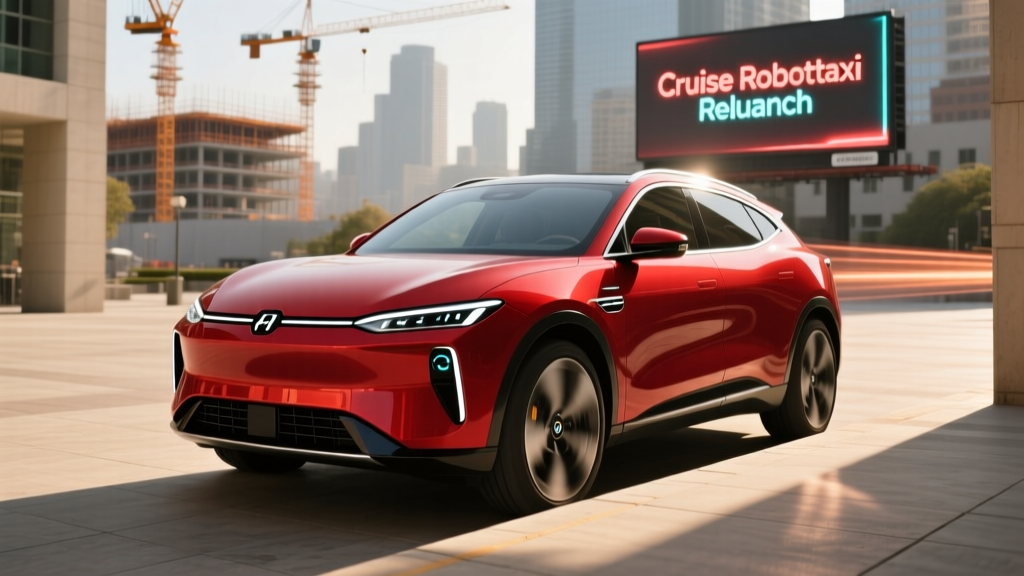
| Cruise (relaunched) | Chevrolet Bolt EV / next-gen Origin (phased) | Phoenix, Dallas, Houston (gradual re-expansion post-2023 suspension) | Daytime + early evening, phased | Safety-driver vehicles first, then driverless in sub-zones |
| Woven City / regional pilots | Various | Closed-campus pilots only (Toyota, Motional) | N/A | Not public ride-hail |
International operations exist but are jurisdictionally distinct: Baidu's Apollo Go runs thousands of daily rides in Wuhan, Beijing, and Chongqing under Chinese municipal permits; Motional (Hyundai/Aptiv joint venture) continues limited Ioniq 5 robotaxi pilots in Las Vegas with a safety operator. Neither is bookable by U.S. consumers outside pilot programs.
How Robotaxi Technology Actually Works
Every Level 4 robotaxi relies on a layered perception-planning-control stack. The specific sensor mix varies by company, but the architecture is consistent.
The Sensor Triad
- LiDAR (Light Detection and Ranging): Spinning or solid-state units emit laser pulses to build a centimeter-accurate 3D point cloud of surroundings, independent of lighting. Waymo's 5th-gen "Halo" rig uses multiple roof- and fender-mounted units. Cruise and Zoox also rely heavily on LiDAR.
- Camera arrays: 8–20+ cameras provide color, texture, and semantic information (traffic-light state, signage, pedestrian intent). Tesla's approach is camera-only; every commercial Level 4 robotaxi in the U.S. supplements cameras with LiDAR and radar.
- Radar (including 4D imaging radar): Measures velocity of moving objects directly via Doppler effect; performs well in rain, fog, and glare where cameras and LiDAR degrade.
Localization and HD Mapping
Robotaxis navigate using pre-built high-definition maps with lane-level geometry, curb heights, and signal phasing, fused with real-time GPS/IMU and LiDAR scan-matching. This is why they're geofenced: the HD map must be maintained, and any construction zone outside the mapped ODD requires either a teleoperations-assisted path or a conservative pull-over.
Planning and Prediction
Neural-network prediction models forecast the trajectories of every agent (pedestrians, cyclists, other vehicles) several seconds ahead; a planner then selects a safe, comfortable trajectory. Edge cases — a couch in the road, a police officer directing traffic with non-standard gestures — remain the frontier where human teleoperators may be consulted.
How Much Does a Robotaxi Ride Cost vs Uber or Lyft?
Pricing is the question most prospective riders ask first. The short answer: robotaxi fares are generally comparable to UberX/Lyft standard, sometimes cheaper during heavy subsidization periods, sometimes higher during peak demand when surge pricing doesn't apply the same way.
| Route (approx.) | Waymo One | UberX | Lyft Standard |
|---|---|---|---|
| Airport to downtown (8 mi) | $22–$30 | $25–$38 | $24–$36 |
| Cross-town (5 mi, midday) | $12–$17 | $14–$22 | $13–$20 |
| Short hop (2 mi) | $7–$10 | $9–$15 | $9–$14 |
| Peak-hour surge (5 mi) | $15–$22 (no surge multiplier) | $28–$55 (surge active) | $25–$50 |
A few structural differences matter:
- No tipping. There's no driver to tip, which shaves 15–20% off the effective cost vs rideshare.
- No surge in the traditional sense. Waymo uses availability-based pricing but caps extremes; during rainstorms or events, it's often cheaper than Uber/Lyft surge.
- Promotional credits. Waymo has offered first-ride and referral credits that can make early rides essentially free — a customer-acquisition strategy subsidized by Alphabet.
- Wait times. Fleet density varies. In Phoenix you might wait 3–6 minutes; in newer markets like Austin, 8–14 minutes is common during off-peak hours.
How Safe Are Robotaxis? The Actual Data
Safety is where marketing claims must bow to numbers. The most transparent dataset comes from Waymo, which has published peer-reviewed and independently analyzed safety comparisons; Cruise's record is more complicated, and Zoox's mileage base is still too small for statistical comparison.
Waymo Safety Data (through 2025, published 2025–2026)
- Fully autonomous miles driven: >50 million driverless miles (cumulative across Phoenix, SF, LA)
- Property-damage-only crash rate vs human benchmark: 76% lower per million miles (Swiss Re partnership analysis, 2024 update)
- Injury-causing crash rate vs human benchmark: 92% lower per million miles
- Contactless events: Rare; most minor incidents involve low-speed sideswipes by other human-driven vehicles in stop-and-go traffic
Source: Waymo Safety Report and NHTSA Standing General Order crash data.
The Cruise counterpoint matters. In October 2023, a Cruise robotaxi in San Francisco struck and then dragged a pedestrian who had been thrown into its path by a human-driven vehicle. California's DMV suspended Cruise's deployment permit; the company paused nationwide operations and relaunched gradually through 2024–2025 with safety drivers first, then phased driverless service in limited zones. This incident underscores that a single high-severity edge case — even one precipitated by a third party — can collapse regulatory trust.
For context, the U.S. human fatality rate is approximately 1.35 deaths per 100 million vehicle miles (NHTSA, 2022 data). Robotaxi fleets have not yet accumulated enough miles to demonstrate statistical significance at the fatality level; the claim is that they are directionally safer on property-damage and injury metrics, which the Waymo data supports within its ODD.
Current Limitations: What Robotaxis Still Cannot Do
Level 4 autonomy is real, but the "4" comes with a long list of caveats. Every robotaxi service today operates under an Operational Design Domain (ODD) — a defined envelope of conditions outside of which the system will either refuse the ride or execute a minimal-risk maneuver (pull over, stop).
Known Constraints in 2026
- Geofencing: You cannot hail a Waymo from San Francisco to Sacramento. The vehicle will refuse trips outside its approved polygon, and freeway routes are selectively enabled.
- Weather: Heavy rain, dense fog, and snow degrade LiDAR and camera performance. Waymo's Phoenix operations rarely face this; SF fog and LA downpours occasionally trigger service pauses or rerouting.
- Construction zones: Unmapped lane shifts, temporary barriers, and flaggers require either a pre-updated HD map or a teleoperations consult. Expect longer routes or ride refusals near active construction.
- Emergency vehicles and police direction: Modern stacks handle sirens and flashing lights reasonably well, but a human officer waving traffic through a non-standard gesture still forces conservative behavior (stop and wait, or pull over).
- Accessibility: Waymo's I-PACE and Cruise's Bolt require passengers to enter a conventional vehicle. Zoox's purpose-built carriage is designed for easier wheelchair access but is not yet in wide commercial deployment. Service-animal policies and mobility-device accommodation remain evolving.
- Passenger behavior: Intoxicated, unruly, or non-buckled passengers create edge cases. Vehicles have in-cabin cameras and can refuse to move or route to a safe stop; this is a frequent operational headache.
- Multi-stop and complex pickups: Apartment complexes, gated communities, drive-throughs, and airport curbside chaos remain difficult. Most services require a precise pin on a public curb.
The Regulatory Landscape: Who Actually Approves Robotaxis
Unlike conventional vehicles, which are federally certified by NHTSA and sold uniformly across 50 states, robotaxi deployment is approved state-by-state and sometimes city-by-city. There is no single national permit.
- California (CPUC + DMV): The DMV issues deployment permits (Cruise, Waymo, Zoox); the California Public Utilities Commission authorizes commercial passenger service and fare collection. San Francisco's Board of Supervisors and local agencies have also weighed in — local political approval matters as much as state permitting.
- Arizona: The most permissive major jurisdiction. No specific permit required beyond standard business and vehicle registration; Waymo has operated driverless in Phoenix since 2020 largely because of this hands-off stance.
- Texas: Austin and Houston have welcomed robotaxi pilots under a 2023 state autonomous-vehicle framework; local permitting is lighter-touch than California.
- Nevada: Authorizes autonomous testing and limited deployment; Zoox's Las Vegas operations run under a state-issued certificate.
- Federal (NHTSA / DOT): NHTSA sets vehicle safety standards (FMVSS) but has not issued a comprehensive robotaxi operating rule. The agency collects crash data via its Standing General Order and can issue recalls — it has opened investigations into both Cruise and Waymo incidents — but deployment authority remains largely with states.
For riders, this patchwork means availability will remain metro-specific for years. A robotaxi you can hail in Austin may not exist in Atlanta, regardless of technical capability.
How to Actually Use a Robotaxi Service
- Download the operator's app (Waymo One, Zoox, or the relevant Cruise app). You'll create an account, add a payment method, and accept terms acknowledging the driverless nature of the ride.
- Enter origin and destination. The app will confirm both are inside the ODD. If not, it will gray out the request.
- Walk to the exact pickup pin. Most services require you to be on a public sidewalk or curb; they won't enter private driveways or parking garages.
- Unlock via app. The vehicle arrives, and you tap "unlock" in the app (or scan a code on the window). Doors open automatically.
- Buckle up and confirm start. A screen or voice prompt asks you to confirm you're ready; the ride begins only when all seatbelts are fastened.
- In-ride controls. You can adjust climate, music, and request a "pull over now" stop via the rear screen. There is typically a help button that connects to a live agent.
- Exit and rate. Payment is automatic; you rate the ride like any rideshare.
Frequently Asked Questions
Is a robotaxi truly self-driving, or is there a hidden human?
In Level 4 services like Waymo One and Zoox, there is no driver in the vehicle and no human remotely piloting it in real time. A remote-assistance team may be consulted for unusual scenarios (the vehicle stops and asks for guidance), but they do not steer or brake — they approve a plan the vehicle executes. This is distinct from Level 2 systems like Tesla FSD (Supervised), where a human must remain engaged at all times.
What happens if the robotaxi gets confused or stuck?
The vehicle executes a "minimal risk condition" — typically a controlled pull-over to the curb or a safe stop in-lane with hazards on. A remote-assistance agent can then approve a new path or dispatch roadside support. You are never expected to take the wheel.
Can I ride a robotaxi in any weather?
Light rain and overcast skies are handled fine. Heavy rain, dense fog, and snow degrade sensors and can trigger service pauses or ride refusals. This is one reason Phoenix — dry and sunny — was the first robotaxi city.
Are robotaxis wheelchair accessible?
Current Waymo (Jaguar I-PACE) and Cruise (Bolt) fleets are not wheelchair accessible. Zoox's purpose-built carriage includes a ramp and securement, but its deployment footprint is still narrow. Accessibility is an active regulatory pressure point, particularly under ADA interpretations.
Who is liable if a robotaxi crashes?
The operating company — Waymo, Cruise, Zoox — carries liability for the vehicle's driving performance within its ODD. This is fundamentally different from Level 2 driver-assist, where the human driver is liable. Insurance structures for robotaxi operators are commercial fleet policies, not personal auto policies.
Will robotaxis replace Uber and Lyft?
Not in the near term. Fleet density, geofence limits, weather constraints, and capital costs keep robotaxis a niche in 2026 — a few tens of thousands of vehicles across a handful of U.S. metros, versus millions of human-driven rideshare vehicles nationwide. Long-term economics favor autonomy (no driver payout), but scaling to suburbia, rural areas, and all weather is a multi-decade transition, not a five-year one.
Do robotaxis qualify for the federal EV tax credit?
No — the §30D credit applies to new EVs purchased for personal use, subject to MSRP caps, buyer income limits, and battery-sourcing rules (see IRS guidance). Fleet vehicles bought by Waymo or Cruise do not generate a consumer credit. Riders benefit only indirectly, through lower operating costs passed into fares.