The Waymo Zeekr Car: A Purpose-Built Robotaxi, Not a Retrofit
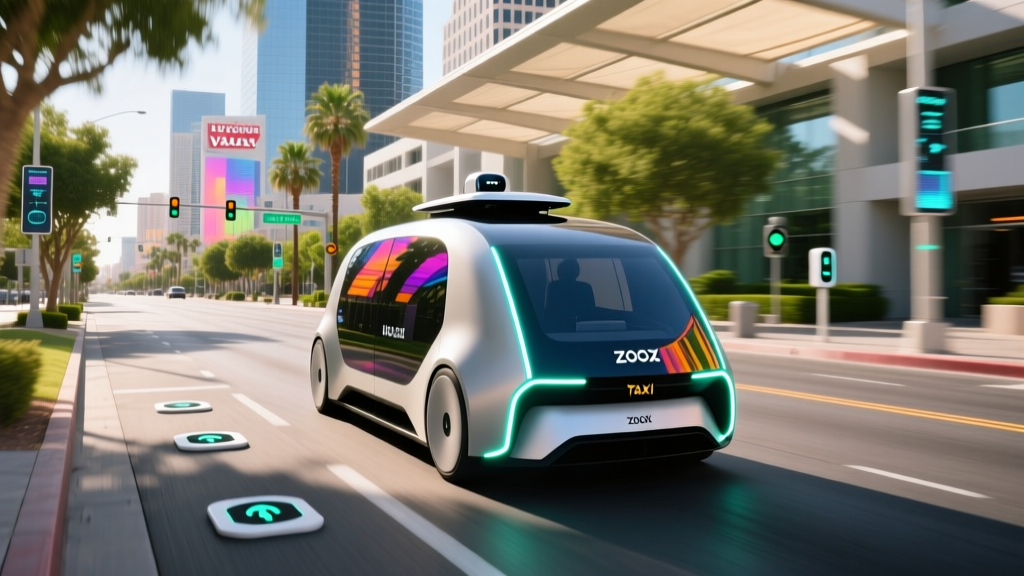
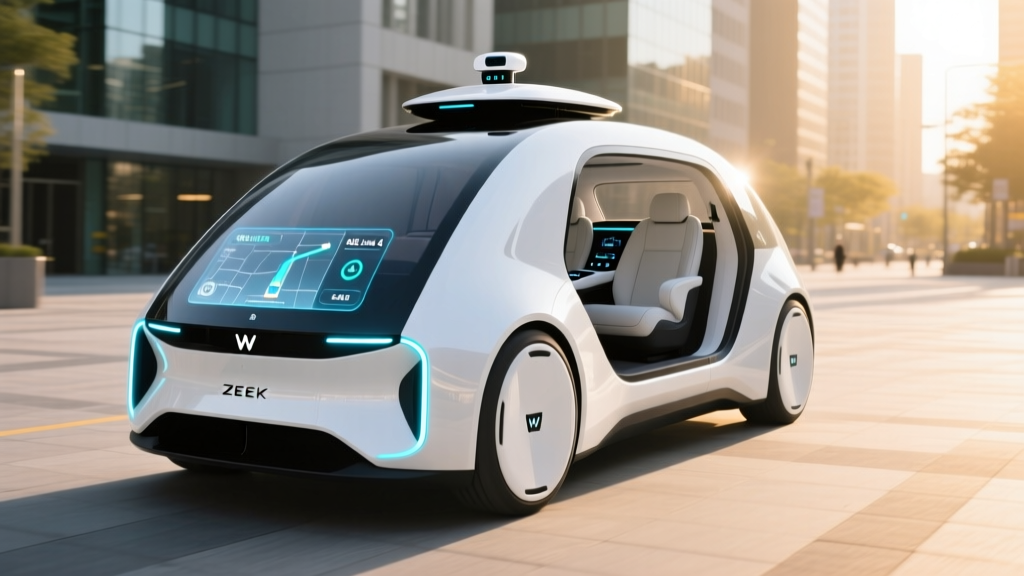
If you've hailed a driverless ride in Phoenix or San Francisco recently, there's a growing chance the vehicle that pulled up wasn't a retrofitted Jaguar I-PACE. It was a low-slung, minivan-like EV designed from the ground up for autonomous operation: the Waymo Zeekr car, officially known as the Zeekr M-Vision concept and production-derivative RT6 robotaxi. Built by Geely's premium EV brand Zeekr on the Sustainable Experience Architecture (SEA), this vehicle represents Waymo's shift from adapting consumer cars to deploying a dedicated autonomous platform.
Unlike Tesla's FSD (Supervised), which remains an SAE Level 2 driver-assist system requiring an attentive human behind the wheel, the Waymo Zeekr robotaxi operates at SAE Level 4 — meaning no driver is present, no steering wheel exists, and the vehicle handles all driving tasks within its defined operational design domain (ODD). This is a fundamental distinction that shapes everything from vehicle design to rider experience.
SAE Automation Levels at a Glance
| Level | Name | Who Drives? | Example |
|---|---|---|---|
| Level 2 | Partial Automation | Human (hands on, eyes on) | Tesla Autopilot, GM Super Cruise, Ford BlueCruise |
| Level 3 | Conditional Automation | System (human on standby) | Mercedes DRIVE PILOT (limited markets) |
| Level 4 | High Automation | System only (no human needed in ODD) | Waymo Zeekr robotaxi, Zoox |
| Level 5 | Full Automation | System only (all conditions) | Does not yet exist commercially |
The Waymo Zeekr car is Level 4 — driverless within its geofenced service area. It cannot operate everywhere in all conditions.
Zeekr RT6 Platform: Battery, Sensors, and Vehicle Specs
The Zeekr-built robotaxi platform rides on Geely's SEA skateboard architecture, the same modular EV underpinning found in the Zeekr 001 and Polestar 4. For the Waymo application, Zeekr engineered a low-floor, wide-door cabin optimized for rider entry and exit rather than driver ergonomics. Key specifications based on Waymo and Zeekr disclosures:
| Attribute | Specification |
|---|---|
| Platform | Geely SEA (Sustainable Experience Architecture) |
| Battery Chemistry | NMC (nickel manganese cobalt), estimated 100 kWh usable |
| Estimated Range | ~250–300 mi (sufficient for full-day robotaxi duty cycles) |
| Charging | DC fast charge capable; depot-based overnight Level 2 charging |
| LiDAR Units | 5+ roof- and fender-mounted LiDAR sensors |
| Cameras | 29+ cameras covering 360° perception |
| Radar | 6 external radar units |
| Seating | Up to 3 riders (no driver seat) |
| Steering Wheel / Pedals | None (fully driverless configuration) |
| Rider Interface | In-cabin screens for route, climate, music, and support |
The sensor suite represents a deliberate contrast to Tesla's camera-only approach. Waymo's stack relies on LiDAR as its primary depth-perception technology, supplemented by high-resolution cameras and radar for redundancy. This multi-modal fusion allows the system to detect objects, classify them, and predict behavior even in low-light or partially occluded conditions — a key reason Waymo has pursued Level 4 deployment while camera-only systems remain at Level 2.
Where Can You Ride the Waymo Zeekr Car Right Now?
As of 2026, Waymo's commercial robotaxi service — branded Waymo One — operates driverless rides across several major U.S. metros. The Zeekr-built vehicles have been progressively integrated into the fleet alongside the older Jaguar I-PACE robotaxis. Service availability is geofenced: the car will only operate within approved zones, which expand incrementally as Waymo validates new road segments.
| Metro Area | Status | Coverage Notes |
|---|---|---|
| Phoenix, AZ (East Valley) | Fully operational | Largest service area; airport rides to PHX available |
| San Francisco, CA | Fully operational | Most of SF proper; SFO airport service launched |
| Los Angeles, CA | Operational (expanding) | Downtown, Hollywood, Santa Monica, Westside zones |
| Austin, TX | Operational (limited) | Downtown and select corridors; Uber integration available |
| Mountain View / Palo Alto, CA | Limited / testing | Selected zones for trusted testers and employees |
To use Waymo One, download the Waymo One app (iOS/Android), enter your destination, and request a ride — the flow mirrors Uber or Lyft. The app shows an estimated fare upfront, the car's approach on a map, and a unique rider code to unlock the doors when the vehicle arrives. You can also request Waymo robotaxis through the Uber app in cities where the two platforms have partnered (currently Austin and select other markets).
Pricing: Waymo vs. Uber and Lyft
One of the most common questions from prospective riders: how does a driverless Waymo ride compare in cost to a traditional rideshare? Based on rider reports and Waymo's published pricing structure, fares are generally competitive with UberX and Lyft Standard — and occasionally cheaper, since there's no driver payout built into the fare.
| Service | Typical Fare Range | Surge Pricing? |
|---|---|---|
| Waymo One | $9 – $16 | Rare; demand-based pricing less aggressive |
| UberX | $11 – $20 | Yes, frequent during peak hours |
| Lyft Standard | $10 – $19 | Yes, common |
| Waymo (airport trip, ~10 mi) | $22 – $38 | Moderate demand adjustments |
Waymo has historically avoided the extreme surge multipliers that Uber and Lyft deploy during high-demand windows. However, wait times can be longer than rideshare in some zones because the robotaxi fleet size is still limited relative to the pool of human drivers. In Phoenix, wait times typically run 3–8 minutes; in San Francisco and LA, expect 5–15 minutes during peak periods.
Safety Record: What the Data Actually Shows
Safety is the single most scrutinized aspect of robotaxi operations. Waymo has accumulated over 30 million fully driverless miles across its operational cities as of late 2025, with that figure climbing through 2026. The company publishes periodic safety reports and is subject to NHTSA oversight and state-level reporting requirements.
Waymo Safety Data Highlights
- Total driverless miles: 30+ million (cumulative through 2025; 2026 figures pending)
- Injury-crash rate: Waymo's published analysis shows its driverless vehicles are involved in injury-causing crashes at approximately 85% lower rate than human benchmarks in comparable urban environments
- Police-reported crashes: Mostly minor, low-speed contacts (stationary object taps, rear-end contacts while stopped); no confirmed fatalities in driverless mode
- Disengagement rate: Not directly comparable to Level 2/3 metrics, since no human driver is present; remote assistance interventions are logged but not publicly broken out per 1,000 miles
Sources: Waymo Safety Reports, NHTSA Standing General Order crash data.
It's important to contextualize these numbers. Robotaxis operate primarily in dense urban environments at moderate speeds — the same conditions where most human fender-benders occur. Waymo's advantage comes from 360-degree sensor coverage, zero distraction, and consistent adherence to speed limits. However, the fleet has drawn scrutiny for incidents involving construction zones, double-parked vehicles, and interactions with emergency responders — edge cases where the system occasionally stops and waits for remote guidance rather than proceeding cautiously.
Following high-profile incidents in San Francisco in 2023–2024 (including a collision with a towed bus and a pedestrian dragged from a separate human-caused crash), California's DMV and the CPUC imposed additional reporting requirements and temporarily restricted Waymo's expansion in certain zones. Waymo responded with software updates and expanded testing validation, and restrictions were subsequently eased.
Technology Stack: How the Waymo Zeekr Car Sees the Road
The Waymo Zeekr robotaxi's perception system is among the most redundant in the industry. Here's a breakdown of the core technology layers:
Perception & Decision-Making Stack
LiDAR (Light Detection and Ranging): Five or more roof- and fender-mounted units generate a real-time 3D point cloud of the vehicle's surroundings out to ~250 meters. LiDAR provides precise depth data regardless of lighting — critical for nighttime and shadow-heavy urban canyons.
Cameras (29+): High-resolution and wide-angle cameras handle object classification (pedestrian vs. cyclist vs. cone), traffic light state detection, and signage reading. Multiple overlapping fields of view ensure no blind spots.
Radar (6 units): Millimeter-wave radar tracks velocity and distance of moving objects, performing well in rain and fog where LiDAR and cameras degrade.
HD Maps + Localization: Waymo pre-maps every road in its service area at centimeter-level precision. The car continuously matches its real-time sensor data against these maps to know its exact position — more accurate than GPS alone.
Planning & Prediction: Waymo's "Driver" software predicts the likely behavior of every detected agent (cars, pedestrians, cyclists) and plans a safe trajectory multiple seconds ahead, re-evaluating ~10 times per second.
Remote Assistance: If the vehicle encounters an unresolvable scenario (e.g., a completely blocked road with no legal alternate path), it can request guidance from a remote operations team. The human advisor provides high-level direction ("go around"), not real-time steering.
This multi-sensor approach contrasts sharply with Tesla's vision-only FSD stack, which relies exclusively on cameras and neural-network inference without LiDAR or HD maps. Both approaches have trade-offs: Waymo's stack is more expensive per vehicle but provides hardware-level redundancy; Tesla's is cheaper to scale but lacks independent depth verification.
Regulatory Landscape: Who Approves Robotaxi Operations?
Robotaxi deployment in the United States is governed by a patchwork of state and federal oversight. No single federal agency currently licenses autonomous vehicles for commercial passenger service. Instead, the regulatory framework works like this:
- NHTSA (federal): Sets vehicle safety standards (FMVSS) and investigates crashes. Waymo has received limited exemptions from certain standards that assume a human driver (e.g., steering wheel requirements).
- State DMVs: Issue permits for testing and, in some states, driverless deployment. California's DMV requires a Deployment Permit for commercial driverless operations.
- State Public Utility Commissions (PUCs): In California, the CPUC regulates robotaxis as passenger carriers, approving fare structures and service areas. This was the body that temporarily paused Waymo's San Francisco expansion in 2023.
- Local municipalities: City governments and transportation authorities negotiate operating agreements, curb-access rules, and airport permits.
This fragmented landscape means Waymo must re-qualify its operations in each new metro area — a significant barrier to rapid national expansion. States like Arizona (where Phoenix is located) adopted permissive regulatory frameworks early, enabling Waymo's largest and longest-running service area. Texas (Austin) has followed a similar model.
Current Limitations: What the Waymo Zeekr Car Cannot Do
Despite impressive capabilities, Level 4 robotaxis have well-defined boundaries. Understanding these limitations is essential for setting realistic expectations:
Known Operational Limitations
- Geofencing: The car will only operate within pre-mapped, approved zones. Request a ride outside the boundary and the app won't let you.
- Heavy weather: Dense fog, heavy snow, and torrential rain can degrade LiDAR and camera performance. Waymo may pause service or restrict routing during severe conditions.
- Construction zones: Rapidly changing lane configurations with temporary barriers and hand-signaling flaggers remain challenging. The car may stop and wait for remote guidance.
- Unmapped or private roads: Driveways, parking garages, and private property are not in the HD map. Drop-offs occur at the curb.
- No highway service (most markets): Waymo's current deployment is optimized for surface streets. Limited freeway segments are included in some cities (e.g., Phoenix), but interstate travel is not available.
- Accessibility gaps: While the Zeekr platform features a low floor and wide doors, wheelchair-accessible vehicle availability remains limited. Waymo has committed to expanding WAV options.
- Pets and unaccompanied minors: Riders must be 18+ and pets are generally not permitted (service animals excepted).
These constraints are not permanent — Waymo's operational design domain expands continuously as the system is validated in new conditions. But they define the current reality: the Waymo Zeekr robotaxi is a transformative urban mobility tool, not a replacement for every car trip you'll ever take.
Frequently Asked Questions
Is the Waymo Zeekr car truly self-driving, or is there a driver?
There is no driver. The Waymo Zeekr robotaxi operates at SAE Level 4, meaning no steering wheel, no pedals, and no human behind the wheel. The vehicle handles all driving tasks autonomously within its geofenced service area. This is fundamentally different from Tesla's FSD (Supervised) or GM's Super Cruise, which are Level 2 systems that require an attentive human driver at all times.
How much does a Waymo robotaxi ride cost compared to Uber?
For a typical 5-mile urban trip, Waymo One fares range from approximately $9–$16, generally comparable to or slightly below UberX ($11–$20) and Lyft Standard ($10–$19). Waymo tends to have less aggressive surge pricing, though wait times may be longer due to smaller fleet sizes. Airport trips (e.g., SFO, PHX) run $22–$38 depending on distance.
Can I buy the Waymo Zeekr car for personal use?
No. The Zeekr RT6 robotaxi platform is built exclusively for Waymo's commercial fleet. It is not available for consumer purchase. Zeekr does sell consumer vehicles (e.g., Zeekr 001, Zeekr X) in certain global markets, but the robotaxi variant is a fleet-only product.
How does Waymo handle situations the car can't resolve?
When the vehicle encounters an ambiguous scenario — such as a fully blocked road or an unusual construction configuration — it will safely stop and connect with Waymo's remote assistance team. A trained advisor provides high-level guidance (e.g., "proceed around the obstacle on the left"), and the car executes the maneuver autonomously. The remote advisor does not steer the car in real time.
What happens if the Waymo Zeekr robotaxi gets into a crash?
Waymo vehicles are equipped with collision detection and automatic emergency protocols. In the event of a crash, the vehicle stops, alerts Waymo's operations center, and contacts emergency services if needed. Riders can use the in-cabin support button to speak with a live agent. Crash data is reported to NHTSA under the Standing General Order for automated driving systems.
Will Waymo expand the Zeekr robotaxi to more cities?
Waymo has announced plans to expand service to additional U.S. metros throughout 2026 and beyond, and the Zeekr platform is expected to be the primary vehicle for new-market deployments due to its purpose-built design and lower per-unit cost compared to the Jaguar I-PACE retrofit. However, each new city requires regulatory approval, HD mapping, and extensive validation testing — so expansion is incremental, not instantaneous.