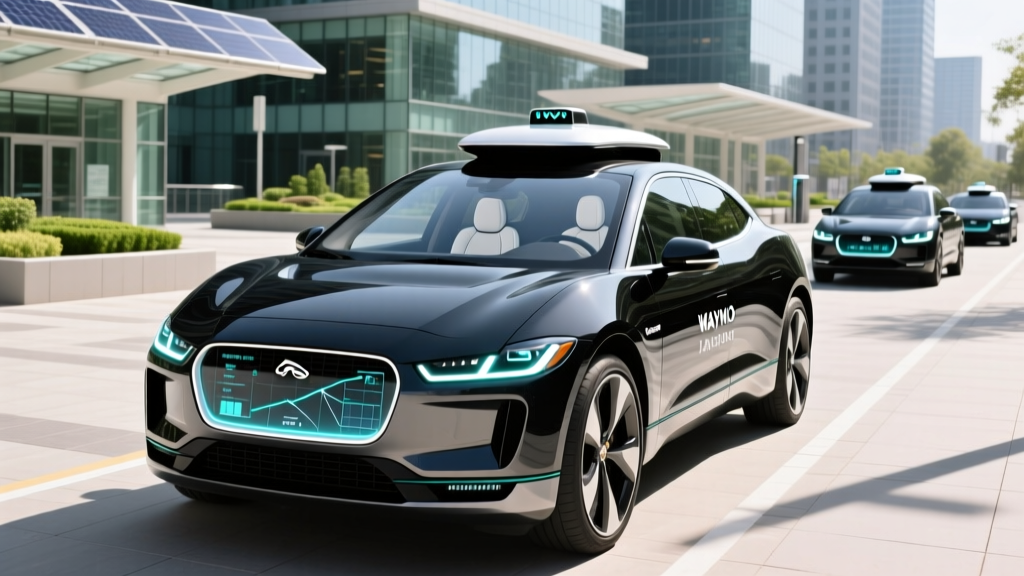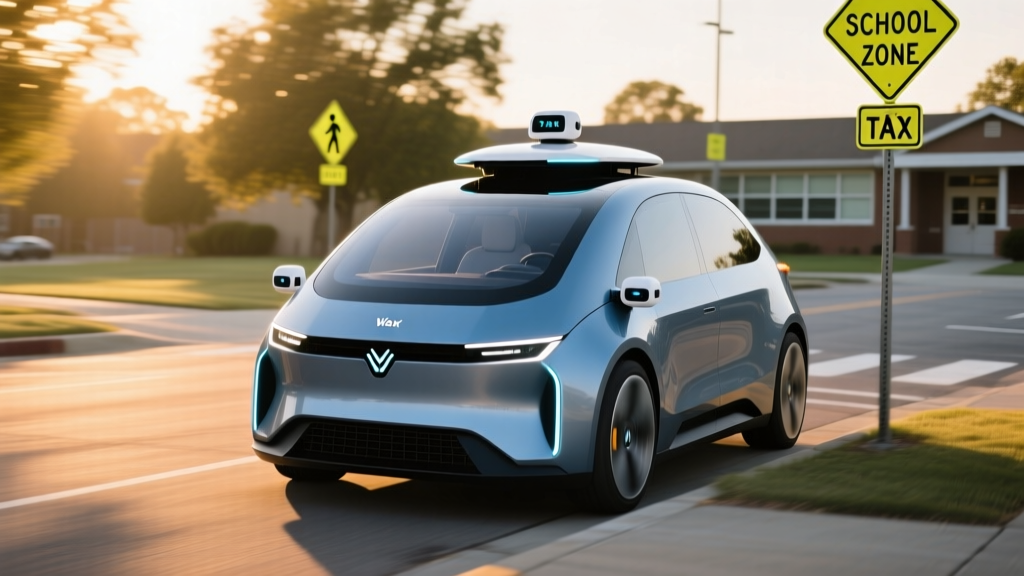
When footage surfaced showing a Waymo car traveled wrong way in a school zone, it reignited a critical question for anyone tracking autonomous vehicles: how close are robotaxis to handling the unpredictable edge cases of real-world driving? The incident—captured in early 2025 and scrutinized by regulators and the public alike—didn't result in a collision, but it exposed the gap between impressive aggregate safety statistics and the messy, imperfect reality of Level 4 autonomy operating on public roads.
At AutoEdgeView, we've ridden in hundreds of robotaxi miles across Phoenix, San Francisco, and Los Angeles. We've also pored over NHTSA reports, CPUC filings, and Waymo's own safety data. This article breaks down what the wrong-way school-zone incident actually tells us, contextualizes it against millions of driverless miles, and gives you the hard numbers on where robotaxis stand today.
What Actually Happened: The Wrong-Way School Zone Incident
In the incident that drew national attention, a Waymo sixth-generation robotaxi (based on the Zeekr RT1 platform) entered a one-way street adjacent to a school zone in the wrong direction. The vehicle traveled a short distance—estimated at under 200 feet—before its systems recognized the error and executed a controlled stop. No pedestrians, cyclists, or other vehicles were struck, and no citations were issued to a human driver because there wasn't one in the car.
Waymo attributed the error to a combination of factors: temporary construction-zone signage that had altered the normal traffic pattern, faded lane markings, and a geofence boundary that permitted routing through the corridor. The National Highway Traffic Safety Administration (NHTSA) opened a preliminary evaluation under its Standing General Order for automated driving systems, and the NHTSA AV safety portal logged the event for ongoing review.
The incident matters not because it was catastrophic—it wasn't—but because a school zone represents one of the highest-stakes environments in urban driving. Speed limits drop to 15–20 mph, children behave unpredictably, and crossing guards, temporary signs, and bus stop-arms create a dense web of rules that human drivers navigate through intuition as much as compliance.
SAE Automation Levels: Why This Is Level 4, Not Level 2
Before going further, it's essential to distinguish what a Waymo robotaxi is—and what it is not. Consumer vehicles with features like Tesla's FSD (Supervised), GM's Super Cruise, or Ford's BlueCruise are SAE Level 2 driver-assistance systems. A human must remain engaged, hands on or near the wheel, eyes on the road. The driver is legally and operationally responsible.
Waymo operates at SAE Level 4: high automation within a defined operational design domain (ODD). There is no human driver in the vehicle. The system handles all driving tasks within its geofenced service area, and if it encounters a scenario it cannot resolve, it is designed to achieve a "minimal risk condition"—typically pulling over and stopping—rather than handing control to a passenger.
| Level | Name | Who Drives | Example |
|---|---|---|---|
| Level 2 | Partial Automation | Human (always) | Tesla Autopilot, Ford BlueCruise |
| Level 3 | Conditional Automation | System (limited), human on standby | Mercedes Drive Pilot (Germany/NV) |
| Level 4 | High Automation | System (no human needed, geofenced) | Waymo, Zoox |
| Level 5 | Full Automation | System (everywhere, all conditions) | Does not yet exist commercially |
No commercially available system is Level 5. When Waymo encounters a scenario outside its ODD—say, an unmapped construction detour or heavy snowfall—it doesn't "try harder." It stops, contacts remote assistance, and waits. That's by design, and it's a critical distinction from the "keep driving and hope for the best" approach that would be reckless at Level 4.
Where Can You Actually Ride in a Robotaxi Right Now?
As of early 2026, fully driverless robotaxi service (no safety operator in the vehicle) is available to the public in a limited but growing set of cities. Here is the current landscape:
| Service | Driverless Cities (2026) | Vehicle Platform | Hours |
|---|---|---|---|
| Waymo One | Phoenix, San Francisco, Los Angeles, Austin (partial) | Jaguar I-PACE / Zeekr RT1 (6th gen) | 24/7 in Phoenix & SF |
| Zoox | Las Vegas (limited corridor), Foster City, CA (testing) | Zoox purpose-built vehicle | Limited hours |
| Cruise | Suspended (relaunch pending in select markets) | Chevrolet Bolt EV / Origin (paused) | N/A |
Waymo remains the dominant player. Its Phoenix service area covers over 225 square miles, including suburban corridors in Chandler, Tempe, and Mesa. San Francisco operates across most of the city proper, and Los Angeles covers a broad swath from downtown through the Westside. Austin launched in late 2025 with a more restricted geofence.
The Technology Stack: Lidar, Cameras, and HD Maps
Waymo's sixth-generation "Driver" system—the hardware and software suite atop each vehicle—represents one of the most sensor-dense platforms in production automotive use. Here's what's on the roof and around the body:
- Lidar: Multiple solid-state and spinning lidar units providing a 360° 3D point cloud out to ~500 meters. Lidar is the core differentiator vs. camera-only approaches (like Tesla's).
- Cameras: 29+ cameras covering all directions, operating in visible and near-infrared spectrums for nighttime and glare performance.
- Radar: Imaging radar units for velocity detection of moving objects and performance in rain/fog where lidar scatters.
- Audio detection: External microphones that can detect sirens, horns, and other acoustic cues.
- HD Maps: Centimeter-precision pre-mapped routes that the vehicle localizes against in real time. This is both a strength (incredible positional accuracy) and a limitation (the car can't drive where it hasn't been mapped).
- Compute: Custom Waymo-designed compute platform with redundant processing paths.
The camera-only vs. lidar debate remains one of the industry's sharpest divides. Tesla's FSD (Supervised) relies entirely on cameras and neural networks—no lidar, no radar, no HD maps. Waymo, Zoox, and most other Level 4 operators consider lidar essential for depth perception redundancy. The wrong-way school-zone incident highlighted a scenario where HD map data, camera recognition of temporary signage, and routing logic all had to align—and in this case, the temporary construction-zone changes created a gap that the system didn't close quickly enough.
How Safe Are Robotaxis? The Real Data
Waymo has published safety data covering over 50 million fully driverless miles as of mid-2025 (the latest publicly available dataset), with 2026 figures expected to push well past 70 million cumulative miles. The company's safety reporting page and peer-reviewed studies compare its crash rates against human benchmarks from the NHTSA.
- Total driverless miles: ~50+ million
- Injury-causing crash rate: ~85% lower than human benchmark (per Waymo's peer-reviewed study using NHTSA data)
- Police-reportable crash rate: ~57% lower than human benchmark
- Contactless "disengagement" events: Not applicable (no driver to disengage); remote-assistance pull-overs average <1 per 5,000 miles
Source: Waymo safety reports; NHTSA Standing General Order data
Those numbers are genuinely impressive in aggregate. But aggregate statistics can mask specific failure modes. The wrong-way incident in a school zone is a case in point: no one was hurt, the vehicle self-corrected, and statistically it's a blip in tens of millions of miles. Yet the severity potential of a wrong-way movement near a school is categorically different from a fender-bender at a four-way stop.
This is the core tension in robotaxi safety assessment. A human driver who goes the wrong way on a one-way street near a school would likely lose their license. A robotaxi doing the same—even once, even without injury—raises systemic questions about how the system handles temporary infrastructure changes. Regulators at both the NHTSA and state-level bodies like the California Public Utilities Commission (CPUC) and Arizona's regulatory authorities are actively refining oversight frameworks to address these edge cases.
How Much Does a Robotaxi Ride Cost vs. Uber or Lyft?
Pricing for Waymo One rides is generally comparable to UberX or Lyft Standard, with some notable nuances:
| Metric | Waymo One | UberX | Lyft Standard |
|---|---|---|---|
| Base fare (typical) | $3.50–$5.00 | $2.50–$4.00 | $2.50–$4.00 |
| Per-mile rate | $1.10–$1.50 | $0.90–$1.30 | $0.90–$1.30 |
| Per-minute rate | $0.25–$0.40 | $0.20–$0.35 | $0.20–$0.35 |
| Surge pricing | Limited; supply constrained by fleet size | Common during peak hours | Common during peak hours |
| Tipping | Not expected (no driver) | 15–20% customary | 15–20% customary |
| 5-mile ride estimate | $12–$18 | $10–$16 (+ tip) | $10–$16 (+ tip) |
The practical takeaway: for a typical urban trip, Waymo's all-in cost (no tip required) often lands within a dollar or two of an UberX ride with a 15% tip. The trade-off is availability—Waymo's fleet is smaller, so wait times can run 8–15 minutes in busy periods, compared to 3–7 minutes for Uber/Lyft in most metro areas. Waymo also doesn't offer shared/pool rides, XL vehicles, or airport service in all markets yet.
Current Limitations: Where Robotaxis Still Fall Short
The wrong-way school-zone incident is a useful lens for understanding the broader limitations of Level 4 robotaxis in 2026. These are not theoretical—they're operational realities that affect every ride:
- Temporary infrastructure changes: Construction zones, detours, and temporary signage remain the single biggest challenge. HD maps may not reflect overnight changes, and camera/lidar perception of handwritten signs or non-standard barricades is imperfect.
- Weather constraints: Heavy rain, fog, and especially snow degrade lidar and camera performance. Waymo suspends service during severe weather events. Phoenix and LA are chosen partly for their dry climates.
- Geofence rigidity: You cannot ride a Waymo from San Francisco to San Jose. The vehicle will not cross its operational boundary, even if the route is simple highway driving.
- School zones and high-pedestrian areas: While Waymo does operate in areas with schools, its behavior tends to be extra-conservative—sometimes excessively so, leading to unnecessary stops that can confuse surrounding human drivers.
- Emergency vehicle interaction: Robotaxis must detect and yield to ambulances, fire trucks, and police. Audio sensors help, but urban noise can delay detection by several seconds.
- Unprotected left turns: Still a computationally complex maneuver in heavy traffic. Waymo handles these, but occasionally takes longer than a human would, causing backup.
- Passenger assistance: No driver means no one to help with luggage, child seats, wheelchair loading, or a passenger who feels ill. The service assumes fully able-bodied, self-sufficient riders.
- Remote-assistance latency: When the vehicle encounters an unresolvable scenario, a remote human operator reviews camera feeds and provides guidance. This can take 30 seconds to several minutes, during which the car is stopped.
The Regulatory Landscape: Who Approves Robotaxi Operations?
Robotaxi regulation in the United States is a patchwork of federal, state, and local authority—often overlapping and sometimes contradictory:
- Federal (NHTSA): Sets vehicle safety standards (FMVSS) and investigates crashes through its Standing General Order, which requires ADS operators to report certain incidents within 24 hours. NHTSA does not "approve" robotaxi services but can issue recalls or demand operational changes.
- State level: This is where the real power lies. California's CPUC and DMV jointly regulate robotaxi permits (Cruise's suspension in late 2023 was a CPUC/DMV action). Arizona has a lighter-touch framework under its Department of Transportation, which is partly why Phoenix was Waymo's launch city. Texas passed enabling legislation in 2023 allowing ADS operations with minimal state oversight.
- Local/municipal: Cities can impose additional requirements—san Francisco, for instance, required extensive public-comment periods and imposed caps on fleet size before granting full expansion permits.
The wrong-way school-zone incident fell under NHTSA's Standing General Order reporting requirements and triggered a CPUC review in California, even though the specific incident occurred outside California. This multi-jurisdictional scrutiny is the norm, not the exception, for any robotaxi safety event.
Is This Truly Self-Driving or Just Advanced Driver-Assist?
This is the question we hear most often, and the answer is unambiguous: Waymo is genuinely self-driving within its operational domain. There is no human behind the wheel, no human monitoring screens in the back seat, and no remote "driver" steering the car in real time. The vehicle makes its own steering, braking, and acceleration decisions using onboard compute.
However—and this is critical—"self-driving" does not mean "capable of handling every scenario a human could." Level 4 autonomy is self-driving within a defined box: specific streets, specific weather conditions, specific speeds. Step outside that box (unmapped road, heavy snow, a police officer directing traffic with hand signals in a way the system hasn't been trained on), and the vehicle defaults to stopping.
Consumer systems like Tesla FSD (Supervised), by contrast, are Level 2. They operate on virtually any road, in most conditions, but require constant human supervision. The driver can be held liable for any failure. These are fundamentally different paradigms, and conflating them—as much of the public discourse does—leads to dangerous misunderstandings about what each system can and cannot do.
What the Wrong-Way Incident Means for the Industry
The school-zone wrong-way event is not an existential blow to robotaxis. Waymo's 50-million-mile safety record, even with this incident included, likely still outperforms the human average on injury-causing crashes. But it underscores three realities that buyers, riders, and policymakers should internalize:
- Edge cases are where autonomy lives or dies. The 99.9% of routine driving is largely solved. The 0.1%—temporary construction, faded markings, non-standard signage—is where incidents happen, and that 0.1% contains the highest-severity scenarios.
- Transparency builds trust. Waymo's decision to publicly address the incident and cooperate with NHTSA stands in contrast to the opacity that damaged Cruise's reputation in 2023. The industry's credibility depends on honest reporting of failures, not just celebration of successes.
- Regulatory frameworks are still maturing. The patchwork of federal, state, and local oversight creates gaps and inconsistencies. A more unified national framework for ADS deployment—something Congress has debated for years without passing—would provide clearer safety benchmarks and faster incident resolution.
For anyone considering a robotaxi ride in Phoenix, San Francisco, Los Angeles, or Austin: the service is real, it is generally safe, and it is priced competitively. But go in with eyes open about what Level 4 autonomy means—and what it doesn't.
Frequently Asked Questions
Has anyone been killed in a Waymo robotaxi?
As of early 2026, there have been no confirmed fatalities in a fully driverless Waymo One ride. There have been minor collisions (primarily low-speed contact with other vehicles or stationary objects), and NHTSA has investigated several incidents. The safety record remains significantly better than the human-driver benchmark on a per-mile basis for injury-causing crashes.
Can I use Waymo if I'm visiting Phoenix or San Francisco?
Yes. Waymo One is available to the public in Phoenix and San Francisco without a waitlist as of 2026. Download the Waymo One app, create an account, and request a ride within the service area. Los Angeles also has open access, though availability can be constrained during peak hours.
How does Waymo handle school zones specifically?
Waymo's system is programmed to reduce speed to the posted school-zone limit during active hours and to exercise heightened caution around crosswalks and school crossings. The wrong-way incident highlighted that the system's challenge isn't speed management within a school zone but rather correct routing near one when temporary signage changes the normal traffic pattern.
What happens if a Waymo vehicle gets confused or can't proceed?
The vehicle pulls to a safe stop and contacts Waymo's remote-assistance team. A trained human reviews the vehicle's camera and sensor feeds and provides guidance—such as confirming it's safe to proceed around an obstacle or authorizing a route deviation. This typically takes 30 seconds to a few minutes. The vehicle will not proceed if it cannot confirm a safe path.
Is Waymo safer than Uber or Lyft with human drivers?
On a per-mile basis, Waymo's published data shows significantly lower rates of injury-causing and police-reportable crashes compared to human benchmarks (which include rideshare drivers). However, robotaxis operate in geofenced, relatively well-mapped urban environments and avoid the most challenging driving conditions (heavy snow, rural roads). A direct apples-to-apples comparison across all driving scenarios isn't possible because the operational domains are so different.
Will robotaxis replace Uber and Lyft?
Not in the foreseeable future. Robotaxis are limited to specific cities, specific geofences within those cities, and specific conditions. Uber and Lyft operate in virtually every city and town. The more likely trajectory is coexistence: robotaxis capturing a growing share of urban rides in favorable markets, while human-driven rideshare remains dominant in suburbs, rural areas, and regions without ADS infrastructure.