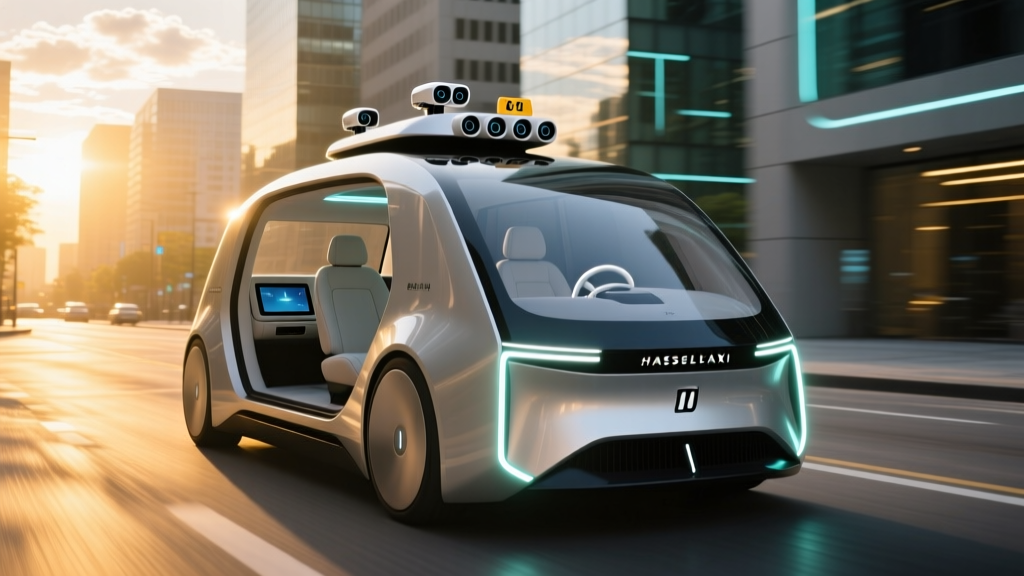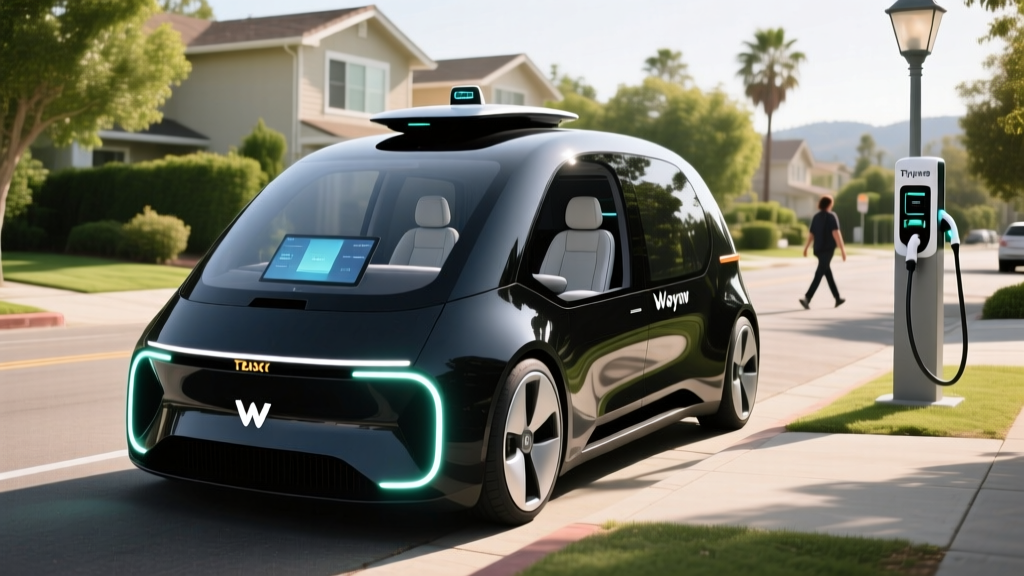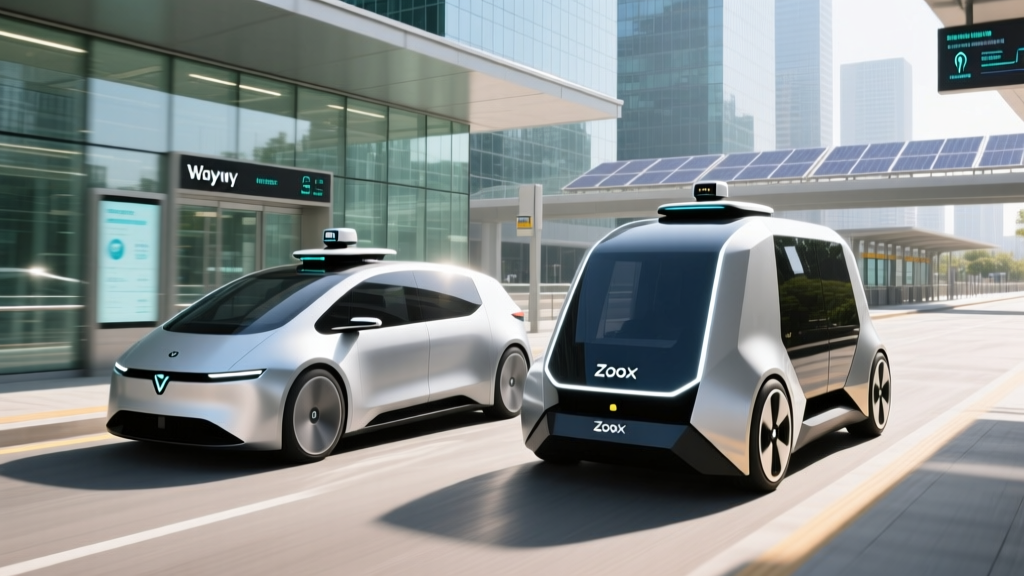
If you have opened a rideshare app in Phoenix, San Francisco, or Los Angeles over the past two years, you may have been offered a ride with no one behind the wheel. Fully driverless robotaxis are no longer a concept — they are a paid, daily commercial service. But the two most visible players, Alphabet's Waymo and Amazon's Zoox, have taken radically different engineering and business paths to get here. This Waymo vs Zoox breakdown compares their technology, safety records, service footprints, pricing, and hard limitations so you know exactly what each offers today.
SAE Automation Levels: What "Self-Driving" Actually Means Here
Before comparing the companies, the SAE International automation framework is essential context. Consumer vehicles you can buy — including Teslas on FSD (Supervised), GM vehicles on Super Cruise, and Ford vehicles on BlueCruise — are SAE Level 2 systems. The driver must remain engaged and supervising at all times. Calling those systems "self-driving" is inaccurate and dangerous.
Both Waymo and Zoox operate at SAE Level 4: the vehicle handles all driving tasks within a defined operational design domain (ODD) — specific geofenced areas under specific conditions — with no human driver present. Neither claims Level 5 (drive anywhere, any condition, no human ever). That distinction matters for setting realistic expectations.
- Level 2 (consumer ADAS): Driver must monitor the road and be ready to take over instantly. Examples: Tesla Autopilot/FSD Supervised, GM Super Cruise, Ford BlueCruise.
- Level 4 (robotaxi): No driver in the vehicle. System handles all driving within its geofenced service area. If it encounters a scenario it cannot handle, it pulls over safely rather than handing control to a passenger. Examples: Waymo One, Zoox.
Tech Stack Face-Off: Lidar-Heavy vs. Purpose-Built Sensor Fusion
Both companies rely on overlapping sensor suites — lidar, radar, cameras, and high-definition maps — but their vehicle platforms diverge sharply.
Waymo: Retrofitted Jaguar I-PACE with 6th-Gen Hardware
Waymo's current fleet consists of Jaguar I-PACE electric SUVs equipped with the company's 6th-generation Driver system. The sensor array includes:
- Multiple high-resolution lidars providing a 360-degree 3D point cloud with range exceeding 500 meters
- Surround-view camera arrays with improved low-light and high-dynamic-range performance
- Short- and long-range radar units for velocity detection and redundancy in low-visibility conditions
- External audio sensors to detect emergency vehicle sirens
The 6th-gen hardware, which began deployment in 2024, improved detection range and reduced per-unit cost. Waymo also leans heavily on HD mapping — every service area is pre-mapped at centimeter-level precision before operations begin.
Zoox: Ground-Up Purpose-Built Vehicle
Zoox's approach is fundamentally different. Rather than retrofitting an existing vehicle, Zoox designed a symmetrical, bidirectional carriage-style robotaxi from scratch. Key distinctions:
- No steering wheel, pedals, or driver controls — the vehicle can travel in either direction
- Four-wheel steering for tight urban maneuvering (turning radius under 24 feet)
- Sensor suite integrated into the body architecture rather than bolted on, with lidar, cameras, and radar providing overlapping 360-degree coverage
- Top speed of 75 mph, battery-electric powertrain with bidirectional charging capability
- Seating for four passengers facing each other in a carriage configuration
Zoox's purpose-built design eliminates the cost and complexity of driver controls but also means the company cannot simply buy a fleet of existing vehicles and retrofit them — scaling production depends on their own manufacturing pipeline.
| Attribute | Waymo (6th-Gen Driver) | Zoox (Purpose-Built) |
|---|---|---|
| Vehicle Platform | Jaguar I-PACE (retrofitted EV SUV) | Custom symmetrical carriage (no steering wheel) |
| Primary Sensors | Lidar + cameras + radar + audio | Lidar + cameras + radar (integrated) |
| HD Mapping | Yes — centimeter-level pre-mapping required | Yes — centimeter-level pre-mapping required |
| Max Speed | ~65 mph (highway-capable) | 75 mph |
| Steering | Conventional (front-wheel steer) | Four-wheel steering, bidirectional travel |
| Passenger Capacity | 3 rear-seat passengers | 4 passengers (face-to-face) |
| Geofencing | Yes — mapped ODD only | Yes — mapped ODD only |
Service Availability: Where Can You Actually Ride Today?
Both services operate within strictly geofenced areas. You cannot hail a robotaxi to a destination outside the mapped zone.
| City | Waymo One | Zoox |
|---|---|---|
| Phoenix, AZ (metro area) | ✅ Fully driverless, 24/7 | ❌ Not available |
| San Francisco, CA | ✅ Fully driverless, 24/7 | ✅ Limited paid service |
| Los Angeles, CA | ✅ Fully driverless | ❌ Testing only |
| Austin, TX | ✅ Expanding service area | ❌ Not available |
| Las Vegas, NV | ❌ Not available | ✅ Limited paid service |
| Atlanta, GA | ✅ Announced expansion | ❌ Not available |
Waymo's footprint is significantly larger. The company has completed over 10 million paid trips across its markets as of late 2025, with Phoenix being its most mature and expansive service area. San Francisco operations expanded to 24/7 service after regulatory approval in mid-2024. Los Angeles and Austin followed with progressively expanding geofences.
Zoox launched its first commercial paid rides in San Francisco and Las Vegas in mid-2025 using its purpose-built vehicle, initially with limited availability and a waitlist model. As of early 2026, Zoox's service area remains smaller and more restricted than Waymo's.
Pricing: Robotaxi vs. Uber and Lyft
Neither company publishes a fixed rate card — pricing is dynamic, similar to conventional rideshare. However, real-world fare data from users in Phoenix and San Francisco provides a useful baseline.
| Service | Typical Fare Range | Notes |
|---|---|---|
| Waymo One | $12 – $18 | Comparable to UberX; occasional promo pricing below $10 |
| Zoox | $10 – $16 | Introductory pricing during limited launch phase |
| UberX | $13 – $20 | Varies by market and demand |
| Lyft | $12 – $19 | Varies by market and demand |
Waymo fares are generally competitive with UberX and Lyft — not dramatically cheaper, but not more expensive either. The company has periodically offered promotional pricing to build ridership. Tipping is not expected (no driver), which effectively reduces total cost by 15–20% compared to a tipped rideshare.
Zoox has priced aggressively during its initial commercial phase, but long-term pricing as the service scales remains unannounced. Both companies are operating at a loss per ride — the path to profitability depends on fleet scale, utilization rates, and reduced per-vehicle hardware costs over time.
Safety Record: What the Data Actually Shows
Safety is the most scrutinized — and most misunderstood — aspect of robotaxi operations. Both companies publish safety data, but comparing them directly requires context about operating environments and reporting methodologies.
- Over 50 million fully autonomous miles driven across all markets
- Over 10 million paid passenger trips completed
- Waymo's published analysis (peer-reviewed methodology) showed a ~85% reduction in injury-causing crash rates compared to human benchmarks in comparable operating environments, based on data through 2024
- Contact rate (any physical contact with another object): significantly below human driver benchmarks per million miles in urban operations
Waymo has experienced publicized incidents — including a collision with a pedestrian in San Francisco in early 2024 that was investigated by the NHTSA — but the company's per-million-mile contact rate has remained below human averages in its operating domains. The NHTSA has required standing general orders for crash reporting from all ADS-equipped vehicle operators, providing a baseline of transparency that did not exist in earlier years of testing.
Zoox, with a smaller fleet and fewer commercial miles, has a more limited public safety dataset. The company has reported no serious passenger or pedestrian injuries during its commercial operations as of early 2026, but the mileage sample is orders of magnitude smaller than Waymo's — making statistical comparison premature.
For context on vehicle safety more broadly, the Insurance Institute for Highway Safety (IIHS) tests production vehicles but does not currently rate Level 4 robotaxi platforms, as these are not consumer-purchasable vehicles.
Regulatory Landscape: Who Approves Robotaxi Operations?
Robotaxi deployment in the United States requires a patchwork of state and local approvals — there is no single federal license to operate a driverless service nationwide.
- California: The California Public Utilities Commission (CPUC) and the California DMV both regulate autonomous vehicle operations. CPUC issues permits for commercial passenger service; the DMV issues testing and deployment permits. Waymo holds both. Zoox received CPUC approval for limited commercial service in 2025.
- Arizona: Among the most permissive regulatory environments. Waymo has operated commercially in Phoenix since 2020 with minimal state-level friction. The Arizona Department of Transportation requires notification but not the same permitting rigor as California.
- Nevada: Zoox received approval for limited commercial operations in Las Vegas. The Nevada DMV oversees autonomous vehicle testing and deployment.
- Texas: Austin has become a key Waymo market. Texas passed autonomous vehicle legislation enabling deployment, with local coordination required for commercial service.
- Federal (NHTSA): The National Highway Traffic Safety Administration does not currently "certify" autonomous driving systems the way it sets FMVSS standards for production vehicles. Instead, NHTSA uses its defect and investigation authority — issuing standing general orders for crash reporting and opening investigations into specific incidents. Both Waymo and Zoox vehicles must meet applicable Federal Motor Vehicle Safety Standards, though Zoox received a limited exemption for its steering-wheel-free design.
This fragmented regulatory landscape means expansion to a new city often requires 12–24 months of engagement with state agencies, local governments, and first responders before commercial service can begin.
Current Limitations: Where Robotaxis Cannot Go
Level 4 autonomy within a geofence is a remarkable engineering achievement, but the limitations are significant and affect real-world usability.
- Geofence boundaries: You cannot travel outside the pre-mapped service area. A trip from downtown San Francisco to Sacramento is not possible — the vehicle will refuse the destination.
- Severe weather: Heavy rain, fog, snow, and ice degrade sensor performance. Both services reduce operations or suspend service during significant weather events. Phoenix and LA are chosen partly because of favorable weather; expansion to cities like Chicago or Minneapolis faces a weather challenge.
- Construction zones: Dynamic road changes that are not reflected in HD maps can cause the vehicle to stop and request remote assistance. Both companies have improved handling of construction zones, but complex multi-stage detours remain edge cases.
- Airport and highway restrictions: Some airport routes and certain highway segments are excluded from service areas. Waymo has expanded highway-capable operations in Phoenix and San Francisco, but not all routes are available.
- No manual override: Passengers cannot steer or brake. If the vehicle encounters an unresolvable scenario, it performs a minimal-risk condition maneuver (pulls over safely). A remote support agent can provide guidance, but there is no remote driving in the traditional sense.
- Accessibility gaps: Neither vehicle currently accommodates wheelchair users without advance arrangement. Waymo's Jaguar I-PACE requires step-up entry; Zoox's low-floor design improves access but full ADA compliance across all scenarios is an ongoing effort.
- Child passengers: Both services restrict unaccompanied minors. Car seat installation is the rider's responsibility, and not all seating configurations support standard child restraint systems easily.
Waymo vs Zoox: Which Service Fits Your Needs?
- You are in Phoenix, San Francisco, Los Angeles, or Austin and need a reliable daily robotaxi option today
- You want the largest service area with the most route options within each city
- You need 24/7 availability (in mature markets like Phoenix and SF)
- You prefer a conventional SUV seating experience with standard three-across rear seating
- You are in San Francisco or Las Vegas and want to experience a purpose-built robotaxi with no steering wheel
- You value a face-to-face social seating configuration for group rides
- You are interested in the technology experience — the Zoox vehicle is architecturally unique and the ride experience is distinct from any retrofitted platform
- You are willing to accept more limited route availability during the early commercial phase
For practical daily transportation, Waymo currently has the clear advantage in availability, coverage, and operational maturity. Zoox's purpose-built vehicle represents a longer-term bet on what robotaxis should look like when designed from the ground up — but that vision is still scaling.
Frequently Asked Questions
Is Waymo or Zoox truly self-driving?
Both operate at SAE Level 4, meaning they are fully driverless within their geofenced service areas — no human driver is present. This is fundamentally different from Level 2 driver-assist systems like Tesla Autopilot or GM Super Cruise, which require active human supervision. However, neither is Level 5 — they cannot drive everywhere in all conditions.
How much does a Waymo or Zoox ride cost compared to Uber?
Fares are generally comparable to UberX and Lyft for equivalent distances — roughly $12–$18 for a typical 5-mile urban trip. Without a driver to tip, the effective total cost is often 15–20% lower than a conventional rideshare. Both services use dynamic pricing, so surge conditions can increase fares.
Are robotaxis safe? What does the data say?
Waymo has published data showing an approximately 85% reduction in injury-causing crash rates compared to human benchmarks across over 50 million autonomous miles. Individual incidents have occurred and are investigated by the NHTSA, but the per-million-mile safety record in Waymo's operating domains has been strong. Zoox has a much smaller mileage dataset, making statistical comparison premature. Both services are subject to NHTSA standing general orders for crash reporting.
Where can I use Waymo or Zoox right now?
Waymo One operates fully driverless commercial service in Phoenix, San Francisco, Los Angeles, and Austin, with Atlanta announced. Zoox offers limited paid service in San Francisco and Las Vegas. Both are geofenced — you can only travel within pre-mapped zones in each city.
What happens if a robotaxi encounters a situation it cannot handle?
Both Waymo and Zoox vehicles are designed to enter a "minimal risk condition" — essentially pulling over safely — when they encounter a scenario beyond their capability. A remote support team can provide guidance (such as confirming it is safe to proceed around an obstacle), but they do not remotely steer or drive the vehicle in real time.
Can robotaxis operate in rain or snow?
Light rain is generally manageable, but heavy rain, fog, snow, and ice degrade lidar and camera performance. Both services will reduce operations or suspend service entirely during severe weather. This is one reason initial deployment has focused on Sun Belt and West Coast cities with mild climates.
Will robotaxis replace Uber and Lyft drivers?
Not in the near term. Robotaxi fleets are limited to geofenced areas in a handful of cities, and fleet sizes are measured in hundreds or low thousands of vehicles — compared to millions of human rideshare drivers nationwide. Robotaxis will likely coexist with human-driven rideshare for years, gradually expanding their share in markets where conditions and regulations permit.