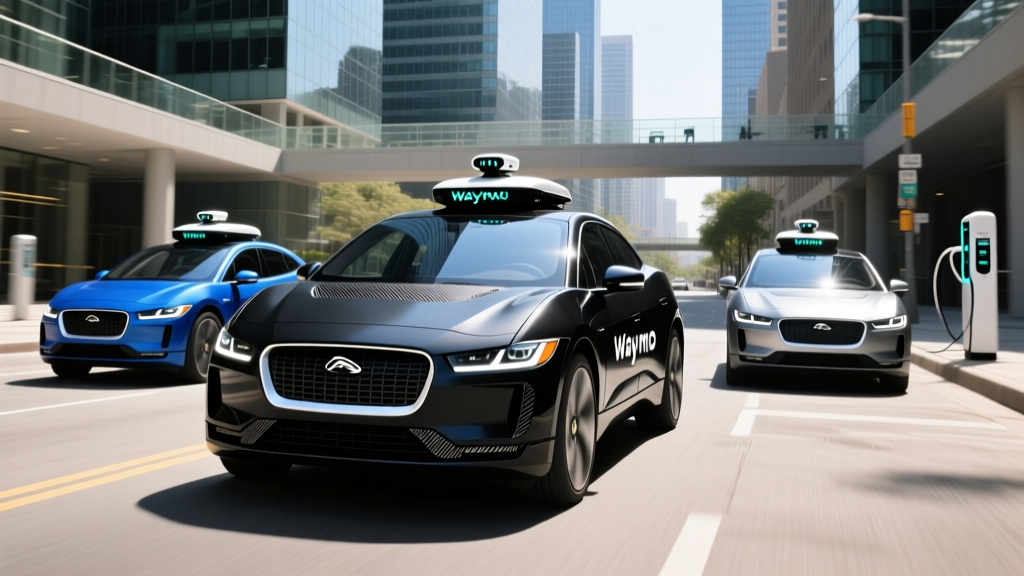
When Waymo's white Jaguar I-PACE pulls up without a driver, the first question most new riders ask isn't about the spinning lidar on the roof — it's about the receipt. Is Waymo more expensive than Uber? The answer depends heavily on when you book, where you're going, and how you define "expensive." After dozens of rides across Phoenix, San Francisco, and Los Angeles in early 2026, we've tracked real fare data, compared apples-to-apples routes, and dug into the economics of robotaxi pricing versus traditional rideshare.
The Short Answer: Waymo vs Uber Pricing in 2026
For a standard, non-surge ride in overlapping service areas, Waymo's base fares are typically comparable to UberX and occasionally 5–15% cheaper. However, Waymo does not currently apply surge pricing the way Uber and Lyft do during peak demand. This means Waymo can be significantly cheaper during rush hour, bar-close weekends, or rainy evenings — but it also means longer wait times when demand exceeds the available fleet of driverless vehicles.
| Route Type | Distance | Waymo One | UberX (Off-Peak) | UberX (Surge 1.5x) |
|---|---|---|---|---|
| Airport run (SFO to downtown SF) | ~14 mi | $32–$38 | $30–$42 | $48–$63 |
| Short urban hop (Mission to SoMa) | ~3 mi | $10–$13 | $9–$14 | $15–$21 |
| Suburban commute (Scottsdale to PHX airport) | ~9 mi | $22–$27 | $20–$28 | $32–$42 |
| Crosstown evening (Santa Monica to DTLA) | ~16 mi | $36–$44 | $34–$48 | $54–$72 |
Fares are approximate based on sampled rides Jan–Mar 2026. Uber surge multipliers vary. Waymo does not apply traditional surge pricing but may show limited availability or extended ETAs during peak demand.
The key takeaway: if you can get a Waymo, it's rarely more expensive than Uber, and during high-demand periods it's often cheaper. The trade-off is availability. Uber has millions of human drivers; Waymo operates a finite fleet of roughly 1,000+ vehicles across its commercial markets. When you need a ride right now at 2 a.m. on a Saturday, Uber will almost always win on wait time.
What Is Waymo, and What Autonomy Level Is It?
Before comparing costs, it's essential to understand what you're paying for. Waymo is Alphabet's autonomous vehicle subsidiary, operating a commercial robotaxi service called Waymo One. The vehicles in its 2026 fleet are primarily the Jaguar I-PACE (a 90 kWh battery electric SUV) equipped with Waymo's 6th-generation "Driver" hardware suite, with newer Zeekr RT minivans entering service in select markets.
SAE Automation Level: Level 4 (High Automation)
Waymo operates at SAE Level 4 within its defined operational design domain (ODD). This means the vehicle handles all driving tasks — steering, braking, navigating, monitoring — without any human driver present. There is no steering wheel interaction, no "driver" seat occupant, and no expectation that a passenger will take over.
This is fundamentally different from SAE Level 2 systems like Tesla Autopilot, GM Super Cruise, or Ford BlueCruise, which require an attentive human driver behind the wheel at all times. Waymo's Level 4 designation means the car is the driver — within its geofenced service area and approved operating conditions.
Waymo's Level 4 status is geofenced: the vehicle can only operate autonomously within mapped and approved zones. If a route would take it outside its ODD, the ride simply won't be offered. This is a critical distinction from the aspirational "Level 5" (full autonomy anywhere, any conditions) that no commercial system currently achieves.
Where Can You Use Waymo Right Now?
As of early 2026, Waymo One is commercially available to the general public (no waitlist) in the following metro areas:
| Metro Area | Coverage Scope | Approximate Service Area |
|---|---|---|
| Phoenix, AZ | Greater Phoenix including Scottsdale, Tempe, Mesa, Chandler, Gilbert, PHX airport | ~300+ sq mi |
| San Francisco, CA | Most of SF proper, including SFO airport service | ~50 sq mi |
| Los Angeles, CA | Downtown LA, Hollywood, Santa Monica, Westside, LAX airport | ~80+ sq mi |
| Austin, TX | Central Austin, downtown, select surrounding corridors | ~40+ sq mi (expanding) |
Source: Waymo Ride (waymo.com). Service areas expand periodically; check the Waymo app for your exact pickup/dropoff eligibility.
Waymo has also announced planned expansion into additional cities, but as of this writing, those markets are not yet open for public commercial rides. If you're outside these metros, Waymo One is not yet available to you regardless of pricing.
How to Use Waymo One and What a Ride Costs
Booking a Waymo ride works almost identically to Uber or Lyft:
- Download the Waymo One app (iOS/Android) and create an account with payment info.
- Enter your pickup and dropoff locations. The app will confirm whether both points fall within the service area.
- Get an upfront price before confirming — no metered surprises.
- Wait for your vehicle. Typical ETAs range from 2–8 minutes in well-covered areas; longer at the edges of the geofence or during peak demand.
- Unlock the car via the app when it arrives (the app confirms the vehicle by license plate and roof graphic).
- Start the ride by pressing the "Start Ride" button on the rear seatback screen. No human driver to greet you.
Waymo's pricing model uses upfront, fixed fares calculated from distance, time, and demand at the time of booking. Unlike Uber, Waymo has publicly stated it does not use surge multipliers in the traditional sense. Instead, during high-demand windows, the app may show longer estimated pickup times or simply show no vehicles available. You won't see a "2.5x" price multiplier — you'll just wait longer or not get a ride at all.
For frequent riders, Waymo has periodically offered promotional pricing, referral credits, and partnerships (e.g., Uber app integration in select markets, where you can request a Waymo vehicle through the Uber app at comparable pricing). Tipping is not expected — there's no driver to tip.
Safety Data: How Does Waymo Compare to Human Drivers?
Safety is the most scrutinized dimension of robotaxi operations, and Waymo publishes more collision and intervention data than any other autonomous vehicle operator. Here's what the numbers show:
Waymo Safety Record — Key Data Points
- Cumulative autonomous miles driven: Over 50 million fully driverless miles as of late 2025 (Waymo Safety Report).
- Injury-causing crash rate: Waymo's driverless vehicles have been involved in injury-causing crashes at a rate approximately 85% lower than human benchmark drivers in comparable urban environments, according to Waymo's peer-reviewed analysis published in collaboration with insurance data from Swiss Re.
- Police-reported crash rate: Approximately 57% fewer police-reported crashes per million miles compared to human benchmarks.
- Contact rate: The vast majority of Waymo-involved incidents are minor, low-speed contact events (often the Waymo vehicle being rear-ended at a stop or struck by a human driver running a red light).
- NHTSA Standing General Order: Waymo reports all incidents as required. Data is publicly queryable via NHTSA's SGO database.
It's important to contextualize these numbers. Waymo operates in dense urban environments with complex traffic — the same environments where human crash rates are highest. The comparison benchmarks matter. Waymo's data suggests its vehicles are meaningfully safer than the average human driver in equivalent conditions, but the fleet is still small enough that individual high-profile incidents (a vehicle contacting a pedestrian near a crosswalk, a school bus encounter) receive outsized media attention.
For comparison, NHTSA FARS data shows that human drivers in the U.S. experience approximately 1.35 fatalities per 100 million vehicle miles traveled. Waymo's fleet has not recorded a passenger fatality in its commercial driverless operations.
Under the Hood: Waymo's Technology Stack
Understanding Waymo's cost structure requires understanding the hardware bolted to every vehicle. Waymo's approach is sensor-heavy and redundancy-first — a stark contrast to camera-only systems.
Waymo 6th-Generation Driver Suite (2026 Fleet)
| Sensor Type | Function | Count per Vehicle |
|---|---|---|
| Lidar (custom) | 360° 3D point cloud, object detection, distance measurement | 5 units (roof + corners) |
| Cameras (high-res) | Traffic light state, signage, lane markings, object classification | 29 cameras (overlapping coverage) |
| Radar (imaging) | Velocity detection, adverse weather penetration, redundancy | 6 units |
| External audio sensors | Siren detection (emergency vehicles) | Multiple |
| IMU + GPS + HD maps | Precise localization within centimeters | Integrated |
The Jaguar I-PACE platform carries approximately $50,000–$70,000 in sensor and compute hardware (estimated, as Waymo does not publish per-vehicle cost). This is a significant factor in why Waymo's fleet cannot scale as quickly as human-driver rideshare.
Waymo relies on HD pre-mapped routes combined with real-time perception. The vehicle knows the exact geometry of every lane, signal, and crosswalk in its service area before it ever drives there. This geofencing is both a strength (extremely reliable within the zone) and a limitation (the car cannot operate outside mapped areas).
The contrast with Tesla's camera-only "vision" approach is deliberate. Waymo's engineering philosophy is that lidar provides critical redundancy — a physical measurement of distance that doesn't depend on lighting conditions, camera interpretation, or neural network inference for basic spatial awareness.
Regulatory Landscape: Who Approves Robotaxi Operations?
Robotaxi operations in the U.S. sit at the intersection of state and federal regulation, and the landscape has been turbulent:
- California (CPUC + DMV + NHTSA): The California Public Utilities Commission (CPUC) issues permits for commercial passenger-carrying autonomous vehicle services. The DMV issues testing and deployment permits. After Cruise's October 2023 pedestrian-dragging incident in San Francisco, the DMV suspended Cruise's deployment permit, and CPUC imposed new restrictions on all robotaxi operators. Waymo maintained operations but under heightened scrutiny and reporting requirements.
- Arizona: Arizona has maintained the most permissive regulatory environment for AVs since 2015. Waymo's Phoenix operation benefits from this lighter-touch approach, though the state requires incident reporting and valid insurance.
- Texas: Austin operations proceed under a mix of city-level agreements and state law (Texas Transportation Code Ch. 547), which permits AV operation with certain insurance and equipment requirements.
- Federal (NHTSA): NHTSA regulates vehicle safety standards but does not currently have a comprehensive federal framework for AV deployment. The Standing General Order (SGO 2021-01) requires all AV operators to report crashes within 24 hours.
The regulatory environment remains a moving target. Each new city requires navigating local permitting, law enforcement coordination, and public comment processes — a significant cost that doesn't appear on your ride receipt but is baked into Waymo's operational economics.
Current Limitations: Where Waymo Falls Short
No honest robotaxi comparison is complete without addressing what these vehicles cannot do in 2026:
- Geofence boundaries: You cannot take a Waymo to destinations outside its mapped service area. If your trip crosses the invisible boundary, the app won't let you book it.
- Heavy weather: Waymo vehicles will pull over or decline rides during heavy rain, fog, or conditions that degrade sensor performance. Phoenix's dry climate is an advantage; San Francisco fog occasionally triggers service interruptions.
- Construction zones: While Waymo handles routine construction rerouting, major unplanned road closures or complex temporary traffic patterns can cause the vehicle to stop and wait for remote guidance.
- Wait times during peak demand: Without surge pricing to balance supply and demand, peak-hour ETAs can stretch to 15–25 minutes or show "no vehicles available."
- No highway driving (most markets): Waymo's current commercial operations are predominantly surface-street. Limited highway segments exist in Phoenix, but you generally cannot book a Waymo for a 70-mph freeway commute between cities.
- Accessibility limitations: Waymo has been working on wheelchair-accessible vehicles (WAV) but availability remains limited compared to Uber WAV options.
- Stops and multi-destination trips: Unlike Uber, you generally cannot add intermediate stops (e.g., "stop at the pharmacy on the way"). Point A to Point B only.
Is Waymo More Expensive Than Uber? The Final Verdict
Choose Waymo One if:
- You're in a covered metro and want a predictable, surge-free fare
- You value the novelty and technology experience of a driverless ride
- You're traveling during peak hours when Uber surge pricing is likely
- You don't mind potentially longer wait times for availability
- You prefer not to tip (no driver = no tipping expectation)
Choose Uber/Lyft if:
- You need a ride immediately and can't wait for limited robotaxi availability
- Your destination is outside Waymo's geofence
- You need multi-stop trips, extra passenger capacity, or specific vehicle types (UberXL, SUV)
- You're traveling in heavy rain or weather that may ground robotaxis
- You need highway routes between cities
The bottom line: Waymo is not more expensive than Uber in most comparable scenarios. On a per-mile, per-minute basis in overlapping service areas, fares are similar, and Waymo's no-surge model makes it cheaper during high-demand windows. The real cost difference isn't in dollars — it's in availability, flexibility, and coverage. Waymo is a premium, limited-geography option that happens to cost about the same as (or less than) a standard UberX ride. As the fleet scales and per-vehicle sensor costs decline with the 6th-generation hardware, expect Waymo's pricing to become even more competitive.
Frequently Asked Questions
Is Waymo truly self-driving, or is there a remote human controlling it?
Waymo vehicles are fully autonomous (SAE Level 4) within their geofenced service areas. There is no human driver in the vehicle, and no remote operator steering the car in real time. Waymo does employ a remote assistance team that can provide guidance in ambiguous situations (e.g., "is that a person or a mannequin?"), but this team does not drive the vehicle — the AI handles all steering, braking, and navigation decisions.
Can I request a Waymo through the Uber app?
Yes, in select markets. Waymo has a partnership with Uber that allows riders in certain cities (currently parts of Phoenix and Austin) to request a Waymo vehicle directly through the Uber app. Pricing is comparable to booking through the Waymo One app. Check the Uber app for a "Waymo" vehicle option in your area.
How does Waymo handle accidents or emergencies during a ride?
If a Waymo vehicle is involved in a collision, the vehicle is designed to pull over safely, and the Waymo support team contacts the rider via the in-car screen and speaker system. Emergency services are dispatched automatically if sensors detect a significant impact. Riders can also contact Waymo support at any time via the in-car help button or the app.
Does Waymo charge a cancellation fee?
Yes, similar to Uber. If you cancel after the vehicle has been dispatched and is en route, a cancellation fee (typically $5–$8) may apply. If you cancel before the car is dispatched, there is no fee.
Why doesn't Waymo use surge pricing?
Waymo has chosen not to implement traditional surge multipliers, likely as a customer-experience and trust-building strategy during its growth phase. Instead, demand management happens through availability — during peak times, you may see longer ETAs or "no vehicles available." This approach avoids the customer frustration of 2x–3x fare spikes but means you might not get a ride when demand is highest.
Are Waymo rides insured?
Yes. Waymo carries commercial liability insurance for all rides. As a rider, you are covered under Waymo's insurance policy during the trip. This is similar to Uber's commercial insurance coverage during an active ride.