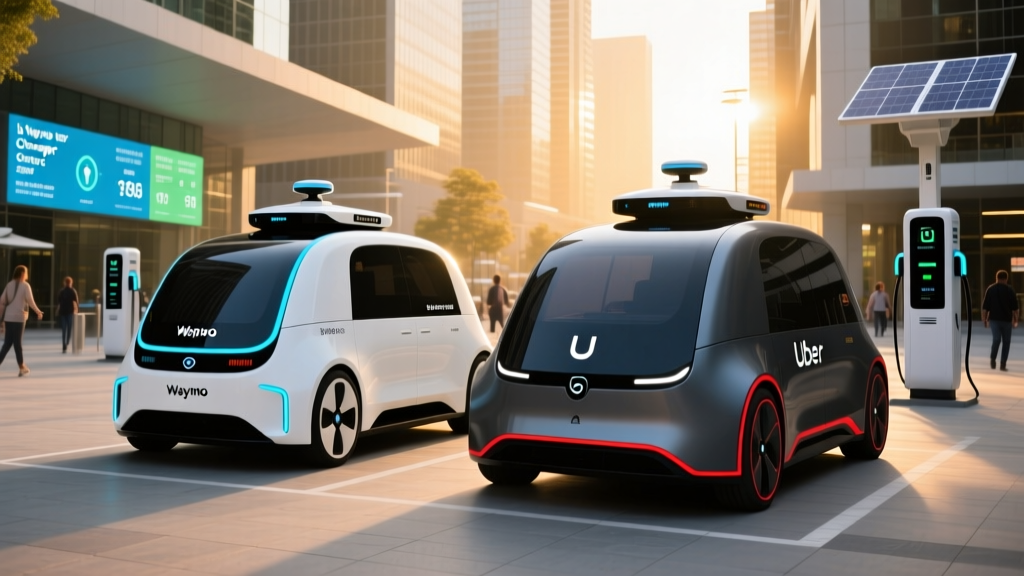
If you live in Phoenix, San Francisco, or Los Angeles, you've likely seen a white Jaguar I-PACE with a roof-mounted sensor rack glide through traffic with no one behind the wheel. That's Waymo One — the most mature Level 4 robotaxi service operating in the United States today. But when it comes to your wallet, the question is practical: is Waymo or Uber cheaper for everyday rides?
The short answer is that it depends on distance, time of day, and which city you're in. Waymo prices are generally competitive with UberX on mid-length trips (3–8 miles) but can be more expensive on very short hops or during peak demand when Uber's surge pricing kicks in. Below, we break down real fare structures, safety records, technology differences, and where each service actually operates in 2026.
SAE Automation Levels: Why Waymo and Uber Are Fundamentally Different
Before comparing costs, it's critical to understand that Waymo and Uber are not the same category of service. Uber is a rideshare platform connecting you with human drivers in personal vehicles. Waymo is a driverless robotaxi — there is no human behind the wheel, and no steering wheel or pedals for a passenger to use.
| Level | Description | Example |
|---|---|---|
| Level 0–1 | No automation / driver assistance (cruise control) | Standard vehicles |
| Level 2 | Partial automation — driver must remain fully engaged | Tesla Autopilot, GM Super Cruise, Ford BlueCruise |
| Level 3 | Conditional automation — driver can disengage in limited scenarios | Mercedes DRIVE PILOT (limited markets) |
| Level 4 | High automation — no driver needed within defined operational domain | Waymo One, Zoox (limited) |
| Level 5 | Full automation — no driver needed anywhere, any condition | Does not exist commercially |
Waymo operates at SAE Level 4 within geofenced urban areas. Consumer vehicles with Autopilot or FSD (Supervised) are Level 2 — the driver must always pay attention. These are fundamentally different systems.
Where Can You Actually Use Waymo Right Now?
Unlike Uber, which operates in virtually every U.S. metro area, Waymo One is limited to specific geofenced zones in a handful of cities. Expansion is ongoing but deliberate — each new zone requires extensive mapping, testing, and regulatory approval.
| City | Status (2026) | Service Area Notes |
|---|---|---|
| Phoenix, AZ | Fully operational | Largest coverage area (~225+ sq mi); airport service available |
| San Francisco, CA | Fully operational | City-wide coverage; freeway-capable routes |
| Los Angeles, CA | Operational (expanding) | Downtown, Hollywood, Westside, LAX corridor |
| Austin, TX | Operational | Central Austin and surrounding corridors |
| Atlanta, GA | Announced / early access | Limited zones; partnership with Uber for some rides |
If you're outside these metros, Uber (or Lyft) remains your only rideshare option. Waymo has announced plans for additional cities, but those are not yet live for public rides.
Is Waymo or Uber Cheaper? Real Fare Comparison
Pricing is where the rubber meets the road. Waymo does not publish a fixed rate card — fares are calculated dynamically based on distance, time, and demand, similar to Uber. However, Waymo's pricing structure tends to differ in key ways.
| Trip Scenario | Waymo One (Est.) | UberX (Est.) | Cheaper Option |
|---|---|---|---|
| Short trip (2 mi, off-peak) | $8–$11 | $7–$9 | Uber |
| Mid trip (5 mi, off-peak) | $13–$17 | $12–$18 | Comparable |
| Long trip (12 mi, off-peak) | $24–$32 | $22–$30 | Comparable |
| 5 mi during surge / peak | $14–$18 | $20–$35+ | Waymo |
| Airport run (15 mi) | $30–$42 | $28–$45 | Comparable |
Key takeaway: On standard off-peak trips, Waymo and UberX are priced within a few dollars of each other. Where Waymo gains a cost advantage is during high-demand periods — Waymo does not apply the same aggressive surge multipliers that Uber does. If you frequently ride during rush hour, bar-close time, or event nights, Waymo can be meaningfully cheaper.
Waymo also periodically offers promotional credits for new users and has experimented with a subscription-style "Waymo One Plus" plan in select markets that locks in lower per-mile rates for a monthly fee. Check the Waymo app for current promotions in your city.
Safety Record: What the Data Actually Shows
Safety is the most scrutinized aspect of robotaxi operations. Waymo has accumulated over 40 million fully driverless miles on public roads as of early 2026, and the company publishes periodic safety reports benchmarking its performance against human drivers.
- Driverless miles logged: 40+ million (as of early 2026)
- Police-reported crash rate: ~85% lower than human benchmark for injury-causing crashes, per Waymo's published safety reports
- Contactless at-fault incidents: Significantly below human baseline per million miles
- Notable incidents: A small number of minor collisions have been reported in San Francisco and Phoenix, most involving other human drivers striking the Waymo vehicle at low speed
- Regulatory actions: California DMV and CPUC oversee operations; NHTSA has investigated specific incidents but has not issued broad operational restrictions
Sources: Waymo Safety Reports, NHTSA, California CPUC filings. Human benchmark data based on NHTSA national crash statistics.
It's important to contextualize these numbers. Waymo operates primarily in dense urban environments at moderate speeds, which produces different crash profiles than highway driving. The vehicles are also highly visible and tend to drive conservatively, which can lead to rear-end collisions by human drivers who don't expect a vehicle to stop as cautiously as it does.
Uber's safety record, by contrast, reflects the full spectrum of human driving behavior. Uber's published safety reports show that rideshare trips have a lower fatality rate per mile than the national driving average, but they still carry the risks inherent to human-operated vehicles — distraction, impairment, fatigue, and aggressive driving all factor in.
Under the Hood: Waymo's Sensor Suite vs. Uber's Human Drivers
Waymo's 6th-generation "Waymo Driver" system is a multi-sensor platform that gives the vehicle a 360-degree, real-time understanding of its surroundings. Here's what's on the roof and body of each Jaguar I-PACE in the fleet:
- LiDAR: Multiple high-resolution LiDAR units providing centimeter-accurate 3D point clouds up to 500+ meters — works in darkness, rain, and direct sunlight
- Cameras: 29+ cameras covering 360° with high dynamic range for reading traffic signals, signs, and detecting pedestrians at distance
- Radar: 6 radar units for velocity detection of moving objects, particularly useful in heavy rain or fog where cameras and LiDAR degrade
- Audio detection: External microphones to detect emergency vehicle sirens from multiple directions
- Compute: Custom-designed onboard AI processors running Waymo's proprietary perception, prediction, and planning models
Geofencing: Waymo vehicles only operate within pre-mapped, approved zones. The HD maps include lane geometry, signal positions, speed limits, and known construction patterns. If a vehicle approaches the geofence boundary, it will not proceed.
By contrast, Uber relies on whatever vehicle the driver happens to own — typically a conventional sedan or SUV with no specialized sensor suite. The "technology" is the human driver's experience, judgment, and local knowledge. This means Uber can operate literally anywhere a road exists, but it also means safety depends entirely on one person's alertness and skill at any given moment.
Notably, Tesla's approach to autonomy (FSD Supervised) uses a camera-only architecture without LiDAR or radar. This remains a Level 2 system requiring active driver supervision, and Tesla does not operate a robotaxi service as of 2026. Waymo's multi-sensor approach is the industry standard for Level 4 operations.
Regulatory Landscape: Who Allows Robotaxis to Operate?
Robotaxi operations in the U.S. require approval from multiple regulatory bodies, and the framework varies significantly by state:
- California (CPUC + DMV): The California Public Utilities Commission issues permits for commercial robotaxi service, while the DMV oversees testing permits and tracks disengagement reports. San Francisco operations were expanded after extensive CPUC review.
- Arizona: Arizona has taken a permissive regulatory stance since 2015, requiring no special state permit for testing or commercial operation beyond standard business licensing. Phoenix is Waymo's longest-running market.
- Texas: Austin operations launched under a framework that allows autonomous vehicle testing and commercial deployment with registration through the Texas Department of Licensing and Regulation.
- Federal (NHTSA): The National Highway Traffic Safety Administration sets vehicle safety standards and investigates crashes but does not directly approve or ban robotaxi services. NHTSA's Standing General Order requires reporting of crashes involving Level 2+ and Level 4 systems.
This patchwork regulatory environment is a major reason robotaxi expansion is slower than rideshare. Each new city may require negotiations with local transportation authorities, first-responder coordination, and public comment periods.
Current Limitations: Where Robotaxis Fall Short
- Weather: Waymo reduces operations or pauses service during heavy rain, flooding, dense fog, or snow. Phoenix's dry climate is ideal; San Francisco fog can cause slowdowns.
- Geofence boundaries: You cannot request a ride to or from a location outside the approved service zone, even if it's just a few blocks beyond the boundary.
- Construction zones: While Waymo handles many construction scenarios, complex or unmarked lane shifts can cause the vehicle to stop and wait for remote guidance, adding minutes to your trip.
- Emergency vehicles: Waymo vehicles pull over for emergency vehicles, which is correct behavior but can add unexpected delays if an ambulance passes frequently on your route.
- No intercity trips: You cannot take a Waymo from San Francisco to Sacramento. These are urban and suburban rides only.
- Accessibility: Waymo has introduced wheelchair-accessible vehicles in some markets, but availability is limited compared to Uber WAV.
- Passenger capacity: Standard Waymo vehicles seat up to 3 passengers (front seat is not available). UberXL or Uber Black SUV options offer more capacity.
These limitations are not permanent — they reflect the current state of Level 4 autonomy operating within a defined domain. For trips that fall outside Waymo's capabilities, Uber remains the fallback.
Decision Framework: When to Choose Waymo vs. Uber
Choose Waymo if:
- You're in a covered city and your trip falls within the geofence
- It's peak demand hours and Uber surge pricing is 1.5x or higher
- You value a consistent, quiet ride with no driver interaction
- You want a predictable fare without surge volatility
- Curiosity — riding in a genuinely driverless vehicle is a remarkable experience
Choose Uber if:
- You're outside Waymo's service area or city
- You need a larger vehicle (UberXL, SUV) or wheelchair accessibility not available via Waymo
- You're making a longer intercity or suburban trip beyond the geofence
- Weather conditions have paused Waymo operations
- You need to make multiple stops or add a stop along the route (Waymo supports this in some markets but with limitations)
Frequently Asked Questions
Is Waymo actually cheaper than Uber in 2026?
On standard off-peak trips, Waymo and UberX are within a few dollars of each other. Waymo tends to be cheaper during high-demand periods when Uber applies surge pricing, since Waymo's dynamic pricing is less aggressive. For very short trips (under 2 miles), Uber is sometimes slightly cheaper due to Waymo's base fare structure.
Can I use Waymo in any city?
No. As of 2026, Waymo One is fully operational in Phoenix, San Francisco, Los Angeles, and Austin, with early access in Atlanta. You must be within the geofenced service area in each city to request a ride. Uber operates in virtually every U.S. metro area.
Is Waymo truly self-driving, or is there a human monitoring remotely?
Waymo operates at SAE Level 4, meaning there is no human driver in the vehicle. The car handles all driving tasks within its operational domain. Waymo does have a remote assistance team that can provide guidance in unusual situations (like an unmapped construction zone), but these remote operators do not "drive" the car in real time — they confirm a path or decision that the vehicle's AI then executes.
How safe are Waymo robotaxis compared to Uber?
Waymo reports that its fully driverless fleet has an injury-causing crash rate approximately 85% lower than human drivers, based on over 40 million driverless miles. Uber's safety data reflects human driving risks — distraction, fatigue, and variable skill levels. Both services have safety records that are generally better than the national average for personal driving, but Waymo's data advantage comes from consistent, conservative driving behavior and 360° sensor coverage that never gets tired or distracted.
Does Waymo accept cash or only card payments?
Waymo is entirely cashless. All rides are paid through the Waymo app using a linked credit or debit card, similar to Uber. Google Pay is also supported.
What happens if a Waymo vehicle breaks down during my ride?
Waymo's fleet operations team monitors every vehicle in real time. If a vehicle experiences a fault, it will pull over safely and Waymo support will contact you through the in-car screen or your phone to arrange an alternative ride. You are not charged for incomplete trips due to vehicle issues.
Can I request a specific route in a Waymo?
Waymo selects routes based on its optimized mapping and real-time traffic data. You cannot manually override the route, though the app shows your planned route before the trip begins. If you need to avoid a specific road, your best option is to use Uber and communicate with the driver.
The bottom line on whether Waymo or Uber is cheaper: for most riders in covered cities, the two services are close enough in price that the decision comes down to availability, trip type, and personal preference. Waymo's advantage is consistent pricing and a novel, genuinely autonomous experience. Uber's advantage is ubiquity, flexibility, and vehicle variety. If you have both apps installed, checking the fare estimate on each before confirming your ride takes seconds — and during surge periods, that quick comparison can save you $10 or more.