Why Waymo's Valuation Tells the Real Robotaxi Story
Waymo's valuation history reads like a barometer for the entire autonomous vehicle industry. In 2018, Morgan Stanley pegged Waymo's worth at $175 billion, calling it a trillion-dollar opportunity in the making. By 2020, that estimate had collapsed to $45 billion as commercialization proved harder than Silicon Valley expected. Then came the funding rounds: $5.6 billion in 2021, another $5 billion in 2024, and a $30 billion valuation established through external investor participation in Alphabet's internal market.
As of early 2026, Waymo remains a subsidiary of Alphabet without a separate public listing, but secondary-market trading and institutional estimates place its implied valuation between $50 billion and $70 billion — a figure that finally reflects commercial revenue rather than pure speculative upside. The company now operates paid driverless rides in multiple U.S. cities, logging over 50 million fully autonomous miles by late 2025, and is scaling aggressively.
This article unpacks what Waymo's valuation history actually means for consumers, investors, and anyone trying to understand whether Level 4 robotaxis are a real transportation option today — or still a science project.
What Level of Autonomy Is Waymo, Really?
Before examining the business case, it's critical to understand what Waymo actually does — and doesn't do — from an engineering standpoint.
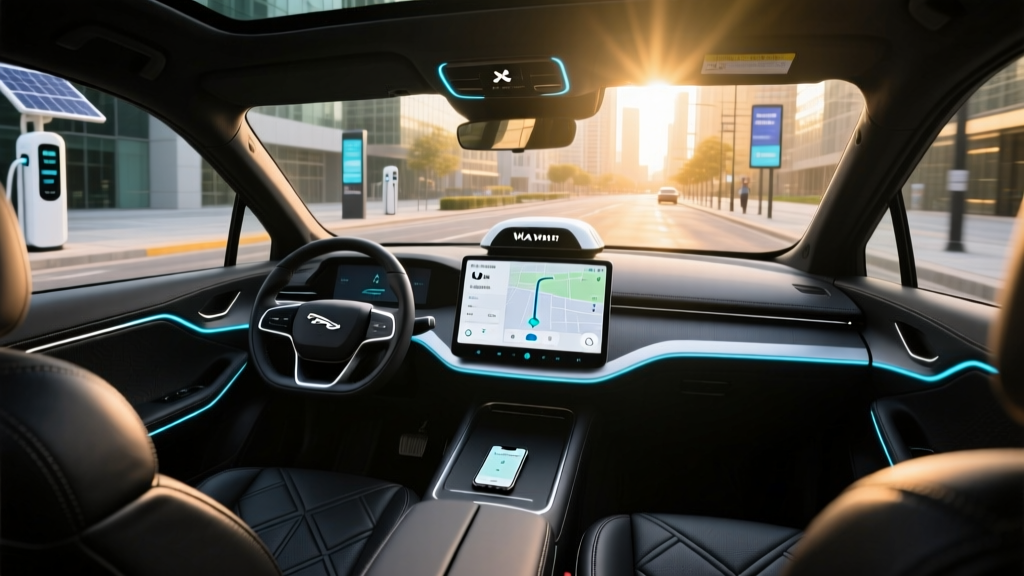
Waymo operates at SAE Level 4, meaning the vehicle handles all driving tasks within its defined Operational Design Domain (ODD) — specific geofenced areas under certain conditions — with no human driver required. There is no one behind the wheel. This is fundamentally different from Tesla Autopilot, FSD (Supervised), GM Super Cruise, or Ford BlueCruise, which are all SAE Level 2 systems requiring continuous human supervision.
| Level | Name | Human Required? | Examples |
|---|---|---|---|
| Level 0 | No Automation | Yes — full control | Conventional vehicles |
| Level 1 | Driver Assistance | Yes | Adaptive cruise control, lane-keep |
| Level 2 | Partial Automation | Yes — must supervise | Tesla Autopilot/FSD, BlueCruise, Super Cruise |
| Level 3 | Conditional Automation | Yes — on standby | Mercedes Drive Pilot (limited conditions) |
| Level 4 | High Automation | No — in ODD | Waymo One, Zoox |
| Level 5 | Full Automation | No — anywhere | Does not yet exist commercially |
The distinction matters enormously. Level 2 systems like FSD can handle many highway and surface-street scenarios but require the driver to remain alert, hands ready, and legally responsible. Waymo's Level 4 vehicles have no steering wheel accessible to passengers — the car is the driver, and Waymo (via Alphabet) bears liability for the driving task within its geofence.
Where Can You Actually Ride a Waymo Right Now?
Waymo's service footprint has expanded steadily since its first paid commercial launch in Phoenix in 2018. As of early 2026, the following cities have active Waymo One service with driverless (no safety operator) rides available to the public:
| City | Status | Service Area Notes |
|---|---|---|
| Phoenix, AZ | Fully operational | Largest coverage area; ~600+ sq mi including Chandler, Tempe, Scottsdale, Mesa, and Phoenix Sky Harbor Airport |
| San Francisco, CA | Fully operational | City-wide coverage including dense downtown corridors; 24/7 service |
| Los Angeles, CA | Fully operational | Expanded coverage across central LA, Hollywood, Santa Monica, LAX airport service |
| Austin, TX | Operational (expanding) | Initial commercial service launched 2025; coverage area growing |
| Mountain View, CA | Limited/employee-first | Alphabet HQ area; limited public access |
Waymo has also announced expansion plans for additional cities, but announced service areas should not be confused with live, bookable rides. If you're outside these metros, you cannot currently hail a Waymo.
How to use Waymo One: Download the Waymo One app (iOS/Android), enter your pickup and dropoff within the service zone, and confirm. The vehicle arrives without a driver. You unlock via the app, and the ride proceeds autonomously. No tipping is required (there's no driver to tip), though the app does offer an optional gratuity line for the "Waymo team."
Waymo Pricing vs. Uber and Lyft: The Real Cost
Robotaxi economics are the crux of Waymo's valuation story. The company needs to prove it can undercut or match rideshare pricing while absorbing the massive capital cost of its sensor-laden vehicles. Here's how pricing compares in early 2026:
| Route Example | Waymo One | UberX | Lyft Standard |
|---|---|---|---|
| 5-mile city trip (SF) | $12–$18 | $14–$22 | $13–$20 |
| 10-mile airport run (PHX) | $20–$30 | $22–$35 | $20–$32 |
| 15-mile cross-town (LA) | $28–$40 | $30–$48 | $28–$45 |
| Per-mile average | $1.80–$2.50 | $2.00–$3.20 | $1.90–$3.00 |
Waymo's pricing is broadly competitive with UberX and Lyft Standard, though surge pricing dynamics differ. Waymo does not currently surge as aggressively as rideshare during peak demand — instead, it may show longer wait times when fleet capacity is constrained. Promotional pricing and first-ride credits are frequently available for new users.
The long-term economic thesis is that removing the driver (who takes 60–80% of a rideshare fare) should eventually make robotaxis significantly cheaper. But Waymo's current fleet — the 6th-generation Waymo Driver based on the Zeekr RT1 electric minivan — carries an estimated per-vehicle hardware cost well over $100,000, including lidar, radar, and camera arrays. Achieving unit economics that beat human drivers at scale remains the central challenge behind every valuation estimate.
Waymo's Safety Record: What the Data Actually Shows
Safety is the single most important variable in Waymo's valuation trajectory. A serious fatal incident could set the company — and the entire robotaxi industry — back years, as demonstrated by Cruise's October 2023 pedestrian-dragging incident in San Francisco that led to its California permit suspension and federal investigation.
- Total fully autonomous miles driven: 50+ million (no safety driver)
- Fatalities in driverless mode: 0 as of early 2026
- Injury-causing collisions: Significantly lower rate per million miles vs. human benchmarks, per Waymo's published safety reports
- Contact rate: Waymo reports a ~85% reduction in injury-causing crash rates compared to human baseline in Phoenix and SF operating areas
- Property-damage-only contacts: Low-speed contacts (under 10 mph) do occur, typically in parking-lot or tight-urban scenarios
Sources: Waymo Safety Reports, NHTSA AV safety data, and peer-reviewed analyses. Note: Waymo's comparison methodology has been debated by independent researchers.
For context, the U.S. human-driver fatality rate is approximately 1.35 deaths per 100 million vehicle miles (per NHTSA FARS data). Waymo's 50+ million driverless miles with zero fatalities is encouraging but not yet statistically conclusive — you need hundreds of millions of miles to definitively prove a lower fatality rate.
What the data does show clearly: Waymo vehicles do not drive drunk, do not text, do not run red lights intentionally, and obey speed limits. Their most common incidents are low-speed, low-severity contacts that would classify as minor fender-benders for human drivers.
Under the Hood: Waymo's Technology Stack
Waymo's approach to autonomous driving is sensor-heavy and redundancy-driven — the opposite of Tesla's camera-centric vision-only philosophy. The 6th-generation Waymo Driver system includes:
- Lidar: Multiple custom-built lidar units providing 360° high-resolution 3D point clouds, effective to 500+ meters. Lidar is Waymo's primary depth-perception sensor and its key differentiator vs. camera-only systems.
- Cameras: High-resolution camera array (visible spectrum) for object classification, traffic-light state detection, signage reading, and lane-marking identification.
- Radar: Imaging radar units for velocity detection, all-weather object tracking, and redundancy in conditions where lidar or cameras degrade (heavy rain, fog).
- External audio sensors: Microphones to detect emergency-vehicle sirens and directional audio cues.
- Compute: Custom-designed AI inference hardware onboard, processing terabytes of sensor data per hour in real time.
- HD Mapping: Centimeter-precision maps of every operational road, pre-built and continuously updated. Waymo vehicles localize against these maps in real time.
- Geofencing: The system operates only within pre-mapped, pre-approved zones. If a route would exit the ODD, the ride cannot be booked.
This sensor-fusion approach is more expensive per vehicle than Tesla's camera-only FSD hardware, but it provides the redundancy required for a driverless (Level 4) system where there is no human to fall back on. Every sensor modality can cross-validate the others — if the camera is blinded by sun glare, lidar and radar still perceive the environment.
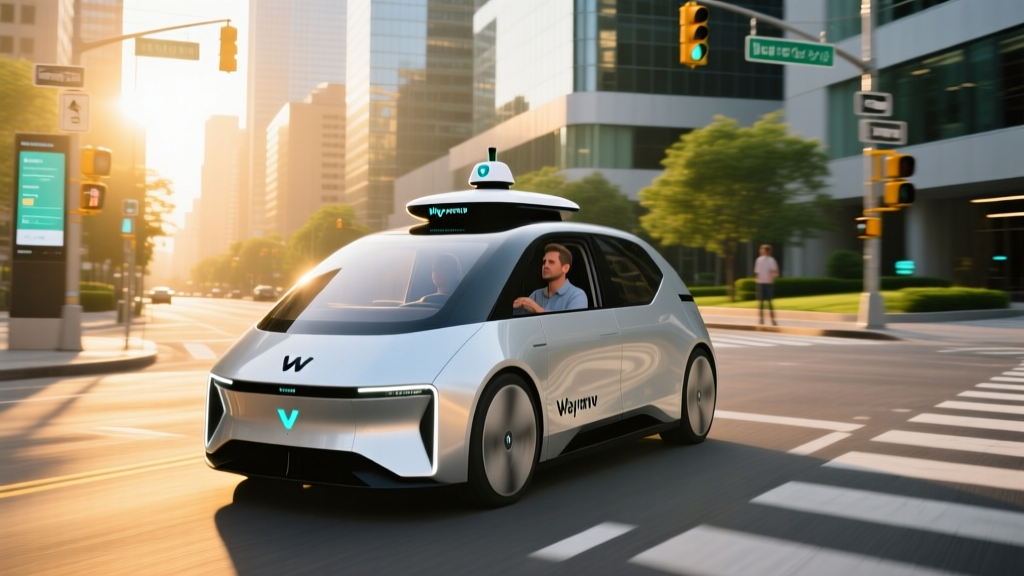
The vehicle platform itself has evolved. Waymo's current fleet primarily uses the Zeekr RT1 (a purpose-built electric minivan designed in partnership with Geely) and the Jaguar I-PACE for legacy fleet vehicles. The Zeekr RT1 offers lower step-in height, wheelchair accessibility, and optimized interior space without a driver's seat.
The Regulatory Landscape: Who Approves Robotaxi Operations?
Robotaxi deployment in the United States is governed by a patchwork of state and local regulations — there is no single federal "robotaxi license." Key regulatory bodies include:
- California Public Utilities Commission (CPUC): Issues permits for commercial passenger-carrying autonomous vehicle services in California. Waymo holds a statewide deployment permit.
- California DMV: Issues testing and deployment permits for autonomous vehicles on public roads. Requires annual disengagement reports and incident reporting.
- NHTSA (federal): Oversees vehicle safety standards and investigates crashes involving automated driving systems. Does not currently "approve" robotaxi services but can issue recalls and open defect investigations.
- State legislatures: Arizona, Texas, and other states have passed laws explicitly permitting driverless commercial operations, often with less restrictive frameworks than California.
- Local municipalities: Cities can impose operational conditions, restrict hours or zones, and require local permits for commercial passenger service.
The regulatory environment has tightened since the Cruise incidents of 2023. California now requires more granular incident reporting, and several cities have pushed back on expansion timelines. Waymo has generally maintained better regulatory relationships than competitors, in part because of its more conservative expansion strategy and willingness to engage with local stakeholders.
Current Limitations: What Waymo Cannot Do
Level 4 autonomy within a geofence is a remarkable engineering achievement, but it comes with hard constraints that riders and investors should understand clearly:
- Geofence dependency: Waymo only operates in pre-mapped areas. Request a ride outside the zone, and the app will decline. Expansion requires mapping, testing, and regulatory approval for each new area.
- Weather constraints: Heavy rain, dense fog, snow, and ice can reduce sensor effectiveness. Waymo will limit or suspend service in severe weather rather than risk unsafe operation. Phoenix and LA are ideal markets partly because of dry climates.
- Construction zones: Major, unmapped road construction can confuse localization or routing. Waymo vehicles may pull over safely and request remote assistance or reroute.
- No highway driving (in most markets): Waymo's current ODD primarily covers surface streets. Freeway operation is limited or unavailable in most cities, restricting inter-city or long-distance trips.
- Edge-case handling: Unusual scenarios — a police officer using hand signals, a fallen tree across the road, an unmarked detour — can cause the vehicle to stop and wait for remote human guidance rather than improvise.
- Pickup/dropoff precision: The vehicle must stop at legal, accessible locations. It cannot pull into a private driveway, navigate a parking garage, or stop in a travel lane. Riders may need to walk a short distance to/from the car.
- No inter-city trips: A Phoenix-to-Flagstaff ride is not possible. The geofence is city-scale, not state-scale.
- Accessibility gaps: While newer Zeekr vehicles improve wheelchair access, not all fleet vehicles accommodate every mobility device. Service animals are accepted.
These limitations are not bugs — they're the defined boundaries of the Operational Design Domain that makes Level 4 safe. The trade-off is clear: Waymo sacrifices universality to achieve driverlessness. A Level 2 system like Tesla FSD can technically "drive" anywhere but requires human oversight everywhere. Waymo drives itself completely, but only where it's been approved to do so.
Waymo Valuation History: What the Numbers Mean Going Forward
Pulling the threads together, Waymo's valuation arc tells a story of recalibration from hype to reality:
| Year | Estimated Valuation | Context |
|---|---|---|
| 2018 | $175B (Morgan Stanley) | Peak hype; pre-commercial launch |
| 2020 | $45B (Morgan Stanley revised) | Commercialization slower than expected |
| 2021 | ~$30B (external funding round) | $5.6B raised; first outside investors |
| 2024 | ~$30B (second external round) | $5B+ raised; SF and LA scaling |
| 2025–2026 | $50B–$70B (est.) | Revenue growth, multi-city ops, 50M+ autonomous miles |
The gap between 2018's $175B estimate and today's ~$50–70B range isn't a failure — it's a correction to reality. Waymo has built the only scaled Level 4 robotaxi service in the United States with real paying riders, real safety data, and real regulatory approvals. But the path to profitability requires solving per-vehicle economics, expanding to dozens of cities, and maintaining a clean safety record over billions of miles, not tens of millions.
For consumers, the practical takeaway is that Waymo is a real, usable transportation option in a handful of major metros — priced competitively with Uber, safer by most available metrics, but limited by geography and weather. For the EV and autonomous-vehicle industry, Waymo's trajectory is the most honest signal we have of what commercial Level 4 autonomy actually costs, how long it takes, and what it can realistically deliver.
Frequently Asked Questions
Is Waymo truly self-driving or is there a human driver?
Waymo is a true Level 4 autonomous vehicle. There is no human driver in the vehicle — no one behind the wheel, no safety operator. The vehicle handles all driving tasks within its approved service area. This is fundamentally different from Tesla FSD, Super Cruise, or BlueCruise, which are Level 2 driver-assist systems requiring human supervision at all times.
Where can I use Waymo right now?
As of early 2026, Waymo One is fully operational for the public in Phoenix (metro-wide), San Francisco (city-wide), Los Angeles (expanded coverage including LAX), and Austin (expanding). Service is app-based and limited to geofenced areas within these metros.
How much does a Waymo ride cost compared to Uber or Lyft?
Waymo pricing is broadly competitive with UberX and Lyft Standard — typically $12–$40 depending on distance and city, with per-mile costs in the $1.80–$2.50 range. Waymo does not surge as aggressively as rideshare during peak demand, but wait times may increase when fleet capacity is constrained.
How safe are Waymo robotaxis?
Waymo reports over 50 million fully autonomous miles with zero fatalities in driverless mode as of early 2026. Their published data shows an approximately 85% reduction in injury-causing crash rates compared to human baselines in their operating areas. Low-speed property-damage contacts do occur but are infrequent. Independent verification of these comparisons is ongoing.
What are the biggest limitations of Waymo's service?
Waymo operates only within geofenced areas, cannot drive in severe weather (snow, heavy rain, fog), generally does not operate on highways, cannot travel between cities, and may struggle with unmapped construction zones or unusual road scenarios. Riders must meet the vehicle at legal curbside locations — no private driveways or parking garages.
Will Waymo expand to my city?
Waymo has stated plans for continued expansion, but each new city requires mapping, testing, regulatory approval, and fleet deployment. Announced cities should not be confused with live service. Check the Waymo One app for current availability in your area.
What vehicle does Waymo use?
Waymo's current fleet includes the Zeekr RT1 (a purpose-built electric minivan) and legacy Jaguar I-PACE vehicles. The Zeekr RT1 is the primary platform for new deployments, offering improved accessibility and a rider-optimized interior without a driver's position.