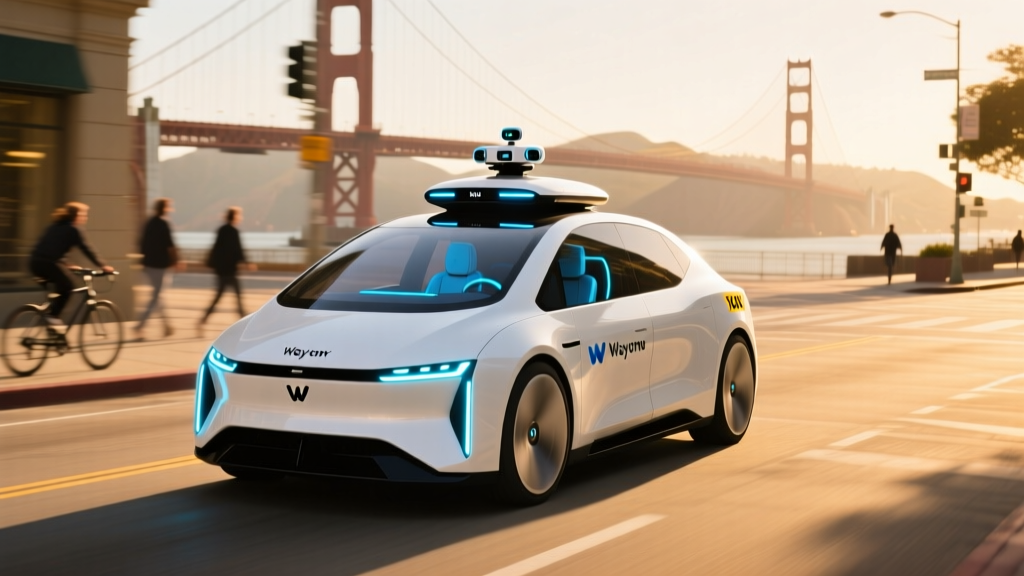
If you've searched for "waymo uber atlanta" recently, you're likely wondering whether you can hail a driverless ride in Georgia's capital. The short answer: Waymo has been expanding its Uber integration aggressively since late 2024, and Atlanta is one of the next major cities in the robotaxi crosshairs — but availability, geofencing, and regulatory approval determine whether you can actually summon one today.
This guide breaks down exactly where Waymo and Uber's robotaxi partnership stands in Atlanta as of 2026, how the technology works, what it costs, and what the safety record actually shows.
Is Waymo Available on Uber in Atlanta Right Now?
As of early 2026, Waymo's fully driverless ride-hailing service (Waymo One) operates commercially in Phoenix, San Francisco, Los Angeles, and Austin. Atlanta has been part of Waymo's mapping and testing footprint since 2023, when the company ran its "Waymo Via" delivery pilots and limited ride-hail trials in neighborhoods like Midtown, Buckhead, and the Westside.
However, a full commercial launch — where any Uber user in Atlanta can toggle "Autonomous" in the app and receive a driverless Waymo vehicle — requires approval from the Georgia Department of Public Safety and coordination with the City of Atlanta's transportation authority. As of this writing, Atlanta is in the testing and limited-access phase, not open commercial service.
| City | Service Type | Uber App Integration | Geofenced Area |
|---|---|---|---|
| Phoenix, AZ | Fully commercial | Yes — live | ~225 sq mi metro |
| San Francisco, CA | Fully commercial | Yes — live | Most of SF proper |
| Los Angeles, CA | Fully commercial | Yes — live | Santa Monica, Hollywood, Downtown core |
| Austin, TX | Commercial (expanding) | Yes — live | Central Austin + airport corridor |
| Atlanta, GA | Testing / limited access | Waitlist | Midtown, Buckhead, Westside (mapped) |
What this means practically: If you open the Uber app in Atlanta today, you won't see a Waymo robotaxi option alongside UberX. You may be invited to a waitlist or early-access program if you're in a mapped neighborhood, but unrestricted commercial service has not launched.
How the Waymo-Uber Partnership Works
In late 2024, Waymo and Uber announced a multi-city integration that places Waymo's 6th-generation robotaxi fleet directly into the Uber app. Here's how it functions in live markets:
- Request a ride — Open Uber, enter your destination. If your pickup and drop-off are within the geofenced zone and a Waymo vehicle is available, the app presents an "Autonomous" option alongside standard UberX.
- Matched to a Waymo — If selected, the app shows the approaching Waymo vehicle (a Jaguar I-PACE or the newer Zeekr-based 6th-gen platform) with its license plate and exact pickup pin.
- Unlock and ride> — At arrival, you verify your ride via the app (or a code on the vehicle's rear window), the doors unlock automatically, and the trip begins with no human behind the wheel.
- In-ride experience — Screens inside the vehicle show the route, allow music control, and let you add stops. A support button connects to a remote Waymo agent if needed.
- Payment — Charged to your Uber account at the displayed fare, identical to a standard rideshare transaction.
SAE Automation Levels: Why This Is Level 4, Not Level 2
It's critical to distinguish Waymo's robotaxi from consumer driver-assist systems like Tesla's FSD (Supervised), GM's Super Cruise, or Ford's BlueCruise. Those are SAE Level 2 systems — the human driver must remain engaged, monitor the road, and be ready to take over instantly.
Waymo operates at SAE Level 4: the vehicle handles all driving tasks within its defined operational design domain (ODD) with no human driver required. There is no steering wheel interaction expected from the passenger. If the system encounters a scenario it cannot handle, it executes a safe stop — it does not hand control to the rider.
| Level | Description | Driver Required? | Examples |
|---|---|---|---|
| Level 0 | No automation | Yes, full-time | Conventional vehicles |
| Level 1 | Single-axis assist (steering OR speed) | Yes, full-time | Adaptive cruise, lane-keep |
| Level 2 | Combined steering + speed assist | Yes, must monitor | Autopilot, FSD Supervised, Super Cruise, BlueCruise |
| Level 3 | Conditional automation (eyes-off in limited conditions) | Must be available to resume | Mercedes DRIVE PILOT (limited markets) |
| Level 4 | High automation within defined ODD | No — vehicle handles all tasks or stops safely | Waymo One, Zoox, Cruise (pre-suspension) |
| Level 5 | Full automation, any condition | No | Does not yet exist commercially |
When you ride in a Waymo in Phoenix or San Francisco, you are in a Level 4 vehicle. The distinction matters because Level 4 systems carry the liability for driving decisions — not the passenger.
Waymo's Technology Stack: Lidar, Cameras, and Geofencing
Waymo's 6th-generation "Driver" platform — deployed on both the Jaguar I-PACE and the newer Zeekr purpose-built robotaxi — uses a sensor suite fundamentally different from Tesla's camera-only approach:
Sensor Fusion Architecture
- Lidar: Multiple solid-state and spinning lidar units provide a 360° 3D point cloud, detecting objects, pedestrians, and road geometry at up to 500 meters. Lidar operates independently of ambient light — critical for night driving and sun-glare scenarios.
- Cameras: 29+ high-resolution cameras cover 360° vision, used for traffic-light state detection, sign reading, lane-marking identification, and object classification.
- Radar: Six imaging radar units supplement lidar in heavy rain, fog, and through large vehicles — scenarios where optical sensors degrade.
- External audio sensors: Microphones detect sirens from emergency vehicles and adjust behavior accordingly (pulling over, yielding right-of-way).
- HD Maps + Geofencing: Waymo pre-maps every road in its operational domain at centimeter-level precision. The vehicle cross-references its real-time sensor data against this map. If it leaves the geofenced area or encounters an unmapped construction zone, the system flags a remote-assist request or initiates a safe pullover.
This multi-sensor approach contrasts with Tesla's vision-only stack. Waymo's position is that lidar provides a deterministic depth measurement that cameras must infer, reducing edge-case failures. The trade-off: higher per-vehicle hardware cost, which Waymo absorbs rather than passing to the rider.
Pricing: Waymo vs. UberX vs. Lyft
In cities where Waymo is commercially live via Uber, pricing is structured to be competitive with — not premium to — standard rideshare. Here's what riders typically see:
| Service | Base Fare | Per-Mile Rate | Estimated 5-Mi Total | Surge Pricing |
|---|---|---|---|---|
| Waymo via Uber | $3.50 | $1.40/mi | $10.50 – $13.00 | Rare (fleet-managed) |
| UberX | $2.50 | $1.50/mi | $10.00 – $16.00 | Common during peak |
| Lyft Standard | $2.75 | $1.45/mi | $10.00 – $15.00 | Common during peak |
Key difference: Waymo fares rarely surge. Because Waymo controls its fleet and dispatch algorithm directly, it avoids the dynamic pricing spikes that make UberX unpredictable during rush hour or events. In Phoenix, riders consistently report Waymo fares 10-20% cheaper than UberX during peak demand windows.
For Atlanta, once commercial service launches, expect similar pricing — potentially with introductory promotional rates to drive adoption, as Waymo did in Los Angeles in 2024.
Safety Record: What the Data Actually Shows
Robotaxi safety is the most scrutinized aspect of the industry. Here's what we know from Waymo's published data and regulatory filings as of early 2026:
Waymo Safety Metrics (Published Data)
- Total autonomous miles driven: Over 40 million fully driverless miles across all markets (as of Q4 2025 reporting).
- Police-contactable crash rate: Waymo reports a rate approximately 85% lower than the human benchmark for police-reported crashes per million miles, based on NHTSA comparative data.
- Injury severity: Of the crashes that have occurred, the vast majority are low-speed contacts (under 15 mph), typically rear-end or side-swipe incidents where the Waymo vehicle was stationary or yielding.
- Disengagement rate: Waymo does not publish traditional "disengagements per 1,000 miles" (a metric more relevant to Level 2/3 testing), as its Level 4 system either handles the scenario or executes a safe stop. Remote-assist requests average fewer than 1 per 10,000 miles in mature markets like Phoenix.
Sources: Waymo Safety Report (2025), NHTSA Standing General Order crash data, IIHS analysis.
Context matters: In October 2024, a Waymo vehicle in San Francisco was involved in a widely-reported incident where it struck a pedestrian who had been pushed into the vehicle's path by another car. NHTSA investigated and determined the Waymo system detected the pedestrian and braked, reducing impact speed from 17 mph to under 6 mph — a response faster than the average human driver. The incident underscores that robotaxis are not crash-proof, but the data suggests they are substantially safer than human-driven vehicles in equivalent exposure scenarios.
For Atlanta specifically, the testing phase has not produced any publicly-reported serious incidents, though the mileage is far lower than in Phoenix or San Francisco.
Regulatory Landscape: Who Approves Robotaxi Operations?
Robotaxi deployment in the U.S. is governed by a patchwork of state and local regulations — there is no single federal "robotaxi license." Here's how it works:
- Federal (NHTSA): Sets vehicle safety standards (FMVSS). NHTSA can investigate crashes and issue recalls but does not "approve" robotaxi services for operation. The Standing General Order requires all Level 4 operators to report crashes within 24 hours.
- State level: Each state determines whether driverless testing and commercial operation are legal. California (CPUC + DMV), Arizona (minimal regulation), Texas (TxDOT), and Georgia each have different frameworks. Georgia's autonomous vehicle law (HB 472, enacted 2023) permits Level 4 operation but requires registration, insurance minimums of $5 million, and compliance with all traffic laws.
- Local/city level: Cities like Atlanta can impose additional requirements — designated testing zones, time-of-day restrictions, coordination with public transit, and data-sharing agreements. Atlanta's Department of Transportation has been in active dialogue with Waymo since 2023.
The regulatory process for a new city launch typically takes 6-12 months from initial testing application to commercial approval. This is why Atlanta, despite being mapped and tested, hasn't flipped the switch to full commercial service yet.
Current Limitations of Robotaxi Service
What Waymo Robotaxis Cannot Do (Yet)
- Weather restrictions: Heavy rain, fog, snow, and ice degrade lidar and camera performance. In San Francisco, Waymo has occasionally paused service during atmospheric river events. Atlanta's thunderstorm season may trigger similar operational pauses.
- Geofence boundaries: Service is restricted to pre-mapped zones. You cannot hail a Waymo from Midtown to, say, Stone Mountain or Marietta if those areas fall outside the current ODD. The geofence expands over time but is not metro-wide at launch.
- Construction zones: Major roadwork that alters lane configurations can confuse the system. Waymo handles this via remote-assist routing or rerouting, but it can cause trip delays or cancellations.
- Highway driving: Waymo's current ODD is primarily urban and suburban surface streets. Highway merges and high-speed lane changes (65+ mph) are being tested but are not yet part of the commercial service envelope in most cities.
- Accessibility: While Waymo vehicles are equipped with wheelchair-accessible features in some markets, availability of WAV (wheelchair-accessible vehicle) robotaxis is limited. The app does allow requesting accessible vehicles where available.
- No human override: As a Level 4 system, there is no steering wheel for the passenger to grab. If the vehicle stops unexpectedly, you cannot "take over" — you must wait for remote assist or roadside support.
Atlanta's Robotaxi Future: What Comes Next
Based on Waymo's expansion cadence — roughly one new commercial city every 6-8 months since mid-2024 — Atlanta is a strong candidate for a 2026 or early 2027 commercial launch. The city's relatively grid-like street network in the urban core, moderate weather (compared to Chicago or Minneapolis), and existing mapping infrastructure make it a logical next step.
When service does go live, expect the initial geofence to cover:
- Midtown and Downtown Atlanta
- Buckhead commercial corridor
- West Midtown / Howell Mill area
- Hartsfield-Jackson Airport corridor (a high-value rideshare route)
Suburban expansion (Sandy Springs, Decatur, Perimeter) will follow in subsequent phases, contingent on mapping completion and regulatory approval.
Frequently Asked Questions
Where can I use Waymo robotaxi service right now?
Commercial Waymo One service is live in Phoenix, San Francisco, Los Angeles, and Austin. Atlanta is in the testing/limited-access phase as of early 2026. You can join the waitlist through the Uber app if you're in a mapped Atlanta neighborhood.
How much does a Waymo ride cost compared to Uber or Lyft?
Waymo fares via Uber are comparable to or slightly cheaper than UberX — typically $10-13 for a 5-mile urban trip. The key advantage is no surge pricing, making Waymo more predictable during peak hours.
Are robotaxis actually safe? What does the real data show?
Waymo reports a police-contactable crash rate approximately 85% lower than the human benchmark per million miles, based on NHTSA comparative data. Over 40 million driverless miles have been driven. Crashes that do occur are predominantly low-speed contacts. No system is crash-proof, but the data indicates a substantial safety improvement over human drivers.
What happens if the Waymo vehicle encounters a situation it can't handle?
The vehicle will execute a controlled stop (pull to the curb, activate hazards) and request remote assistance from a Waymo operations agent. The agent can provide routing guidance or dispatch roadside support. The passenger cannot manually drive the vehicle.
Is Waymo truly self-driving, or is it like Tesla's Autopilot?
Waymo is SAE Level 4 — fully driverless within its operational domain, with no human driver required or expected. This is fundamentally different from Tesla's FSD (Supervised), GM Super Cruise, and Ford BlueCruise, which are SAE Level 2 systems requiring continuous driver attention. A Waymo passenger is a rider, not a driver.
Can I use Waymo in Atlanta to get to the airport?
Not yet commercially. The Hartsfield-Jackson Airport corridor is part of Atlanta's mapped testing area, but commercial rides (including airport trips) will only be available once full service launches, expected in late 2026 or early 2027.
Does Waymo operate in rain or bad weather?
Waymo can operate in light to moderate rain. However, severe weather — heavy downpours, dense fog, or ice — may trigger temporary service pauses in affected areas. Atlanta's summer thunderstorm season could cause intermittent availability.