For Bay Area travelers and locals alike, the question has shifted from "when will robotaxis arrive?" to "can I take a Waymo to SFO Airport?" As of early 2026, Waymo's commercial driverless service has expanded significantly across the San Francisco Bay Area, but airport access remains one of the most searched — and most nuanced — topics in the autonomous vehicle space. This guide breaks down exactly where Waymo operates today, what a trip to San Francisco International Airport (SFO) costs, how the safety record stacks up against human-driven rideshare, and the real-world limitations you need to know before hailing your first driverless ride.
Is Waymo Truly Self-Driving? Understanding SAE Level 4
Before booking a ride, it is critical to understand what Waymo actually is — and what it is not. Waymo's commercial service, branded Waymo One, operates at SAE Level 4 autonomy. This is fundamentally different from the Tesla Autopilot or FSD (Supervised) systems available in consumer vehicles, which remain SAE Level 2 driver-assist features requiring constant human supervision.
SAE Automation Levels — What They Mean for You:
- Level 0: No automation. The driver does everything.
- Level 1: Single-feature assist (adaptive cruise OR lane-keeping, not both simultaneously managing the drive).
- Level 2: Combined assist (steering + acceleration/braking), but the driver must remain engaged and supervise at all times. Examples: Tesla Autopilot, GM Super Cruise, Ford BlueCruise.
- Level 3: Conditional automation — the vehicle handles all driving in specific scenarios, but the human must take over when requested. Currently limited (Mercedes Drive Pilot in select markets).
- Level 4: High automation — the vehicle handles all driving tasks without a human driver in defined operational conditions (geofenced areas, specific weather). Waymo One operates here. No human driver is present.
- Level 5: Full automation everywhere, all conditions. Does not exist commercially today.
The distinction matters enormously. When you step into a Waymo vehicle — currently the Jaguar I-PACE electric SUV or the purpose-built Zeekr robotaxi being introduced in select markets — there is no one in the driver's seat. The vehicle navigates urban streets, highways, construction zones, and complex intersections entirely on its own, within its approved operational design domain (ODD). If the system encounters a scenario it cannot handle, it executes a minimal-risk maneuver (typically pulling over safely) rather than handing control to a passenger.
Waymo to SFO Airport: Current Service Availability
Waymo began testing airport service to SFO in mid-2024 with a limited group of trusted testers, and by late 2024, the service opened to the general public via the Waymo One app. As of 2026, SFO airport trips are fully available to any Waymo One user, making it one of the first major commercial airports in the world served by a Level 4 driverless taxi.
| Region | Status | Airport Access | Notes |
|---|---|---|---|
| San Francisco (citywide) | Live — 24/7 | SFO: ✅ Available | Full geofence coverage including downtown, SOMA, Mission, Sunset |
| San Jose / South Bay | Live | SJC: ✅ Available | Covers downtown San Jose, Santana Row, parts of Sunnyvale/Mountain View |
| East Bay (Oakland, Berkeley) | Live (expanded zones) | OAK: ✅ Available | Oakland and Berkeley core; some suburban fringes still in testing |
| Peninsula (Palo Alto → SFO corridor) | Live | SFO: ✅ Available | Key corridor for airport trips; covers Menlo Park, Redwood City, San Mateo |
| Los Angeles | Live | LAX: Testing phase | Citywide service active; LAX trips not yet generally available to public |
| Phoenix | Live | PHX: ✅ Available | Original launch market; broad coverage including airport since 2020 |
| Austin | Live (limited zones) | AUS: Testing phase | Downtown and select corridors; airport not yet in public service area |
For the specific Waymo to SFO airport route, pickups are available anywhere within the San Francisco, Peninsula, and South Bay geofences. Drop-offs occur at designated areas within SFO's ground transportation zone — the same curbs used by Uber, Lyft, and traditional taxis. Waymo has coordinated with SFO to secure a permitted commercial operator license, which the San Francisco Airport Commission regulates.
How to Use Waymo One and Pricing vs Uber/Lyft
Booking a Waymo to SFO is straightforward if you are within the service area:
- Download the Waymo One app (iOS/Android) and create an account.
- Enter your pickup location and set SFO as your destination.
- The app confirms availability, provides an upfront price, and estimates wait time (typically 3–8 minutes in San Francisco proper).
- When the vehicle arrives, verify the ride by matching the license plate and unlocking via the app.
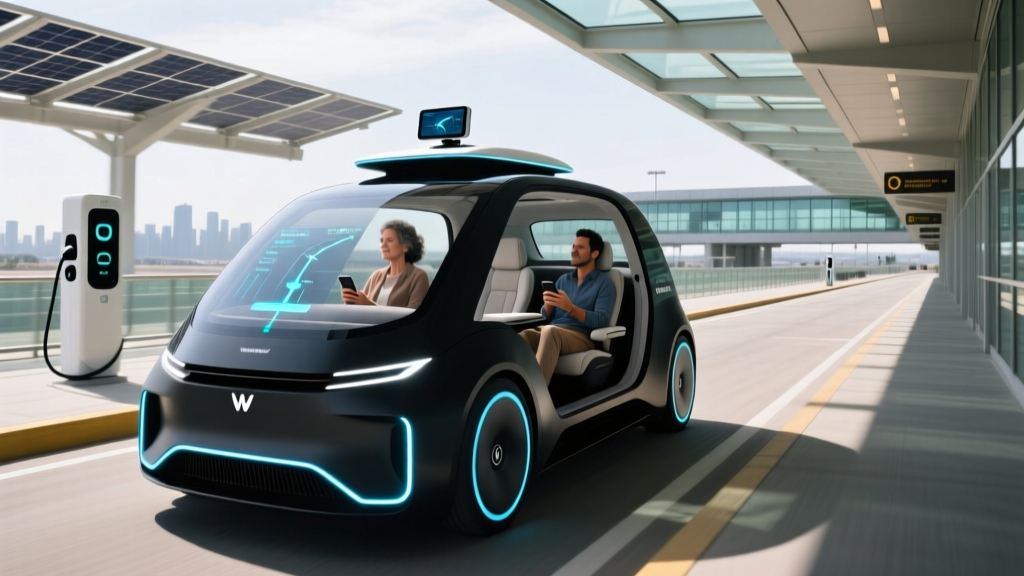
- There is no driver. You sit in the rear seats, and the ride begins automatically.
- A screen in the back shows the route, speed, and detected objects in real time.
Pricing: Waymo vs Rideshare for SFO Trips
One of the most common questions is cost. Waymo One uses dynamic pricing similar to rideshare platforms, but without a driver tip expectation. Below is a representative comparison for common Bay Area routes to SFO, based on 2026 observed pricing (actual fares vary by time of day, demand, and exact pickup point):
| Route | Distance | Waymo One | UberX | Lyft Standard |
|---|---|---|---|---|
| Downtown SF → SFO | ~15 mi | $38–$52 | $32–$48 | $30–$46 |
| Mission District → SFO | ~12 mi | $34–$46 | $28–$42 | $27–$40 |
| Palo Alto → SFO | ~20 mi | $48–$65 | $40–$58 | $38–$55 |
| Oakland (downtown) → SFO | ~22 mi | $52–$70 | $44–$62 | $42–$58 |
| Berkeley → SFO | ~25 mi | $58–$78 | $50–$68 | $48–$65 |
Waymo fares are generally comparable to or slightly higher than standard UberX/Lyft rides — typically 10–20% more on many routes. However, there is no surge pricing in the traditional sense, and no tip is expected (since there is no driver). For many riders, the novelty and consistency of a driverless experience justify the modest premium. Waymo also offers a subscription plan, Waymo One Plus, which provides priority matching and a small fare discount for frequent riders — useful for commuters who use the service regularly, not just airport travelers.
How Safe Are Waymo Robotaxis? The Real Data
Safety is the defining question for any robotaxi service. Waymo has accumulated more real-world driverless miles than any other commercial operator, and the data tells a compelling — though not flawless — story.
Waymo Safety Record — Key Figures (through late 2025):
- Total fully driverless miles: Over 10 million miles across Phoenix, San Francisco, Los Angeles, and other markets (source: Waymo Safety Report).
- Injury-causing crash rate: Waymo reports an 85% lower rate of injury-causing crashes compared to human benchmark data from the same geographies, per their peer-reviewed safety study published in 2024.
- Property-damage-only crash rate: Approximately 57% lower than human benchmarks.
- Contact rate with first responders: Waymo vehicles contact remote assistance (a human specialist monitoring the fleet) an average of 0.4 times per 1,000 miles — and the vast majority of these contacts are resolved without the vehicle stopping.
- NHTSA standing: Waymo reports all incidents as required under NHTSA's Standing General Order for automated driving systems. Publicly reported incidents have largely involved low-speed contact with other vehicles or objects, with no fatalities attributed to Waymo's driverless operations as of early 2026.
Context matters. Waymo's geofenced service areas are well-mapped urban environments with robust sensor coverage. The system has logged billions of miles in simulation and tens of millions in real-world driving. That said, the service is not immune to edge cases. In 2024, a Waymo vehicle in San Francisco was involved in a low-speed collision with a parked fire truck — an incident that drew scrutiny from the National Highway Traffic Safety Administration (NHTSA) and prompted Waymo to update its software to improve emergency vehicle recognition. These incidents are rare but instructive: they demonstrate that Level 4 autonomy is highly capable within its ODD, but not infallible.
Compared to human-driven rideshare, where distracted driving, fatigue, and impairment remain significant risk factors, Waymo's consistent sensor vigilance and adherence to speed limits present a strong safety argument — particularly for predictable routes like airport transfers.
Technology Stack: How Waymo's 6th-Gen System Works
Waymo's current fleet primarily uses its 6th-generation Driver system, a significant upgrade over earlier hardware. The technology stack is sensor-fusion-based — meaning it combines multiple sensor types rather than relying on cameras alone (as Tesla's vision-only approach does).
Waymo 6th-Gen Sensor Suite:
- LiDAR: Multiple high-resolution LiDAR units providing 360° 3D point-cloud mapping of the environment. LiDAR works independently of lighting conditions, giving Waymo a critical advantage in nighttime and low-visibility scenarios compared to camera-only systems.
- Cameras: A suite of high-dynamic-range cameras covering 360° with improved resolution over 5th-gen hardware, enabling better detection of traffic signals, signage, and small objects at distance.
- Radar: Imaging radar units for velocity detection and all-weather performance (rain, fog).
- External audio sensors: Microphones that detect sirens from emergency vehicles, enabling the system to pull over appropriately.
- HD Mapping: Waymo relies on centimeter-accurate pre-built maps of its service areas. The vehicle localizes within these maps in real time, combining map data with live sensor input.
The reliance on HD mapping and geofencing is both Waymo's greatest strength and its key limitation. The system knows every lane, crosswalk, speed limit, and signal pattern within its service area before a single trip begins. This is why Waymo cannot simply expand to a new city overnight — each market requires extensive mapping, validation, and regulatory approval. But within those mapped areas, the redundancy of LiDAR + camera + radar provides a safety margin that camera-only systems struggle to match, particularly in challenging lighting (direct sun glare, nighttime without streetlights, tunnels).
The vehicle platform itself — the all-electric Jaguar I-PACE — provides a 90 kWh battery pack, approximately 234 miles of EPA range, and sufficient energy capacity for a full day of urban robotaxi operation. Waymo's fleet management includes automated return-to-depot charging, with vehicles swapping in and out of service to maintain continuous coverage.
Regulatory Landscape: Who Approves Robotaxi Operations?
Robotaxi operations in the United States exist within a patchwork of state and local regulations. In California — Waymo's primary market — two agencies hold approval authority:
- California Department of Motor Vehicles (DMV): Issues permits for testing and commercial deployment of autonomous vehicles. Waymo holds a commercial deployment permit, which requires meeting specific safety, insurance, and reporting criteria.
- California Public Utilities Commission (CPUC): Regulates commercial passenger service (the "taxi" side). Waymo received its TCP (Transportation Charter Party) carrier permit to operate a paid driverless ride-hailing service.
At the federal level, NHTSA oversees vehicle safety standards and crash reporting but does not currently approve or disapprove specific autonomous driving systems for commercial use — that authority remains with states. This has created a regulatory environment where Waymo can operate commercially in California, Arizona, and select other states, but cannot legally offer driverless service in states that have not established AV deployment frameworks.
For airport operations specifically, each airport authority must independently approve commercial operators. SFO's decision to permit Waymo followed a pilot period and coordination on designated pickup/dropoff zones. Other airports — including LAX and Austin-Bergstrom — are in various stages of negotiation and testing with Waymo and other operators.
Current Limitations: What Waymo Cannot Do
Waymo's Level 4 system is impressive within its operational design domain, but that domain has real boundaries. Understanding these limitations is essential for anyone planning to rely on the service — especially for time-sensitive trips like airport transfers.
Current Waymo Limitations (2026):
- Geofence boundaries: The vehicle will not drive outside its mapped and approved service area. If your origin or destination falls outside the geofence, the app will not allow the booking.
- Heavy weather: While the 6th-gen system handles light rain and fog, Waymo may suspend service during severe conditions — heavy downpours, flooding, or dense fog that exceeds sensor thresholds. In the Bay Area, this is rare but possible during atmospheric river events.
- Road construction: Major, unmapped construction zones can cause the vehicle to reroute or, in rare cases, pull over and request remote assistance. Waymo updates maps frequently, but sudden overnight lane closures can temporarily confuse the system.
- No multi-stop trips: You cannot add a stop (e.g., pick up a friend, stop at a store). It is point A to point B only.
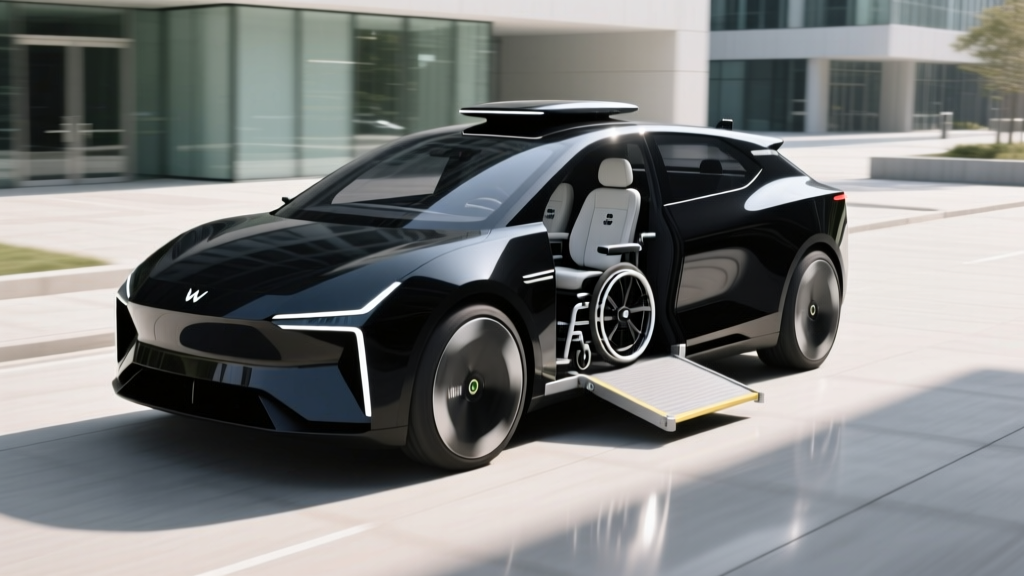
- Luggage and accessibility: The Jaguar I-PACE has limited cargo space compared to an SUV rideshare option. Large luggage for multiple passengers may not fit. Waymo has been testing wheelchair-accessible vehicles, but availability remains limited.
- Wait times during peak demand: Unlike rideshare platforms that can surge-price to attract more human drivers, Waymo's fleet size is fixed. During peak hours (early morning airport rushes, evening events), wait times can extend to 15–20 minutes in some zones.
- No highway-only service: All trips must originate and terminate within the geofence. You cannot hail a Waymo for a long-distance highway trip between cities that are not both within the service area.
For the specific Waymo to SFO airport use case, the most practical limitation is fleet availability during peak travel windows. If you have a 6:00 AM flight and need a 4:00 AM pickup, check the app the night before — service runs 24/7 in San Francisco, but vehicle density at that hour is lower, and you may face a longer wait or need a backup plan.
Frequently Asked Questions
Can I take a Waymo to SFO Airport right now?
Yes. As of 2026, Waymo One is fully available for trips to and from SFO for any user within the Bay Area service geofence. Pickups and drop-offs use the same ground transportation curbs as rideshare and taxis.
How much does a Waymo to SFO cost compared to Uber?
Expect to pay roughly $38–$52 for a downtown San Francisco to SFO trip, which is typically 10–20% more than a standard UberX or Lyft ride on the same route. However, there is no tip required and no traditional surge pricing.
Is Waymo really self-driving with no driver?
Yes. Waymo One operates at SAE Level 4 — there is no human in the driver's seat. This is fundamentally different from Level 2 systems like Tesla Autopilot or GM Super Cruise, which require a human driver to remain engaged at all times.
What happens if the Waymo gets confused or encounters a problem?
The vehicle contacts a remote assistance specialist who can provide guidance (e.g., confirming it is safe to proceed around an obstacle). The remote assistant does not "drive" the car remotely — they provide high-level routing or confirmation decisions while the vehicle's system continues to handle steering, braking, and acceleration. If the system cannot resolve the situation, it performs a safe pullover.
Does Waymo operate in bad weather?
Waymo handles light rain and typical Bay Area fog. However, during severe weather — heavy rain, flooding, or extreme fog — the service may be temporarily suspended in affected zones. The app will notify you if service is unavailable.
Can I bring large luggage on a Waymo to SFO?
The Jaguar I-PACE offers approximately 25 cubic feet of cargo space behind the rear seats. A standard carry-on and a checked bag for one or two passengers will fit. For larger groups with multiple large suitcases, you may need to consider a traditional rideshare with an SUV option.
Which other airports does Waymo serve?
Beyond SFO, Waymo offers airport service at Phoenix Sky Harbor (PHX), San Jose International (SJC), and Oakland International (OAK). LAX and Austin-Bergstrom are in testing or negotiation phases but not yet generally available to the public.
The ability to hail a Waymo to SFO Airport represents a tangible milestone in autonomous transportation — not a future promise, but a present-day reality for Bay Area travelers. The service is not perfect: it costs slightly more than rideshare on many routes, fleet availability can lag during peak hours, and geofence limitations mean it is not an option for every origin point. But for trips that fall within its coverage area, Waymo offers a consistent, data-backed safe, and genuinely driverless experience that no Level 2 consumer system can match. As the fleet expands, geofences grow, and purpose-built vehicles like the Zeekr robotaxi enter service, expect airport access to become one of the most common — and most practical — use cases for Level 4 autonomy.