The Short Answer: Can You Take Waymo to SFO?
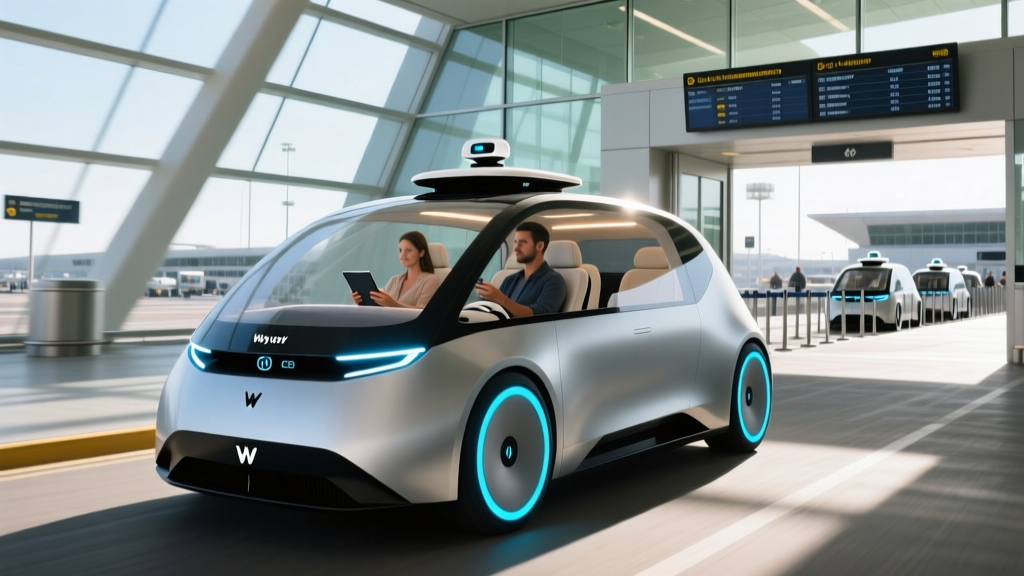
As of early 2026, yes — you can take a Waymo One robotaxi to and from San Francisco International Airport (SFO). Waymo expanded its San Francisco service area to include SFO airport pickups and drop-offs following a pilot program that began in late 2024 and transitioned into full public availability. The geofenced service zone now covers the airport's Departures/Terminal level, with a designated ride-hail pickup area on the Garage G side.
But before you book, there are critical details about pricing, wait times, geofence boundaries, and what this Level 4 autonomous ride actually feels like that every traveler should understand. This guide covers everything you need to know.
Waymo's 6th-generation driver system operates at SAE Level 4 — meaning the vehicle handles all driving tasks within its defined operational design domain (ODD) with no human driver present. This is fundamentally different from Level 2 systems like Tesla Autopilot or GM Super Cruise, which require an attentive human behind the wheel at all times. In a Waymo, there is no steering wheel accessible to passengers, no driver's seat, and no expectation that you intervene. If the system encounters a scenario it cannot handle, it executes a minimal-risk condition (pulling over safely) rather than handing control to you.
Where Can I Use Waymo Right Now? Service Availability in 2026
Waymo One is not a nationwide service — it operates within tightly defined geofences in select metro areas. Here's the current operational map as of 2026:
| Metro Area | Status | Coverage Area | Airport Access |
|---|---|---|---|
| San Francisco Bay Area | ✅ Live (public) | SF, parts of Oakland, Daly City, SFO | SFO: Yes |
| Los Angeles | ✅ Live (public) | Santa Monica, Hollywood, Downtown, LAX | LAX: Yes (2025+) |
| Phoenix, AZ | ✅ Live (public) | Metro Phoenix, Chandler, Tempe, PHX | PHX: Yes |
| Austin, TX | ✅ Live (limited) | Downtown, South Austin (expanding) | AUS: Not yet |
| Atlanta, GA | 🟡 Pilot (Uber integration) | Midtown, Downtown, Buckhead | ATL: Not yet |
SFO specifics: The Waymo pickup zone at SFO is located at the Garage G Level 4 Ride App Pickup area, the same zone used by Uber and Lyft. When you enter SFO as your destination in the Waymo One app, the vehicle navigates to the Departures/Terminal level for drop-off. Return pickups from the airport follow the standard ride-hail staging pattern — your car will meet you at Garage G after you claim baggage.
The San Francisco geofence covers roughly 55 square miles of the city proper, plus select corridors south through Daly City and north into parts of Oakland via the Bay Bridge. However, not every address within these cities is serviceable — the geofence follows specific mapped streets, and trips that begin or end outside the boundary will be rejected by the app.
How Much Does Waymo Cost vs. Uber and Lyft?
Waymo One pricing uses a dynamic model similar to rideshare: base fare + per-mile + per-minute rates, with surge pricing during high-demand periods. Here's how typical SFO trips compare:
| Route | Waymo One | UberX | Lyft Standard |
|---|---|---|---|
| SFO → Union Square (~14 mi) | $38–$52 | $34–$58 | $32–$55 |
| SFO → Mission District (~13 mi) | $35–$48 | $30–$52 | $29–$50 |
| SFO → Palo Alto (~20 mi) | Not in geofence | $45–$75 | $42–$70 |
| SFO → Fisherman's Wharf (~16 mi) | $42–$58 | $38–$62 | $36–$60 |
Key pricing observations:
- Off-peak parity: During non-surge periods, Waymo fares are typically within $2–$5 of UberX/Lyft for equivalent routes. The autonomous service does not carry a significant premium.
- Surge behavior: Waymo's surge pricing tends to be less aggressive than Uber/Lyft during peak airport hours, because Waymo doesn't need to incentivize human drivers to reposition. However, limited fleet size means wait times can stretch to 15–25 minutes during rush hour.
- No tipping: There is no driver to tip. Your quoted fare is your total fare (plus any applicable tolls, like the ~$9.75 SFO exit fee that all ride-hail services pass through).
- Geofence limitation: If your destination falls outside the Waymo service area (Palo Alto, San Jose, most of the Peninsula), the app will not offer the ride. This is the single biggest practical limitation for SFO travelers heading south.
How Safe Are Waymo Robotaxis? The Real Data
- 30+ million fully driverless miles completed across all markets
- ~85% fewer injury-causing crash involvement rate vs. human benchmarks (per NHTSA-aligned analysis published by Waymo)
- ~90% fewer police-reported crash involvement rate vs. human drivers in comparable urban environments
- Zero passenger fatalities since commercial launch in 2018
- Fleet vehicles are Jaguar I-PACE EVs equipped with redundant braking, steering, and compute systems
Waymo publishes periodic safety performance data comparing its crash rates to human benchmarks derived from NHTSA and insurance industry databases. The most comprehensive independent review came from the Insurance Institute for Highway Safety (IIHS), which analyzed Waymo's Arizona crash data and found substantially lower rates of property-damage and injury crashes compared to human drivers in the same geography.
Context on incidents: Waymo vehicles have been involved in minor contact incidents — primarily low-speed sideswipe and rear-end events in dense urban traffic. In nearly all documented cases, the Waymo vehicle was the struck party, not the striking party. The fleet has also drawn scrutiny for instances of vehicles briefly stopping in travel lanes or near rail crossings, prompting NHTSA Standing General Order reporting and ongoing monitoring.
How this compares to Level 2 systems: Consumer driver-assist systems like Tesla Autopilot and GM Super Cruise operate at SAE Level 2 — the driver remains legally responsible and must maintain awareness. These systems have been involved in high-speed incidents where driver inattention was a contributing factor. Waymo's Level 4 architecture eliminates the human-inattention failure mode entirely within its operational domain, which is a structurally different safety proposition.
How Waymo's Technology Stack Works
6th-Generation Waymo Driver System
Waymo's current fleet uses a sensor-fusion approach that combines three complementary perception technologies — a fundamentally different philosophy from camera-only systems:
- LiDAR (custom-built): Multiple roof-mounted and body-integrated LiDAR units create a real-time 360° 3D point cloud of the environment, detecting objects at 500+ meters regardless of lighting conditions. This is the primary depth-perception layer.
- Cameras (high-resolution): A suite of visible-light cameras reads traffic signals, lane markings, signage, and text (construction signs, temporary detours). Cameras provide semantic understanding that LiDAR alone cannot.
- Radar (imaging radar): Radar units track velocity and trajectory of moving objects (other vehicles, cyclists, pedestrians) and function reliably in rain, fog, and direct sun glare — conditions where cameras and LiDAR can degrade.
- HD Maps + Localization: Waymo pre-maps every street in its service area at centimeter-level precision. The vehicle continuously matches real-time sensor data against this map to determine its exact position — GPS alone is not sufficient for lane-level accuracy.
Compute: Custom-designed system-on-chip (SoC) hardware processes sensor fusion, prediction, and planning in real time. The system runs redundant compute paths — if one processor fails, a backup takes over without interrupting the ride.
The reliance on HD maps and geofencing is both Waymo's greatest strength and its most visible limitation. The system performs with extraordinary precision within its mapped domain, but it cannot simply drive to an unmapped address the way a human driver (or a camera-only Level 2 system with a human supervisor) could.
What Are the Current Limitations?
Waymo's Level 4 system is impressive but far from universal. Understanding its boundaries prevents frustration and failed ride requests:
⚠️ Known Operational Limitations
- Geofence boundaries: If your origin or destination falls outside the mapped service area, the ride cannot be booked. At SFO, this means Peninsula destinations (San Mateo, Palo Alto, Mountain View, San Jose) are not available via Waymo.
- Heavy weather degradation: While the 6th-gen system handles light rain and fog, severe weather events (heavy downpour, flooding, dense fog below visibility thresholds) can trigger ride cancellations or extended wait times as the fleet reduces operational speed or pauses service.
- Construction zones: Major, unmapped construction that alters lane geometry can cause the vehicle to stop and request remote assistance. Waymo's remote guidance team can resolve these, but it adds delay.
- No highway driving (in most markets): Waymo's SF service area primarily covers surface streets. The SFO route uses Highway 101/I-280 segments, which Waymo has mapped and approved, but general freeway travel beyond these corridors is limited.
- Wait times: Fleet size is finite. During peak airport arrival banks (early morning, late evening), expect 10–25 minute waits vs. 3–8 minutes for Uber/Lyft with larger driver pools.
- No stops: You cannot add intermediate stops to a Waymo ride. It's point A to point B only.
- Accessibility: Waymo's Jaguar I-PACE fleet includes wheelchair-accessible vehicles (WAVs) in select markets, but availability at SFO is limited and should be confirmed in-app before relying on it.
- Luggage space: The I-PACE trunk accommodates standard carry-on and one checked bag comfortably. Four passengers with four large suitcases will be tight — consider a traditional rideshare XL for group airport runs.
How to Book a Waymo Ride to or From SFO
- Download the Waymo One app (iOS/Android) and create an account. You'll need a valid payment method and must be 18+.
- Enter your destination. If SFO is your pickup, use the airport's designated pickup zone. The app will confirm whether the trip is within the service area.
- Confirm your fare. The price shown is guaranteed (no meter running). Tolls and airport fees are included in the quoted price.
- Meet your vehicle. The app shows the car's license plate, model (Jaguar I-PACE, white with Waymo branding), and exact pickup pin. At SFO Garage G, follow signs for "Ride App Pickup."
- Start your ride. Unlock the car via the app by tapping "Start Ride" when you're at the vehicle. The doors unlock automatically. Buckle up, and the trip begins — no driver interaction needed.
- In-ride controls: A rear-seat screen shows your route, ETA, and a "Pull Over" button. You can also contact Waymo's rider support line at any time. Music and climate controls are available on the screen.
Regulatory Landscape: Who Approves Robotaxi Operations?
Robotaxi services operate under a layered regulatory framework that differs significantly from rideshare:
- State level (California): The California Public Utilities Commission (CPUC) issues permits for autonomous vehicle passenger service. Waymo holds a TCP (Transportation Charter-Party Carrier) permit with a driverless AV program permit, allowing it to charge fares for rides with no human in the vehicle. The California DMV separately issues testing and deployment permits and tracks disengagement reports.
- State level (Arizona, Texas): Arizona has a more permissive regulatory environment — Waymo has operated commercially in Phoenix since 2018 under executive order authority. Texas passed legislation in 2023 enabling AV passenger service with less prescriptive oversight.
- Federal level: NHTSA maintains authority over vehicle safety standards (FMVSS) and investigates incidents through its Office of Defects Investigation. The NHTSA Standing General Order requires all AV operators to report crashes involving their systems within 24 hours. There is currently no comprehensive federal regulatory framework for AV deployment — it remains a patchwork of state rules.
- Airport authorities: Individual airport operators (like SFO, managed by the San Francisco Airport Commission) negotiate access agreements with AV companies, including pickup/dropoff zones, per-trip fees, and operational requirements.
Frequently Asked Questions
Can I take Waymo from SFO to downtown San Francisco?
Yes. Downtown SF (Financial District, Union Square, SOMA, North Beach) is fully within Waymo's San Francisco geofence. Expect a fare of $35–$55 and a ride time of 25–45 minutes depending on traffic and time of day.
Can I take Waymo from SFO to Palo Alto or San Jose?
No. The South Bay and most of the Peninsula are outside Waymo's current Bay Area service geofence. For these destinations, use Uber, Lyft, Caltrain, or a traditional taxi.
Is Waymo really self-driving, or is there a remote human controlling it?
Waymo operates at SAE Level 4 — the vehicle drives itself entirely autonomously with no human in the driver's seat and no remote joystick control. A remote guidance team can assist the vehicle with high-level decisions (e.g., "proceed past this construction cone" or "reroute"), but they do not steer, brake, or accelerate the car in real time. The onboard system handles all dynamic driving tasks.
How does Waymo handle a flat tire or mechanical problem mid-ride?
The vehicle's diagnostic systems monitor tire pressure, battery state, and mechanical health continuously. If a fault is detected, the system initiates a minimal-risk maneuver — pulling to the nearest safe stop and contacting Waymo's roadside assistance team. Passengers are notified via the in-car screen and can contact rider support directly.
Is it safe to ride alone in a Waymo at night from SFO?
Waymo operates 24/7 in San Francisco, including late-night airport runs. The vehicle interior has cameras for safety monitoring, and rider support is available by phone or in-app at all times. The safety data shows lower crash rates than human drivers at all hours. That said, as with any ride service, remain aware of your surroundings when entering and exiting the vehicle.
What vehicle will pick me up?
Waymo's fleet consists exclusively of Jaguar I-PACE electric SUVs equipped with the 6th-generation Waymo Driver sensor suite. The I-PACE has a 90 kWh battery pack (NMC chemistry), 394 horsepower, and an EPA range of 234 miles — though Waymo's fleet vehicles charge frequently and never run low on range during passenger trips.
Can I bring a child seat in a Waymo?
Waymo does not currently provide child seats, and bringing your own is not supported due to installation requirements. Children under 8 or under 4'9" are required by California law to ride in an appropriate child restraint system, which means Waymo is not suitable for young children at this time.