Waymo in Las Vegas: Where Things Stand in 2026
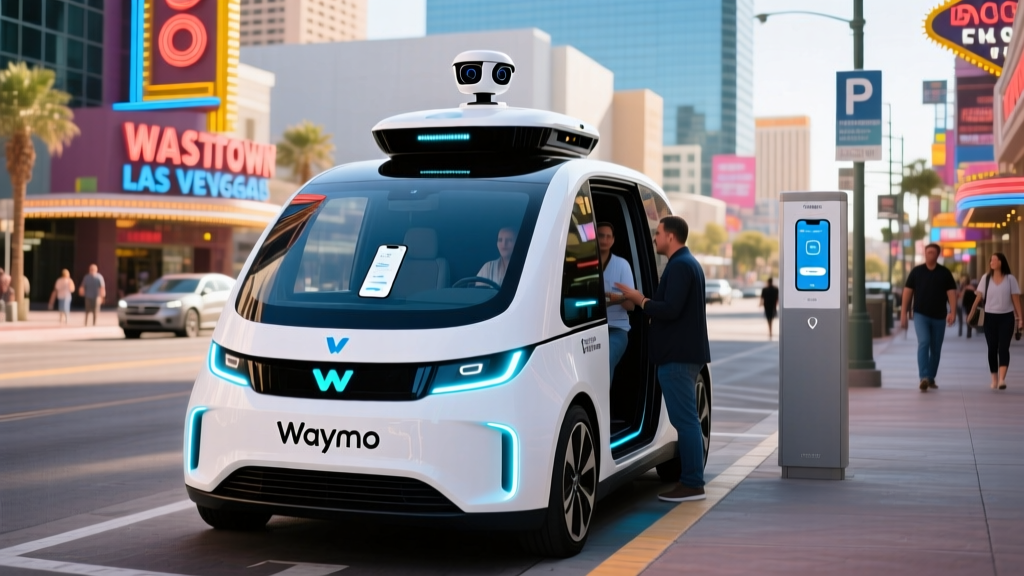
Las Vegas has long been a proving ground for autonomous vehicle technology, and the search for a Waymo taxi Las Vegas experience is one of the most common queries from visitors and residents alike. As of early 2026, Waymo's fully driverless commercial robotaxi service — branded as Waymo One — is not yet open to the general public in Las Vegas. The city remains part of Waymo's active testing and expansion pipeline, but it has not joined the ranks of Phoenix, San Francisco, and Los Angeles as a live commercial market.
That said, Waymo vehicles have been spotted testing on Las Vegas roads, and the company has signaled Nevada as a priority expansion target. Here's everything you need to know about the current state of Waymo robotaxis in Las Vegas, where you can ride one today, and what the service looks like when it arrives.
Is This Truly Self-Driving? SAE Automation Levels Explained
Before evaluating any robotaxi service, it's critical to understand what level of automation you're actually riding in. The Society of Automotive Engineers (SAE) defines six levels of driving automation, and the distinction between Level 2 and Level 4 is the single most misunderstood topic in autonomous vehicles.
| Level | Name | Who Drives? | Example |
|---|---|---|---|
| 0 | No Automation | Human does everything | Basic car |
| 1 | Driver Assistance | Human + one assist feature | Adaptive cruise control |
| 2 | Partial Automation | Human must supervise at all times | Tesla Autopilot/FSD, GM Super Cruise, Ford BlueCruise |
| 3 | Conditional Automation | System drives in limited conditions; human on standby | Mercedes DRIVE PILOT (specific highways, under 40 mph) |
| 4 | High Automation | System handles everything in defined area; no human needed | Waymo One, Zoox |
| 5 | Full Automation | System drives everywhere, all conditions | Does not exist commercially |
Source: SAE International J3016
Waymo One is a Level 4 service. There is no driver in the vehicle, no steering wheel for a passenger to grab, and no expectation that you will take over. This is fundamentally different from Tesla's FSD (Supervised), which remains a Level 2 system requiring continuous driver attention. When you ride in a Waymo, you are a passenger — not a backup driver.
Where Can You Actually Ride a Waymo Robotaxi Right Now?
While Las Vegas is not yet live, Waymo's commercial footprint has grown considerably. Here is the current operational map as of 2026:
| City | Status | Service Area Notes |
|---|---|---|
| Phoenix, AZ | Live — open to public | Largest coverage area; ~225 sq mi including Chandler, Tempe, Mesa, Scottsdale, Sky Harbor Airport |
| San Francisco, CA | Live — open to public | Full city coverage including SFO airport rides |
| Los Angeles, CA | Live — open to public | Downtown LA, Hollywood, Santa Monica, LAX service area expanding |
| Austin, TX | Live — limited/waitlist | Initial commercial service launched; geofenced core area |
| Las Vegas, NV | Testing / pre-commercial | Vehicles spotted testing; no public ride-hail availability |
| Atlanta, GA | Announced / testing | Partnership with Uber for future integration |
If you're visiting from Las Vegas and want the Waymo experience, Phoenix is a roughly four-hour drive and offers the most mature, widest-coverage robotaxi service in the world. The Phoenix metro area was Waymo's first commercial market and remains its most robust.
How to Use Waymo One and What It Costs vs. Uber/Lyft
In live markets, using Waymo One is straightforward: download the Waymo One app (iOS/Android), enter your pickup and drop-off, and a Jaguar I-PACE or Waymo's custom 6th-generation vehicle arrives without a driver. There's no human interaction unless you initiate it through the in-car support button.
Typical Pricing Structure
Waymo prices its rides to be competitive with Uber and Lyft in the same market. Pricing varies by city, time of day, and distance, but here's what riders report in Phoenix and San Francisco:
| Route | Distance | Waymo One | UberX | Lyft Standard |
|---|---|---|---|---|
| Downtown Phoenix → Sky Harbor Airport | ~5 mi | $18–$24 | $15–$22 | $14–$20 |
| SF Mission District → SFO | ~14 mi | $38–$52 | $32–$48 | $30–$45 |
| Short neighborhood trip (Phoenix) | ~2 mi | $8–$12 | $8–$11 | $7–$10 |
| LA Santa Monica → Downtown | ~16 mi | $35–$50 | $30–$45 | $28–$42 |
Prices are approximate ranges based on rider reports and vary with demand, time of day, and route specifics. Waymo occasionally offers promotional pricing in new markets.
Waymo tends to price at a slight premium to UberX on longer routes but is often comparable or cheaper on short trips. The value proposition isn't purely cost — it's consistency. There's no surge pricing in the traditional sense (though demand-based adjustments exist), no driver conversation, and no variability in vehicle cleanliness or driving style.
Waymo's Safety Record: What the Data Actually Shows
- Total autonomous miles driven: Over 30 million fully driverless miles as of late 2025 (Waymo)
- Injury-causing crash rate: 85% lower than human benchmarks in comparable urban environments (based on Waymo's published safety case studies and NHTSA comparison data)
- Police-reported contact rate: 57% lower than human drivers in the same operating areas
- Most common incident type: Low-speed contact with stationary objects (parked cars, bollards) — not high-speed collisions
- Recall events: Waymo has issued voluntary software recalls when patterns were identified, consistent with NHTSA reporting requirements for ADS-equipped vehicles
Waymo's safety record is the most extensively documented in the robotaxi industry, in part because the company has published detailed safety case frameworks and participated in NHTSA's Standing General Order reporting for crashes involving automated driving systems.
The data tells a nuanced story. Waymo vehicles are involved in fewer injury-causing crashes per million miles than human drivers in the same cities. However, they do experience incidents — most commonly low-speed contacts with stationary objects, unexpected road construction, or other drivers behaving unpredictably. Several high-profile incidents in San Francisco (a vehicle contacting a towed truck, a collision with a pedestrian who entered the roadway from behind a parked bus) have drawn scrutiny and prompted software updates.
For context, human drivers in the US experience approximately 1.35 fatalities per 100 million vehicle miles traveled and roughly 160 police-reported crashes per 100 million miles (source: IIHS). Waymo's reported rates are substantially lower, though direct comparison requires careful methodology since Waymo operates in geofenced, mapped urban areas — not rural highways or unmapped roads.
Under the Hood: Waymo's Technology Stack
Waymo's approach to autonomy is sensor-heavy and fundamentally different from camera-only systems like Tesla's FSD. The current Waymo fleet primarily uses the 6th-generation Waymo Driver hardware, integrated into vehicles like the Jaguar I-PACE and Waymo's custom-built ride-hail vehicle.
Sensor Suite Breakdown
| Sensor Type | Role | Specs (6th Gen) |
|---|---|---|
| LiDAR | 3D mapping of surroundings, object detection at range | Custom-built; 360° coverage; detection range 500m+; multiple units per vehicle |
| Cameras | Traffic light recognition, signage, lane markings, color | High-resolution; 360° array; optimized for sun glare and low light |
| Radar | Velocity detection, object tracking in poor visibility | 4D imaging radar; improved resolution over prior gen |
| External audio receivers | Siren detection, emergency vehicle awareness | Microphone array for directional audio classification |
The reliance on LiDAR is the key differentiator. While Tesla argues that camera-only vision (mimicking human eyes) is sufficient, Waymo's position is that LiDAR provides a redundant, non-visual 3D understanding of the environment that cameras alone cannot match — particularly in edge cases involving unusual lighting, partially occluded objects, or adverse conditions.
All Waymo vehicles operate within a pre-mapped geofence. The system uses high-definition maps of the service area, updated continuously, combined with real-time sensor data to navigate. This means Waymo cannot simply drive anywhere — it can only operate within its mapped and approved zone.
Current Limitations: Where Waymo Can't Go (Yet)
- Heavy rain or flooding: Waymo vehicles will pull over or decline rides in severe weather that degrades sensor performance
- Outside the geofence: Rides cannot start or end outside the mapped service area — no exceptions
- Highway driving at speed: Most Waymo One routes avoid limited-access highways above 65 mph, though this varies by city
- Construction zones: Major, unmapped road construction can cause the vehicle to stop and request remote guidance
- Multi-point stops: You cannot add intermediate stops (no drive-through, no picking up a second passenger)
- Pets and unaccompanied minors: Riders must be 18+; pets are not permitted in most markets
- Wheelchair accessibility: The current Jaguar I-PACE fleet is not wheelchair-accessible; Waymo has announced plans for accessible vehicles but they are not yet widely deployed
These limitations are not theoretical — they affect real ride decisions daily. In Phoenix during monsoon season, Waymo has suspended service temporarily. In San Francisco, riders near the edge of the geofence sometimes find their address just outside the boundary. And the inability to make intermediate stops means Waymo can't yet compete with the flexibility of a personal car for errands.
The Regulatory Landscape: Who Approves Robotaxi Operations?
Robotaxi deployment in the United States is governed by a patchwork of state and local regulations — there is no single federal license to operate a driverless taxi.
In Arizona, where Waymo's Phoenix operation is headquartered, the regulatory environment has been permissive. Governor Doug Ducey's 2015 executive order opened the state to autonomous vehicle testing with minimal barriers, and the Arizona Department of Transportation oversees deployment permits.
In California, the process is more complex. Waymo must hold permits from both the California Department of Motor Vehicles (DMV) for testing and the California Public Utilities Commission (CPUC) for commercial passenger service. The CPUC's approval process includes public comment periods, safety data reviews, and operational restrictions.
For Nevada — and a potential Las Vegas launch — the Nevada Department of Motor Vehicles administers autonomous vehicle testing permits under NRS 482A. Nevada was actually one of the first states to pass autonomous vehicle legislation (in 2011), and the state has issued testing permits to multiple companies. A commercial robotaxi service like Waymo One would likely need additional approval from the Nevada Transportation Authority or local jurisdictions, particularly for operations on the Strip, which involves coordination with Clark County, the city of Las Vegas, and the Nevada Resort Association.
At the federal level, NHTSA sets vehicle safety standards and investigates incidents, but it does not currently issue operational permits for robotaxis. Congress has not passed comprehensive autonomous vehicle legislation, leaving the regulatory landscape fragmented state by state.
When Will Waymo Launch in Las Vegas?
Waymo has not announced a specific launch date for Las Vegas, but several signals point to it being a near-term priority:
- Waymo vehicles have been documented testing on Las Vegas streets, including areas near the Strip and downtown
- Nevada's existing AV regulatory framework is among the most permissive in the country
- Las Vegas's grid-like road infrastructure, warm dry climate (minimal weather disruptions), and high tourist volume make it an attractive market
- Waymo's partnership with Uber could eventually surface Waymo rides through the Uber app in Las Vegas, following the model piloted in other markets
Industry analysts expect a Las Vegas commercial launch within the 2026–2027 timeframe, though this is an estimate — not a confirmed date. Waymo's expansion pace has been deliberate, prioritizing safety validation in each new city before opening to the public.
Frequently Asked Questions
Can I hail a Waymo robotaxi in Las Vegas today?
No. As of early 2026, Waymo One is not available for public rides in Las Vegas. Waymo vehicles are testing in the area, but commercial service has not launched. The nearest live Waymo One market is Phoenix, approximately 280 miles away.
How much does a Waymo ride cost compared to Uber or Lyft?
In live markets, Waymo One pricing is generally comparable to UberX and Lyft Standard — typically within $2–$5 on most routes. Short trips (2–3 miles) often cost $8–$12, while airport runs (5–15 miles) range from $18–$52 depending on the city and distance. Waymo does not use traditional surge pricing.
Is Waymo actually safer than a human driver?
Based on Waymo's published data and NHTSA reporting, Waymo vehicles experience significantly fewer injury-causing crashes per million miles than human drivers in comparable urban environments. However, direct statistical comparison is complex because Waymo operates in geofenced, mapped areas and avoids certain conditions (severe weather, unmapped construction). No autonomous system is incident-free.
What happens if a Waymo vehicle encounters a problem during my ride?
Waymo vehicles are equipped with a rider support button that connects you to a remote human agent. If the vehicle encounters a scenario it cannot handle (unmapped construction, a blocked road), it will pull over safely and either wait for the situation to resolve, receive remote guidance, or end the ride with a partial refund. The vehicle is designed to fail safe — meaning it stops rather than proceeding uncertainly.
Does Waymo operate on highways?
Limited highway driving is part of Waymo's capability set in some markets (Phoenix includes highway segments for airport routes), but most rides stay on surface streets. The system's geofence defines which road types are permitted in each city.
Will Waymo come to the Las Vegas Strip?
That's the key question for Las Vegas. The Strip presents unique challenges: extreme pedestrian density, constant construction, frequent lane changes, and complex pickup/drop-off zones at resorts. Whether Waymo's initial Las Vegas geofence includes the Strip or starts with suburban areas (like Summerlin or Henderson) remains to be seen. Resort partnerships for designated pickup zones would likely be part of any Strip deployment.
This article reflects information available as of early 2026. Robotaxi service availability, pricing, and regulatory status change frequently. Always check Waymo's official site and local regulatory agencies for the most current information before planning a trip around robotaxi availability.