If you've been tracking the robotaxi conversation in 2026, you've likely encountered the phrase "Waymo tax" — a colloquial term used in forums, social media, and ride-hailing debates to describe the perceived premium riders pay when choosing a driverless Waymo ride over a traditional Uber or Lyft. But does a literal Waymo tax exist? And more importantly, how do real robotaxi fares compare to conventional rideshare when you factor in surge pricing, tipping, and service fees?
This guide dissects the actual cost structure of Waymo One in 2026, examines the regulatory fees and taxes that apply to autonomous ride-hailing, and provides hard data on safety, availability, and the technology that makes it all work. Whether you're a daily commuter in San Francisco or a curious traveler planning a Phoenix trip, you'll leave with exact numbers — not marketing fluff.
What Does 'Waymo Tax' Actually Mean?
There is no official government levy called the "Waymo tax." The term has emerged organically among riders and industry commentators to describe two overlapping phenomena:
- Perceived fare premium: The observation that Waymo One rides in certain markets cost 10–25% more than a comparable UberX or Lyft standard ride during non-surge periods.
- Regulatory surcharges: In some jurisdictions, autonomous vehicle (AV) operators pay per-trip fees or special licensing costs that can indirectly affect consumer pricing. San Francisco, for example, imposed AV-specific permitting requirements and trip-related assessments as part of its oversight framework.
Neither constitutes a formal "tax" in the traditional sense, but both influence the final price on your receipt. Let's look at what you actually pay.
Waymo One Pricing vs. Uber and Lyft: The 2026 Numbers
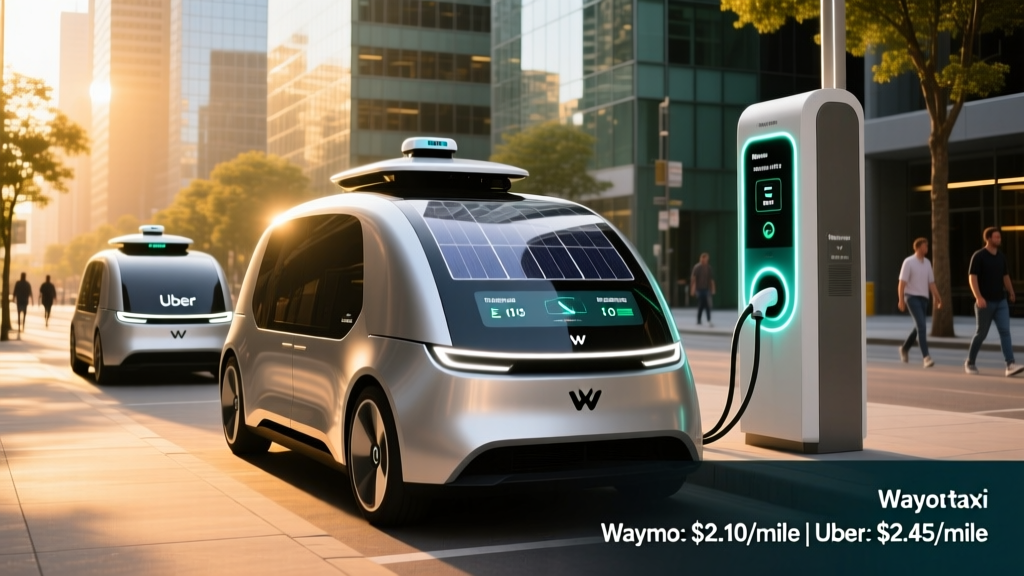
Pricing for robotaxi services is dynamic, just like conventional rideshare. Waymo One uses a base fare, per-mile rate, and per-minute rate that varies by city. Below is a representative comparison based on publicly reported fare structures and rider-collected data from early 2026.
| Cost Component | Waymo One | UberX | Lyft Standard |
|---|---|---|---|
| Base Fare | $3.50 | $2.80 | $2.50 |
| Per-Mile Rate | $1.45 | $1.25 | $1.20 |
| Per-Minute Rate | $0.40 | $0.35 | $0.33 |
| Service/Booking Fee | $2.50 | $3.00 | $2.75 |
| Tip (expected) | $0 (no driver) | $3.00–$5.00 | $3.00–$5.00 |
| Estimated Total | $16.75 | $19.55–$21.55 | $18.70–$20.70 |
Key takeaway: On a raw fare basis, Waymo One is often slightly more expensive before tip. But because there's no human driver to tip, the all-in cost frequently lands at or below a comparable UberX or Lyft ride — particularly for shorter urban trips. During peak surge periods, Waymo's pricing has historically been more stable, since it isn't subject to the same driver-supply fluctuations.
SAE Automation Level: Where Waymo Sits
Waymo One operates at SAE Level 4 (High Automation) within its defined operational design domain (ODD). This means the vehicle handles all driving tasks — steering, braking, navigation, and hazard response — without any human intervention required, but only within pre-mapped geofenced areas under approved conditions.
This is fundamentally different from SAE Level 2 systems like Tesla Autopilot, Ford BlueCruise, or GM Super Cruise, which require continuous driver supervision. A Level 4 robotaxi has no steering wheel for the passenger to grab — the system is fully responsible.
| SAE Level | Name | Driver Required? | Example |
|---|---|---|---|
| Level 2 | Partial Automation | Yes — hands on, eyes on | Tesla Autopilot, BlueCruise |
| Level 3 | Conditional Automation | Sometimes — must be ready to take over | Mercedes Drive Pilot (limited markets) |
| Level 4 | High Automation | No — within ODD | Waymo One, Zoox |
| Level 5 | Full Automation | No — anywhere, any condition | Does not exist commercially |
Where Can You Actually Ride a Waymo Robotaxi in 2026?
Waymo One is not available everywhere. The service operates within tightly defined geofenced zones that expand incrementally as Waymo validates safety performance in new corridors. As of early 2026, the confirmed live service areas are:
| City / Region | Status | Service Area Notes | Airport Access |
|---|---|---|---|
| Phoenix, AZ (East Valley) | Fully operational — open to public | Chandler, Tempe, Gilbert, Mesa; largest continuous geofence (~315 sq mi) | Phoenix Sky Harbor (PHX) — select rides |
| San Francisco, CA | Fully operational — open to public | Most of SF proper; expanded to portions of Daly City and SFO corridor | SFO — approved for pickups/dropoffs |
| Los Angeles, CA | Operational — phased public access | Santa Monica, Beverly Hills, Hollywood, Downtown LA; expanding | LAX — testing phase, not yet live |
| Austin, TX | Operational — limited public access | Central Austin corridor; initial launch area | AUS — not yet available |
Waymo has announced intentions to expand to additional cities, but announced expansion is not the same as live service. If you're outside these geofences, you cannot hail a Waymo One ride — the app simply won't offer it as an option.
How to Use Waymo One: Step by Step
Using Waymo One is similar to conventional rideshare, with a few notable differences:
- Download the Waymo One app (iOS/Android) and create an account. You'll need a valid payment method and phone number.
- Enter your pickup and dropoff within the geofenced service area. The app confirms whether autonomous service is available for your route.
- Confirm your ride. You'll see the vehicle model (typically a Jaguar I-PACE EV or the custom Zeekr-built Waymo 6th-generation vehicle), license plate, and an estimated arrival time.
- Board the vehicle. When it arrives, confirm your identity via the app (PIN or QR code). Doors unlock automatically.
- Start the ride. Tap "Start Ride" on the rear-seat screen. There's no driver to greet you — the vehicle handles everything.
- In-ride controls. You can adjust climate, add a music station (Spotify integration), and track your route on the screen. A "Help" button connects you to a live remote support agent at any time.
- Arrival and payment. Payment processes automatically upon arrival. No tipping interface is presented — there's no driver to tip.
Safety Record: What the Real Data Shows
Safety is the single most scrutinized aspect of robotaxi operations. Waymo publishes periodic safety reports, and regulatory bodies including the National Highway Traffic Safety Administration (NHTSA) and California's DMV track incident data. Here's what the numbers show as of early 2026:
Waymo Safety Data Points (Through Late 2025)
- Cumulative autonomous miles driven: Over 40 million fully driverless miles across all markets (per Waymo's published reports).
- Contact rate: Waymo's internal data and peer-reviewed analysis published in collaboration with insurers showed a ~76% reduction in property-damage-contact rates compared to human driver benchmarks in equivalent urban environments.
- Injury-involved collision rate: Significantly lower than the human baseline in comparable geographies, though direct comparison requires careful normalization (urban vs. highway, weather, trip length).
- Notable incidents: Waymo vehicles have been involved in low-speed contact events (typically in construction zones or when interacting with erratic human drivers). A 2024 incident in San Francisco involving a Waymo vehicle and a pedestrian drew regulatory scrutiny but was attributed in part to complex intersection dynamics. California's DMV and CPUC investigated and the service continued operations.
- Disengagement data: In California DMV disengagement reports (which apply to testing, not commercial operations), Waymo consistently reports among the lowest intervention rates per 1,000 miles of any AV operator.
Sources: California DMV OL-316 reports, Waymo Safety Reports, NHTSA Standing General Order crash data.
It's important to contextualize these figures: robotaxis operate primarily in dense urban environments at moderate speeds (under 45 mph), which is a different risk profile than highway driving. Waymo's safety record is strong within its operational domain, but it does not represent Level 5 "anywhere, any condition" capability.
The Technology Stack: How Waymo Vehicles See the Road
Waymo's approach to autonomy relies on a multi-sensor fusion architecture — fundamentally different from the camera-only approach used by Tesla's FSD system. Here's the hardware and software stack on the current 6th-generation Waymo Driver platform:
Waymo 6th-Gen Sensor Suite
- LiDAR: Multiple solid-state and spinning LiDAR units providing a 360° high-resolution 3D point cloud. Effective range exceeds 500 meters for object detection. LiDAR works independently of ambient light — critical for night driving and sun glare scenarios.
- Cameras: A suite of high-resolution cameras covering 360° with overlapping fields of view. Used for traffic light state detection, signage reading, lane marking identification, and object classification.
- Radar: Imaging radar units for velocity detection of moving objects (other vehicles, cyclists), particularly useful in rain or fog where LiDAR and camera performance degrade.
- Audio sensors: External microphones to detect emergency vehicle sirens and trigger appropriate pull-over behavior.
- HD Mapping: Waymo vehicles operate on pre-built centimeter-accurate maps of every road within the geofence. The vehicle constantly compares live sensor data against this map for localization and anomaly detection.
- Compute: Custom-designed onboard compute platform running Waymo's perception, prediction, and planning software stack. Processes terabytes of sensor data per hour in real time.
Geofencing dependency: The system requires pre-mapped roads and validated operational conditions. If the vehicle enters an unmapped area, encounters an unexpected road closure, or faces conditions outside its ODD (e.g., heavy snow), it will safely pull over and contact remote support rather than attempt to navigate blindly.
This multi-sensor approach is more expensive per vehicle than camera-only systems but provides redundancy that regulators and safety researchers consider essential for driverless operations. A single Jaguar I-PACE equipped with the Waymo Driver is estimated to carry over $100,000 in sensor and compute hardware above the base vehicle cost.
The Regulatory Landscape: Who Approves Robotaxi Operations?
Robotaxi deployment in the United States is governed by a patchwork of state and local regulations — there is no single federal "robotaxi license." Here's how the approval chain works:
- Federal (NHTSA): The National Highway Traffic Safety Administration sets vehicle safety standards (FMVSS) and requires AV operators to report crashes under the Standing General Order. However, NHTSA does not currently "approve" AV deployment — that authority largely falls to states.
- State DMVs: In California, the DMV issues testing permits and tracks disengagement data. Companies must apply for and maintain a permit to test AVs on public roads.
- State Public Utility Commissions: In California, the California Public Utilities Commission (CPUC) regulates commercial robotaxi services as passenger carriers. Waymo received its CPUC permit to charge fares for driverless rides in San Francisco in 2023. This is the critical commercial authorization.
- Local municipalities: Cities can impose additional requirements — designated operating zones, time-of-day restrictions, data-sharing mandates, and per-trip fees. San Francisco and Phoenix have taken notably different regulatory approaches.
In Arizona, where Waymo first launched commercially, the regulatory environment has been comparatively permissive, with executive orders enabling AV testing and deployment with fewer local hurdles. Texas, where Austin operations began, has its own evolving framework managed through the Texas Department of Transportation and local authorities.
Current Limitations: Where Robotaxis Still Fall Short
Despite impressive safety records and expanding service areas, Level 4 robotaxis have concrete limitations that riders should understand before booking:
Known Limitations of Waymo One (2026)
- Geofence boundaries: You can only travel within the pre-mapped service area. If your destination is outside the zone, the ride cannot be booked. Expansion is incremental, not continuous.
- Weather restrictions: Heavy rain, fog, and snow can trigger service suspension in affected areas. Phoenix's dry climate is an advantage; San Francisco's fog occasionally impacts availability. Waymo does not currently operate in cities with regular snowfall.
- Construction zones: While Waymo vehicles can navigate many construction areas, complex or rapidly changing work zones may cause the vehicle to stop and request remote assistance, adding delay.
- Wait times: Fleet density varies by market and time of day. In Phoenix, wait times average 5–10 minutes; in San Francisco during peak demand, they can exceed 15 minutes. This is less predictable than Uber/Lyft in high-density areas.
- No highway driving: Current Waymo One operations are limited to surface streets and lower-speed roads. Highway-speed autonomous rides are not part of the commercial service.
- Accessibility: The Jaguar I-PACE fleet requires passengers to enter a standard SUV-height vehicle. Waymo has committed to deploying wheelchair-accessible vehicles, but availability remains limited as of early 2026.
- Multi-stop and complex routing: You cannot add intermediate stops or request route changes mid-ride as easily as with a human driver. The system follows its optimized path.
- Edge cases: Unusual road configurations, informal traffic patterns (e.g., four-way stops where drivers use eye contact), and emergency scenarios still occasionally require remote human intervention.
Is a Robotaxi Truly Self-Driving or Just Advanced Driver-Assist?
This distinction is critical and frequently confused in public discourse. Waymo One is genuinely driverless — SAE Level 4. There is no human in the driver's seat. There are no pedals or steering wheel accessible to the passenger. The vehicle navigates, makes decisions, and responds to hazards entirely on its own within its operational domain.
This stands in direct contrast to consumer vehicles equipped with SAE Level 2 driver-assistance systems — including Tesla Autopilot and Full Self-Driving (Supervised), Ford BlueCruise, and GM Super Cruise. Those systems can steer, accelerate, and brake on highways, but the human driver remains legally and operationally responsible at all times. You must keep your eyes on the road and be prepared to take over instantly.
Marketing language from automakers sometimes blurs this line. Terms like "Full Self-Driving" on a Level 2 system are feature names, not descriptions of actual capability. Only Level 4 services like Waymo One and Zoox (in limited deployment) remove the human from the driving equation entirely — and they do so only within tightly controlled geographic and environmental boundaries.
Ownership Economics: Robotaxi vs. Personal EV
For readers considering whether robotaxi services might replace personal vehicle ownership, the economics depend heavily on your driving patterns:
| Expense Category | Personal EV (e.g., Tesla Model Y) | Waymo One (Primary Transport) | Uber/Lyft (Primary Transport) |
|---|---|---|---|
| Vehicle payment / depreciation | $6,500 | $0 | $0 |
| Insurance | $1,800 | $0 | $0 |
| Fuel / electricity | $550 | Included in fare | Included in fare |
| Maintenance | $400 | $0 | $0 |
| Ride costs (8,000 mi @ avg rates) | $0 | ~$11,600 | ~$12,800 |
| Parking (urban) | $2,400 | $0 | $0 |
| Annual Total | ~$11,650 | ~$11,600 | ~$12,800 |
At current pricing, robotaxi-only transportation is roughly cost-competitive with personal EV ownership for moderate-mileage urban drivers — but only if you live entirely within the geofence and don't need a car for weekend trips, highway travel, or destinations outside the service area. For higher-mileage drivers or those who regularly leave the city, personal ownership remains significantly cheaper.
Frequently Asked Questions
Is there an actual government tax on Waymo rides?
No. There is no federal or state tax specifically labeled a "Waymo tax." However, robotaxi operators may be subject to per-trip municipal fees, AV-specific permit costs, and standard commercial transportation taxes that vary by jurisdiction. These costs may be reflected in consumer pricing, but they are not a unique surtax on Waymo.
How much does a Waymo ride cost compared to Uber?
For a typical 5-mile urban trip without surge pricing, Waymo One fares run approximately $15–$18, while UberX runs $13–$16 before tip. Once you factor in the expected $3–$5 tip for a human driver, the total cost of a Waymo ride is often comparable to or slightly less than UberX. During surge periods, Waymo pricing tends to be more stable.
Can I use Waymo at the airport?
As of 2026, Waymo One offers service at Phoenix Sky Harbor (PHX) and San Francisco International (SFO) for approved pickup and dropoff locations. LAX and Austin-Bergstrom are in testing or planning phases but are not yet live for commercial robotaxi service.
What happens if the Waymo vehicle encounters a problem during my ride?
The vehicle is monitored by Waymo's fleet response team in real time. If the system encounters a scenario it cannot handle (e.g., an unusual road closure), it will safely pull over and connect with a remote support agent who can guide the vehicle or dispatch roadside assistance. You can also press the "Help" button on the rear-seat screen at any time to speak with a live agent.
Is Waymo safer than a human driver?
Waymo's published data and independent analyses suggest that within its operational domain (mapped urban roads, moderate speeds, favorable weather), Waymo vehicles have lower property-damage and injury-involved collision rates than the human driver benchmark in equivalent environments. However, robotaxis do not yet operate in the full range of conditions that human drivers encounter (highways, rural roads, heavy snow), so a direct apples-to-apples comparison across all driving scenarios is not possible.
Does Waymo work in rain or snow?
Waymo vehicles can operate in light rain, but heavy rain, dense fog, or snow may trigger service suspensions in affected areas. Waymo does not currently operate in cities with regular snowfall. The sensor suite (particularly LiDAR) performs well in low light but can be affected by heavy precipitation that scatters laser returns.
What vehicle does Waymo use?
Waymo's primary fleet vehicle as of 2026 is the Jaguar I-PACE, an all-electric SUV with a 90 kWh battery and approximately 234 miles of EPA range. Waymo is also deploying its custom-designed 6th-generation vehicle built in partnership with Zeekr (Geely), purpose-built for autonomous ride-hailing with no traditional driver controls.