If you've searched for a Waymo subscription hoping to find a flat monthly fee for unlimited robotaxi rides, here's the straight answer: Waymo does not currently offer a traditional subscription plan. The company's Waymo One service operates on a per-ride pricing model, similar to Uber or Lyft, but without a human behind the wheel. What Waymo does offer are occasional promotional passes, loyalty-style credits for frequent riders, and bundled ride packages in select markets — the closest thing to a subscription structure available in 2026.
This guide breaks down exactly how Waymo One works today, where you can hail a ride, what it costs compared to conventional rideshare, the real safety data behind the service, and the hard limitations that still apply to Level 4 autonomous driving.
What Is Waymo One and How Does Pricing Work?
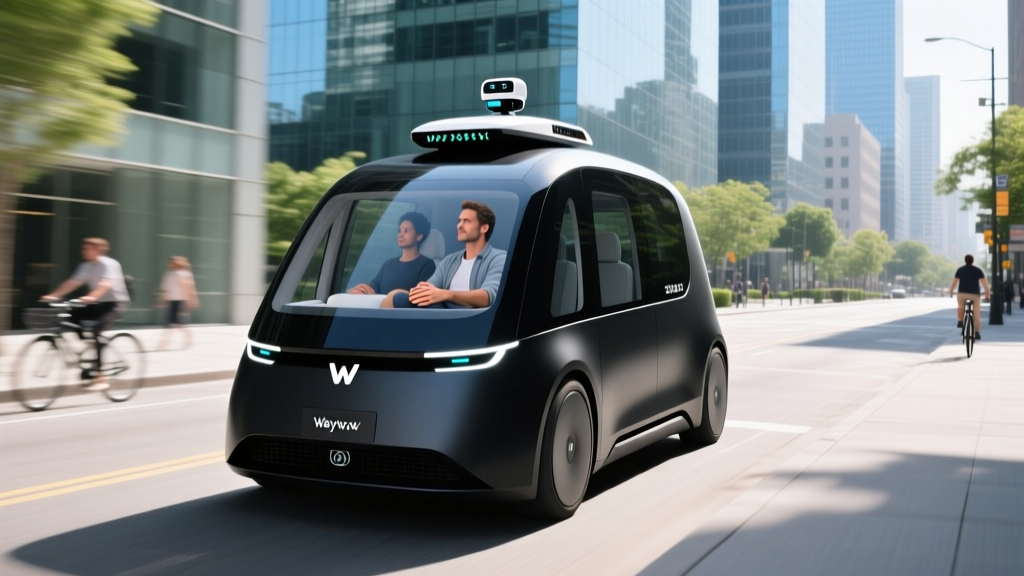
Waymo One is the commercial robotaxi service operated by Waymo (a subsidiary of Alphabet). Riders request a trip through the Waymo One app, a fully driverless vehicle arrives, and the car completes the trip with no one in the driver's seat. There is no steering wheel interaction, no remote teleoperation under normal conditions, and no safety driver — this is a true SAE Level 4 service within its operational design domain.
| Metric | Waymo One | UberX | Lyft Standard |
|---|---|---|---|
| Base fare | ~$3.50–$5.00 | ~$2.50–$4.00 | ~$2.00–$3.50 |
| Per-mile rate | ~$1.10–$1.50 | ~$0.90–$1.30 | ~$0.85–$1.25 |
| Per-minute rate | ~$0.25–$0.40 | ~$0.20–$0.35 | ~$0.18–$0.30 |
| Surge pricing | Limited / none currently | Common during peak | Common during peak |
| Tip expected | No (no driver) | Yes ($2–$5 typical) | Yes ($2–$5 typical) |
| Avg. 5-mile trip cost | ~$11–$16 | ~$12–$18 (with tip) | ~$11–$17 (with tip) |
The critical cost insight: when you remove the expected tip from rideshare comparisons, Waymo One pricing is broadly competitive — and in some corridors, slightly cheaper than an UberX with tip included. Waymo has historically avoided aggressive surge pricing, though the company has signaled this could change as demand scales.
As for subscription-style offerings, Waymo has periodically tested ride bundles (e.g., 10 rides for a fixed price) and promotional credit packages for new users. These are market-specific and time-limited. There is no standing monthly plan as of mid-2026.
Where Can You Use Waymo One Right Now?
Waymo One is not available everywhere. The service operates within tightly defined geofenced zones in specific metro areas. As of 2026, confirmed live markets include:
| Metro Area | Status | Approximate Coverage Area | Notes |
|---|---|---|---|
| Phoenix, AZ (East Valley) | Fully operational | ~315 sq mi (Chandler, Tempe, Mesa, Gilbert, Scottsdale, parts of Phoenix) | Original launch market; widest coverage |
| San Francisco, CA | Fully operational | ~47 sq mi city core + select corridors | Expanded to most of SF proper; some highway segments excluded |
| Los Angeles, CA | Fully operational | ~80+ sq mi (Santa Monica, Hollywood, Downtown, Mid-Wilshire, Beverly Hills) | Launched commercially 2024; still expanding zones |
| Austin, TX | Operational (expanding) | ~40+ sq mi central Austin | Commercial service launched 2025; coverage growing |
| Mountain View / Palo Alto, CA | Limited / employee + trusted tester | Select corridors | Not fully open public access as of 2026 |
If you're outside these zones, you cannot request a Waymo ride. The geofence is strictly enforced — the app will not allow trip requests that originate or terminate outside the approved service area. Waymo has announced plans for additional city expansions, but those remain announced, not live.
SAE Automation Level: What Level 4 Actually Means
| SAE Level | Name | Who Drives? | Examples |
|---|---|---|---|
| Level 2 | Partial Automation | Human (must supervise at all times) | Tesla Autopilot/FSD Supervised, GM Super Cruise, Ford BlueCruise |
| Level 3 | Conditional Automation | System in limited conditions; human must take over on request | Mercedes Drive Pilot (limited markets, ≤40 mph) |
| Level 4 | High Automation | System fully, within defined ODD; no human needed | Waymo One, Zoox (limited), Cruise (suspended 2024) |
| Level 5 | Full Automation | System everywhere, all conditions | Does not exist commercially |
This distinction matters enormously. When you step into a Waymo One vehicle, no one is watching the road for you — and no one needs to. The car handles everything within its service area. When you use Tesla FSD Supervised on your own car, you are legally and practically the driver at all times.
Safety Record: What the Data Shows
- Total autonomous miles driven: Over 50 million fully driverless miles as of late 2025 (Waymo Safety Report)
- Injury-causing crash rate: Waymo reported an 85% reduction in injury-causing crash rates compared to human benchmarks in comparable urban environments, based on 7.1 million+ driverless miles analyzed in a 2024 study
- Police-reported crash rate: Approximately 6x lower than human drivers in the same operating cities, per Waymo's peer-reviewed analysis
- Contactless incidents: The vast majority of reported incidents involved low-speed contact (under 15 mph), often with stationary objects or in complex construction zones
- NHTSA Standing General Order: Waymo, like all ADS operators, reports crashes to NHTSA under the Standing General Order — data is publicly queryable
Context matters: Waymo's fleet operates primarily in dense urban environments at relatively low speeds (under 45 mph in most zones). The comparison benchmarks matter — Waymo compares to urban human driver averages, which already include the full spectrum of impairment, distraction, and fatigue. The data is strong but not infinite; 50 million miles is significant for a robotaxi fleet but a fraction of the billions of miles driven by humans annually.
Notable incidents have occurred. In early 2024, a Waymo vehicle in San Francisco struck a pedestrian who entered the roadway from behind a parked truck at night; the vehicle braked but could not avoid contact at low speed. The pedestrian sustained minor injuries. Waymo issued a software update to improve detection of pedestrians emerging from occluded areas. These edge cases — occluded pedestrians, unusual road configurations, construction-zone cone patterns — remain the frontier challenges for Level 4 systems.
Technology Stack: Lidar, Cameras, and Geofencing
Waymo's vehicles (currently the 6th-generation "Driver" system, primarily integrated into the Zeekr RT1 and Jaguar I-PACE fleet) use a multi-sensor approach that differs fundamentally from camera-only systems:
- Lidar: Multiple roof-mounted and body-integrated lidar units create a real-time 360° 3D point cloud of the environment, detecting objects, their distance, and their movement regardless of lighting conditions. Waymo's custom lidar operates at ranges exceeding 200 meters.
- Cameras: A suite of high-resolution cameras (visible spectrum) provides color and texture information — reading traffic signals, identifying signage, classifying objects, and detecting lane markings.
- Radar: Imaging radar supplements lidar for velocity detection of moving objects, performing reliably in rain and fog where lidar signal can attenuate.
- Audio sensors: External microphones detect emergency vehicle sirens, triggering appropriate pull-over behavior.
- HD Maps: Waymo pre-maps every inch of its service territory at centimeter-level precision. The vehicle localizes itself against this map in real time — this is what enables the geofence.
- Compute: Custom-designed system-on-chip (SoC) hardware processes sensor fusion, prediction, and planning at the vehicle level, with no cloud dependency for real-time driving decisions.
The multi-sensor redundancy is the key differentiator from camera-only approaches (like Tesla's vision-based FSD). If one sensor modality is degraded — fog reducing camera clarity, for instance — lidar and radar maintain object detection. The trade-off is cost: a Waymo 6th-gen sensor suite is estimated to cost tens of thousands of dollars per vehicle, which is why this model works for fleet-operated robotaxis but not consumer vehicles.
The geofence itself is a digital boundary enforced by the HD map. Waymo vehicles will not operate outside mapped territory, and they will not operate on roads that haven't been surveyed and approved. This is both a safety feature and a limitation.
Regulatory Landscape: Who Approves Robotaxi Operations?
Robotaxi operations in the United States are governed by a patchwork of state and local authorities. There is no single federal "robotaxi license." Here's the regulatory framework:
- California (CPUC + DMV): The California Public Utilities Commission (CPUC) issues permits for commercial passenger service (driverless deployment permits). The California DMV separately issues autonomous vehicle testing and deployment permits. Both must approve operations. The CPUC can revoke permits — as demonstrated by the Cruise suspension in October 2023.
- Arizona: Arizona has maintained a permissive regulatory environment since 2015, with executive orders enabling autonomous vehicle testing and commercial operation. Waymo's Phoenix operations were the first to go fully commercial under this framework. The Arizona Department of Transportation oversees basic compliance.
- Texas: Texas passed autonomous vehicle legislation (HB 3932, 2017) allowing operation without specific state-level commercial permits beyond standard vehicle registration and insurance requirements. Austin's operations fall under this framework.
- Federal (NHTSA): The National Highway Traffic Safety Administration sets vehicle safety standards (FMVSS) and requires crash reporting under the Standing General Order. NHTSA does not currently "approve" robotaxi services but can investigate and issue recalls for automated driving systems. NHTSA's ADS resource page tracks ongoing rulemaking.
The regulatory reality: Waymo can only expand to states and cities where the legal framework permits driverless commercial passenger service. Each new market requires navigating local permitting, insurance requirements, and in some cases, direct negotiations with city governments.
Current Limitations: What Waymo Cannot Do
Despite impressive capabilities, Waymo One in 2026 has concrete limitations that riders must understand:
- Geofence boundaries: You cannot hail a ride outside the mapped service area. Suburbs beyond the geofence, highway segments not yet approved, and rural roads are all inaccessible.
- Weather restrictions: Heavy rain, fog, and dust storms (common in Phoenix monsoon season) can trigger service pauses. Waymo vehicles will pull over safely and wait if sensor performance degrades below thresholds. Snow and ice are not supported — no Waymo market currently operates in winter-weather conditions.
- Speed limits: Waymo vehicles are currently limited to roads with speed limits of 45 mph or below in most markets. Freeway/highway driving is available only on select approved segments (e.g., portions of I-10 in Phoenix, select SF Bay Area highways as of 2025).
- No multi-stop trips: You cannot add intermediate stops (e.g., pick up a friend, stop at a store). Each ride is point-A to point-B only.
- Limited vehicle types: The fleet consists primarily of the Zeekr RT1 minivan-style vehicle and legacy Jaguar I-PACE SUVs. You cannot request a specific vehicle type, and cargo capacity is limited to what fits in the trunk.
- Accessibility: Waymo has deployed wheelchair-accessible vehicles (WAVs) in select markets, but availability is limited and wait times are significantly longer. This is an area of active expansion but not yet at parity with standard vehicles.
- No child seats: Waymo vehicles do not provide child safety seats. Children under a certain age/height may not ride without an appropriate restraint system, per state law.
- Pet policy: Service animals are permitted; pets are generally not allowed.
- Construction zones: While Waymo handles many construction scenarios, complex or unmapped construction zones may cause the vehicle to stop and request remote assistance (a "stranded" state that can add 5–15 minutes to a trip).
- Airport service: Airport pickups/dropoffs are available at Phoenix Sky Harbor (PHX) and San Francisco International (SFO) as of 2025–2026, but not all airports in Waymo markets are supported.
How to Use Waymo One: Step by Step
- Download the Waymo One app (iOS or Android) and create an account with a valid payment method.
- Confirm you're within a service area. The app shows the geofence boundary on a map. Your pickup and dropoff must both be inside.
- Enter your destination and confirm the upfront price (Waymo provides a fixed fare before you confirm, similar to Uber's upfront pricing).
- Wait for the vehicle. Typical wait times range from 3–12 minutes depending on market density and time of day. Phoenix tends toward shorter waits due to fleet maturity.
- Verify the vehicle using the license plate and car number displayed in the app. The doors unlock automatically when you approach.
- Start your trip by tapping the "Start Ride" button on the rear-seat screen. The vehicle departs autonomously.
- Monitor the ride on the in-car display, which shows the vehicle's perception of the environment (detected cars, pedestrians, signals). You can contact live support at any time via the app or in-car button.
- Exit at your destination. The vehicle will pull to a safe stop, unlock the doors, and prompt you to check for personal belongings.
Frequently Asked Questions
Is there a Waymo subscription or monthly plan?
Not in the traditional sense. Waymo One charges per ride with upfront pricing. Waymo has occasionally offered ride bundles and promotional credits for frequent users, but there is no standing monthly subscription as of 2026. The company has indicated it may explore subscription-style pricing as the service scales.
How much does a typical Waymo ride cost compared to Uber?
A typical 5-mile urban trip costs roughly $11–$16 on Waymo One, compared to $12–$18 on UberX when you include a standard tip. Waymo does not currently implement surge pricing, which can make it notably cheaper during peak demand periods. The no-tip factor is a meaningful cost advantage.
Is Waymo truly self-driving, or is there a remote human operator?
Waymo One vehicles are fully driverless (SAE Level 4) within their service area. There is no human in the vehicle, and no remote operator driving the car in real time. Waymo does employ a remote assistance team that can provide guidance in unusual situations (e.g., an ambiguous construction zone), but this team does not steer or control the vehicle — they confirm a path or action that the vehicle's system then executes.
What happens if the Waymo vehicle encounters a situation it can't handle?
The vehicle is programmed to safely pull over and stop. It will then contact Waymo's remote assistance team, which can evaluate the situation and provide guidance. In practice, this happens rarely — Waymo reports that the vast majority of trips complete without any remote intervention — but it can add several minutes to your trip.
Can I use Waymo One if I'm visiting Phoenix or San Francisco?
Yes. Waymo One is available to any user who downloads the app, creates an account, and is physically within the service area. You do not need to be a resident. Tourists and business travelers are a significant portion of ridership in Phoenix and San Francisco.
How does Waymo handle bad weather?
Waymo vehicles operate in light rain and moderate conditions. However, heavy rain, dense fog, dust storms, or any condition that significantly degrades lidar and camera performance will trigger a service pause. The vehicle will pull to a safe stop and wait, or the app may simply not allow you to request a ride until conditions improve. Snow and ice are not supported in any current market.
Is Waymo safer than a human Uber driver?
Based on Waymo's published data — analyzed across millions of driverless miles — the fleet's injury-causing crash rate is significantly lower than the human benchmark for comparable urban driving. However, "safer" is not "risk-free." Low-speed contacts and edge-case incidents do occur. The NHTSA Standing General Order crash database provides publicly queryable data on all reported ADS-involved crashes.