There Is No Waymo Stock Ticker Symbol — Here's What Investors Need to Know
Type "Waymo stock ticker symbol" into any search engine and you'll find a trail of confused forum posts, misleading fintech articles, and wishful thinking. The answer is straightforward: Waymo does not have its own stock ticker. The autonomous vehicle subsidiary has never conducted an initial public offering (IPO) and remains a wholly owned division of Alphabet Inc., the parent company of Google.
For investors who want exposure to the world's most advanced commercial robotaxi operation, the path runs through Alphabet's publicly traded shares. But before allocating capital, it pays to understand exactly what you're buying — and what Waymo's 2026 operational footprint actually looks like on the ground.
Waymo's commercial service operates at SAE Level 4 — the vehicle handles all driving tasks within a defined operational design domain (geofenced urban areas, specific weather conditions) with no human driver present. This is fundamentally different from Level 2 driver-assist systems like Tesla Autopilot or Ford BlueCruise, which require continuous human supervision. Level 5 (full autonomy everywhere, all conditions) does not exist in any commercial deployment today.
How to Get Investment Exposure to Waymo in 2026
Since Waymo is not a standalone public company, investment exposure comes through Alphabet's two share classes:
| Share Class | Ticker | Voting Rights | Notes |
|---|---|---|---|
| Class A | GOOGL | 1 vote per share | Standard common stock; most widely held |
| Class C | GOOG | No voting rights | Typically trades at slight discount to GOOGL |
Alphabet does not break out Waymo's financials as a separate segment in its standard earnings reports, though the company has occasionally disclosed "Other Bets" revenue and operating losses in quarterly filings. Waymo falls under this "Other Bets" umbrella alongside ventures like Verily and Wing. As of early 2026, Alphabet has not announced plans for a Waymo spin-off or IPO, though speculation resurfaces periodically in financial media.
Investors seeking pure-play autonomous vehicle exposure have limited alternatives. Publicly traded competitors include Mobileye (MBLY), which supplies ADAS and autonomy chips but does not operate a robotaxi service, and Aurora Innovation (AUR), focused primarily on autonomous trucking. Neither offers the same commercial robotaxi footprint as Waymo.
Where Can You Actually Ride a Waymo Robotaxi Right Now?
Waymo's commercial service, branded Waymo One, has expanded steadily but remains geofenced to specific metropolitan areas. As of 2026, confirmed live-service cities include:
| City | Service Status | Coverage Area | Availability |
|---|---|---|---|
| Phoenix, AZ (metro) | Live — fully open | ~225 sq mi across Phoenix, Scottsdale, Tempe, Mesa, Chandler | 24/7, anyone can request via app |
| San Francisco, CA | Live — fully open | Most of SF proper, expanding southward | 24/7, open to all riders |
| Los Angeles, CA | Live | Downtown LA, Hollywood, West LA, Santa Monica, portions of the Valley | Open to all via app |
| Austin, TX | Live (expanding) | Central Austin, downtown, select surrounding neighborhoods | Open to all via app |
Waymo has also announced planned expansion to additional cities, but announced service areas are not live until the company confirms open public access. Always check the Waymo One app for your specific pickup location — geofence boundaries are precise, and a destination even one block outside the zone cannot be served.
Waymo Pricing vs. Uber and Lyft: The Real Cost Per Ride
Robotaxi rides are not cheaper than rideshare in every scenario. Waymo's pricing is dynamic, similar to Uber and Lyft, and varies by distance, time of day, and demand. Based on rider reports and published fare data from Phoenix and San Francisco in 2025–2026:
| Route Type | Waymo One (typical) | UberX (typical) | Lyft (typical) |
|---|---|---|---|
| Short trip (3–5 mi, off-peak) | $10–$16 | $9–$14 | $8–$13 |
| Medium trip (8–12 mi, off-peak) | $18–$30 | $16–$28 | $15–$26 |
| Airport run (15–20 mi) | $35–$55 | $30–$50 | $28–$48 |
| Surge pricing (peak demand) | Less frequent surges; capped multipliers | 2x–4x surges common | 2x–3x surges common |
Key difference: Waymo fares tend to be slightly higher than baseline UberX/Lyft on standard rides but more predictable during peak demand, since there's no human driver supply constraint creating extreme surge pricing. Waymo also eliminates tipping — there's no driver to tip, which saves riders 15–20% on top of the fare.
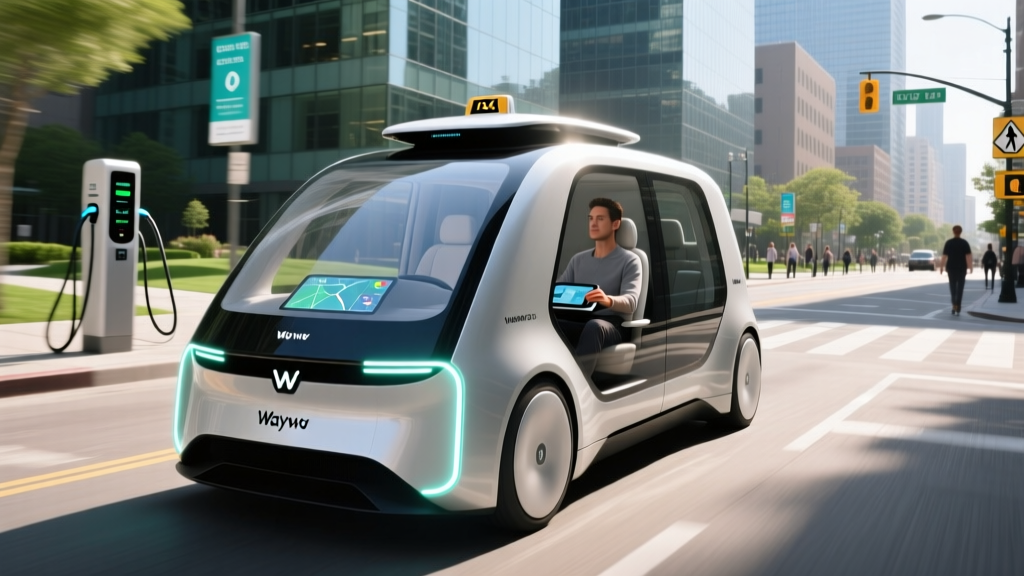
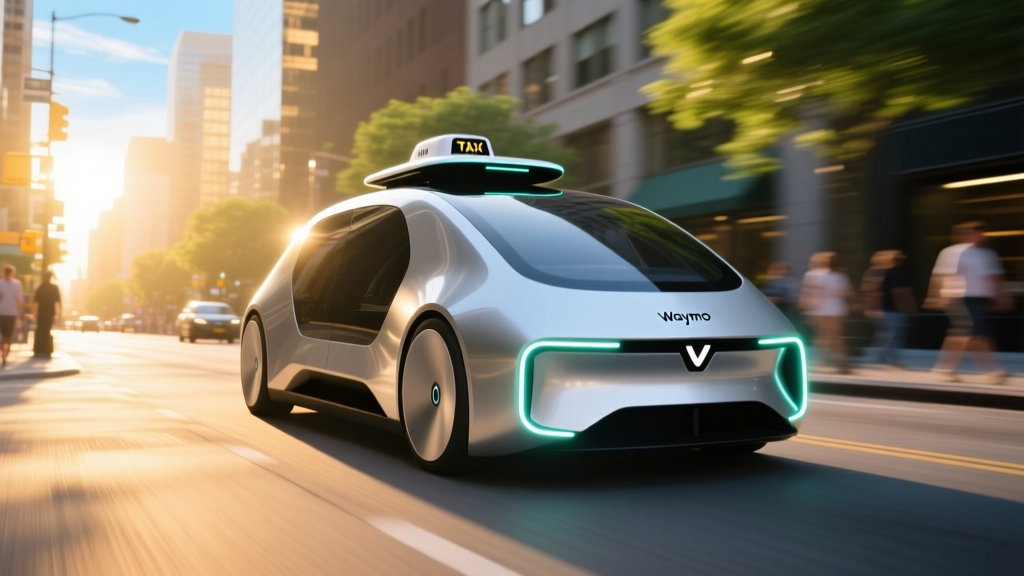
To use the service: download the Waymo One app (iOS/Android), enter your pickup and destination, confirm the fare upfront, and a vehicle arrives — typically within 3–8 minutes in well-covered zones. The vehicle is a Jaguar I-PACE EV equipped with Waymo's sensor suite, or in newer deployments, a purpose-built Geely/Zeekr robotaxi vehicle with no steering wheel.
Waymo's Safety Record: What the Data Actually Shows
- 30+ million fully autonomous (driverless) miles completed on public roads
- Fewer injury-causing crashes per million miles than human benchmarks in comparable urban environments, according to Waymo's published analysis reviewed by NHTSA
- Contact rate: Waymo reports approximately 85% fewer police-reported crash-involved incidents per million miles compared to human drivers in the same operating cities
- Most incidents: Low-speed, minor-contact events (e.g., being rear-ended at a stop, brushing a parked car) — consistent with dense urban driving environments
Waymo publishes periodic safety performance data and has submitted incident reports to NHTSA under the Standing General Order requiring crash reporting for vehicles with ADS (Automated Driving Systems). The company's internal analyses, some peer-reviewed, compare Waymo crash rates against human benchmarks from the same cities.
However, context matters. Waymo's geofenced zones are mapped in extreme detail, and the vehicles operate at moderate urban speeds (typically under 45 mph). Comparing robotaxi safety to highway driving or rural roads would be misleading. Additionally, NHTSA has investigated several Waymo incidents, including vehicles briefly entering construction zones or making unexpected stops — none resulting in serious injury as of the latest public reports.
The honest assessment: Waymo's safety record in geofenced urban environments is strong by available data, but the dataset is still young relative to the billions of miles driven annually by human drivers. Long-term actuarial conclusions remain premature.
Under the Hood: Waymo's Technology Stack
Waymo's approach to autonomous driving is sensor-redundant — a stark contrast to camera-only systems. The current-generation Waymo Driver (6th generation hardware, deployed from 2024 onward) integrates:
- LiDAR: Multiple solid-state and spinning units providing 360° 3D point-cloud mapping out to 500+ meters — the core sensor for object detection and spatial awareness
- Cameras: High-resolution surround cameras (improved low-light and sun-glare performance over 5th gen)
- Radar: Imaging radar for velocity detection and operation in rain/fog where LiDAR performance degrades
- Audio detection: External microphones to detect emergency vehicle sirens and trigger yielding behavior
- HD Mapping: Centimeter-precision pre-mapped routes — the vehicle "knows" every lane, curb, and traffic signal position before it drives
This multi-sensor approach gives Waymo an edge in edge-case detection — a pedestrian stepping out from behind a truck, a cyclist at night, a stalled vehicle around a blind corner. The tradeoff is cost: each Waymo-equipped Jaguar I-PACE carries an estimated $100,000+ in sensor and compute hardware, though Waymo has driven this figure down significantly with each generation.
By comparison, Tesla's FSD (Supervised) relies primarily on cameras and neural networks without LiDAR. This remains a Level 2 system requiring driver supervision and is not a robotaxi service. The two approaches represent fundamentally different philosophies: Waymo bets on sensor redundancy within a tight geofence; Tesla bets on vision-only generalization at scale.
The Regulatory Landscape: Who Approves Robotaxi Operations?
Robotaxi deployment in the United States is governed by a patchwork of state and local regulations — there is no single federal license to operate driverless vehicles commercially.
- California (CPUC + DMV): The California Public Utilities Commission issues permits for commercial passenger service. The DMV separately issues driverless testing and deployment permits. Waymo holds both.
- Arizona: Among the most permissive regulatory environments. No specific state permit required beyond standard business and vehicle registration. Waymo has operated commercially in Phoenix since 2020.
- Texas: Austin has welcomed Waymo with a relatively open regulatory framework. State-level legislation provides a framework for ADS-equipped vehicles.
- Federal (NHTSA): NHTSA does not "approve" ADS systems but sets Federal Motor Vehicle Safety Standards (FMVSS). NHTSA has issued a Standing General Order requiring crash reporting for all ADS-equipped vehicles and has opened investigations into specific incidents across the industry.
For investors, the regulatory environment is a double-edged sword: permissive states enable faster scaling, but a single serious incident can trigger investigations, service pauses, or new restrictions — as seen when California briefly suspended Cruise's (GM's robotaxi subsidiary) permit in late 2023 following a pedestrian incident in San Francisco.
Current Limitations: What Waymo Cannot Do
Despite impressive capabilities, Waymo's Level 4 service has well-defined limitations that riders and investors should understand:
- Geofencing: The vehicle will not drive outside its mapped service area. If your destination falls outside the zone, the app won't let you book the ride.
- Weather constraints: Heavy rain, fog, snow, and ice degrade sensor performance. Waymo limits or suspends service during severe weather — unlike a human driver who might push through.
- Highway driving: Most Waymo service areas are urban/suburban. Limited highway operation exists on select routes (e.g., Phoenix freeway segments) but is not the norm.
- Construction zones: While Waymo handles many construction scenarios, complex or rapidly changing work zones can trigger the vehicle to pull over and request remote human assistance.
- Unmapped areas: New roads, recently modified intersections, or private property (parking garages, driveways) are not served.
- No intercity trips: You cannot take a Waymo from Phoenix to Tucson. This is strictly a last-mile/urban mobility service.
- Accessibility: Waymo has deployed WAV (wheelchair-accessible vehicle) options in select cities, but availability is limited compared to standard vehicles.
These limitations are not bugs — they're the design constraints of Level 4 autonomy. The system operates safely within its defined domain and declines to operate outside it, which is arguably the correct engineering approach.
Frequently Asked Questions
Is there a Waymo stock I can buy directly?
No. Waymo is a subsidiary of Alphabet Inc. and does not have its own stock ticker symbol or public shares. To gain investment exposure, you would purchase Alphabet shares (GOOGL or GOOG). Alphabet has not announced any plans for a Waymo IPO or spin-off as of early 2026.
Is Waymo truly self-driving, or is there a human watching?
Waymo One rides are fully driverless — there is no human in the driver's seat, no remote operator controlling the vehicle in real time. Remote human assistants can provide guidance in edge cases (e.g., confirming it's safe to proceed through an unusual construction zone), but they do not steer or control the vehicle directly. This is SAE Level 4 autonomy within the geofenced service area.
How does Waymo's safety compare to a human Uber driver?
Waymo's published data indicates lower rates of injury-causing crashes per million miles compared to human benchmarks in the same urban environments. However, Waymo operates under constrained conditions (geofenced, moderate speeds, fair weather), which makes a direct apples-to-apples comparison with all human driving difficult. The data is encouraging but the sample size is still relatively small.
Can I use Waymo at the airport?
Yes, in cities where the airport falls within the geofenced service area. Phoenix Sky Harbor (PHX) and San Francisco International (SFO) are served by Waymo One. Availability at LAX and Austin-Bergstrom (AUS) depends on the specific terminal and current service zone boundaries — check the app for your exact pickup point.
Will Waymo ever come to my city?
Waymo has indicated plans to expand to dozens of cities over the coming years, but expansion requires extensive HD mapping, regulatory approval, and local fleet deployment. Cities with supportive regulatory environments, favorable weather, and grid-like street layouts tend to be prioritized. There is no public timeline for specific new-city launches.
What vehicle will pick me up?
Most current Waymo One rides use the Jaguar I-PACE, a battery-electric SUV with 84 kWh usable battery capacity and approximately 234 miles of EPA range. Waymo's newer custom vehicle, developed with Geely/Zeekr, features a purpose-built interior with no steering wheel and is being gradually introduced into the fleet.