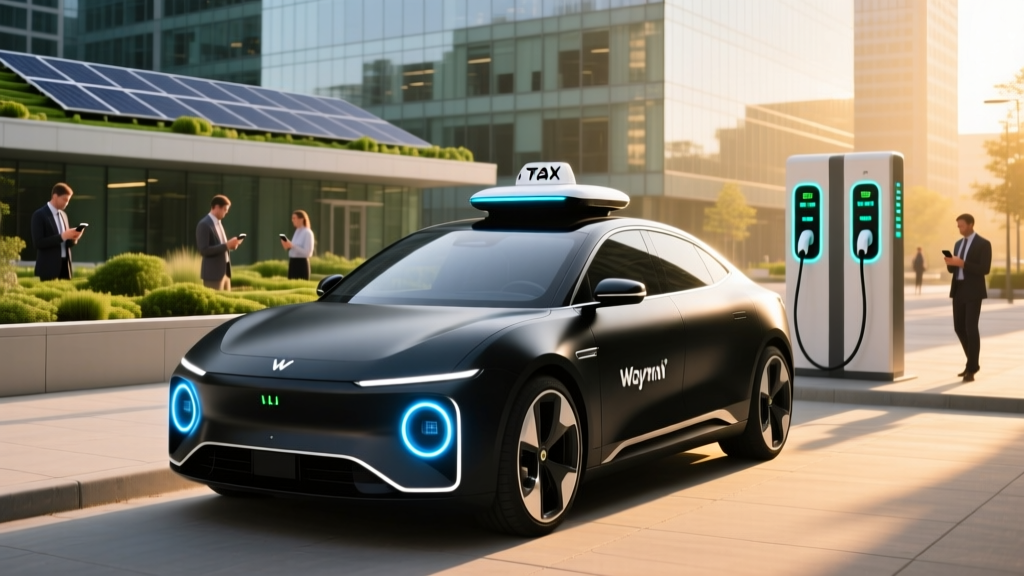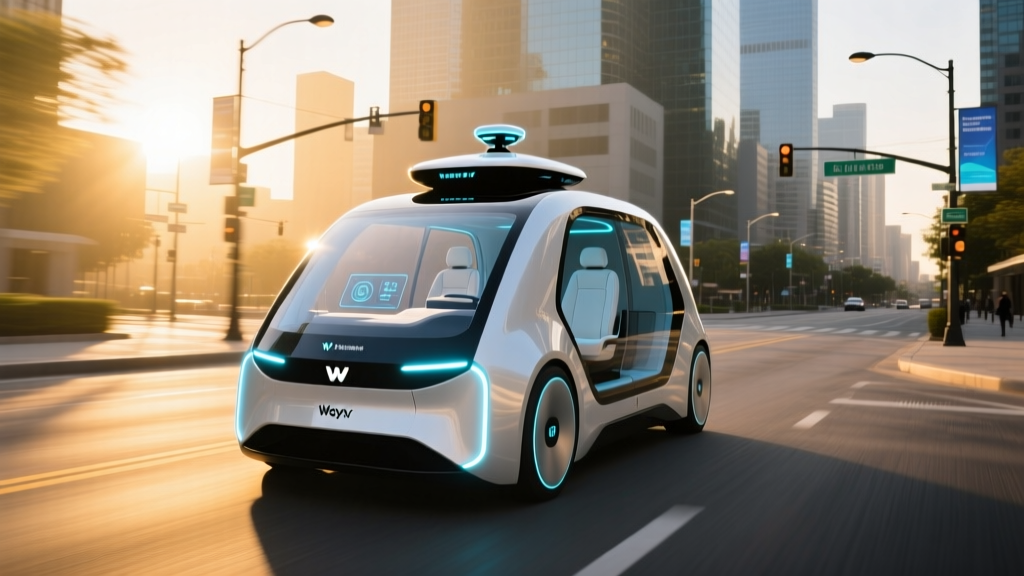
If you've ridden in a driverless taxi in Phoenix, San Francisco, or Los Angeles, you've likely experienced Waymo's Level 4 robotaxi service firsthand — and then immediately searched for the stock symbol for Waymo to invest in the company behind it. The answer is straightforward but requires a bit of unpacking: Waymo does not have its own stock symbol because it is not a publicly traded company. It operates as a subsidiary of Alphabet Inc., the parent company of Google, which trades on the NASDAQ under two ticker symbols: GOOGL (Class A, with voting rights) and GOOG (Class C, without voting rights).
As of early 2026, Alphabet has not announced plans to spin off Waymo as an independent public entity, despite periodic speculation from analysts. That means if you want exposure to the robotaxi market leader through public markets, buying Alphabet shares is the primary path. This guide breaks down what Waymo actually is, where it operates, how its technology and safety record stack up, and what investing in the robotaxi space really looks like.
Waymo's Autonomy Level: What Level 4 Actually Means
Before evaluating Waymo as an investment thesis, it's essential to understand what the company actually does — and how its autonomy level differs fundamentally from the driver-assist systems in consumer vehicles.
SAE Automation Level: Level 4 (High Automation)
Waymo's robotaxis operate at SAE Level 4, meaning the vehicle handles all driving tasks within a defined operational design domain (ODD) — specific geofenced areas under specific conditions — with no human driver present. The vehicle can safely pull over if it encounters a situation it cannot handle. This is categorically different from Level 2 systems like Tesla Autopilot, Ford BlueCruise, or GM Super Cruise, which require an attentive human driver at all times.
Here's how the SAE levels break down for context:
| SAE Level | Name | Who Drives? | Example |
|---|---|---|---|
| Level 0 | No Automation | Human | Traditional car, no assists |
| Level 1 | Driver Assistance | Human (one feature assisted) | Adaptive cruise control OR lane keeping |
| Level 2 | Partial Automation | Human (must supervise) | Tesla Autopilot, Ford BlueCruise, GM Super Cruise |
| Level 3 | Conditional Automation | System (human must take over on request) | Mercedes DRIVE PILOT (limited markets/conditions) |
| Level 4 | High Automation | System (no human needed in ODD) | Waymo One, Zoox |
| Level 5 | Full Automation | System (everywhere, all conditions) | Does not yet exist commercially |
The critical distinction: when you summon a Waymo, there is no one in the driver's seat. The vehicle navigates urban traffic, construction zones, and pedestrian-heavy corridors entirely on its own — within its approved geofence. Consumer Level 2 systems, no matter how capable they appear, are not robotaxis and should never be described as "self-driving."
Where Can You Use Waymo Right Now?
Waymo's commercial ride-hailing service, Waymo One, has expanded steadily but remains geofenced to specific metropolitan areas. As of early 2026, here is where you can actually hail a driverless ride:
| City / Region | Status | Service Area Notes |
|---|---|---|
| Phoenix, AZ (Metro) | Fully operational | Largest coverage area; includes Tempe, Scottsdale, Chandler, Mesa; airport service to PHX |
| San Francisco, CA | Fully operational | City-wide coverage including downtown, SoMa, Mission, Sunset; SFO airport access approved |
| Los Angeles, CA | Fully operational | Covers downtown LA, Hollywood, Santa Monica, Westside corridors |
| Austin, TX | Operational (expanding) | Central and south Austin zones; ongoing expansion |
| Atlanta, GA | Launched / expanding | Initial zones in midtown and downtown; phased rollout |
Waymo has announced intentions to expand to additional cities, but announced expansion is not the same as live service. Always check the Waymo One app for your specific location before assuming availability.
How to Use Waymo One
The experience closely mirrors Uber or Lyft:
- Download the Waymo One app (iOS/Android).
- Create an account and add a payment method.
- Enter your pickup and drop-off locations within the service area.
- Confirm your ride — a Jaguar I-PACE-based robotaxi (or Waymo's newer custom vehicle in some markets) arrives autonomously.
- Unlock the vehicle via the app, buckle up, and press "Start Ride" on the rear-seat screen.
- The vehicle drives itself to your destination. You can monitor the route on the screen but have no steering controls.
Waymo Pricing: How Does It Compare to Uber and Lyft?
One of the most common questions from prospective riders is cost. Waymo positions its pricing to be competitive with standard rideshare — not premium — though surge-style pricing can apply during peak demand.
| Ride Type | Estimated Cost (5-mile urban trip) | Notes |
|---|---|---|
| Waymo One | $12 – $18 | Varies by city, time of day, demand |
| UberX | $11 – $20 | Subject to surge pricing |
| Lyft Standard | $10 – $19 | Subject to prime-time pricing |
| Waymo (airport trip, ~15 mi) | $28 – $40 | Comparable to UberX to airport |
In practice, Waymo rides tend to land in the same range as a non-surged UberX or Lyft ride. The company has offered promotional pricing and loyalty credits in newer markets to build ridership. Tipping is optional and handled in-app — though there's no driver to tip, which some riders factor into their cost comparison.
Safety Record: What the Data Actually Shows
Safety is the single most scrutinized aspect of robotaxi operations — and it should be. Waymo publishes safety data and has been subject to extensive regulatory oversight. Here's what the numbers show as of early 2026:
Waymo Safety Data (through 2025)
- Total autonomous miles driven: Over 50 million fully driverless miles across all operational cities
- Contact rate: Waymo's internal data and third-party analyses show a contact rate (collisions per million miles) approximately 50–70% lower than human benchmarks for comparable urban driving, according to studies published by the company and reviewed by NHTSA
- Injury-causing collisions: Significantly below the human baseline rate per million miles in urban environments
- Notable incidents: A small number of minor-contact incidents have been reported (e.g., low-speed contact with stationary objects, interactions with improperly parked vehicles). No fatal collisions involving a Waymo robotaxi in driverless operation as of early 2026
- Regulatory incidents: In 2024, a Waymo vehicle in San Francisco struck a pedestrian who moved into the vehicle's path from behind a parked truck — the vehicle braked but could not avoid contact entirely. The NHTSA investigated and the incident informed updated operational protocols
For context, the National Highway Traffic Safety Administration (NHTSA) reports that human drivers experience approximately 1.35 fatalities per 100 million vehicle miles traveled nationally, with urban rates for injury-causing crashes substantially higher. Waymo's operational domain is dense urban environments where crash rates are elevated, making the comparison more relevant than highway-heavy national averages.
It's important to note that robotaxi safety data is still accumulating. Tens of millions of miles is impressive, but it's a fraction of the trillions of miles humans drive annually. Statistical confidence grows with scale, and Waymo's expansion is partly about building that dataset.
Technology Stack: How Waymo's Robotaxis Actually See the Road
Waymo's sensor suite is fundamentally different from camera-only approaches (like Tesla's FSD architecture). The company uses a multi-modal perception system that combines several sensor types for redundancy:
Waymo Driver Sensor Suite (5th Generation)
- LiDAR: Custom-built, roof-mounted LiDAR provides a real-time 360° 3D point cloud of the vehicle's surroundings out to 500+ meters. LiDAR works independently of ambient light — critical for nighttime and high-contrast scenarios.
- Cameras: Multiple high-resolution cameras surround the vehicle for object classification, traffic-light state detection, signage reading, and color/lane-marking interpretation.
- Radar: Millimeter-wave radar units provide velocity data for moving objects and perform reliably in rain and fog where LiDAR and cameras can degrade.
- External audio sensors: Microphones detect sirens from emergency vehicles, enabling the system to pull over proactively.
- HD mapping: Waymo pre-maps every inch of its geofenced service areas at centimeter-level precision. The vehicle continuously compares its real-time sensor data against this map for localization and anomaly detection.
This multi-sensor fusion approach is the defining difference between Level 4 robotaxis and Level 2 driver-assist systems. Waymo's vehicle doesn't just "see" the road — it cross-references what it sees against a known map, uses redundant sensor types to confirm objects, and can fall back to safe-stop behaviors if any sensor degrades.
The tradeoff is cost: a single Waymo vehicle's sensor suite is estimated at well over $100,000 in hardware, which is why the robotaxi model requires fleet-scale operations to amortize costs — unlike consumer vehicles where cost must fit a retail price point.
Regulatory Landscape: Who Approves Robotaxi Operations?
Robotaxi deployment in the United States is governed by a patchwork of state and local regulations. There is no single federal "robotaxi license." Instead, here's how the approval chain works:
- State level: Each state determines whether autonomous vehicles can operate without a human driver. California's DMV and the California Public Utilities Commission (CPUC) must both grant permits — the DMV for the vehicle's autonomous operation, and the CPUC for its use as a paid ride-hailing service. Arizona took a more permissive approach via executive order. Texas and Georgia have their own frameworks.
- Federal level: NHTSA sets vehicle safety standards (FMVSS) and can investigate crashes. However, NHTSA does not currently "approve" autonomous driving systems pre-deployment — it operates on a post-incident investigation model. Congress has not passed comprehensive federal AV legislation despite multiple attempts.
- Local level: Cities and counties can influence operations through permitting for airport access, curb management, and local traffic coordination. San Francisco's Board of Supervisors, for example, has held extensive hearings on robotaxi operations and their impact on emergency services and traffic flow.
Waymo must maintain active permits in each jurisdiction it operates in, and those permits can come with restrictions — caps on fleet size, hours of operation, weather conditions, and geographic boundaries. Regulatory compliance is a continuous operational cost, not a one-time approval.
Current Limitations: What Waymo Cannot Do
Despite the impressive technology, Level 4 autonomy in a geofenced urban environment has real, practical limitations that riders and investors should understand:
- Geofence dependency: Waymo vehicles will not operate outside their approved service areas. If your destination falls outside the geofence, the app simply won't let you book the ride. Expansion requires extensive mapping, testing, and regulatory approval — it's not a software toggle.
- Weather constraints: Heavy rain, dense fog, and snow can degrade LiDAR and camera performance. In Phoenix, this is rarely an issue. In San Francisco, heavy fog can trigger service modifications. Waymo does not currently operate in cities with significant snow seasons.
- Construction and road closures: While Waymo handles routine construction zones, sudden or unmapped road changes can cause the vehicle to stop and wait, or to route around the obstacle — sometimes resulting in longer-than-expected trips.
- No highway driving (limited): Waymo's current operations are primarily surface-street focused. Some highway segments within geofenced areas may be included, but long-distance highway travel is not part of the service model.
- Edge-case stops: In rare scenarios — an unusual obstacle, a confusing traffic-control situation, or a sensor fault — the vehicle will pull over safely and contact a remote support team. This can add minutes to a trip.
- Pet and cargo limitations: Service animals are permitted, but pets are not. Cargo must fit within the passenger compartment — there's no trunk access for riders.
- No multi-stop trips: Unlike Uber/Lyft, you cannot add intermediate stops to a Waymo ride. It's point A to point B only.
Investing in Waymo: Your Actual Options
Since there is no standalone stock symbol for Waymo, here are the practical paths to gain investment exposure:
1. Buy Alphabet (GOOGL / GOOG) Shares
This is the most direct route. Waymo is a subsidiary of Alphabet, and its financial results are partially reflected in Alphabet's "Other Bets" segment. As of Alphabet's recent reporting, Waymo has been moving toward reduced losses and increased revenue from ride-hailing operations, though it is not yet independently profitable. When you buy GOOGL or GOOG, you're buying the entire Alphabet conglomerate — Google Search, YouTube, Google Cloud, and Waymo together. Waymo represents a small fraction of Alphabet's overall revenue and market cap.
2. Invest in Robotaxi Adjacent Companies
If you want broader autonomous-vehicle exposure beyond Alphabet, consider companies in the supply chain and competitive landscape:
- Mobileye (MBLY): Intel-spun AV technology company supplying ADAS and autonomy chips/systems to multiple OEMs.
- Aurora Innovation (AUR): Focuses on autonomous trucking, not ride-hailing, but operates Level 4 technology in freight.
- Zoox (private, owned by Amazon/AMZN): Waymo's closest Level 4 competitor in robotaxis, with a purpose-built bidirectional vehicle. Not independently tradeable.
- Baidu (BIDU): Operates Apollo Go robotaxi service in China — the largest robotaxi fleet globally by ride volume.
3. Watch for a Potential Waymo IPO
Industry analysts have periodically speculated about an Alphabet spinoff of Waymo as a separate public company, particularly as its revenue grows and losses narrow. As of early 2026, no formal IPO filing or spinoff announcement has been made. If and when this happens, Waymo would receive its own ticker symbol and trade independently. Monitoring Alphabet's quarterly earnings calls is the best way to stay informed on this possibility.
Frequently Asked Questions
Is there a stock symbol for Waymo I can trade directly?
No. Waymo is a wholly owned subsidiary of Alphabet Inc. and does not have its own stock symbol. To invest in Waymo, you buy Alphabet shares under GOOGL (Class A) or GOOG (Class C) on the NASDAQ.
Is Waymo truly self-driving, or is there a human operator?
Waymo One operates at SAE Level 4 — there is no human driver in the vehicle. The car handles all driving tasks within its geofenced service area autonomously. This is fundamentally different from Level 2 systems like Tesla FSD (Supervised), which require an attentive driver behind the wheel at all times.
How much does a Waymo ride cost compared to Uber?
For a typical 5-mile urban trip, Waymo One costs approximately $12–$18, which is comparable to a non-surged UberX or Lyft ride ($11–$20). Airport trips (around 15 miles) typically run $28–$40. Pricing varies by city, time of day, and demand.
How safe are Waymo robotaxis?
Waymo has accumulated over 50 million fully driverless miles with a collision rate significantly below the human baseline for comparable urban driving, according to company data and third-party analyses reviewed by NHTSA. There have been no fatal collisions involving a Waymo robotaxi in driverless operation as of early 2026. However, the total miles driven are still a fraction of national driving volumes, and statistical confidence continues to build with scale.
What cities can I use Waymo in right now?
As of early 2026, Waymo One is fully operational in Phoenix (metro-wide), San Francisco, Los Angeles, Austin, and Atlanta — with Atlanta being the newest market in a phased rollout. Service is geofenced to specific zones within each metro area. Check the Waymo One app for exact coverage boundaries.
What are the biggest limitations of Waymo's service?
Key limitations include geofence boundaries (no rides outside approved zones), weather sensitivity (no snow or heavy-fog operations), inability to make multi-stop trips, no pet transport (service animals excepted), and occasional remote-assist stops that can add time to a trip. The service is surface-street focused and not designed for long-distance or highway-heavy travel.
Will Waymo ever have its own IPO?
Alphabet has not announced plans for a Waymo spinoff or IPO as of early 2026. Analysts periodically raise the possibility, especially as Waymo's revenue grows. Any such move would be announced through Alphabet's SEC filings and earnings communications.