Can You Actually Get a Waymo Pickup at SFO in 2026?
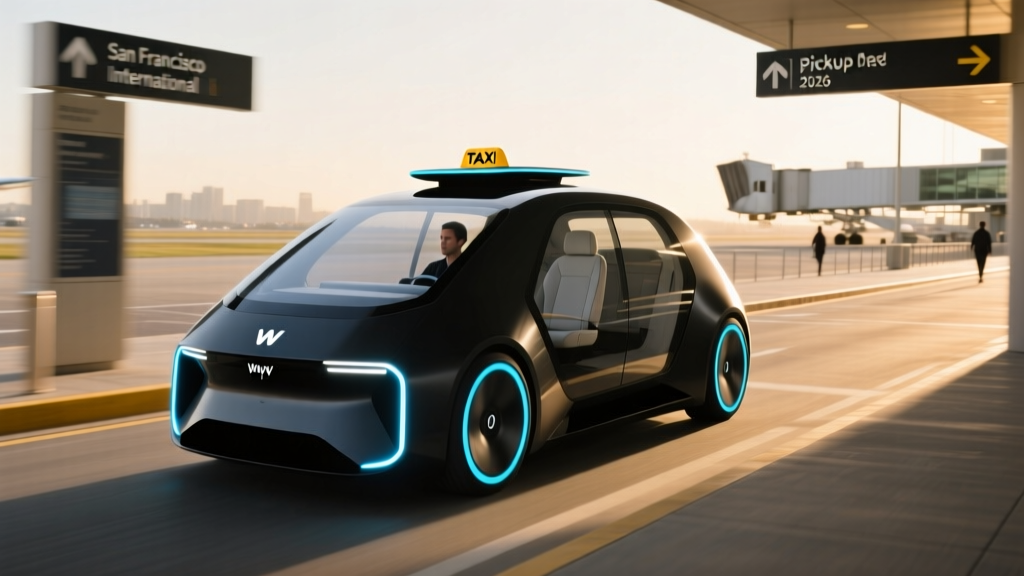
If you've landed at San Francisco International Airport and opened the Waymo One app hoping for a driverless ride, you're not alone. The search for a reliable Waymo SFO pickup has become one of the most common queries among Bay Area travelers and EV enthusiasts alike. After years of geofenced expansion across the San Francisco Bay Area, Waymo's commercial robotaxi service now covers substantial portions of the city and surrounding communities — but the airport question requires a precise, up-to-date answer.
Waymo operates the largest fully driverless commercial taxi fleet in the United States. Unlike Tesla's Full Self-Driving (Supervised) or GM's Super Cruise, which require an attentive human behind the wheel, Waymo's vehicles operate with no one in the driver's seat. That distinction matters enormously — legally, technically, and practically. This guide breaks down exactly where you can hail a Waymo near SFO, what it costs, how safe the fleet actually is, and where the service boundaries still exist.
SAE Automation Level: What Waymo Actually Is
| SAE Level | Description | Example | Driver Required? |
|---|---|---|---|
| Level 2 | Partial automation — steering and acceleration assisted | Tesla Autopilot, FSD (Supervised), BlueCruise | Yes, always |
| Level 3 | Conditional automation — system drives in specific scenarios | Mercedes Drive Pilot (limited markets) | Conditionally no |
| Level 4 | High automation — fully driverless within operational design domain | Waymo One, Zoox | No (within geofence) |
| Level 5 | Full automation — anywhere, any condition | Does not yet exist commercially | No |
Waymo One operates at SAE Level 4: fully driverless within its mapped and approved service area. There is no human driver, no steering wheel intervention, and no expectation that a passenger will take control.
Where Waymo Operates Right Now — and the SFO Question
As of early 2026, Waymo One's commercial service area in the Bay Area spans most of San Francisco proper, portions of the Peninsula, and select zones in the East Bay. The service has expanded methodically since its initial San Francisco launch, adding coverage in cities like San Jose, Mountain View, Sunnyvale, and parts of Oakland. However, direct curbside pickup at SFO terminals has been subject to negotiation between Waymo, the San Francisco Airport Commission, and the California Public Utilities Commission (CPUC).
| Location | Waymo One Availability | Notes |
|---|---|---|
| San Francisco (citywide) | ✅ Full service | Core market since 2022; 24/7 operation |
| SFO Airport (curbside terminals) | ⚠️ Limited / Designated zones | Check app for real-time geofence; designated pickup areas may apply |
| San Jose (downtown + core) | ✅ Service active | Expanded through 2025 |
| Mountain View / Sunnyvale | ✅ Service active | Includes areas near Waymo HQ |
| Oakland (select zones) | ✅ Partial coverage | Geofence boundaries apply |
| SFO Rental Car Center / Long-term parking | ⚠️ Check app | Some peripheral airport zones may be within geofence |
| Los Angeles (metro) | ✅ Full service | Second major market |
| Phoenix (metro) | ✅ Full service | Original commercial launch market |
Practical advice for SFO travelers: Open the Waymo One app before you land (you'll need Wi-Fi or cellular). Enter your terminal or the airport's designated rideshare pickup zone as the destination. If the pin falls within the current geofence, you'll get a price estimate and ETA. If it doesn't, the app will tell you the nearest available pickup point — which may be a short walk or BART ride away from the terminals.
How to Hail a Waymo: App, Wait Times, and the Pickup Experience
Using Waymo One is structurally similar to Uber or Lyft, but the experience diverges in meaningful ways once the vehicle arrives.
Step-by-step: Booking your ride
- Download the Waymo One app (iOS or Android) and create an account. You'll need a valid payment method on file.
- Enter your pickup and dropoff locations. The app will confirm whether both points fall within the active service area.
- Review the upfront price. Waymo provides a fixed fare before you confirm — no surge pricing in the traditional rideshare sense, though demand-based pricing adjustments have been tested in some markets.
- Confirm and wait. Typical wait times in San Francisco core areas run 3–8 minutes during normal hours; airport-adjacent pickups may take longer depending on fleet positioning.
- Locate your vehicle. The app shows the car's license plate, model (currently the Jaguar I-PACE or the newer custom Waymo vehicle), and a live map. The car will pull to a safe stop at your pin.
- Unlock and ride. Tap "Unlock" in the app when you're at the vehicle. The doors open, you buckle up, confirm your destination on the rear seat screen, and the car departs — with an empty driver's seat.
There is no driver to greet you, help with luggage, or make conversation. The interior is clean, climate-controlled, and features a screen showing the vehicle's perception of surrounding traffic, pedestrians, and cyclists in real time. You can adjust the temperature, change music, or request a pull-over through the in-car interface.
Waymo Pricing vs. Uber and Lyft: What You'll Actually Pay
One of the most common questions from first-time riders: is a robotaxi more expensive than a human-driven rideshare? The answer depends on distance, time of day, and market — but in general, Waymo's pricing is competitive with UberX and Lyft standard fares, and frequently cheaper during peak surge periods when human-driver rideshares spike.
| Route (San Francisco) | Waymo One (est.) | UberX (est.) | Lyft Standard (est.) |
|---|---|---|---|
| Downtown SF → SFO (14 mi) | $32–$42 | $28–$55 | $26–$50 |
| Mission District → Fisherman's Wharf (5 mi) | $14–$19 | $13–$24 | $12–$22 |
| SoMa → Golden Gate Park (6 mi) | $16–$22 | $15–$28 | $14–$26 |
| SFO → Palo Alto (20 mi) | $45–$58 | $40–$75 | $38–$70 |
Estimates based on typical non-surge pricing in early 2026. Uber/Lyft surge can push fares 1.5–3x during peak demand; Waymo's pricing has historically been more stable, though this may evolve as the service scales.
Waymo also offers a subscription-style membership in some markets with waived service fees and priority matching, which can reduce per-ride costs for frequent riders. Tipping is not expected (there is no driver), though the app does provide an option to leave feedback or a gratuity that goes toward fleet operations staff.
Safety Data: What the Numbers Actually Show
The safety question is the most scrutinized aspect of robotaxi operations — and rightly so. Waymo has accumulated tens of millions of fully driverless miles across Phoenix, San Francisco, and Los Angeles, and the company has published collision and contact-rate data that can be compared against human benchmarks.
Waymo Safety Record: Key Data Points
- Driverless miles logged: Over 10 million fully autonomous commercial miles as of late 2025 (Waymo Safety Report)
- Injury-causing crash rate: Waymo's vehicles have been involved in injury-causing crashes at a rate approximately 85% lower than the human benchmark in comparable urban environments, according to Waymo's published analysis using NHTSA crash data as a baseline.
- Police-reported crash rate: Approximately 57% lower than human drivers in the same operating areas.
- Contact incidents: The vast majority of Waymo-involved incidents have been low-speed rear-end or side-swipe contacts where the Waymo vehicle was stationary or moving slowly — often struck by human-driven vehicles.
- Fatality record: As of early 2026, Waymo has reported zero passenger fatalities in its commercial driverless operations.
Source: Waymo Safety Data, NHTSA
It's important to contextualize these numbers. Waymo operates primarily in dense urban environments at moderate speeds — a different risk profile than highway driving. The company's vehicles are equipped with redundant sensor suites that give them 360-degree awareness at all times, and they do not experience distraction, fatigue, or impairment. However, they do encounter edge cases — construction zones with unclear lane markings, unusual road-user behavior, and complex multi-point intersections — where the vehicle may choose to stop and wait or request remote guidance from a human operations specialist.
California's Department of Motor Vehicles (DMV) requires all autonomous vehicle operators to report disengagements and collisions. Waymo's DMV filings are public record and show a declining intervention rate year over year as the software stack improves.
The Technology Stack: How a Waymo Vehicle Sees the World
Waymo's approach to autonomous driving is fundamentally different from Tesla's camera-centric strategy. Where Tesla relies primarily on vision (cameras + neural networks), Waymo uses a multi-sensor fusion architecture that includes lidar, radar, and cameras — each compensating for the others' weaknesses.
Waymo Sensor Suite (5th-Generation & Custom Vehicle)
| Sensor Type | Function | Key Advantage |
|---|---|---|
| Lidar (custom-built) | 3D point-cloud mapping of surroundings up to 500m | Precise distance measurement; works in darkness; not fooled by glare |
| Cameras (multi-spectrum) | Color/texture recognition — traffic lights, signs, lane markings, pedestrian intent | High-resolution semantic understanding |
| Radar (imaging) | Velocity detection of moving objects; penetration through fog/light rain | Works in adverse weather where lidar/cameras degrade |
| Audio detection | Siren recognition (emergency vehicles) | Directional awareness of approaching emergency vehicles |
| HD Maps + GPS/IMU | Precise localization within the geofenced area | Centimeter-level positioning; pre-known road geometry |
This sensor redundancy is a defining feature of Level 4 systems. If one sensor modality is degraded — say, heavy sun glare washes out the cameras — the lidar and radar continue to provide accurate object detection and distance data. This is a critical safety advantage over camera-only systems, particularly in the variable lighting and weather conditions common in the Bay Area.
Waymo vehicles also rely on high-definition maps of their operating area. These maps encode lane geometry, traffic signal positions, speed limits, crosswalk locations, and known construction patterns. The vehicle localizes itself within this map in real time using lidar and GPS, giving it a level of spatial awareness that goes beyond what any onboard sensor alone could provide.
Regulatory Framework: Who Approves Robotaxi Operations
Robotaxi operations in California are governed by a layered regulatory structure that most riders never think about — but that directly determines where and when you can get a Waymo SFO pickup.
- California DMV: Issues autonomous vehicle testing and deployment permits. Waymo holds a Driverless Testing and Deployment Permit, which allows commercial operation without a safety driver.
- California Public Utilities Commission (CPUC): Regulates commercial passenger transport, including robotaxis. Waymo received its TCP (Transportation Charter Party) permit for commercial fare-charging service, making it a legally sanctioned common carrier.
- NHTSA (federal): Sets vehicle safety standards. Waymo has received specific exemptions for vehicles without traditional controls (steering wheel, pedals) in its custom-built robotaxi platform.
- Airport authorities: SFO, managed by the San Francisco Airport Commission, controls ground transportation access. Rideshare and robotaxi pickup at airport terminals requires specific agreements — which is why SFO availability may lag behind the rest of the city.
This regulatory framework means Waymo cannot simply expand wherever it wants. Each new city or zone requires mapping, testing, regulatory approval, and often public comment periods. The process is deliberate — and it's why announced expansion timelines should always be treated as targets, not guarantees.
Current Limitations: Where Waymo Cannot Go (and Why)
For all its capability, Waymo's Level 4 system operates within a defined Operational Design Domain (ODD) — a technical term for the specific conditions under which the system is approved to function. Step outside that domain, and the vehicle will not operate.
Known Limitations as of 2026
- Geofence boundaries: The vehicle will not drive outside its mapped and approved service area. If your destination falls outside the zone, the app will not let you book the ride.
- Heavy weather degradation: While Waymo's radar helps in light rain and fog, heavy downpours, dense fog (common in San Francisco), or flooding may cause the system to pull over safely and pause operations until conditions improve.
- Construction zones: Major road construction with altered lane configurations can challenge the HD map. Waymo vehicles may route around these areas or proceed with extreme caution at reduced speed.
- No highway/freeway service (most markets): Waymo's primary operations are on surface streets. Limited freeway segments have been tested, but most rides stay on local roads.
- Airport access restrictions: As noted, SFO curbside pickup depends on airport authority agreements. Other airports (OAK, SJC) have their own rules.
- No intercity trips: You cannot hail a Waymo from San Francisco to Sacramento or Lake Tahoe. The service is strictly intra-metro.
- Luggage and accessibility: The Jaguar I-PACE offers moderate cargo space. Large groups with excessive luggage may find the vehicle unsuitable. Waymo has been working on wheelchair-accessible vehicle options but availability remains limited.
- No stops or multi-destination trips: Unlike Uber, you generally cannot add intermediate stops. The ride goes from A to B.
These limitations are not bugs — they are the engineering discipline that keeps Level 4 operations safe. Waymo would rather decline a ride than attempt a scenario its system cannot handle confidently. For riders, this means occasionally needing a backup plan (Uber, Lyft, or public transit) when conditions fall outside the ODD.
Frequently Asked Questions
Can I get a Waymo pickup directly at SFO terminals right now?
Availability at SFO terminals depends on the current geofence and airport authority agreements. Open the Waymo One app and enter your exact terminal or the airport's designated rideshare area. If the zone is active, you'll see pricing and ETA. If not, the app will suggest the nearest available pickup point, which may require a short BART ride or walk to an adjacent area.
How much does a Waymo ride cost compared to Uber or Lyft?
Waymo pricing is generally comparable to UberX and Lyft standard fares — typically $14–$42 for common San Francisco routes. The key advantage is price stability: Waymo does not typically surge as aggressively as human-driver rideshares during peak demand, so during busy periods, Waymo can actually be the cheaper option.
Is Waymo truly self-driving, or is there a remote driver?
Waymo One is SAE Level 4: fully driverless with no human in the vehicle. There is no remote driver controlling the car in real time. However, Waymo employs remote fleet response specialists who can provide guidance if the vehicle encounters an ambiguous situation (e.g., an unusual construction setup). These specialists do not "drive" the car — they confirm the vehicle's proposed plan or provide contextual information. The driving decisions remain with the onboard AI.
How safe are Waymo robotaxis compared to human drivers?
Based on Waymo's published safety data and NHTSA benchmarks, Waymo's driverless fleet has demonstrated injury-causing crash rates approximately 85% lower and police-reported crash rates approximately 57% lower than human drivers in comparable urban environments. As of early 2026, there have been zero passenger fatalities in Waymo's commercial driverless operations. Full data is available via Waymo's safety publications and California DMV filings.
What happens if the Waymo vehicle encounters a problem during my ride?
The vehicle is designed to handle failures gracefully. If a sensor malfunctions or the system encounters a scenario it cannot resolve, the car will execute a minimal risk condition — typically pulling over safely to the curb, activating hazards, and contacting Waymo's roadside assistance team. You can also request a pull-over at any time via the in-car screen. A human support specialist is always reachable through the app or in-car interface.
What vehicle will pick me up?
Waymo's current fleet primarily uses the Jaguar I-PACE — a fully electric luxury crossover with a 90 kWh battery pack and approximately 234 miles of EPA range. Waymo has also been deploying its custom-built 6th-generation robotaxi vehicle, designed from the ground up for driverless operation with no steering wheel or pedals. Both platforms carry the same sensor suite and software stack.
Can I use Waymo if I'm visiting San Francisco and don't have an account?
Yes. Download the Waymo One app, create an account with your email and payment method, and you can book rides immediately within the service area. There is no waitlist for the San Francisco market as of 2026 — the service is open to the public.