Waymo in San Francisco: The Practical Rider's Briefing
San Francisco is the undisputed proving ground for the commercial robotaxi industry, and Waymo — Alphabet's autonomous driving subsidiary — operates the largest fleet of fully driverless taxis in the city. If you've searched for Waymo SF information to figure out whether you can hail one tonight, what it costs, and whether it's genuinely safe, this guide breaks down exactly what the service delivers in 2026 with hard numbers, not marketing copy.
Waymo's San Francisco operation is not a pilot or a test with a safety driver behind the wheel. It is a commercial, paid, fully driverless ride-hail service operating 24/7 across a substantial portion of the city. Here's everything a prospective rider or EV-curious observer needs to know.
Waymo's robotaxi service operates at SAE Level 4 — high automation within a defined operational design domain (ODD). The vehicle handles all driving tasks within its geofenced service area without any human driver present. This is fundamentally different from Level 2 driver-assistance systems like Tesla Autopilot, GM Super Cruise, or Ford BlueCruise, which require an attentive human driver at all times. In a Waymo, there is no one in the driver's seat. The car drives itself or, if it encounters a scenario it cannot handle, it pulls over safely and contacts remote assistance.
Where Can I Ride Waymo in San Francisco Right Now?
Waymo's San Francisco service area covers roughly 55 square miles as of early 2026, encompassing most of the city's core neighborhoods. The geofence has expanded progressively since the service launched commercially, but it does not cover every street in the city.
| Area | Status | Notes |
|---|---|---|
| SoMa / Mission Bay | ✅ Active | Core zone, highest vehicle density |
| Financial District / Embarcadero | ✅ Active | 24/7 service |
| Mission / Castro / Noe Valley | ✅ Active | Residential pickups available |
| Marina / Pacific Heights | ✅ Active | Expanded in late 2024 |
| Sunset / Richmond | ✅ Active | Western neighborhoods added progressively |
| SFO Airport | ✅ Active | Airport service launched mid-2024 |
| Golden Gate Bridge / Presidio | ⚠️ Limited | Restricted routes; bridge crossing not supported |
| Daly City / South SF | ❌ Outside geofence | Not yet available |
Beyond San Francisco, Waymo operates commercial services in the Phoenix metro area (its longest-running market), Los Angeles, and has been expanding into additional cities. But SF remains the densest, most complex urban environment where the service runs.
How to book: Download the Waymo One app (iOS/Android), enter your pickup and dropoff within the service area, and request a ride. Wait times typically range from 2–8 minutes in core zones during peak hours, though this can stretch in peripheral neighborhoods or during heavy rain.
Waymo Pricing vs. Uber and Lyft in San Francisco
One of the most common questions from new riders: does going driverless actually save you money? The answer is nuanced. Waymo prices its rides to be competitive with UberX and Lyft standard fares, but it does not consistently undercut them.
| Route (approx.) | Waymo One | UberX | Lyft |
|---|---|---|---|
| SoMa → Mission (3 mi) | $12–$16 | $11–$18 | $10–$17 |
| Financial District → SFO (15 mi) | $38–$48 | $35–$55 | $33–$52 |
| Marina → Castro (5 mi) | $18–$24 | $16–$26 | $15–$25 |
| Sunset → Embarcadero (8 mi) | $26–$34 | $24–$38 | $22–$36 |
Key pricing takeaways:
- No surge pricing in the traditional sense. Waymo does not implement the same aggressive surge multipliers as Uber/Lyft during peak demand. Instead, when demand exceeds vehicle supply, you may see longer wait times or a message that no cars are available.
- Fares are locked at request. You see the price before confirming, and it doesn't change mid-ride due to traffic.
- No tipping. There's no driver to tip, which effectively saves riders 15–20% compared to a comparable Uber/Lyft ride where tipping is customary.
- Promotional pricing. Waymo frequently offers first-rider discounts and referral credits, which can make initial rides substantially cheaper than rideshare.
Safety Record: What the Data Actually Shows
Safety is the make-or-break question for robotaxi adoption. Waymo has published peer-reviewed safety data and regularly reports to the California DMV and NHTSA. Here's what the numbers say.
- Cumulative fully autonomous miles driven: Over 10 million driverless miles across all markets (as of late 2025 reporting).
- Injury-causing crash rate: Waymo's peer-reviewed study (published in collaboration with insurance data analyses) found its vehicles were involved in injury-causing crashes at a rate approximately 85% lower than the human benchmark in comparable urban driving environments.
- Police-reportable crash rate: Approximately 57% lower than human drivers in the same geographies.
- SF-specific incidents: Waymo has had minor contact incidents in San Francisco (scrapes with parked vehicles, low-speed collisions with cyclists or pedestrians), most of which were classified as non-injury. A small number of incidents involving school buses and first-responder vehicles drew regulatory scrutiny in 2024–2025, leading to software updates and operational adjustments.
- California DMV disengagement reports: As a commercial Level 4 service, Waymo reports operational metrics differently than Level 2 test programs. The company publishes its own safety framework rather than relying solely on DMV disengagement data, which is widely considered an unreliable metric for comparing autonomous systems.
Sources: NHTSA standing general order crash reporting, Waymo safety publications, California DMV autonomous vehicle program data.
Context that matters: Waymo vehicles operate exclusively in dense urban environments where crash rates per mile are inherently higher than highway or suburban driving. The comparison benchmarks matter enormously. Waymo's data compares its vehicles to human drivers in the same urban geographies, which is the appropriate baseline — but it does not mean a Waymo is safer than a human on a rural interstate, because Waymos don't drive on rural interstates.
It's also worth noting that every Waymo contact incident is reported to NHTSA under the Standing General Order requiring crash reporting for vehicles equipped with automated driving systems. This transparency is significantly greater than the reporting requirements for human-driven rideshare vehicles.
How Waymo's Technology Stack Works
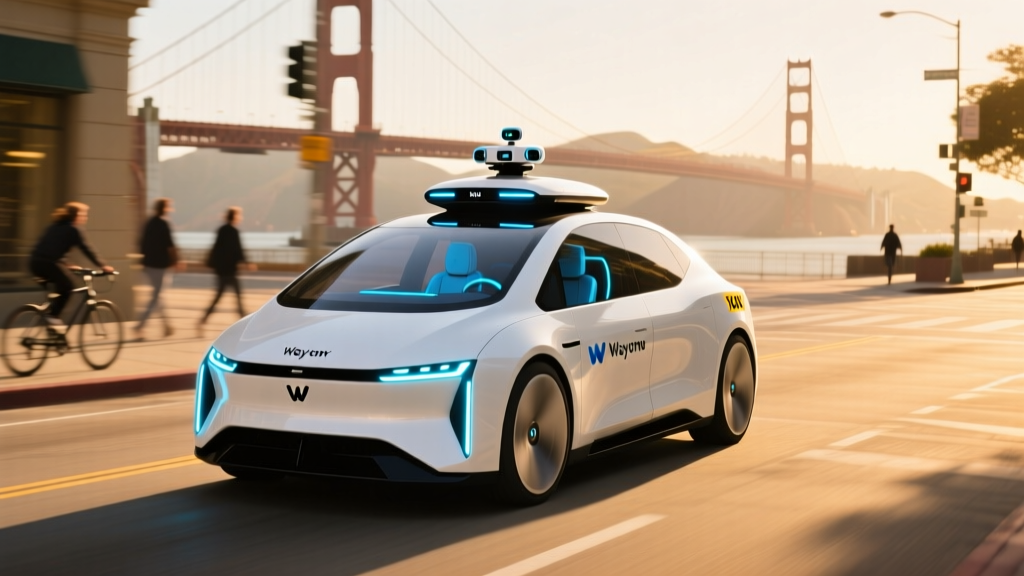
Understanding what's on the roof and under the hood of a Waymo vehicle (currently the 6th-generation system integrated into the Zeekr RT and previously the Jaguar I-PACE) helps explain both the service's capabilities and its limitations.
- LiDAR: Multiple high-resolution LiDAR units providing 360° 3D point-cloud mapping. LiDAR is the primary sensor for object detection and distance measurement, functioning independently of ambient light.
- Cameras: A suite of external cameras (high dynamic range) for lane detection, traffic-light state recognition, signage, and color information that LiDAR alone cannot provide.
- Radar: Imaging radar units for velocity detection of moving objects and redundancy in conditions where camera and LiDAR performance may degrade.
- Audio detection: External microphones to detect emergency vehicle sirens and trigger appropriate pull-over behavior.
- HD Maps: Waymo relies on centimeter-accuracy pre-built maps of every street in its service area. The vehicle localizes itself within these maps in real time. This is a key differentiator from Tesla's approach, which does not use HD maps or LiDAR.
- Compute: Custom-designed autonomous driving computers mounted in the vehicle, processing sensor data in real time with redundant failover systems.
LiDAR vs. camera-only — why it matters: Waymo's reliance on LiDAR gives it a direct, active measurement of the 3D environment that doesn't depend on good lighting or clear contrast. This is why Waymo can operate at night and in moderate fog with performance that a camera-only system would struggle to match. The trade-off is cost: each Waymo vehicle's sensor suite is estimated to add tens of thousands of dollars to the vehicle's hardware bill, which is one reason the fleet scales more slowly than a camera-only approach theoretically could.
Geofencing: Waymo's system is not a general-purpose self-driving system that can be deployed anywhere. It operates within a meticulously mapped and validated geofence. Every street, intersection, construction zone, and school zone within the service area has been driven, mapped, and tested before the system is allowed to operate there driverless. This is the defining characteristic of Level 4: high capability within a constrained domain.
Regulatory Framework: Who Approves Waymo in SF?
Robotaxi operations in California require approval from two state agencies, and the regulatory landscape has been anything but static.
- California DMV (Department of Motor Vehicles): Issues the autonomous vehicle testing and deployment permits. Waymo holds a deployment permit allowing driverless commercial operations.
- California Public Utilities Commission (CPUC): Regulates the commercial ride-hail aspect — essentially the "taxi" side. Waymo received its TCP (Transportation Charter Party) carrier permit to charge passengers for rides.
- NHTSA (National Highway Traffic Safety Administration): Federal oversight of vehicle safety standards. Waymo must report crashes under the Standing General Order and comply with Federal Motor Vehicle Safety Standards (FMVSS). The Jaguar I-PACE and Zeekr RT platforms must meet or receive exemptions from certain standards (e.g., steering wheel and mirror requirements for vehicles designed without them).
- San Francisco local government: The city has negotiated operational agreements with Waymo regarding fleet size caps, parking behavior, and coordination with emergency services. In 2023–2024, the SF Board of Supervisors held contentious hearings that resulted in operational restrictions before the current expansion was approved.
The regulatory environment remains a moving target. California's framework is the most mature in the US, but other states where Waymo is expanding (Arizona, Nevada) have different approval structures. There is currently no single federal framework for autonomous vehicle deployment — regulation remains a patchwork of state-level rules.
Current Limitations: What Waymo SF Cannot Do
For all its sophistication, the Waymo service has concrete limitations that riders should understand before booking.
- Heavy rain and flooding: While Waymo operates in light-to-moderate rain, the system will restrict or suspend service during heavy downpours where sensor performance (particularly LiDAR and camera) degrades significantly. San Francisco's atmospheric river events can trigger service pauses.
- Dense fog: Sustained heavy fog (common in western SF neighborhoods) can reduce operational confidence and trigger more conservative driving behavior or route restrictions.
- Construction zones: Major, unmapped construction that alters lane configurations can cause the vehicle to stop and request remote assistance. Expect longer ride times or rerouting in areas with active heavy construction.
- Geofence boundaries: You cannot book a ride to or from any address outside the mapped service area. The app will prevent you from entering an out-of-bounds destination.
- Bridge crossings: The Golden Gate Bridge is not in the service area. Bay Bridge crossings to Oakland are generally not supported (check the app for current status).
- Multi-stop rides: Waymo currently supports point-A-to-point-B trips only. You cannot add intermediate stops.
- Cargo and pets: Service animals are permitted. Pets are not. Large items that could damage the interior are prohibited.
- Passenger behavior monitoring: Interior cameras monitor the cabin. Passengers who interfere with vehicle controls, refuse to wear seatbelts, or engage in unsafe behavior may have their ride terminated and their account suspended.
The edge-case reality: Waymo's vehicles are conservative drivers. They will sometimes stop and wait rather than proceed through an ambiguous situation — a double-parked delivery truck, an uncontrolled intersection with unclear right-of-way, or a pedestrian behaving unpredictably. This caution is a feature of the safety design, but it can result in rides that feel slower or more hesitant than a confident human driver, particularly in the chaotic traffic of Market Street or Van Ness Avenue.
The Vehicle: What You're Riding In
Waymo's current fleet in San Francisco consists primarily of two platforms:
- Jaguar I-PACE (5th-gen system): The all-electric Jaguar crossover was Waymo's primary vehicle for years. It features a 90 kWh battery pack, approximately 234 miles of EPA range, and CCS1 charging. Many of these vehicles remain in active service.
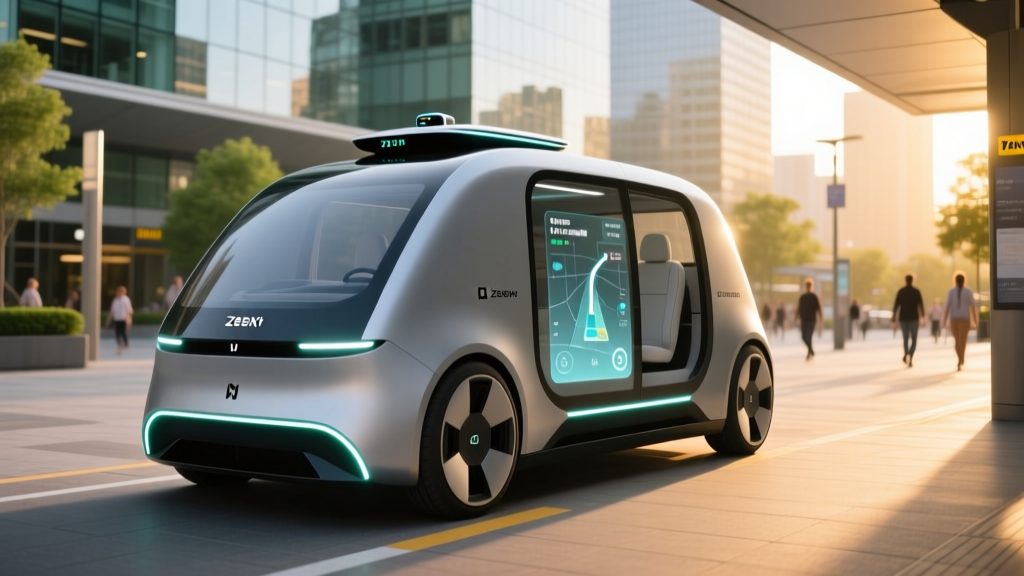
- Zeekr RT (6th-gen system): The newer, purpose-built robotaxi platform from Geely's Zeekr brand, designed from the ground up for autonomous ride-hail. It features a lower floor, wider doors, no driver controls, and the latest 6th-generation sensor suite. These vehicles are progressively entering the SF fleet through 2025–2026.
Both vehicles are fully electric, which keeps operating costs lower than ICE alternatives and aligns with California's zero-emission fleet requirements. The Zeekr RT's purpose-built design eliminates the driver's seat entirely in production configuration, though current regulatory requirements may still mandate certain manual override capabilities.
Frequently Asked Questions
Is Waymo truly self-driving, or is there a remote human controlling the car?
Waymo operates at SAE Level 4. The vehicle makes all driving decisions autonomously in real time — steering, braking, accelerating, lane changes, and route navigation. There is no remote human "joystick" controlling the car. However, if the vehicle encounters a scenario it cannot resolve (e.g., a completely blocked road with no clear alternative), it will stop safely and contact a remote support team who can provide guidance or approve a new route. The remote team does not drive the vehicle directly; they provide high-level instructions that the autonomous system then executes.
How much does a Waymo ride cost compared to Uber or Lyft?
Waymo fares are generally comparable to UberX and Lyft standard fares for the same route. The effective cost is often lower because there is no expectation to tip. For a typical 3–5 mile ride within central SF, expect $12–$24. Airport runs to SFO from downtown typically cost $38–$48. See the pricing table above for route-specific estimates.
Can I use Waymo from SFO airport?
Yes. Waymo launched SFO airport service in 2024, and it remains active. You can request a pickup at designated areas within the airport. Check the Waymo One app for the exact pickup location, as it may differ from the standard rideshare pickup zones.
What happens if the Waymo vehicle gets into an accident?
The vehicle is equipped with systems to detect a collision, stop safely, and automatically contact Waymo support and emergency services if needed. Passengers can also use the in-vehicle support button to reach a live agent immediately. All incidents are reported to NHTSA and the California DMV as required. Waymo carries commercial insurance for its fleet operations.
Is Waymo available 24 hours a day in San Francisco?
Yes, Waymo operates 24/7 in its San Francisco service area. However, vehicle availability may be reduced during late-night hours (roughly 1–5 AM), resulting in longer wait times or limited availability in peripheral neighborhoods.
How does Waymo compare to Tesla's Full Self-Driving?
These are fundamentally different systems operating at different SAE levels. Waymo is a Level 4 driverless robotaxi — no human driver is present, and the system handles all driving within its geofenced area. Tesla FSD (Supervised) is a Level 2 driver-assistance system that requires a fully attentive human driver who is legally responsible for the vehicle at all times. Tesla FSD can theoretically drive on any road, but it cannot drive without a human. Waymo drives without a human, but only on pre-mapped roads within its service area. They solve different problems.