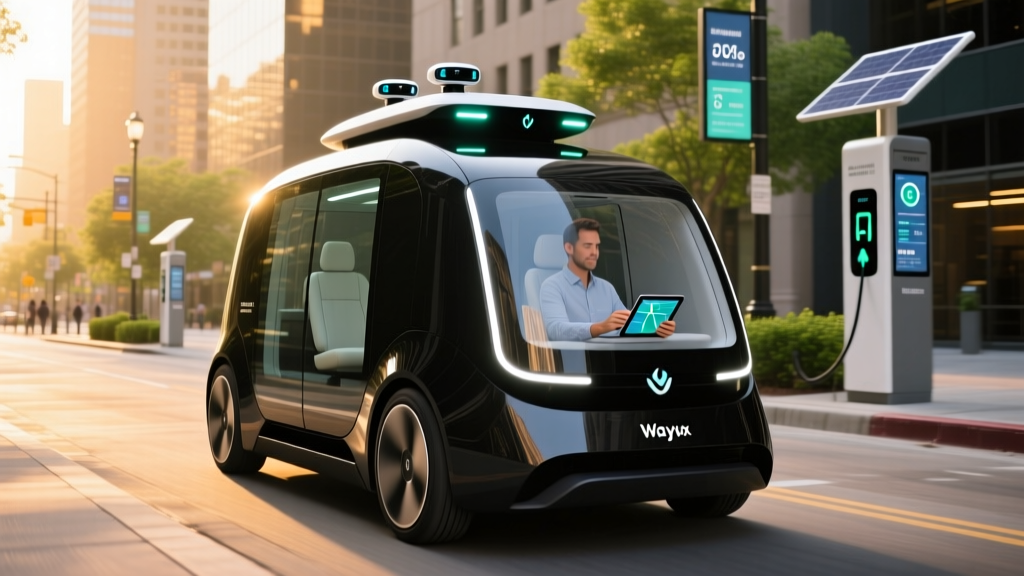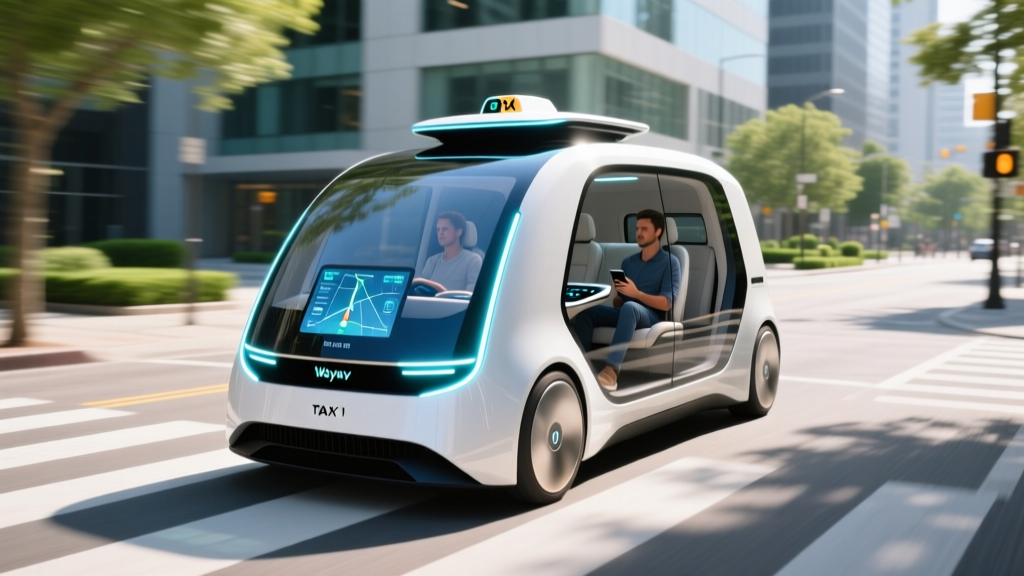
If you've searched for a Waymo self-driving taxi, you've likely seen the videos: a white Jaguar I-PACE or Zeekr minivan gliding through city streets with no one behind the wheel. Unlike the driver-assist features in consumer EVs — Tesla's FSD (Supervised), GM's Super Cruise, Ford's BlueCruise — Waymo operates a true driverless commercial service. There is no steering wheel for a passenger to grab, no "driver" to take over. This is SAE Level 4 autonomy in real, daily, paid operation.
As of early 2026, Waymo (an Alphabet subsidiary) has completed over 50 million cumulative fully autonomous miles across multiple U.S. metros. Here is exactly where you can hail one, what it costs, how safe the fleet has proven to be, and where the technology still falls short.
SAE Automation Levels: Why Waymo Is Level 4, Not Level 2
Consumer systems like Tesla Autopilot, FSD (Supervised), GM Super Cruise, and Ford BlueCruise are SAE Level 2 — the driver must remain attentive and ready to intervene at all times. Waymo's robotaxi fleet operates at SAE Level 4, meaning the vehicle handles all driving tasks without human backup within its defined geofenced service area. There is no Level 5 (drive anywhere, any conditions) robotaxi in commercial operation anywhere in the world as of 2026.
| Level | Description | Examples | Driver Required? |
|---|---|---|---|
| Level 0–1 | No automation / basic assist (cruise control) | Standard cruise control | Yes, full-time |
| Level 2 | Combined steering + speed assist; driver must monitor | Tesla FSD (Supervised), GM Super Cruise, Ford BlueCruise | Yes, always |
| Level 3 | Conditional automation; driver can disengage but must take over on request | Mercedes Drive Pilot (limited markets/conditions) | Conditionally |
| Level 4 | Full autonomy in defined domain; no human intervention needed | Waymo One, Zoox (limited) | No |
| Level 5 | Full autonomy everywhere, all conditions | None in commercial operation | No |
Where Can You Use the Waymo Self-Driving Taxi Right Now?
Waymo One — the company's commercial ride-hailing service — is not available everywhere. It operates within geofenced zones in select metros. The service area has expanded steadily, but each city requires regulatory approval, mapping, and extensive testing before paid rides begin.
| Metro Area | Status (Early 2026) | Service Area Notes | Access |
|---|---|---|---|
| Phoenix, AZ (East Valley) | Fully operational | Largest continuous service zone; Chandler, Tempe, Mesa, Scottsdale, parts of downtown Phoenix; ~200+ sq mi | Open to public via Waymo One app |
| San Francisco, CA | Fully operational | Most of SF proper including downtown, Mission, Sunset; ~50 sq mi urban core | Open to public via Waymo One app |
| Los Angeles, CA | Operational (expanding) | Santa Monica, West Hollywood, downtown LA, Beverly Hills; phased expansion ongoing | Open via Waymo One app |
| Austin, TX | Operational (expanding) | Downtown Austin, South Congress, select surrounding neighborhoods | Open via Waymo One app |
| Atlanta, GA | Testing / limited launch | Initial geofenced zones; partnership with Uber for integration | Waitlist / limited access |
Key point: Even within an "operational" city, you cannot hail a Waymo to every address. The geofence defines precisely where pickups, dropoffs, and routing are permitted. Request a ride outside the zone and the app will reject it.
How to Hail a Waymo and What It Costs vs. Uber or Lyft
Using Waymo One is structurally similar to Uber or Lyft: download the app, set pickup and dropoff locations, confirm the ride. The difference is that no driver will greet you — the vehicle pulls up, unlocks, and you ride alone (or with your party) to your destination.
Step-by-Step: Hailing a Waymo
- Download the Waymo One app (iOS/Android) and create an account.
- Enter your pickup location — it must be within the active geofence.
- Enter your destination — also within the geofence.
- Confirm the fare estimate and request the ride.
- The vehicle arrives; unlock via the app by tapping the car icon when prompted.
- Start the ride from the rear-seat screen. The vehicle drives itself.
- Upon arrival, exit and the ride ends automatically.
Pricing: Waymo vs. Rideshare
| Route Example | Waymo One (Est.) | UberX (Est.) | Lyft (Est.) |
|---|---|---|---|
| 5-mile trip (Phoenix, non-surge) | $10–$14 | $9–$13 | $9–$12 |
| 10-mile trip (SF, non-surge) | $18–$25 | $16–$22 | $15–$21 |
| 15-mile trip (LA, moderate demand) | $28–$38 | $24–$35 | $22–$32 |
| Airport run (PHX, ~10 mi) | $20–$28 | $18–$26 | $17–$24 |
The pricing reality: Waymo is broadly competitive with UberX and Lyft standard fares, often within $1–$5 on comparable routes. Waymo does not currently implement traditional surge pricing, which can make it notably cheaper during peak-demand periods when Uber/Lyft prices spike 1.5–3x. However, Waymo does not offer a budget tier comparable to Uber Share or Lyft Shared — every ride is a private, single-party trip. There is also no tipping, since there is no driver.
The Waymo Technology Stack: Lidar, Cameras, and HD Mapping
Waymo's approach to autonomous driving is sensor-rich and fundamentally different from Tesla's camera-only philosophy. The current fleet primarily uses the Jaguar I-PACE (a fully electric SUV with a 90 kWh battery pack and EPA-estimated 234-mile range) equipped with Waymo's 6th-generation "Driver" hardware suite, with newer Zeekr custom robotaxi vehicles entering service.
6th-Gen Waymo Driver Hardware
- Lidar: Multiple roof-mounted and body-integrated lidar units providing 360° high-resolution 3D point-cloud mapping at ranges exceeding 500 meters. Lidar is Waymo's primary depth-sensing modality.
- Cameras: High-resolution camera array covering 360° around the vehicle, used for lane detection, traffic-light state recognition, signage reading, and object classification.
- Radar: Imaging radar units for velocity detection of moving objects, performance in rain/fog where camera/lidar degrade.
- Audio sensors: External microphones to detect emergency vehicle sirens and trigger yielding behavior.
- HD Maps: Centimeter-precision pre-mapped routes for every operational zone. The vehicle localizes itself against these maps in real time. This is why Waymo cannot operate outside its geofence — the map must exist first.
- Compute: Custom onboard computing platform processing sensor fusion, prediction models, and planning algorithms in real time.
Why lidar matters: Waymo's reliance on lidar gives it a redundant depth-perception layer that camera-only systems (like Tesla FSD) lack. Lidar works independently of ambient lighting, meaning nighttime and low-sun-angle scenarios don't degrade perception the way they can for vision-only stacks. The trade-off is cost — a Waymo-equipped vehicle's sensor suite adds tens of thousands of dollars in hardware, which is viable for a fleet operator but not for individual consumer vehicles.
Safety Data: What the Numbers Actually Show
Waymo has published safety analyses comparing its fleet's crash rates to human benchmarks. A peer-reviewed study published in collaboration with insurance and safety researchers found that Waymo vehicles were involved in significantly fewer police-reported crashes per million miles than the human baseline from the National Highway Traffic Safety Administration (NHTSA) data. Specifically:
- Injury-causing crash rate: Waymo's fleet showed approximately an 85% reduction in injury-causing crash involvement compared to the human benchmark in comparable urban environments.
- Any-crash rate: Roughly 57% fewer police-reportable crashes per million miles than human drivers in similar geographies.
- Rear-end and intersection incidents: The most common Waymo-involved incidents are low-speed contact events, often with the Waymo vehicle being rear-ended by human drivers — consistent with the pattern that cautious, predictable robotaxi driving can confuse aggressive human drivers behind it.
Important context: These comparisons have limitations. Waymo operates in geofenced, well-mapped urban zones, mostly in fair-weather cities (Phoenix, LA), and avoids the most chaotic driving scenarios by design. The human benchmark includes rural highways, severe weather, and drunk driving — conditions Waymo does not encounter. The data is compelling but not a perfect apples-to-apples comparison.
Waymo vehicles are also equipped with exterior and interior cameras that record every trip. The Insurance Institute for Highway Safety (IIHS) and academic researchers have noted this telemetry provides an unusually rich dataset for safety analysis that conventional fleet data lacks.
Current Limitations: Where Waymo Cannot (Yet) Operate
Level 4 autonomy is powerful within its domain — but the domain is narrow. Understanding these constraints is essential before you assume a Waymo self-driving taxi can replace all your rides.
Known Operational Limitations
- Geofence boundary: The vehicle will not drive outside its pre-mapped zone. If your destination is 500 feet beyond the boundary, the app will not let you book the ride.
- Heavy rain and flooding: While Waymo has expanded its rain-operational capability (especially in Phoenix monsoon testing), sustained heavy rain, standing water, and fog can trigger the vehicle to pull over safely and wait, or end the trip early. Lidar and camera performance degrade in these conditions.
- Snow and ice: Waymo does not currently operate in cities with regular snowfall. Snow-covered lane markings, reduced sensor range, and low-traction surfaces remain unsolved for commercial Level 4 service.
- Construction zones: Dynamic lane shifts, temporary barriers, and flagger-directed traffic can confuse the system. Waymo handles many routine construction scenarios, but complex or rapidly changing sites may cause the vehicle to stop and request remote guidance.
- Highway driving: Waymo's operational domain is primarily surface streets. Limited freeway segments are included in some cities (e.g., specific SF and Phoenix highway routes), but long-distance highway travel is not part of the service.
- Pickup/dropoff precision: In dense urban areas, the vehicle may stop a short walk from your exact requested address if the specific curb is inaccessible (double-parked vehicles, fire hydrants, narrow streets).
- No intercity travel: You cannot take a Waymo from Phoenix to Tucson or SF to Sacramento. Each metro is a separate, independent geofence.
- Accessibility: The current Jaguar I-PACE fleet is not wheelchair-accessible. Waymo has announced plans for more accessible vehicle platforms (Zeekr), but full ADA-compliant fleet coverage is still in progress.
Regulatory Landscape: Who Approves Robotaxi Operations
Robotaxi operations in the United States are governed by a patchwork of state and local regulations — there is no single federal "robotaxi license." Each state where Waymo operates has its own framework:
- Arizona: Among the most permissive regulatory environments. The state allowed driverless testing and commercial deployment early, with minimal additional permitting beyond standard vehicle registration and insurance requirements. This is why Phoenix was Waymo's first commercial market.
- California: The California Public Utilities Commission (CPUC) and the California DMV both have jurisdiction. Waymo must hold a DMV autonomous vehicle testing/deployment permit and a CPUC passenger carrier permit for paid rides. California's regulatory process is more rigorous and public, with incident-reporting requirements (disengagement reports, collision reports filed with the DMV).
- Texas: Austin operates under state legislation that permits autonomous vehicle operations with insurance and registration requirements. Local coordination with the city is required for commercial service.
- Federal level: NHTSA oversees vehicle safety standards but does not currently issue specific "approval" for autonomous driving systems. The NHTSA Standing General Order requires operators to report certain crashes involving automated driving systems within one day.
The practical effect: expansion to a new city requires not just technical readiness but regulatory approval at the state (and sometimes municipal) level, which can take months to years. This is a major bottleneck for scaling robotaxi services nationally.
Waymo Self-Driving Taxi: Frequently Asked Questions
Is the Waymo self-driving taxi truly self-driving, or is there a remote driver?
There is no driver in the vehicle — no one in the front seat, no steering wheel for a passenger to use. Waymo operates at SAE Level 4. However, the fleet is supported by a remote operations team that can provide guidance in ambiguous situations (e.g., an unusual construction zone). This remote team does not "drive" the car in real time with a joystick; rather, they can confirm a path or provide high-level routing guidance while the vehicle's own systems execute all driving actions.
How much does a Waymo ride cost compared to Uber or Lyft?
Waymo pricing is generally within $1–$5 of a standard UberX or Lyft fare for the same route. The key advantage is that Waymo does not currently use surge pricing, so during high-demand periods (concerts, rush hour, bad weather) a Waymo can be significantly cheaper. There is no tip. A typical 5-mile ride runs $10–$14; a 10-mile urban trip runs $18–$25.
Can I use Waymo at the airport?
Yes, in Phoenix (Phoenix Sky Harbor International Airport, PHX) and in San Francisco (SFO), Waymo offers airport pickups and dropoffs within its service zone. Availability at LAX (Los Angeles) has been expanding. Check the Waymo One app for current airport support in your city.
What happens if the Waymo vehicle encounters an emergency or gets stuck?
The vehicle is programmed to execute a "minimal risk condition" — it will signal, pull to the side of the road or stop in a safe location, and contact Waymo's remote support team. Passengers can also reach support via the in-vehicle screen or the app at any time. The vehicle will not attempt a maneuver it cannot confidently complete.
What vehicles does Waymo use?
The primary fleet vehicle is the Jaguar I-PACE, a fully electric SUV with a 90 kWh battery pack and an EPA-estimated 234-mile range. Waymo is also deploying the Zeekr M-Vision, a purpose-built robotaxi with a lower floor, sliding doors, and no driver controls, designed specifically for autonomous ride-hailing. Both vehicles are fully electric, producing zero tailpipe emissions during operation.
How safe are Waymo robotaxis compared to human drivers?
Based on Waymo's published safety analyses (covering tens of millions of driverless miles), the fleet has demonstrated approximately an 85% reduction in injury-causing crashes and a 57% reduction in any police-reported crash compared to human benchmarks in comparable environments. However, Waymo operates in geofenced, primarily fair-weather urban zones — it does not face the full spectrum of driving conditions that human drivers encounter. See NHTSA crash data for the human baseline.
Can I hail a Waymo to a destination outside its service area?
No. Both your pickup and dropoff must be within the active geofence. The app will not let you book a ride that starts or ends outside the mapped zone. You cannot take a Waymo between cities (e.g., Phoenix to Tucson).
Is Waymo available 24/7?
In Phoenix and San Francisco, Waymo One operates around the clock, including overnight hours. Availability during late-night hours may involve longer wait times due to fewer vehicles on the road. Service hours may be more limited in newer markets.
The Bottom Line on Waymo's Robotaxi Service
The Waymo self-driving taxi is not a concept, a demo, or a promise — it is a functioning commercial service that tens of thousands of people use weekly in Phoenix, San Francisco, Los Angeles, and Austin. At SAE Level 4, it represents a genuinely different category of transportation from the Level 2 driver-assist features available in consumer EVs.
The trade-offs are real: limited geography, weather constraints, no intercity travel, and a fleet that cannot yet serve every rider (including wheelchair users in many cases). But within its operational domain, the safety data is strong, the pricing is competitive, and the experience — riding in a car with no driver — is something no consumer EV purchase can replicate in 2026.
For EV owners and enthusiasts, Waymo's all-electric fleet also represents a significant real-world validation of electric powertrains for high-utilization commercial service, where the Jaguar I-PACE vehicles log hundreds of miles per day with fast-charging turnaround. If you're in a Waymo city, it's worth downloading the app and experiencing Level 4 autonomy firsthand — it's the clearest window into what autonomous transportation looks like when it actually works.