Is Waymo Self-Driving in Nashville Available Right Now?
If you've searched for "waymo self-driving nashville" hoping to hail a driverless ride through Broadway or across the Cumberland River, here's the honest answer as of mid-2026: Waymo's commercial robotaxi service is not yet live in Nashville, Tennessee. The city is not among Waymo's currently operational markets, nor has it appeared in the company's confirmed near-term expansion roadmap.
That said, Nashville is exactly the type of mid-size, fast-growing Sun Belt metro where autonomous vehicle operators are looking to expand next. With a population exceeding 2 million in the greater metro area, a booming tourism economy, and a tech-forward local government, Nashville frequently appears on shortlists for future robotaxi deployment. Here's everything you need to know about where Waymo operates today, what the technology actually does, and what a Nashville launch would realistically require.
Waymo's robotaxi service operates at SAE Level 4 — meaning the vehicle handles all driving tasks within a defined operational design domain (geofenced area, specific weather conditions) with no human driver present. This is fundamentally different from Tesla's FSD (Supervised), Ford BlueCruise, or GM Super Cruise, which are SAE Level 2 systems requiring constant driver attention. Level 4 means the car is the driver. Level 2 means you are.
Where Can I Use Waymo's Robotaxi Service Today?
Waymo One, the company's commercial ride-hailing service, operates in a limited but growing set of U.S. metros. As of 2026, confirmed live service areas include:
| City | Status | Service Area Notes |
|---|---|---|
| Phoenix, AZ | Fully operational | Largest coverage area; ~200+ sq mi including Chandler, Tempe, Mesa, Scottsdale |
| San Francisco, CA | Fully operational | City-wide coverage; 24/7 service including highway segments |
| Los Angeles, CA | Fully operational | Expanded from initial Westside zone to broader LA basin |
| Austin, TX | Operational / expanding | Downtown and surrounding neighborhoods; ongoing geofence growth |
| Nashville, TN | Not yet available | No confirmed launch date; not in announced expansion cities |
Waymo has historically expanded methodically — spending 12 to 18 months mapping a city, testing with safety drivers, obtaining local and state regulatory approvals, and then gradually opening service to waitlisted riders before full public access. If Nashville were announced as a future market, expect a similar timeline before you could actually book a ride.
How Waymo's Level 4 Technology Stack Works
The Sensor Suite: Lidar + Cameras + Radar
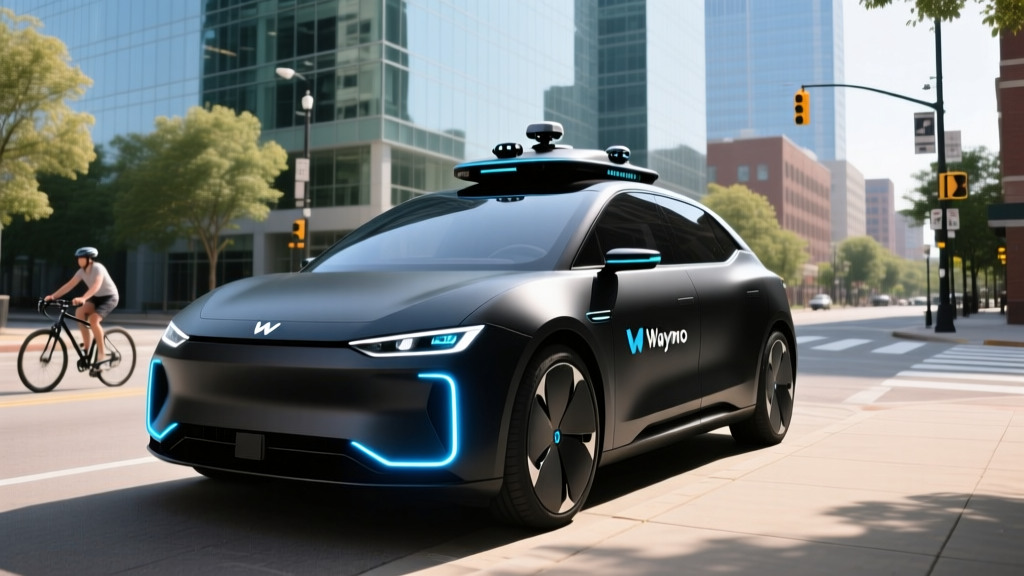
Unlike Tesla's camera-only approach, Waymo's 6th-generation "Driver" system (integrated into the Zeekr RT01 and previously the Jaguar I-PACE) uses a redundant, multi-sensor architecture:
- Lidar: Multiple roof-mounted and side-mounted lidar units create a real-time 360° 3D point cloud, detecting objects up to 500+ meters away regardless of lighting conditions. This is the backbone of Waymo's perception system.
- Cameras: High-resolution cameras at multiple focal lengths read traffic signals, detect pedestrian gestures, read construction signage, and classify objects. Camera data is fused with lidar for redundancy.
- Radar: Imaging radar units handle adverse weather (rain, fog) where lidar and camera performance degrade, and measure velocity of surrounding objects via Doppler effect.
- HD Mapping: Waymo pre-maps every inch of its operational domain at centimeter-level precision. The vehicle localizes itself within this map in real time — it doesn't drive on unfamiliar roads.
Geofencing is the critical constraint: the vehicle will only operate within its mapped, approved zone. If a rider requests a destination outside the geofence, the app simply won't allow the booking. This is why Waymo can achieve Level 4 (no driver needed) — it trades unlimited geographic flexibility for extreme reliability within a known environment.
How Much Would a Waymo Ride Cost vs. Uber or Lyft?
In markets where Waymo One operates, pricing is generally competitive with UberX and Lyft standard rides — and occasionally cheaper during surge periods, since Waymo doesn't implement traditional surge pricing. Based on observed pricing in Phoenix and San Francisco:
| Route (approx.) | Waymo One | UberX | Lyft |
|---|---|---|---|
| Short trip (~3 mi, downtown) | $8–$12 | $9–$15 | $9–$14 |
| Medium trip (~8 mi, cross-town) | $15–$22 | $16–$28 | $15–$26 |
| Airport run (~15 mi) | $28–$40 | $30–$55* | $28–$50* |
| Surge pricing? | No traditional surge | Yes (1.5x–3x+) | Yes (1.5x–3x+) |
*Uber/Lyft airport fares highly variable based on demand, time of day, and market.
Waymo's pricing advantage shows up most during peak demand. When Uber and Lyft surge 2x or 3x during a concert let-out or rush hour, Waymo's fares remain stable. The tradeoff: Waymo may have longer wait times (5–15 minutes in current markets) because fleet sizes are still smaller than rideshare driver pools.
If Nashville launches, expect introductory promotional pricing (Waymo has historically offered discounted or free initial rides to build adoption) followed by rates in line with the table above, adjusted for local market conditions.
Waymo's Safety Record: What the Data Actually Shows
Concrete Safety Numbers
- Total autonomous miles driven: Over 50 million fully driverless miles as of early 2026 (source: Waymo).
- Injury-causing crash rate: Waymo's driverless vehicles have been involved in injury-causing crashes at a rate approximately 85% lower than the human benchmark in comparable urban environments, per Waymo's published safety analysis using NHTSA data as a baseline.
- Contact rate: Waymo reports that its vehicles make contact with objects (including minor scrapes and low-speed bumps) at a rate roughly 57% lower than human drivers in the same geographies.
- Incident context: Most reported incidents involving Waymo vehicles have been low-speed, rear-end, or sideswipe events — often caused by other human drivers colliding with the robotaxi, not the other way around. Waymo vehicles tend to drive conservatively, which can lead to being rear-ended at stoplights by inattentive human drivers.
Note: Waymo publishes periodic safety performance reports. For the most current data, consult waymo.com/safety and cross-reference with NHTSA's AV safety resources.
It's important to contextualize these numbers. Waymo operates in geofenced, relatively well-mapped urban areas — often in favorable weather conditions. The comparison to human drivers is directionally valid but not a perfect apples-to-apples match, since Waymo avoids the most challenging driving scenarios (unmapped roads, severe weather, rural highways) by design.
For a Nashville deployment, safety data would need to account for Tennessee's specific driving environment: higher-speed suburban arterials, frequent construction zones along I-40 and I-65, severe thunderstorm events, and occasional ice/snow in winter. These are conditions Waymo's Phoenix and LA operations don't regularly face.
What Would a Nashville Robotaxi Launch Require?
Bringing Waymo or any Level 4 robotaxi service to Nashville involves several regulatory and practical hurdles:
State-Level Approval
Tennessee passed autonomous vehicle legislation (the Tennessee Autonomous Vehicle Act) that allows testing and deployment of self-driving vehicles, but the regulatory framework is still maturing compared to Arizona or California. Any commercial robotaxi service would need to coordinate with the Tennessee Department of Transportation (TDOT) and potentially the Tennessee Public Utilities Commission for any ride-hailing regulatory overlay.
Local Government Coordination
Metro Nashville government would need to address questions around curb management, pickup/dropoff zones in high-traffic areas like Broadway and The Gulch, and coordination with Nashville's public transit system (MTA/WeGo). Cities that have successfully launched robotaxis typically have dedicated AV liaisons within city government.
Mapping and Testing Phase
Before any paying rider steps into a Waymo in Nashville, the company would need to:
- Map the intended service area at centimeter-level precision (typically 3–6 months)
- Run extensive testing with safety drivers in the vehicle (6–12 months)
- Gradually expand to driverless testing with no passengers (3–6 months)
- Open limited commercial service to waitlisted users before full public access
Even if Waymo announced Nashville as its next city tomorrow, a realistic timeline to public availability would be 18–24 months from announcement.
Current Limitations of Waymo's Robotaxi Service
What Waymo Cannot Do (Even Where It Operates)
- Drive outside the geofence: No service to areas beyond the mapped zone. In Phoenix, this means no trips to Sedona or the Grand Canyon. A Nashville geofence likely wouldn't initially cover Franklin, Murfreesboro, or Clarksville.
- Handle severe weather: Heavy rain, snow, ice, and dense fog degrade lidar and camera performance. Waymo vehicles will pull over or refuse to dispatch in conditions that exceed their operational design domain. Nashville's occasional ice storms would likely shut down service entirely.
- Navigate unmapped construction zones: While Waymo handles routine construction with cone detection and lane-shift logic, major unplanned road closures or long-term rerouting can stump the system until maps are updated.
- Accept verbal instructions: You can't tell a Waymo to "pull over at that gas station" or "take the scenic route." The vehicle follows its planned route and stops only at the requested destination.
- Carry unaccompanied minors: Riders must be 18+ with a valid Waymo account. No child-only rides.
- Allow pets without carriers: Service animals are accommodated, but pets must be in carriers — similar to Uber/Lyft policies.
- Handle complex multi-point trips: No "stop at the pharmacy on the way" capability. Each ride is point A to point B.
These limitations are the primary reason Level 4 autonomy — impressive as it is — does not equal the "self-driving everywhere" vision some consumers imagine. The technology excels within its designed parameters but is deliberately constrained to stay within those parameters.
Competitors Eyeing Nashville and the Southeast
Waymo isn't the only player that could bring robotaxi service to Nashville. Several other operators are expanding in the Southeast:
- Cruise (GM): After its 2023 suspension and subsequent relaunch with safety drivers, Cruise has been rebuilding its commercial service gradually. Nashville could be a candidate for future expansion given GM's strong regional dealer presence.
- Zoox (Amazon): Zoox's purpose-built bidirectional vehicle is currently testing in Las Vegas and the Bay Area. Amazon's significant logistics footprint in Tennessee could create synergies for a Nashville deployment.
- Motional (Hyundai/Aptiv): Has tested in multiple cities and partners with existing ride-hail platforms, which could lower the barrier to Nashville entry.
- Tesla Robotaxi (announced): Tesla has discussed a future unsupervised robotaxi service, but as of 2026, no Level 4 commercial service exists. Tesla's FSD remains a Level 2 supervised system requiring driver attention at all times.
Frequently Asked Questions
Where can I use Waymo's robotaxi service right now?
As of 2026, Waymo One is commercially available in Phoenix (including Chandler, Tempe, Mesa, and Scottsdale), San Francisco, Los Angeles, and Austin. Nashville is not currently a service area and has no confirmed launch date.
How much does a Waymo ride cost compared to Uber or Lyft?
Waymo pricing is comparable to UberX and Lyft standard fares — typically $8–$12 for short downtown trips and $28–$40 for airport runs. Waymo's key advantage is the absence of surge pricing, making it significantly cheaper during peak demand periods when Uber/Lyft fares can double or triple.
How safe are Waymo robotaxis? Is there real data?
Yes. Waymo has published data showing its driverless vehicles experience injury-causing crashes at approximately 85% lower rates than the human benchmark in comparable urban environments, based on analysis of over 50 million autonomous miles. Most incidents involving Waymo vehicles are low-speed events caused by other drivers. Full safety reports are available at waymo.com/safety and can be cross-referenced with NHTSA databases.
Is Waymo truly self-driving, or is it like Tesla Autopilot?
Waymo is genuinely self-driving — SAE Level 4 — with no human driver in the vehicle and no expectation of human intervention. This is fundamentally different from Tesla Autopilot, FSD (Supervised), Ford BlueCruise, or GM Super Cruise, which are all SAE Level 2 systems that require an attentive human driver at all times. Waymo's vehicle is the driver; with Tesla FSD, you are the driver.
When will Waymo come to Nashville?
There is no confirmed date. Nashville is not in Waymo's announced expansion cities as of mid-2026. If announced, expect an 18–24 month timeline from announcement to public service availability, accounting for mapping, testing with safety drivers, regulatory approvals, and phased commercial rollout.
Can I ride in a Waymo in the rain or snow?
Waymo vehicles can handle light rain, but service may be suspended during heavy rain, snow, ice, or dense fog. These conditions exceed the vehicle's operational design domain. In a Nashville deployment, expect service interruptions during severe thunderstorms and any ice or snow events.
Do Waymo vehicles have a steering wheel or a driver?
Current Waymo One vehicles (Zeekr RT01 and the earlier Jaguar I-PACE conversions) do have steering wheels and pedals, but no human sits in the driver's seat during commercial operation. The vehicle is fully autonomous within its geofence. Zoox's purpose-built vehicle, by contrast, has no steering wheel at all — but is not yet in commercial service.
The Bottom Line for Nashville
Waymo's robotaxi technology is real, operational, and backed by tens of millions of driverless miles with a safety record that — within its designed parameters — outperforms human drivers on key metrics. But "waymo self-driving nashville" remains a future prospect, not a present reality.
Nashville's growth trajectory, tourism economy, and improving regulatory environment make it a plausible candidate for robotaxi expansion in the 2027–2028 timeframe. Until then, Nashville residents and visitors will need to rely on traditional rideshare, and anyone interested in experiencing Level 4 autonomy firsthand will need to visit Phoenix, San Francisco, Los Angeles, or Austin.
If and when Waymo announces Nashville as a target market, we'll update this guide with confirmed timelines, geofence boundaries, and local regulatory details. For the latest on autonomous vehicle availability and safety regulation, bookmark NHTSA's AV safety page and follow IIHS research on AV crashworthiness and interaction safety.