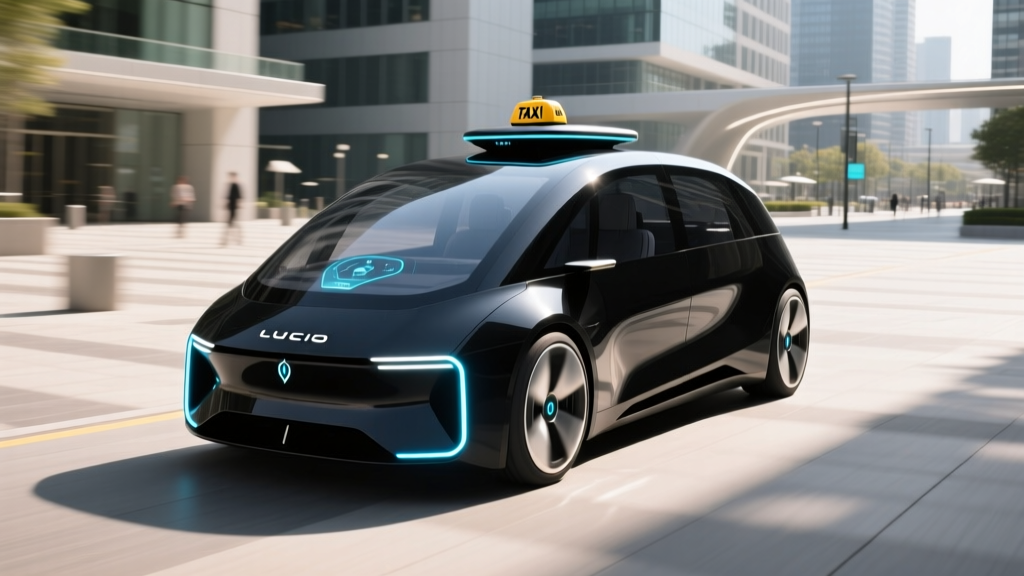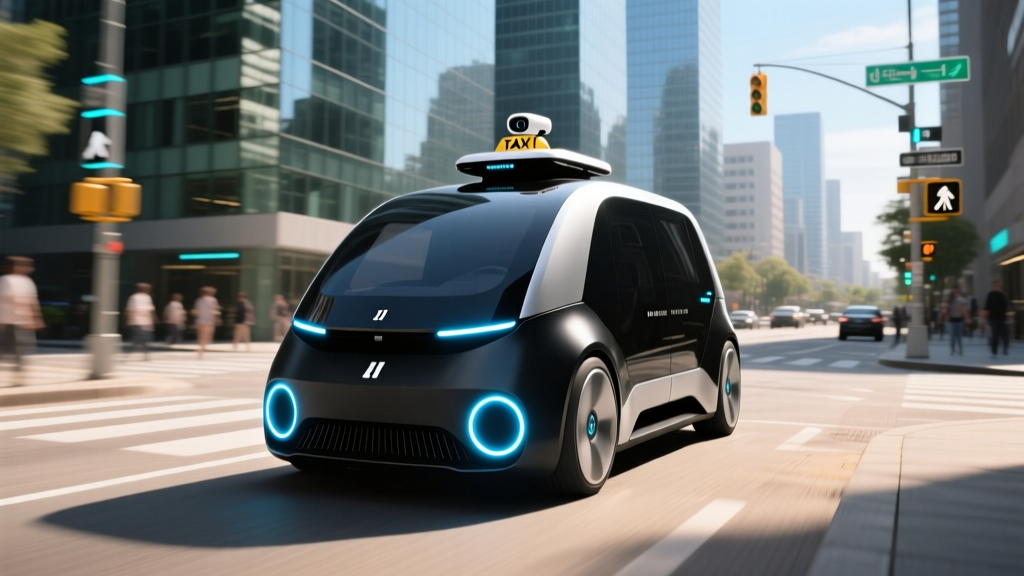
Can Waymo Robotaxis Replace the Yellow School Bus?
The phrase "Waymo school buses" has circulated in EV and autonomous-vehicle forums since 2024, fueled by Alphabet's expanding robotaxi footprint and growing public curiosity about whether Level 4 autonomous vehicles could eventually handle student transportation. As of 2026, Waymo does not operate dedicated school bus services anywhere in the United States. What Waymo does operate is the largest commercial Level 4 robotaxi fleet in the country — and understanding that service reveals both why the school-bus idea persists and why it remains firmly in the future.
This guide breaks down Waymo's actual robotaxi operations, the technology powering them, real safety data, pricing versus Uber and Lyft, current limitations, and the regulatory and practical hurdles that separate today's driverless ride-hailing from autonomous student transport.
SAE Automation Level: Where Waymo Sits
Waymo One operates at SAE Level 4 (High Automation) — meaning the vehicle handles all driving tasks within its defined operational design domain (geofenced areas, specific weather conditions) with no human driver present. This is fundamentally different from Level 2 systems like Tesla Autopilot, GM Super Cruise, or Ford BlueCruise, which require continuous driver supervision. Level 4 robotaxis have no steering wheel accessible to passengers and no expectation of human takeover.
Where Can You Use Waymo One Right Now?
Waymo One, the company's commercial ride-hailing service, operates in a limited but growing set of metropolitan areas. Service is geofenced — meaning the vehicles only operate within pre-mapped, approved boundaries that Waymo and local regulators have validated.
| City | Status (2026) | Service Area Notes | Operating Hours |
|---|---|---|---|
| Phoenix, AZ (East Valley) | Live — full commercial | Chandler, Tempe, Gilbert, Mesa; ~225 sq mi geofence | 24/7 |
| San Francisco, CA | Live — full commercial | Most of SF proper; expanded to airport routes | 24/7 |
| Los Angeles, CA | Live — commercial (phased) | Downtown LA, Hollywood, Santa Monica, Westside corridors | Limited overnight hours |
| Austin, TX | Live — commercial (expanding) | Central Austin, downtown, select suburban corridors | ~6 AM – 2 AM |
| Atlanta, GA | Announced / early access | Midtown, Buckhead, airport corridor (preliminary) | TBD |
Expansion to additional cities is in testing or regulatory review, but Waymo has been deliberate about geographic growth — each new city requires extensive mapping, local regulatory approval, and phased rider-only testing before paid commercial launch.
How to Use Waymo One and What It Costs
Using Waymo One is nearly identical to calling an Uber or Lyft. Download the Waymo One app (iOS/Android), enter your pickup and drop-off locations, confirm the ride, and a Jaguar I-PACE-based robotaxi (or, in some markets, the newer Zeekr RT custom vehicle) arrives without a driver.
There is no driver to tip, no conversation required, and the in-app experience shows a live map of the vehicle's route with real-time sensor visualization.
| Metric | Waymo One | UberX | Lyft Standard |
|---|---|---|---|
| Base fare (typical 5-mile trip) | $10–$14 | $12–$18 | $11–$17 |
| Per-mile rate | ~$1.10–$1.50 | ~$1.25–$1.80 | ~$1.20–$1.75 |
| Surge pricing | Rare / capped | Common (2–4x) | Common (1.5–3x) |
| Tipping | Not applicable (no driver) | Expected ($2–$5+) | Expected ($2–$5+) |
| Wait time fees | Minimal ($0.10/min after 5 min) | $0.50–$1.00/min | $0.40–$0.80/min |
| Average 10-mile trip cost | $16–$22 | $18–$30 | $17–$28 |
Waymo's pricing is generally competitive with or slightly below traditional rideshare, particularly during high-demand periods when Uber and Lyft surge. The absence of a driver tip (typically 15–20% on rideshare) further reduces the effective cost per trip.
Waymo Safety Record: What the Data Shows
Safety is the most scrutinized aspect of any robotaxi service, and Waymo has published more operational data than any competitor. As of early 2026, Waymo's fleet has accumulated over 35 million fully autonomous driverless miles across its commercial and testing operations.
Key Safety Metrics (Waymo, through Q1 2026)
- Total driverless miles: 35+ million
- Reported contact incidents (NHTSA SGTRD): ~90 since 2022 (across all operations)
- Injury-causing crashes: Significantly below human-driver baseline per million miles (per NHTSA Standing General Order data)
- Most common incident type: Low-speed contact with stationary objects, other vehicles in stop-and-go traffic
- Fatalities: 0 in fully autonomous commercial operations
Source: NHTSA Automated Vehicle Safety Data, Waymo Safety Reports
For context, the U.S. traffic fatality rate is approximately 1.35 deaths per 100 million vehicle miles (IIHS). Waymo's driverless operations have not recorded a fatality across tens of millions of miles — a sample size that, while still smaller than national driving data, is statistically meaningful.
That said, Waymo vehicles have been involved in minor fender-benders, primarily when other human drivers rear-end the robotaxi at stoplights or when the Waymo vehicle makes overly conservative stops that surprise following traffic. These incidents are reportable under NHTSA's Standing General Order for crash reporting on automated vehicles.
The Technology Stack: How Waymo Sees the Road
Waymo's sensor suite is one of the most comprehensive in the autonomous vehicle industry, using a multi-modal approach that contrasts sharply with Tesla's camera-only strategy.
Waymo 6th-Generation Driver System
- LiDAR: Multiple custom-designed units providing 360° 3D point-cloud mapping out to 500+ meters; operates in darkness, fog, and rain
- Cameras: 29+ high-resolution cameras covering 360° with HDR capability for traffic-light detection, sign reading, and object classification
- Radar: 6 imaging radar units for velocity detection of moving objects, performance in heavy precipitation
- External audio receivers: Detect sirens, horns, and other acoustic cues
- Compute: Custom Waymo-designed AI inference hardware, redundant systems for steering, braking, and power
- HD Maps + Geofencing: Centimeter-precision pre-mapped routes; vehicles will not operate outside approved boundaries
This sensor redundancy is critical for Level 4 operation. Unlike Level 2 systems where a human can intervene if a camera misreads a situation, a driverless robotaxi must handle every scenario within its operating domain without fallback. LiDAR provides depth perception independent of lighting conditions, radar cuts through weather that might blind cameras, and the fused sensor data feeds Waymo's "Waymo Driver" AI, which has been trained on billions of simulated miles in addition to real-world driving data.
The vehicles currently in Waymo's fleet — the Jaguar I-PACE (84 kWh battery, ~234-mile EPA range, modified for autonomy) and the newer Zeekr RT (custom-built robotaxi platform with lower floor, wider doors, and no driver controls) — are electric, producing zero tailpipe emissions during operation.
Regulatory Landscape: Who Approves Robotaxi Operations?
Robotaxi deployment in the United States is governed by a patchwork of state and local regulations. There is no single federal license for autonomous vehicle operations; instead, each state sets its own framework.
- Arizona: The most permissive regulatory environment. No special permit required beyond standard vehicle registration; Waymo has operated commercially in Phoenix since 2020. Governor-level executive orders established the framework.
- California: Requires a DMV Autonomous Vehicle Testing Permit and a separate California Public Utilities Commission (CPUC) permit for commercial passenger service. The CPUC suspended Cruise's permit in late 2023 following a serious incident, illustrating the state's willingness to revoke operating authority.
- Texas: Austin allows testing and commercial operations under local and state frameworks; Waymo launched there in 2025.
- Federal (NHTSA): Sets vehicle safety standards (FMVSS) but has not issued specific robotaxi operating rules. The Standing General Order requires crash reporting for all vehicles with SAE Level 2+ or higher automation.
For any future "Waymo school bus" scenario, regulatory approval would be substantially more complex. Student transportation is governed by additional layers of federal (NHTSA school bus safety standards), state (department of education transportation rules), and local (school district board approval) regulation. No state currently has a framework for autonomous student transport vehicles.
Current Limitations: What Waymo Cannot Do
Despite impressive capabilities, Waymo's Level 4 robotaxis have well-defined operational boundaries. Understanding these limitations is essential for evaluating any future expansion to use cases like student transport.
Operational Limitations (2026)
- Geofence restriction: Vehicles will not operate outside pre-mapped, regulator-approved zones. If your destination is outside the geofence, the ride cannot be completed.
- Weather constraints: Heavy rain, fog, snow, and ice can trigger service suspension. Phoenix and LA are favorable markets partly because of mild weather; expansion to Chicago or Minneapolis faces serious weather-related challenges.
- Construction zones: Major, unmapped road construction can confuse the system. Waymo vehicles will pull over safely and contact remote assistance rather than navigate an unrecognizable road layout.
- No highway driving (most markets): Waymo primarily operates on surface streets. Limited highway segments are approved in some cities, but interstate driving is not a core capability.
- Passenger age restrictions: Riders must be 18+ with a valid account. Unaccompanied minors cannot use Waymo One — a direct barrier to any school-bus application.
- No wheelchair accessibility (standard fleet): The current Jaguar I-PACE fleet is not wheelchair-accessible, though Waymo has announced plans for accessible vehicles in future fleet additions.
- Remote assistance dependency: When the AI encounters an edge case it cannot resolve, a remote human operator provides guidance. This works for ride-hailing but raises questions for high-occupancy student transport.
Why "Waymo School Buses" Remain a Future Concept
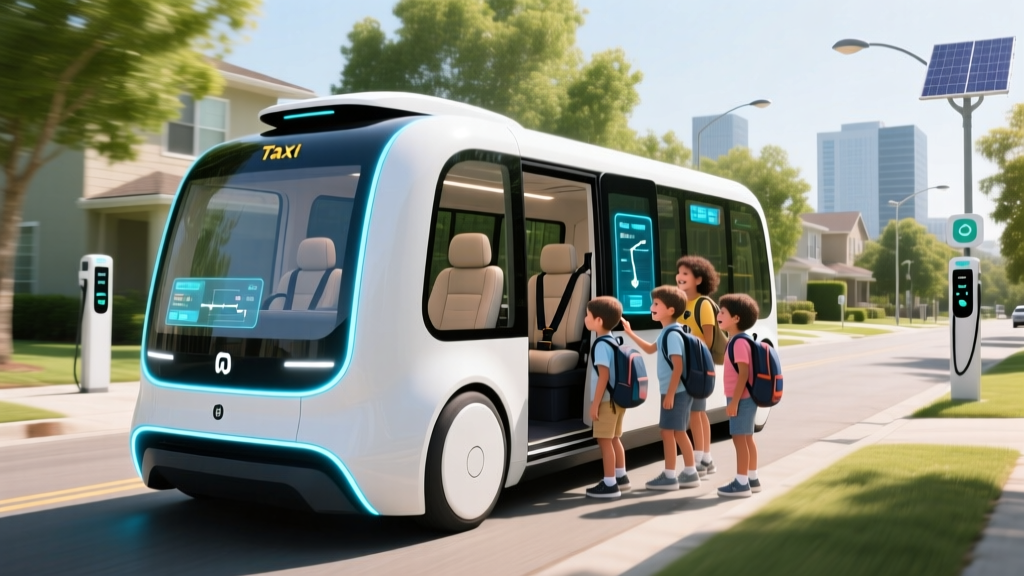
The idea of autonomous school buses is compelling: eliminate the nationwide school bus driver shortage (estimated at 15–20% vacancy nationally), reduce costs, and potentially improve safety. Several startups — including Zoox (Amazon-owned) and smaller firms like Einride and Nuro — have explored autonomous shuttle concepts that could theoretically serve school routes.
However, the gap between a robotaxi carrying one or two adult passengers and a vehicle transporting 20–70 children is enormous:
- Vehicle form factor: Standard school buses are 35–45 feet long, weigh 25,000+ lbs, and require a completely different sensor and compute architecture than a passenger car.
- Child supervision: Current school buses have drivers who manage student behavior, handle emergencies, assist special-needs students, and communicate with parents and dispatch. No robotaxi can replicate these functions.
- Liability and insurance: School districts face complex liability frameworks. An autonomous vehicle carrying minors would require new insurance products and likely new legislation at the state level.
- Public trust: Surveys consistently show parents are far more skeptical of autonomous vehicles carrying children than carrying adults. Building public acceptance is a multi-year process.
- NHTSA FMVSS compliance: School buses must meet specific Federal Motor Vehicle Safety Standards (roof crush, emergency exits, stop-arm cameras, compartmentalization seating) that no current robotaxi platform satisfies.
Waymo itself has not announced any school bus program. The company's public roadmap focuses on expanding ride-hailing to more cities, adding highway capability, and eventually offering personal autonomous vehicle ownership — not student transportation.
Decision Framework: Who Should Use Waymo One Today?
Choose Waymo One if:
- You live in Phoenix, San Francisco, Los Angeles, or Austin and want consistent, predictable ride pricing without surge multipliers
- You value privacy (no driver interaction) and want to see exactly how the vehicle is navigating
- You're interested in experiencing Level 4 autonomy firsthand to understand where the technology actually stands
- You take regular short-to-medium trips (3–15 miles) within the geofenced service area
Wait or look elsewhere if:
- You need rides outside geofenced zones, in heavy weather, or on highways
- You're transporting minors, large groups, or require wheelchair accessibility
- You're looking for autonomous school transport — this technology does not exist commercially in 2026
- You need intercity or airport routes not yet covered by Waymo's approved corridors
Frequently Asked Questions
Does Waymo operate school buses in any city?
No. As of 2026, Waymo operates only its Waymo One ride-hailing robotaxi service in Phoenix, San Francisco, Los Angeles, and Austin. There is no Waymo school bus program, and the company has not announced plans for student transportation.
Is Waymo truly self-driving or is there a remote human driver?
Waymo One vehicles are SAE Level 4 — fully driverless with no human in the vehicle. There is no remote "driving" in the traditional sense; remote assistance operators provide high-level guidance (e.g., "proceed around the obstacle") when the AI encounters an edge case, but they do not steer or brake the vehicle in real time.
How much does a Waymo ride cost compared to Uber?
Waymo One pricing is generally comparable to or slightly below UberX, typically $10–$14 for a 5-mile trip. The biggest savings come during surge periods (Waymo rarely surges) and from the absence of driver tips, which can save 15–20% per ride.
What happens if a Waymo vehicle encounters an emergency?
Waymo vehicles are programmed to pull over safely, activate hazard lights, and contact remote assistance. Passengers can also press an in-vehicle help button at any time. The vehicle will not continue driving if it detects a system fault or unsafe condition.
Can children ride in a Waymo robotaxi?
No. Waymo One requires riders to be at least 18 years old with a valid account. Minors cannot ride unaccompanied, and the vehicles do not have child safety seat installations. This policy alone makes Waymo unsuitable for school transport scenarios.
How safe are Waymo robotaxis compared to human drivers?
Across 35+ million driverless miles, Waymo has recorded zero fatalities in commercial operations and a contact-incident rate below the human-driver baseline per NHTSA data. However, the sample size is still small relative to the trillions of miles driven by humans annually, and robotaxis operate in favorable, geofenced conditions rather than all driving scenarios.