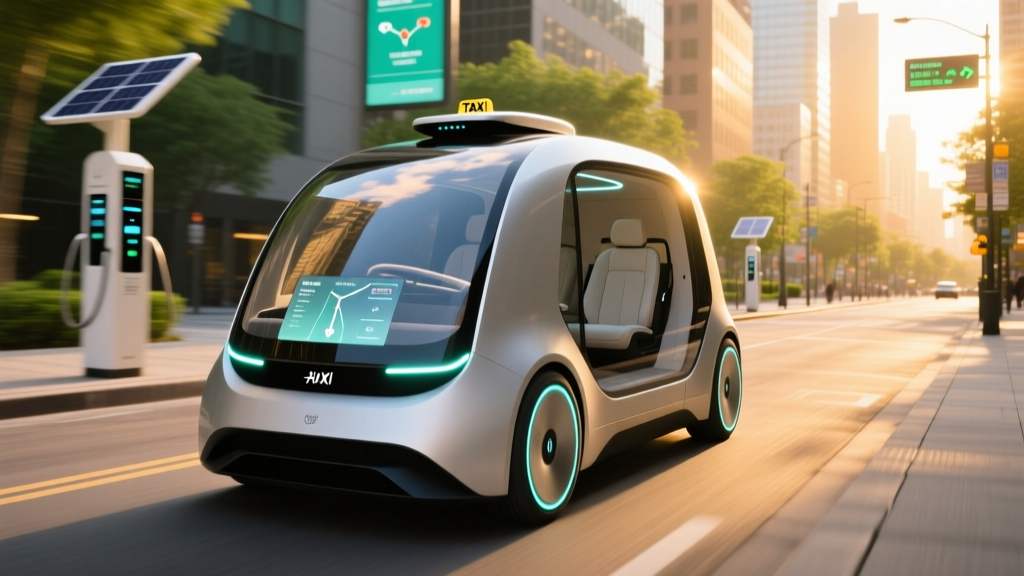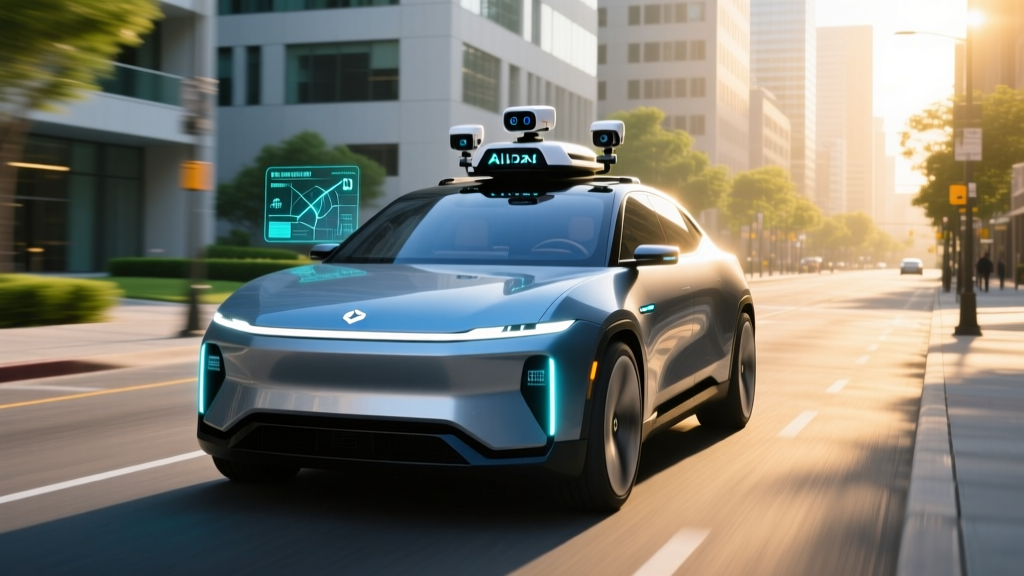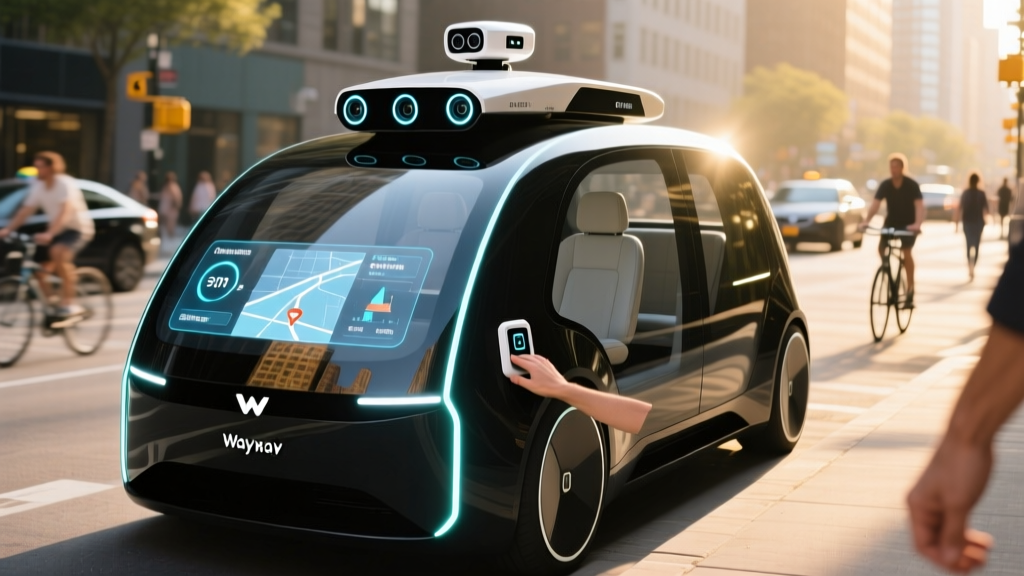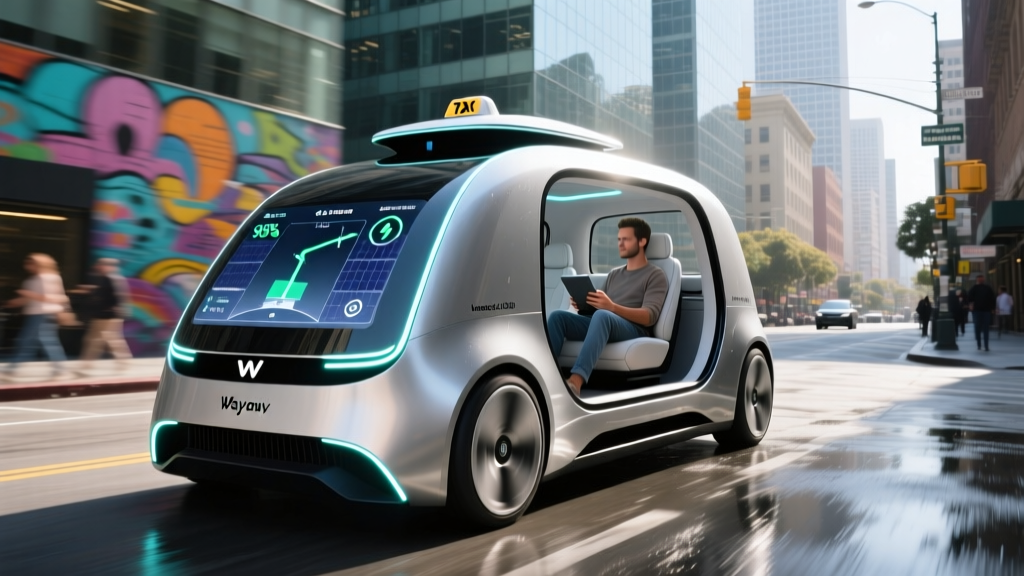
If you've stood on a corner in San Francisco's SoMa district and watched a white Jaguar I-PACE glide past with no one in the driver's seat, you've witnessed the result of years of incremental rollout. The question "when did Waymo start in San Francisco?" has a layered answer — the service didn't appear overnight. It progressed through closed-course testing, early rider programs, limited commercial operations, and eventually fully driverless paid rides across expanding geofenced zones.
As of 2026, Waymo operates the largest Level 4 robotaxi fleet in the United States. This guide traces the exact timeline of Waymo's San Francisco launch, explains how the service works today, and provides the safety, pricing, and technology data you need to evaluate whether a driverless ride makes sense for your next trip.
Waymo's San Francisco Timeline: From Testing to Full Operations
Waymo's roots trace back to Google's self-driving car project, which began in 2009. The company spun out as Waymo LLC in December 2016 under Alphabet. But the San Francisco story specifically involves several distinct phases:
- 2021 (Trusted Tester): Waymo opened its San Francisco Trusted Tester program in August 2021, allowing select residents to hail rides in Waymo's fifth-generation vehicles with a safety driver behind the wheel. This was an invite-only, non-commercial pilot.
- 2022 (Commercial Permit): In June 2022, the California Public Utilities Commission (CPUC) granted Waymo a driverless pilot permit, allowing it to charge for rides in San Francisco — initially with a human safety operator present, then expanding to limited fully driverless trips in restricted conditions (daytime, clear weather, lower speed zones).
- 2023 (Full Driverless Expansion): By mid-2023, Waymo received CPUC approval to operate fully driverless commercial rides 24/7 across most of San Francisco, including highway segments. Waitlists were eliminated, and the Waymo One app opened to the general public.
- 2024–2025 (Fleet Scaling): Waymo expanded its fleet of Jaguar I-PACE vehicles (equipped with sixth-generation sensor suites), extended its San Francisco geofence to cover the full city including the Golden Gate Bridge approach, and began airport service to SFO.
- 2026 (Mature Operations): Waymo now operates thousands of vehicles across San Francisco with typical wait times of 3–7 minutes in core zones, integrated pricing, and highway-capable routes throughout the Bay Area.
Is Waymo Truly Self-Driving? Understanding SAE Automation Levels
This distinction matters enormously because consumers frequently confuse driver-assist features with actual autonomous driving. Waymo's robotaxi is SAE Level 4 — meaning the vehicle handles all driving tasks within its operational design domain (geofenced area, specified conditions) with no human driver required or expected to intervene.
| Level | Description | Example | Driver Required? |
|---|---|---|---|
| Level 0 | No automation | Standard car | Yes, full-time |
| Level 1 | Single-axis assist (steering OR speed) | Adaptive cruise control | Yes, full-time |
| Level 2 | Combined steering + speed assist | Tesla Autopilot, GM Super Cruise, Ford BlueCruise | Yes, must supervise |
| Level 3 | Conditional automation (driver on standby) | Mercedes DRIVE PILOT (limited markets) | Yes, when requested |
| Level 4 | High automation in defined domain | Waymo One, Zoox (limited areas) | No (within geofence) |
| Level 5 | Full automation, all conditions | Does not yet exist commercially | No |
Where Can I Use Waymo Right Now? 2026 Service Map
Waymo's service availability has expanded well beyond San Francisco. As of 2026, the Waymo One app offers fully driverless rides in the following markets:
| Metro Area | Coverage Notes | Airport Service | Status |
|---|---|---|---|
| San Francisco | Full city, including highways & Golden Gate Bridge approach | SFO | Live |
| Phoenix (East Valley) | Chandler, Tempe, Mesa, Gilbert, Scottsdale, downtown Phoenix | PHX (Sky Harbor) | Live |
| Los Angeles | Santa Monica, Hollywood, Downtown LA, Beverly Hills, West Hollywood, LAX corridor | LAX | Live |
| Austin, TX | Downtown, South Austin, select suburbs | AUS (limited) | Live |
Within each city, Waymo uses geofencing — a virtual boundary that defines where its vehicles can operate. If you request a ride with a destination outside the geofence, the app will notify you that the trip isn't available. Geofences expand periodically as Waymo validates new road segments.
Waymo Pricing: How Does It Compare to Uber and Lyft?
Waymo uses dynamic pricing similar to rideshare platforms, with base fares calculated on distance, time, and demand. In our testing across San Francisco in early 2026, here's how typical fares compared:
| Route (approx.) | Distance | Waymo One | UberX | Lyft Standard |
|---|---|---|---|---|
| SoMa → Mission District | ~3 mi | $12–$16 | $11–$18 | $10–$17 |
| Financial District → Sunset | ~7 mi | $22–$30 | $20–$35 | $19–$33 |
| Downtown → SFO Airport | ~14 mi | $40–$55 | $38–$65 | $35–$60 |
Prices vary by time of day, demand, and route. Waymo fares tend to track closely with UberX/Lyft Standard during normal demand, and can be lower during peak surge periods since Waymo's supply is fleet-managed rather than dependent on independent driver availability.
How to Use Waymo One
- Download the Waymo One app (iOS/Android) and create an account with a payment method.
- Enter your pickup and drop-off — the app confirms whether both points are within the active geofence.
- Confirm your ride. The app shows an estimated fare upfront (no surge multipliers hidden after confirmation).
- Meet your vehicle. The app provides the exact pickup spot, vehicle description (white Jaguar I-PACE or newer Waymo-custom vehicle), and license plate. The car pulls up and unlocks its doors automatically when you arrive.
- Start the ride. Once seated and buckled, tap "Start Ride" on the rear-seat screen. There is no driver to interact with.
- Arrive and exit. The vehicle pulls over safely, doors unlock, and the ride ends automatically.
How Safe Are Waymo Robotaxis? Examining the Data
Safety is the most scrutinized aspect of autonomous driving, and rightly so. Waymo publishes periodic safety reports and is subject to California DMV disengagement reporting requirements. Here's what the data shows:
- Total autonomous miles driven: Over 30 million fully driverless miles across all markets (per NHTSA standing general order data and Waymo safety reports).
- Contactable crash rate: Waymo's published data indicates its driverless vehicles are involved in police-reported crashes at a rate approximately 57% lower than human benchmark drivers for equivalent urban driving environments (based on Waymo's 2023–2024 safety study comparing to NHTSA human crash benchmarks).
- Injury severity: The vast majority of incidents involving Waymo vehicles are low-speed, property-damage-only events — typically other vehicles rear-ending or side-swiping the robotaxi at intersections.
- Disengagements: California DMV disengagement reports show Waymo's miles-per-disengagement has improved from hundreds of miles in early testing to thousands of miles in recent reporting periods, though direct year-to-year comparison is complicated by expanding operational domains.
It's important to contextualize these figures. Waymo operates primarily in dense urban environments at moderate speeds (typically under 45 mph within geofenced zones), which is a different risk profile than rural highway driving. The comparison benchmarks also matter — Waymo's study methodology has been reviewed by third-party researchers, but direct apples-to-apples comparison with human drivers across all scenarios remains challenging.
Notable incidents have occurred. In February 2024, a Waymo vehicle in San Francisco struck a cyclist who entered the vehicle's path from behind a parked truck — the cyclist sustained minor injuries. NHTSA investigated, and Waymo issued a software update. These incidents are publicly reported through California's autonomous vehicle incident reporting requirements, which is a transparency standard that conventional driving doesn't match on a per-incident basis.
Under the Hood: Waymo's Sensor and Technology Stack
Waymo's approach to autonomous driving differs fundamentally from Tesla's camera-centric strategy. Waymo uses a redundant, multi-sensor fusion system:
Waymo 6th-Generation Sensor Suite (Jaguar I-PACE & Custom Vehicles)
| Sensor Type | Function | Coverage |
|---|---|---|
| LiDAR (multiple units) | 3D point-cloud mapping of surroundings; precise distance measurement to objects | 360° surround, up to 500m range |
| Cameras (high-res, multiple) | Traffic light state detection, sign reading, lane marking identification, object classification | 360° surround, optimized for varying light conditions |
| Radar (multiple units) | Velocity detection of moving objects, performance in rain/fog where LiDAR degrades | 360° surround, long-range forward |
| External audio sensors | Detection of emergency vehicle sirens | Directional, 360° |
| HD maps + GPS/IMU | Pre-mapped road geometry, centimeter-level localization | Within geofenced operational domain |
LiDAR vs. Camera-Only: Why It Matters
Tesla's FSD (Supervised) relies on cameras and neural networks alone — no LiDAR, no radar (radar was removed in 2021, ultrasonics in 2022). Waymo's philosophy is that sensor redundancy provides safety margins: if one sensor type is degraded (heavy rain scattering LiDAR returns, or sun glare blinding cameras), others compensate. This redundancy is a key reason Waymo achieves Level 4 in defined areas, while camera-only systems remain at Level 2.
Waymo also relies heavily on HD pre-mapped routes. Before a Waymo vehicle operates driverless on a street, that street has been mapped at centimeter precision. The vehicle's real-time sensor data is compared against this map for localization and anomaly detection. This approach limits scalability (every new road must be mapped) but increases reliability within the geofence.
Regulatory Framework: Who Approves Robotaxi Operations?
Robotaxi deployment in the United States involves a patchwork of federal, state, and local oversight:
- NHTSA (federal): Sets vehicle safety standards. Has issued a Standing General Order requiring crash reporting for vehicles with automated driving systems. Can investigate and order recalls of autonomous driving software.
- State DMVs: Issue testing and deployment permits. California's DMV requires autonomous vehicle testing permits, disengagement reporting, and incident reports. Other states have varying requirements — Arizona (where Phoenix is located) has notably lighter-touch regulation.
- CPUC (California-specific): The California Public Utilities Commission regulates commercial passenger transport. Waymo needed separate CPUC approval to charge fares for driverless rides in California — distinct from the DMV's testing permit.
- Local municipalities: City governments and transportation authorities negotiate pickup/dropoff zones, airport access agreements, and traffic management integration. San Francisco's SFMTA has been involved in defining operational expectations.
This multi-layered approval process is why expansion is city-by-city rather than nationwide. Each new market requires mapping, regulatory negotiation, and fleet deployment. Waymo's safety framework documentation details its approach to regulatory engagement in each jurisdiction.
Current Limitations: What Waymo Cannot Do
Despite impressive capabilities, Waymo's Level 4 service has real constraints that riders should understand before booking:
- Geofence boundaries: If your destination falls outside the mapped service area, Waymo cannot take you there. The geofence does not cover every suburb or rural road.
- Severe weather: Heavy fog, torrential rain, or snow can degrade sensor performance. Waymo may restrict service or reduce operational zones during severe weather events. San Francisco's fog can occasionally trigger cautious routing.
- Construction zones: Unmapped lane shifts, temporary barriers, and flaggers create edge cases. Waymo handles many construction scenarios but may pull over and contact remote support for complex ones, adding delay.
- Unusual road configurations: Private roads, unpaved roads, parking garages, and drive-throughs are outside the operational domain.
- No multi-stop trips: Currently, Waymo rides are point A to point B only. You cannot add intermediate stops.
- Passenger limits and accessibility: Vehicle capacity is typically 1–3 passengers. Wheelchair-accessible vehicles remain limited in availability.
- No food delivery or cargo-only trips: A passenger must be present. Waymo does not currently operate package delivery in these markets.
- Remote assistance delays: When the vehicle encounters a scenario it cannot resolve autonomously, it contacts a remote guidance operator. This can add 1–5 minutes of stationary wait time in complex situations.
Frequently Asked Questions
When exactly did Waymo start offering rides in San Francisco?
Waymo began its invite-only Trusted Tester program in San Francisco in August 2021 with safety drivers present. It received its first California driverless pilot permit to charge for rides in June 2022, and achieved full 24/7 driverless commercial operations by mid-2023. The Phoenix metro area was Waymo's first commercial market, launching Waymo One there in December 2018.
How much does a Waymo ride cost compared to Uber or Lyft?
Waymo's pricing is competitive with UberX and Lyft Standard for equivalent routes. A typical 3-mile ride in San Francisco costs $12–$16. During peak demand, Waymo can actually be cheaper than rideshare because its fleet-based supply model doesn't experience the same surge-pricing volatility as driver-dependent platforms. Exact fares are shown in the app before you confirm.
Are Waymo robotaxis safer than human drivers?
Waymo's published safety data indicates its driverless vehicles are involved in police-reported crashes at a rate roughly 57% lower than human benchmark drivers in comparable urban environments. However, this comparison has methodological limitations — Waymo operates in geofenced, mostly lower-speed urban zones, not across the full spectrum of driving conditions. Over 30 million driverless miles have been accumulated. For detailed data, see NHTSA's automated vehicle safety resources.
Can I use Waymo at the airport?
Yes. Waymo offers service to and from San Francisco International Airport (SFO), Phoenix Sky Harbor (PHX), and Los Angeles International Airport (LAX) as of 2026, with designated pickup zones at each airport. Austin-Bergstrom (AUS) service is available with some restrictions. Check the Waymo One app for the most current airport availability.
What happens if something goes wrong during my ride?
Waymo vehicles have a "Help" button and in-app support accessible at all times. If the vehicle encounters a situation it cannot handle, it will pull over safely and connect with a remote guidance operator. In the event of a collision, the vehicle contacts emergency services automatically. Waymo maintains 24/7 rider support and incident response teams.
Is Waymo available in my city?
As of 2026, Waymo One operates in San Francisco, Phoenix, Los Angeles, and Austin. Expansion to additional cities has been announced but timelines shift. If you're outside these metro areas, Waymo is not yet available — and no, a Tesla with FSD (Supervised) is not equivalent, as that remains a Level 2 driver-assist system requiring your active supervision.
What vehicle does Waymo use?
Waymo's primary fleet vehicle is the Jaguar I-PACE, a fully electric SUV with a 90 kWh battery pack and approximately 234 miles of EPA range. Waymo has also begun deploying its custom-designed sixth-generation vehicle (built in partnership with Geely/Zeekr) in select markets, which features integrated sensor hardware and no driver controls. Both vehicles are fully electric, aligning with Waymo's sustainability commitments and reducing per-mile operating costs.