Yes, Waymo Is Operating in San Francisco — Here's What You Need to Know
If you've searched "is Waymo in San Francisco," the answer is a definitive yes. Waymo One, Alphabet's commercial robotaxi service, has been operating across San Francisco since 2022 and has steadily expanded its coverage area to encompass nearly the entire city. As of early 2026, Waymo's fifth-generation Jaguar I-PACE fleet and newer Zeekr RT1 vehicles are completing hundreds of thousands of paid, driverless rides per month in the Bay Area alone — making San Francisco the most mature robotaxi market in the United States.
But availability is only part of the story. This guide covers exactly where you can hail a Waymo, what it costs compared to Uber or Lyft, the real safety data behind driverless operations, and the limitations that still constrain the service today.
Where Can I Use Waymo in San Francisco Right Now?
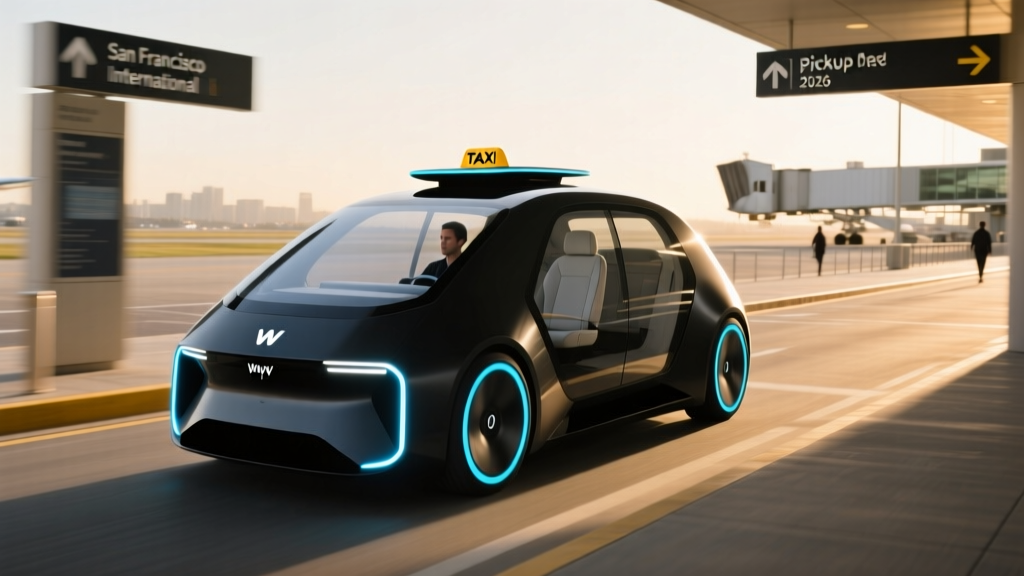
Waymo One's San Francisco service area covers roughly 50 square miles, stretching from the Presidio in the northwest to the Bayview and Hunters Point neighborhoods in the southeast. The geofence includes downtown, the Financial District, SoMa, the Mission, the Castro, the Sunset, the Richmond, and most residential neighborhoods in between. Waymo can pick up and drop off at SFO (San Francisco International Airport) as of 2024, and service to Oakland International Airport (OAK) was added in 2025.
| City / Region | Status | Approx. Coverage Area | Notes |
|---|---|---|---|
| San Francisco, CA | Fully operational | ~50 sq mi | Citywide including SFO airport |
| Phoenix Metro, AZ | Fully operational | ~315 sq mi | Largest coverage area; includes Tempe, Scottsdale, Mesa, PHX airport |
| Los Angeles, CA | Fully operational | ~80 sq mi | Downtown, Hollywood, Santa Monica, LAX airport |
| Austin, TX | Operational (limited) | ~35 sq mi | Downtown and surrounding neighborhoods; expanding |
| Mountain View / Silicon Valley, CA | Operational | ~25 sq mi | Waymo HQ area; overlaps with SF Bay Area expansion |
Outside San Francisco, Phoenix remains Waymo's largest and longest-running market (commercial service launched in 2020), while Los Angeles represents a rapidly growing operation. Austin launched limited commercial service in 2025. Waymo has announced plans for additional cities, but those expansions are not yet live — check the Waymo One app for the most current coverage map.
How Much Does Waymo Cost vs. Uber and Lyft?
Waymo One uses dynamic pricing similar to traditional rideshare, but without a human driver's cut. In San Francisco, typical Waymo fares run 10–25% below equivalent UberX or Lyft rides during standard demand periods. A 3-mile trip within SoMa typically costs $10–$14, while a 10-mile ride from the Mission to the Presidio runs $22–$30.
| Trip Scenario | Distance | Waymo One | UberX | Lyft |
|---|---|---|---|---|
| SoMa to Financial District | ~2 mi | $9–$12 | $11–$15 | $10–$14 |
| Mission to Downtown | ~4 mi | $14–$18 | $16–$22 | $15–$20 |
| Sunset to SFO Airport | ~12 mi | $30–$40 | $35–$50 | $32–$48 |
| Castro to Marina | ~5 mi | $17–$22 | $20–$28 | $19–$26 |
During peak demand or surge events, Waymo's pricing tends to be more stable than Uber or Lyft because the company doesn't rely on driver supply incentives. However, wait times can stretch to 10–15 minutes during rush hours when fleet capacity is strained. Waymo also offers Waymo Pass, a subscription plan for frequent riders that provides discounted per-ride rates.
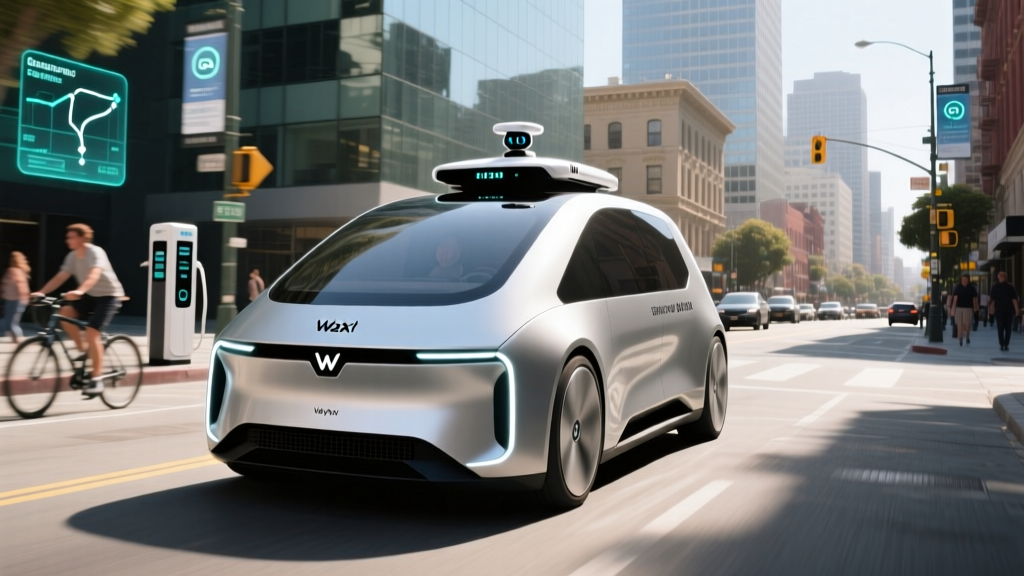
How to ride: Download the Waymo One app (iOS/Android), create an account, enter your pickup and destination, and confirm. The app shows the exact pickup spot, vehicle description (typically a white Jaguar I-PACE or Zeekr RT1 with Waymo branding), and estimated arrival time. You unlock the vehicle through the app when it arrives — no human interaction required.
Is Waymo Truly Self-Driving? Understanding SAE Level 4
Yes — Waymo operates at SAE Level 4 automation within its geofenced service areas. This is a critical distinction that separates robotaxis from consumer driver-assist systems.
| SAE Level | Classification | Who Drives? | Examples |
|---|---|---|---|
| Level 0 | No automation | Human does everything | Most conventional vehicles |
| Level 1 | Driver assistance | Human + one system (steering OR speed) | Adaptive cruise control, lane-keep assist |
| Level 2 | Partial automation | Human supervises; system handles steering AND speed | Tesla Autopilot, GM Super Cruise, Ford BlueCruise |
| Level 3 | Conditional automation | System drives in specific conditions; human must take over when requested | Mercedes DRIVE PILOT (limited markets, low speed) |
| Level 4 | High automation | System drives fully within defined conditions; no human needed | Waymo One, Zoox (geofenced areas) |
| Level 5 | Full automation | System drives everywhere, all conditions | Does not yet exist commercially |
At Level 4, Waymo vehicles operate with no one in the driver's seat and no remote human "babysitting" each car in real time. The system handles all driving tasks — navigation, lane changes, unprotected left turns, pedestrian detection, construction-zone routing — within its approved operational design domain (ODD). If the system encounters a scenario it cannot handle, it executes a minimal-risk maneuver (typically pulling over safely) rather than handing off to a human occupant.
This is fundamentally different from Tesla's Full Self-Driving (Supervised), GM's Super Cruise, or Ford's BlueCruise, which are all SAE Level 2 systems. Level 2 requires continuous human supervision — eyes on the road, hands available. Calling Level 2 "self-driving" is inaccurate and potentially dangerous.
Waymo's Safety Record: What the Data Actually Shows
Safety is the most scrutinized aspect of robotaxi operations, and Waymo has published more data than any other Level 4 operator. As of late 2025, Waymo reported over 50 million fully autonomous miles driven across its fleet, with the majority accumulated in Phoenix, San Francisco, and Los Angeles.
- Total autonomous miles: 50+ million (driverless, no safety operator)
- Injury-reducing collisions vs. human benchmark: Waymo's insurance-claim rate was approximately 85% lower for injury-causing crashes compared to human drivers in comparable urban environments, per a study published by the Insurance Institute for Highway Safety (IIHS) and Swiss Re partnership
- Police-contactable incidents: Approximately 20% of the rate of human drivers in comparable geographies, per Waymo's published safety reports
- Most common incident type: Low-speed contact with stationary objects or other vehicles during complex urban maneuvers; serious injuries to occupants are extremely rare
Context matters. Waymo operates in dense urban environments where low-speed fender-benders are common even for human drivers. The company's data shows its vehicles are involved in fewer police-reported and insurance-claimed crashes per million miles than human drivers in the same cities. However, Waymo vehicles have drawn public attention for specific incidents — including a 2023 episode where a Waymo vehicle struck a pedestrian who had stepped into the vehicle's path from behind a large truck, and occasional cases of vehicles stalling in intersections or making unexpected stops that disrupted traffic flow.
The National Highway Traffic Safety Administration (NHTSA) requires all Level 4 operators to report crashes involving automated driving systems. Waymo's reported incident rate, when normalized per million miles, compares favorably to the human baseline — but the data pool, while growing, remains small relative to the trillions of miles driven by humans annually.
Under the Hood: Waymo's Sensor and Technology Stack
Waymo's approach to autonomous perception differs sharply from camera-only systems like Tesla's. The company uses a redundant, multi-sensor fusion stack designed to handle edge cases that any single sensor type would struggle with.
Waymo Driver Sensor Suite (5th-Gen + Zeekr RT1)
- LiDAR: Multiple high-resolution laser-scanning units providing 360° 3D point-cloud mapping up to 500+ meters. LiDAR works independently of ambient light and directly measures distance — critical for nighttime driving and detecting objects without relying on visual contrast.
- Cameras: A suite of high-dynamic-range cameras covering 360° at varying focal lengths, enabling traffic-light state detection, sign reading, lane-marking identification, and pedestrian intent prediction.
- Radar: Imaging radar units complement LiDAR for velocity detection of moving objects (especially other vehicles) and function reliably in rain, fog, and dust where LiDAR signal quality can degrade.
- External audio sensors: Microphones capable of detecting sirens from approaching emergency vehicles, enabling the system to yield proactively.
- HD mapping: Waymo pre-maps every road within its service area at centimeter-level precision. The vehicle localizes itself within this map in real time, providing a layer of redundancy beyond live sensor perception.
- Compute: Custom-designed onboard computers running Waymo's proprietary perception, prediction, and planning algorithms, processing multiple terabytes of sensor data per hour.
The multi-sensor approach costs significantly more per vehicle than a camera-only architecture — Waymo's sensor suite adds tens of thousands of dollars to each vehicle — but it provides the redundancy that regulators and safety researchers consider essential for driverless Level 4 operations in complex urban environments. Geofencing (restricting operation to pre-mapped, approved areas) further reduces the scenario complexity the system must handle.
Regulatory Landscape: Who Approves Robotaxi Operations?
Robotaxi deployment in the United States is governed at the state level, with no comprehensive federal framework for Level 4 commercial operations. In California, two agencies share oversight:
- California Public Utilities Commission (CPUC): Issues permits for commercial passenger service (the "driverless pilot" and subsequent commercial deployment permits). Waymo received its CPUC commercial deployment permit in August 2023, allowing 24/7 paid service in San Francisco.
- California Department of Motor Vehicles (DMV): Issues testing and deployment permits for autonomous vehicles on public roads. The DMV tracks disengagement reports and can suspend permits for safety violations.
In Arizona, the regulatory environment is notably more permissive — no specific state permit is required beyond standard business licensing, which is why Phoenix became Waymo's first commercial market. Texas passed legislation in 2025 enabling Level 4 operations with a state permit framework, clearing the way for Austin service. Each new city requires Waymo to navigate local regulatory requirements, coordinate with first responders, and demonstrate safety performance to local authorities.
At the federal level, NHTSA retains authority over vehicle safety standards and crash investigations but does not currently issue permits for autonomous driving operations. Congressional efforts to create a unified federal AV framework have stalled repeatedly since 2017.
Current Limitations: What Waymo Still Can't Do
Level 4 autonomy within a geofence is a significant achievement, but it comes with meaningful constraints that riders should understand before relying on the service.
- Geofence boundaries: Waymo cannot drive outside its approved service area. If your destination falls beyond the geofence, the app will not allow you to book the trip. Expansion is incremental — new neighborhoods require mapping, testing, and regulatory approval.
- Weather restrictions: Heavy rain, fog, and flooding can degrade LiDAR and camera performance. Waymo may suspend or limit service during severe weather events. San Francisco's famous fog can occasionally trigger slowdowns or temporary service pauses in affected neighborhoods.
- Construction zones: While Waymo handles many construction scenarios, major road closures or rapidly changing detour routes can cause the vehicle to stop and wait for remote routing assistance, adding delay.
- No highway driving (yet in SF): Waymo's San Francisco operations primarily cover surface streets. Highway driving at speeds above 65 mph is part of Waymo's Phoenix operations but is more limited in the Bay Area.
- Pickup/dropoff precision: The vehicle must be able to pull over safely at a legal stopping point. It cannot stop in a bus lane, bike lane, or double-park — which means your pickup spot might be a short walk from your exact door, especially on busy commercial streets.
- Wait times during peak demand: Fleet size is finite. During weekday rush hours or weekend evenings in popular neighborhoods, expect 8–15 minute wait times — sometimes longer than Uber or Lyft, which can draw from a much larger driver pool.
- Accessibility: Current Waymo vehicles (Jaguar I-PACE, Zeekr RT1) are sedans/crossovers. Wheelchair-accessible vehicles are limited, though Waymo has announced partnerships to expand accessible fleet options.
- Passenger behavior monitoring: Interior cameras monitor the cabin. Excessive disruptive behavior, tampering with vehicle controls, or failure to wear a seatbelt can result in the ride being terminated.
Frequently Asked Questions
Can I use Waymo at San Francisco International Airport (SFO)?
Yes. Waymo One added SFO pickup and drop-off in 2024. The app guides you to a designated rideshare pickup zone. Service to Oakland International Airport (OAK) was added in 2025.
Is there a human driver or safety operator inside the Waymo vehicle?
No. Waymo One vehicles in San Francisco operate fully driverless — there is no one in the driver's seat. The vehicle is monitored by Waymo's fleet operations team remotely, but no human is actively driving or steering the car in real time.
How does Waymo compare to Cruise (GM)?
GM's Cruise robotaxi service suspended all operations nationwide in October 2023 following a serious incident in San Francisco. As of early 2026, Cruise has not resumed commercial driverless service. Waymo is currently the only large-scale commercial Level 4 robotaxi operating in San Francisco.
What happens if the Waymo vehicle gets confused or encounters an emergency?
If the system encounters a scenario it cannot resolve, it will execute a "minimal risk condition" — typically pulling over to a safe stopping point. You can contact Waymo support through the in-app help button or the in-vehicle intercom at any time. For medical emergencies, dial 911 directly.
Does Waymo work at night?
Yes. Waymo One operates 24/7 in San Francisco. The multi-sensor stack (LiDAR, radar, cameras) is designed for nighttime driving and does not rely on visible light the way a human driver does.
Is Waymo cheaper than Uber at surge times?
Generally, yes. Waymo's dynamic pricing tends to surge less aggressively than Uber or Lyft because fleet supply isn't dependent on convincing human drivers to get on the road. However, during extreme demand spikes, Waymo may simply show longer wait times rather than dramatically higher prices.
Sources: Waymo Safety Report, NHTSA Automated Vehicle Safety, CPUC Autonomous Vehicle Program.