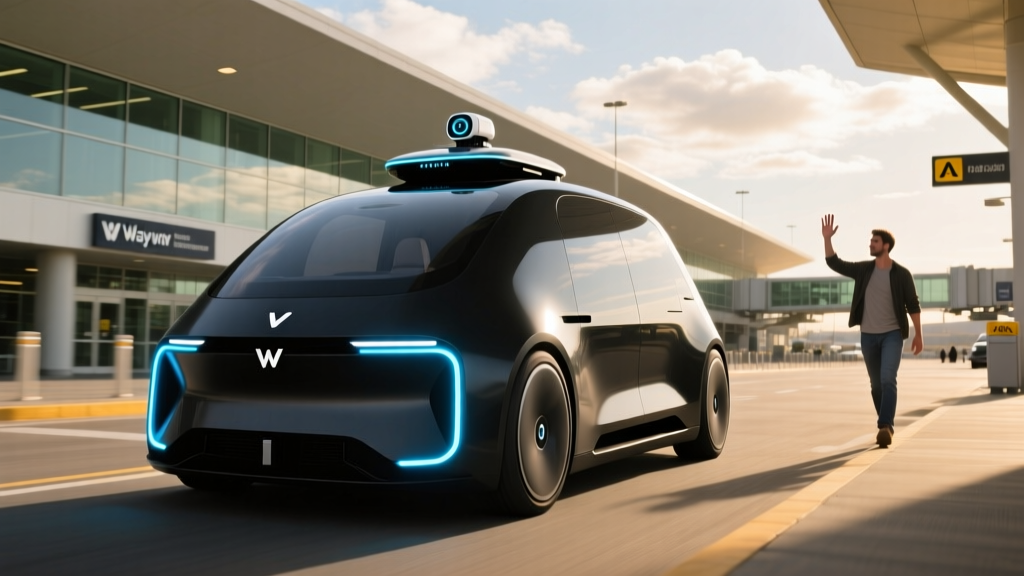
If you've landed at San Francisco International Airport and opened the Waymo One app hoping for a driverless ride, you've likely hit a wall: SFO sits outside Waymo's core San Francisco geofence, and airport service has been one of the most-requested features since the company launched commercial operations in the city. As of early 2026, Waymo's relationship with SFO remains constrained by regulatory approvals, geofence boundaries, and the airport's own ground-transportation permitting process.
This guide breaks down exactly where Waymo operates in the Bay Area today, what it would take to hail a robotaxi to or from SFO, how pricing compares to Uber and Lyft, and what the safety and technology data actually show. No hype — just the operational reality.
Is This Truly Self-Driving? SAE Automation Levels Explained
Before discussing airport access, it's critical to distinguish what Waymo actually is. Waymo's commercial robotaxi service (Waymo One) operates at SAE Level 4 — meaning the vehicle handles all driving tasks within a defined operational design domain (ODD) with no human driver present. This is fundamentally different from Tesla's FSD (Supervised), GM's Super Cruise, or Ford's BlueCruise, which are SAE Level 2 driver-assistance systems that require a licensed, attentive driver behind the wheel at all times.
| Level | Description | Example |
|---|---|---|
| Level 2 | Driver-assist; human must supervise | Tesla Autopilot/FSD, BlueCruise |
| Level 3 | Conditional automation; human on standby | Mercedes DRIVE PILOT (limited) |
| Level 4 | Full automation in defined ODD; no driver | Waymo One, Zoox |
| Level 5 | Full automation everywhere, all conditions | Does not exist commercially |
Waymo is Level 4, not Level 5. It cannot drive everywhere in all conditions — it operates within a mapped, geofenced area under specific conditions. Source: SAE International J3016
Where Can I Use Waymo Right Now? Bay Area Service Map
Waymo One's Bay Area operational area has expanded significantly since its initial San Francisco launch. As of 2026, the service covers most of San Francisco proper, large portions of the East Bay (including Oakland, Berkeley, and parts of Alameda County), and select Peninsula corridors. However, SFO — located in San Mateo County, roughly 13 miles south of downtown San Francisco — has been a complex expansion target.
| Location | Waymo One Status (2026) | Notes |
|---|---|---|
| San Francisco (citywide) | ✅ Fully operational | 24/7 service, all neighborhoods |
| Oakland / Berkeley | ✅ Operational | Expanded East Bay coverage |
| SFO Airport | ⚠️ Limited / Testing | Waymo has conducted testing at SFO under a permit with the San Francisco Airport Commission; full commercial rides to/from terminals remain restricted |
| San Jose / SJC Airport | ❌ Not available | Outside current Bay Area geofence |
| Daly City / South SF | ⚠️ Partial coverage | Some Peninsula areas included; check app for exact pickup zones |
| Los Angeles (metro) | ✅ Operational | LAX service launched after airport permit agreement |
| Phoenix (metro) | ✅ Operational | Longest-running market; PHX airport available |
The SFO situation specifically: Waymo and the San Francisco Airport Commission signed a testing and operations agreement that allows Waymo vehicles to operate on SFO grounds under a ground-transportation permit. However, commercial passenger pickups and drop-offs at SFO terminals require separate approval processes that involve airport revenue considerations, ground-transportation staging lot logistics, and coordination with the San Francisco Airport Commission. Check the Waymo One app for real-time geofence boundaries before planning an airport trip.
How Much Does Waymo Cost vs. Uber and Lyft?
Waymo One uses dynamic pricing similar to rideshare platforms, but without a human driver's earnings factored in. In practice, Waymo fares in San Francisco tend to be competitive with UberX and Lyft standard rides — sometimes slightly cheaper during non-surge periods, sometimes slightly more expensive during peak demand.
| Service | Typical Fare Range | Surge Behavior | Wait Time |
|---|---|---|---|
| Waymo One | $30–$45 | Moderate dynamic pricing | 3–8 min (in geofence) |
| UberX | $32–$55 | Heavy surge during peak | 2–6 min |
| Lyft Standard | $30–$50 | Heavy surge during peak | 2–7 min |
| Waymo (if SFO available) | $35–$50 (est.) | Expected: moderate | 5–12 min (est.) |
| Taxi (SFO authorized) | $45–$65 | Metered, no surge | Taxi stand, immediate |
Key differences: Waymo doesn't have a driver to tip (though the app allows it), and the experience is notably quieter and more private. However, Waymo cannot make unscheduled stops (no drive-thru detours), and if your destination falls outside the geofence, the ride simply cannot be booked. For SFO trips specifically, if Waymo's geofence doesn't include the airport terminals, you'll need to use Uber, Lyft, BART (which runs directly to SFO from downtown SF for approximately $10–$13), or a taxi.
Waymo Safety Record: What the Data Actually Shows
Safety is the single most scrutinized aspect of robotaxi operations, and Waymo publishes more transparency data than any competitor. Here's what the numbers say:
- Autonomous miles driven: Over 50 million fully driverless miles completed across all markets (as of late 2025 reporting)
- Injury-causing crash rate: Waymo's published safety data shows a reduction of approximately 85% in injury-causing crashes compared to human baseline driving in comparable urban environments
- Contact rate: Police-contactable incidents occur at a rate significantly below human drivers per million miles
- NHTSA Standing General Order: Waymo reports all Level 4 incidents to NHTSA under mandatory crash-reporting rules; reports are publicly searchable
Context: Human drivers in San Francisco average roughly 4.8 police-reported crashes per million miles. Waymo's rate in comparable conditions is substantially lower, though direct comparison is complicated by geofencing (Waymo avoids the most dangerous unmapped routes). Source: NHTSA, Waymo safety reports.
Notable incidents have occurred — including collisions with stationary objects and interactions with pedestrians at complex intersections — and each is investigated by both Waymo and regulators. The California DMV requires autonomous vehicle operators to report all collisions involving their vehicles, and these reports are publicly available. Waymo's record is not flawless, but the data consistently shows lower crash involvement rates than human benchmarks in equivalent driving environments.
Technology Stack: How Waymo's 6th-Gen Vehicles See the World
Waymo's current fleet uses the 6th-generation Waymo Driver hardware suite, integrated into vehicles like the Zeekr RT (a purpose-built electric robotaxi) and modified Jaguar I-PACE SUVs. Unlike Tesla's camera-only approach, Waymo uses a redundant multi-sensor architecture:
| Sensor Type | Function | Advantage |
|---|---|---|
| LiDAR (multiple units) | 3D point-cloud mapping of surroundings up to 500+ meters | Works in darkness; precise distance measurement; sees around partial occlusions |
| Cameras (high-res, multi-directional) | Traffic light state, sign reading, lane markings, object classification | Color and text recognition; complements LiDAR for semantic understanding |
| Radar | Velocity detection of moving objects; penetration through rain/fog | Robust in adverse weather where LiDAR degrades |
| HD Maps + Localization | Pre-mapped road geometry, speed limits, lane configurations | Provides baseline context; reduces real-time computation burden |
| Audio sensors | Emergency vehicle siren detection | Allows vehicle to pull over for approaching emergency vehicles |
This sensor fusion approach is why Waymo can operate without a human driver (Level 4), while camera-only systems still require one (Level 2). The trade-off: LiDAR and radar hardware is expensive — estimated at $100,000+ per vehicle for the full suite — which is why Waymo's model relies on fleet operations rather than selling hardware to consumers.
The vehicles are also geofenced: they will only operate within a pre-mapped Operational Design Domain (ODD). If a rider requests a destination outside the geofence, the app will not allow the booking. The ODD is also condition-limited — Waymo vehicles may reduce speed or pull over safely in heavy rain, dense fog, or construction-zone scenarios that exceed the system's confidence thresholds.
Regulatory Landscape: Who Approves Robotaxi Operations?
Robotaxi operations in California require approval from multiple overlapping authorities, which is precisely why SFO access has been a slow process:
- California DMV: Issues Autonomous Vehicle Testing and Deployment permits. Waymo holds a full deployment permit allowing commercial driverless operations.
- California Public Utilities Commission (CPUC): Regulates passenger-carrying commercial transport. Waymo received CPUC approval for paid robotaxi service — this is the permit that allows Waymo One to charge fares.
- Local municipalities: Cities like San Francisco have their own transportation authority oversight. The SFMTA has been a vocal stakeholder in robotaxi operations on city streets.
- Airport authorities: SFO is operated by the San Francisco Airport Commission, an independent body. Ground transportation permits at airports are revenue-generating contracts — any robotaxi operator must negotiate access fees, staging areas, and pickup/drop-off logistics separately from city street operations.
- NHTSA (federal): Oversees vehicle safety standards and crash reporting. NHTSA does not currently "approve" autonomous operations but mandates incident reporting and can issue recalls for autonomous driving software defects.
This multi-layered regulatory environment means that even though Waymo can legally drive on the streets surrounding SFO, actually picking up a fare at Terminal 3 requires a separate airport ground-transportation agreement — a process that involves fee negotiations, insurance requirements, and operational logistics distinct from city permits.
Current Limitations: What Waymo Cannot Do
- Geofence boundaries: The vehicle will not drive outside its mapped ODD. If your destination is outside the zone, you cannot book the ride.
- SFO commercial service: As of early 2026, full commercial pickups/drop-offs at SFO terminals are not broadly available. Testing and limited operations are underway, but travelers should not rely on Waymo for SFO trips without confirming in-app availability.
- Weather constraints: Heavy rain, fog, or unusual road conditions can trigger conservative behavior — slower speeds, longer routes, or safe pullovers.
- No unscheduled stops: You cannot ask the Waymo to stop at a store or add a mid-trip waypoint. The route is fixed at booking.
- Limited cargo: Waymo vehicles are standard passenger vehicles — no trunk access for passengers in most configurations, and no oversized luggage handling.
- No highway driving (some markets): While Waymo has expanded to include highway segments in some geofences, not all routes include freeway travel. SF-to-SFO via US-101 may or may not be within the approved ODD.
- Accessibility: Waymo has been expanding wheelchair-accessible vehicle options, but availability is limited compared to standard fleet vehicles.
- Pets: Service animals are permitted; pets are generally not allowed unless in a carrier, and policies vary.
How to Use Waymo One: Step by Step
- Download the Waymo One app (iOS/Android) and create an account. You'll need a valid payment method on file.
- Enter your pickup location. The app will confirm whether you're inside the service area. If you're near a geofence boundary, the app may suggest walking a short distance to a covered zone.
- Enter your destination. If it's within the ODD, you'll see a fare estimate and ETA.
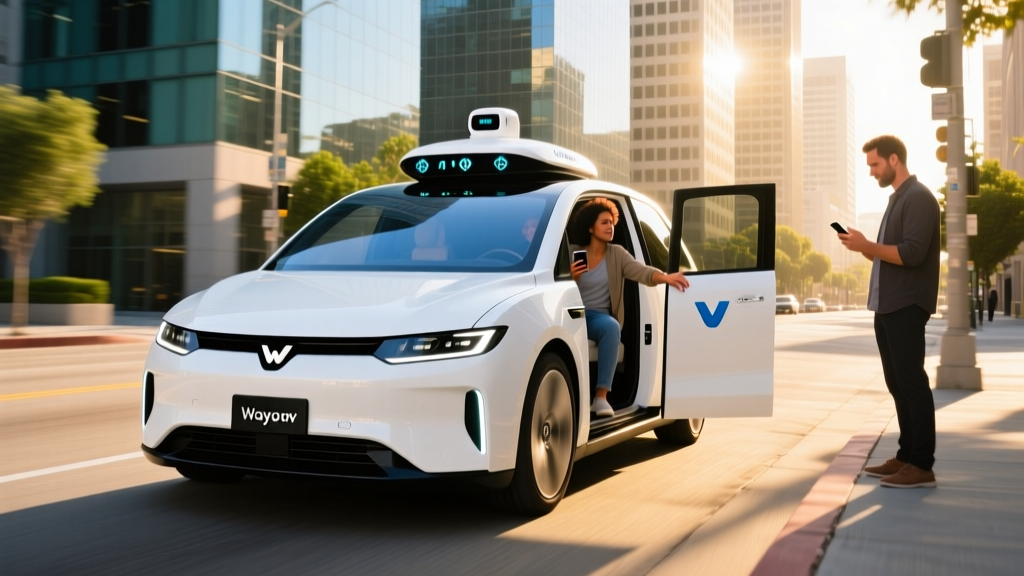
- Confirm the ride. The vehicle (typically a white Zeekr RT or Jaguar I-PACE with Waymo branding and visible LiDAR pods) will arrive at your pickup point.
- Unlock via app. Tap "Start Ride" in the app when you're seated. There is no driver — the vehicle begins driving autonomously.
- In-ride screens show your route, ETA, and a visualization of what the vehicle's sensors are detecting (pedestrians, other cars, cyclists).
- Arrival: The vehicle pulls to the curb, unlocks the doors, and you exit. Payment is automatic.
Frequently Asked Questions
Can I take a Waymo to San Francisco Airport (SFO) in 2026?
Full commercial Waymo One service to SFO terminals is not yet broadly available. Waymo has been testing at SFO under an airport permit agreement, but travelers should check the Waymo One app for real-time availability. If SFO is outside the current geofence, alternatives include Uber/Lyft, BART (direct rail connection from downtown SF, ~$10–$13), or taxi. The situation is evolving — Waymo has publicly stated airport access is a priority expansion target.
How much does a Waymo ride cost compared to Uber or Lyft?
Waymo fares are generally comparable to UberX and Lyft standard rides, typically ranging from $30–$45 for a cross-San-Francisco trip of roughly 10–14 miles. During peak demand, Waymo's dynamic pricing tends to surge less aggressively than rideshare, since there is no driver supply constraint — the fleet size is the limiting factor. There is no driver to tip, though the app offers a tipping option.
Is Waymo actually safer than a human driver?
Waymo's published data indicates a significant reduction in injury-causing crashes compared to human benchmarks — approximately 85% fewer per million miles in comparable urban driving environments. However, this comparison comes with caveats: Waymo operates in geofenced, pre-mapped areas and may avoid the most dangerous routes. NHTSA crash reports and California DMV collision data are publicly available for independent review. No autonomous system is incident-free, but the aggregate data supports a strong safety record.
What happens if the Waymo vehicle encounters a situation it can't handle?
Waymo vehicles are designed to enter a "minimal risk condition" — typically slowing down, activating hazard lights, and pulling to a safe stop at the roadside. A remote support team monitors the fleet and can provide guidance to the vehicle (though they do not remotely drive it in real time). If necessary, the vehicle will remain stopped until the situation resolves or roadside assistance is dispatched.
Is Waymo a Level 4 or Level 5 autonomous vehicle?
Waymo is SAE Level 4 — fully autonomous within its defined Operational Design Domain (geofenced area, mapped roads, specific weather conditions). It is not Level 5, which would mean it can drive anywhere a human can, in any condition, with no geographic restrictions. No Level 5 vehicle exists commercially today.
What cities does Waymo operate in besides San Francisco?
As of 2026, Waymo One offers commercial service in San Francisco, Los Angeles (including LAX airport access), Phoenix (including PHX airport), and has been expanding into additional metro areas. Austin, Texas, has also been part of Waymo's expansion plans. Service areas grow continuously — check the Waymo One app for the latest coverage maps.
Does Waymo work at night and in the rain?
Yes, Waymo operates 24/7 in its service areas, and its sensor suite (LiDAR, radar, cameras) functions in darkness. In rain, the system operates but may adopt more conservative driving behavior — reduced speeds, increased following distances, or in extreme conditions, a safe pullover. San Francisco's relatively mild weather is one reason it was an early deployment city.
The Bottom Line for SFO Travelers
Waymo's robotaxi technology is proven, the safety data is strong, and the riding experience is genuinely novel. But if your immediate need is a guaranteed ride to or from SFO in 2026, you should have a backup plan. Open the Waymo One app before your trip to check whether SFO falls within the active geofence — if it does, you'll enjoy a quiet, driverless ride at competitive pricing. If it doesn't, BART remains the most reliable and affordable option from downtown San Francisco, with Uber/Lyft as the flexible alternative. Airport access is clearly on Waymo's roadmap; the regulatory and logistical pieces are still being assembled.