Understanding the Waymo San Francisco Accident Conversation
Every robotaxi incident makes headlines, but context matters. When users search for Waymo San Francisco accident data, they're often reacting to viral videos or news reports without the full statistical picture. Let's examine what the actual safety data shows about Waymo's Level 4 autonomous operations in San Francisco and other cities.
SAE Automation Level: Level 4 (High Automation)
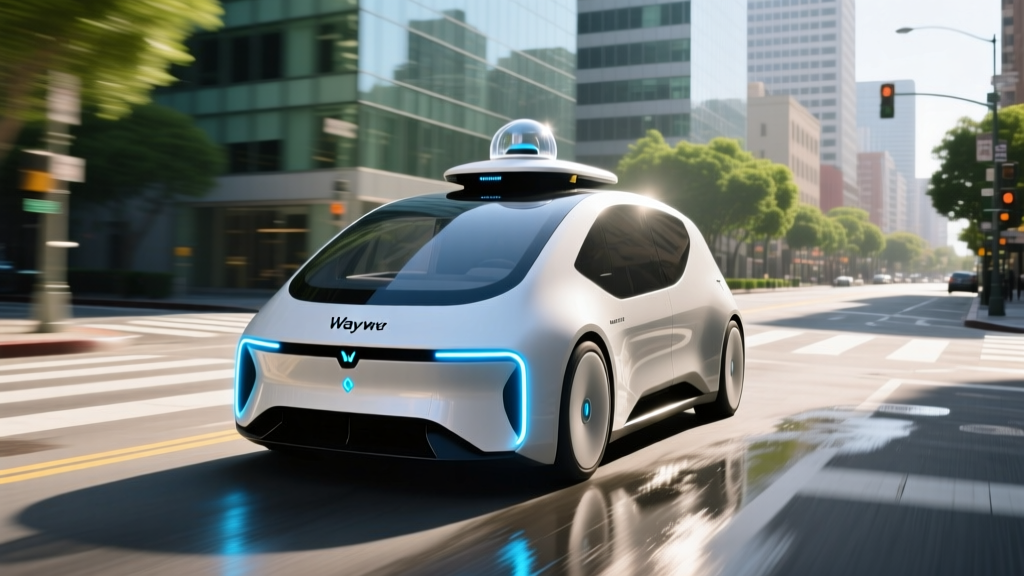
Waymo operates at SAE Level 4 — the vehicle performs all driving tasks within its operational design domain (geofenced areas, specific conditions) with no human driver required. This differs fundamentally from Tesla Autopilot/FSD (Level 2), which requires active driver supervision at all times. Level 4 means the car handles everything or safely stops itself if it encounters scenarios outside its capabilities.
Where Waymo Operates Right Now (2026 Service Areas)
Waymo's commercial robotaxi service, Waymo One, operates in specific geofenced zones across multiple cities. Unlike Uber or Lyft, you can't summon a Waymo anywhere — the service is limited to approved operational areas where the company has mapped every lane, intersection, and edge case.
| City | Service Area Size | Operational Hours | Public Access |
|---|---|---|---|
| San Francisco | ~80 sq miles (most of city) | 24/7 | Open to public via app |
| Phoenix (East Valley) | ~225 sq miles | 24/7 | Open to public via app |
| Los Angeles | ~80 sq miles (Santa Monica, Hollywood, Downtown) | Limited hours initially | Waitlist/gradual rollout |
| Austin | Announced expansion | TBD | Testing phase |
Key limitation: Even within these cities, Waymo won't operate on certain highways, in heavy snow, or in areas with poor GPS/map coverage. The geofence is strict — request a ride outside the zone, and the app simply won't let you.
Waymo's Safety Record: What the Data Actually Shows
Waymo Safety Metrics (as of late 2025/early 2026)
- Total autonomous miles driven: Over 30 million fully driverless miles across all cities
- San Francisco operations: Millions of paid rides completed since public launch
- At-fault collision rate: Waymo reports 85% fewer injury-causing crashes per million miles compared to human drivers in comparable urban environments (per Waymo's safety reports)
- Contact with emergency responders: Documented incidents where vehicles stopped near active emergency scenes, requiring manual intervention or remote assistance
- Property damage incidents: Minor collisions with stationary objects, construction zones, or improperly parked vehicles — typically low-speed
The reality of Waymo San Francisco accident data is nuanced. Yes, incidents occur — no transportation system is perfect. But the relevant comparison is whether Waymo's vehicles crash less often than human drivers navigating the same chaotic urban streets.
Context for High-Profile Incidents
Several incidents have drawn media attention:
- Construction zone confusion: Waymo vehicles have occasionally stopped in travel lanes when encountering unexpected road work, creating traffic hazards even if no collision occurred
- Emergency vehicle interactions: A handful of cases where vehicles didn't properly yield to fire trucks or ambulances, prompting software updates
- Pedestrian near-misses: Isolated incidents where the vehicle's prediction of pedestrian behavior was incorrect, though typically resulting in overly cautious stops rather than collisions
NHTSA's Standing General Order requires all automated driving systems to report crashes, making robotaxi incidents more visible than human driver crashes, which often go unreported unless serious.
Technology Stack: How Waymo Sees the World
Waymo's Sensor Suite (5th Generation Driver)
Unlike Tesla's camera-only approach, Waymo uses a redundant multi-sensor stack:
- LiDAR: Multiple roof-mounted and side units create a 360-degree 3D point cloud, detecting objects up to 500+ meters with centimeter-level precision regardless of lighting
- Cameras: High-resolution visual sensors for traffic light state detection, sign reading, lane marking identification, and object classification
- Radar: Millimeter-wave units for velocity detection of moving objects and operation in rain/fog where cameras and LiDAR degrade
- Audio sensors: Microphones detect sirens from emergency vehicles before they're visible
- HD Maps: Pre-built centimeter-accurate maps of every operational area, updated regularly for construction or permanent changes
This sensor redundancy is why Waymo can operate at Level 4 without a human backup — if one sensor type fails or is obstructed, others maintain situational awareness. The tradeoff is cost: each Waymo vehicle carries $100,000+ in sensor hardware, making the business model dependent on high utilization across thousands of rides.
Pricing: Waymo vs Uber vs Lyft in San Francisco
| Service | Typical 3-Mile SF Ride | Surge Pricing | Wait Time | Tipping |
|---|---|---|---|---|
| Waymo One | $12-18 | No surge pricing | 3-8 minutes | Not expected (no driver) |
| UberX | $14-22 | Frequent surge (1.5x-3x) | 2-6 minutes | 15-20% expected |
| Lyft | $13-21 | Frequent surge | 2-7 minutes | 15-20% expected |
Waymo's pricing is competitive with human-driven rideshare, especially during peak hours when Uber/Lyft surge. The company has stated publicly that robotaxi economics improve with scale — each vehicle can operate 20+ hours daily with only charging/maintenance downtime, versus human drivers working 8-12 hour shifts.
How to use Waymo One: Download the app, enter pickup/dropoff within the service area, confirm the fare, and the nearest vehicle drives to you. You unlock via the app, and the car handles everything. No steering wheel interaction, no driver conversation — just autonomous urban navigation.
Current Limitations: Where Waymo Can't Go (Yet)
Operational Constraints
- Weather: Heavy rain, fog, or snow degrades sensor performance — service may pause or restrict to clearer conditions
- Highway driving: Most Waymo operations avoid high-speed highways (65+ mph), focusing on surface streets where the business case is strongest
- Construction zones: Major road work with shifted lanes or temporary signals can exceed the system's ability to adapt, requiring remote assistance or route changes
- Geofence boundaries: Request a ride to an unmapped neighborhood or airport outside the zone, and the service simply isn't available
- Complex multi-point stops: Unlike human drivers, you can't ask Waymo to "wait here for 2 minutes" or make multiple stops in one ride
- Passenger assistance: No driver to help with luggage, car seats, or mobility devices — you're on your own for loading/unloading
These limitations aren't failures — they're honest boundaries that keep the system safe. Waymo's approach is to expand capabilities incrementally (adding highway segments, improving rain performance) only after extensive validation, rather than deploying beyond proven capabilities.
Regulatory Landscape: Who Approves Robotaxi Operations
Robotaxi deployment requires approval from multiple regulatory bodies:
- California DMV: Issues permits for testing and commercial deployment; requires detailed safety cases and incident reporting
- California Public Utilities Commission (CPUC): Regulates commercial passenger service, setting insurance requirements and operational rules
- NHTSA (Federal): Oversees vehicle safety standards, crash reporting, and can issue recalls for automated driving systems
- Local municipalities: City governments can restrict operations, set parking/pickup rules, and coordinate on infrastructure needs
This multi-layered oversight means expansion is slow and deliberate. Waymo can't simply flip a switch and launch in a new city — it must map the area, test extensively, secure permits, and demonstrate safety to regulators. This explains why robotaxi availability remains limited to a handful of cities despite years of development.
FAQ: Common Questions About Waymo Safety and Operations
Is Waymo truly self-driving, or is there a remote human operator?
Waymo vehicles are fully autonomous within their operational domain — no human driver is in the car, and no remote operator is "driving" the vehicle in real-time. However, Waymo does have remote support staff who can assist the vehicle's AI when it encounters ambiguous situations (like a construction zone with conflicting signals). The remote team provides guidance, not direct steering control.
What happens if a Waymo vehicle gets into an accident?
Waymo carries commercial insurance for all rides. If an incident occurs, the vehicle is programmed to pull over safely, contact Waymo support, and wait for appropriate response (police, tow truck, etc.). Passengers can exit safely and receive support via the in-car screen and app. All incidents are reported to NHTSA per federal requirements.
How does Waymo's safety compare to human drivers?
Per million miles driven, Waymo reports significantly lower rates of injury-causing crashes compared to human drivers in similar urban environments. However, robotaxi miles are driven in geofenced, mapped areas with favorable conditions — a direct comparison to all human driving (including rural highways, bad weather, etc.) isn't apples-to-apples. The more relevant metric: within Waymo's operational domain, does the system crash less than attentive human drivers would? The data suggests yes, but the sample size is still growing.
Can I use Waymo if I'm visiting San Francisco?
Yes — Waymo One is open to the public. Download the app, create an account, and request rides within the service area. No special invitation or residency required, though you may encounter wait times during peak demand.
What if I feel unsafe during a Waymo ride?
Every vehicle has an in-car support button and screen to contact Waymo's operations team. You can also end the ride early via the app, and the vehicle will pull over safely at the next appropriate location. The vehicle will not lock you in or refuse to stop.
The Bottom Line: Data Over Headlines
Searching for "Waymo San Francisco accident" will surface real incidents — no transportation system is flawless. But the relevant question isn't whether robotaxis ever crash; it's whether they crash less than the human-driven alternative on the same streets. Current data suggests they do, with the caveat that robotaxi operations are limited to favorable conditions and mapped areas.
For San Francisco residents and visitors, Waymo One offers a viable alternative to Uber/Lyft within its service zone, with competitive pricing and no surge multipliers. The technology works — millions of paid rides prove that. The question is whether you're comfortable being an early adopter of Level 4 autonomy, accepting the current limitations in exchange for participating in a transportation shift that will take decades to fully mature.
If you're considering a robotaxi ride, understand what you're getting: a geofenced, weather-dependent, no-frills autonomous trip that's statistically safer than the average human driver but not infallible. The headlines will always focus on the crashes; the data tells a more complete story.