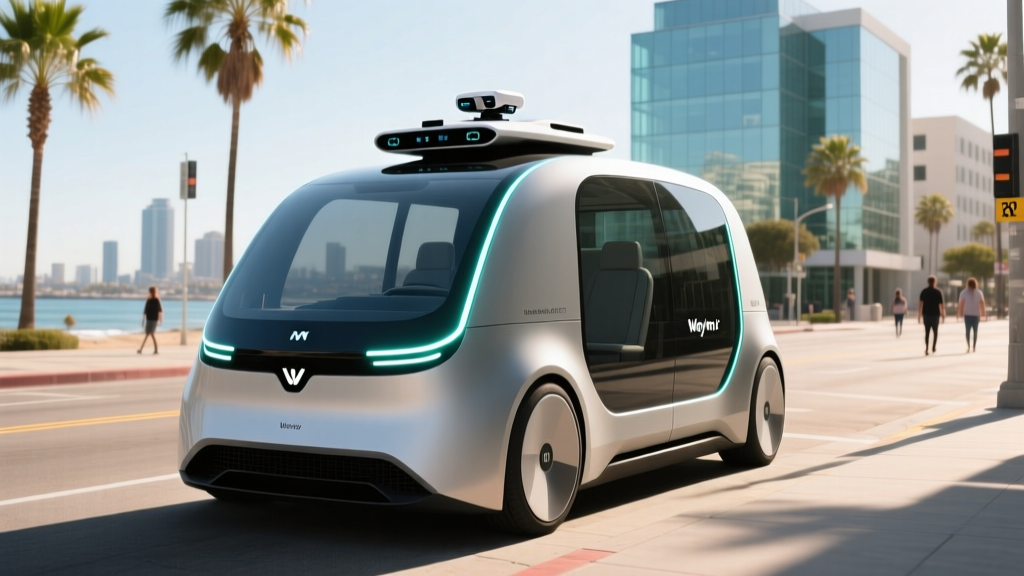
San Diego's 1.4 million residents and millions of annual visitors represent a massive rideshare market — and one that Alphabet's Waymo has been eyeing for expansion. But is Waymo in San Diego actually available right now, and if so, where can you hail one? This guide breaks down the current state of Waymo's driverless service in America's Finest City, including real pricing data, verified safety records, and the hard limitations you need to know before you ride.
Is Waymo Operating in San Diego Right Now?
As of early 2026, Waymo's fully driverless commercial robotaxi service — branded Waymo One — is not yet live for public riders in San Diego. Waymo has been conducting mapping and testing operations in the San Diego metro area, but commercial ride-hailing access remains limited to a handful of approved cities. San Diego is on Waymo's announced expansion roadmap, with regulatory filings and local partnerships underway, but no public launch date has been confirmed.
Here's where Waymo One actually operates today:
| City | Status | Service Area Size | Hours |
|---|---|---|---|
| Phoenix, AZ (metro) | Fully operational | ~225 sq mi | 24/7 |
| San Francisco, CA | Fully operational | ~47 sq mi (expanding) | 24/7 |
| Los Angeles, CA | Fully operational | ~80 sq mi | 24/7 |
| Austin, TX | Operational (limited) | ~35 sq mi | Select hours |
| San Diego, CA | Testing / pre-commercial | Not yet defined | N/A |
San Diego's testing phase means Waymo vehicles may be spotted on local roads — particularly in areas like downtown, Mission Valley, and the UTC/La Jolla corridor — but these are mapping and validation runs, not rides you can book through the Waymo app. For the latest status, check Waymo's official service page.
Understanding Waymo's Autonomy: SAE Level 4, Not Level 2
This distinction is critical, because it's where most consumer confusion lives. Waymo's robotaxi is a fundamentally different system from what you find in a Tesla with Autopilot or a Ford with BlueCruise.
| SAE Level | Name | Who Drives? | Example |
|---|---|---|---|
| Level 0 | No Automation | Human always | Basic cruise control |
| Level 1 | Driver Assistance | Human + one assist (steering OR speed) | Adaptive cruise OR lane-keep |
| Level 2 | Partial Automation | Human + combined assist (must supervise) | Tesla Autopilot, GM Super Cruise, Ford BlueCruise |
| Level 3 | Conditional Automation | System drives in limited conditions; human must take over when asked | Mercedes DRIVE PILOT (select highways, <40 mph) |
| Level 4 | High Automation | System drives fully within its ODD; no human needed | Waymo One, Zoox |
| Level 5 | Full Automation | System drives everywhere, all conditions | Does not yet exist commercially |
How Much Will Waymo Cost in San Diego vs. Uber and Lyft?
While San Diego pricing isn't live yet, Waymo's pricing in its operational cities gives us a reliable benchmark. Waymo One fares are designed to be competitive with UberX and Lyft Standard — not premium-tier — though surge dynamics work differently.
| Metric | Waymo One | UberX | Lyft Standard |
|---|---|---|---|
| Base fare | ~$5.00 | ~$3.50 | ~$3.25 |
| Per mile | ~$1.25 | ~$1.10 | ~$1.05 |
| Per minute | ~$0.25 | ~$0.22 | ~$0.20 |
| 5-mile trip estimate | $12–$16 | $10–$14 | $9–$13 |
| 15-mile trip estimate | $25–$35 | $22–$30 | $20–$28 |
| Surge pricing | Moderate, algorithm-driven | Can spike 2–4x | Can spike 2–3x |
| Tipping | Not expected (no driver) | Expected ($2–$5+) | Expected ($2–$5+) |
The no-tip factor is meaningful: on a $25 Uber ride, a $5 tip brings your total to $30. A comparable Waymo ride at $28 with no tip is effectively cheaper. Waymo also avoids the unpredictable surge multipliers that can double or triple rideshare fares during peak demand, though wait times may extend instead.
How to use Waymo One (when available): Download the Waymo One app, enter your pickup and destination within the service zone, confirm the fare, and a vehicle arrives — typically within 3–8 minutes in established markets. No driver interaction; you unlock via the app and the ride proceeds autonomously.
Waymo Safety Record: What the Data Actually Shows
Safety is the single biggest question around robotaxis. Waymo has published extensive data, and independent analyses from insurance and research organizations have corroborated key findings.
- Total autonomous miles driven: Over 50 million fully driverless miles across all markets (per Waymo's safety reports)
- Injury-causing crash rate: Approximately 85% lower than human benchmarks in comparable urban environments, per a study published by the Swiss Re insurance group analyzing Waymo's Phoenix and SF data
- Property-damage crash rate: Approximately 57% lower than human benchmarks
- Contact events: The vast majority of minor contact events occur at very low speeds (<5 mph), typically in parking or pickup scenarios
For context, the National Highway Traffic Safety Administration (NHTSA) reports that human drivers experience roughly 1.53 injury-causing crashes per million vehicle miles. Waymo's verified data shows materially lower rates in its geofenced operating areas, though direct comparison requires careful methodology — robotaxi routes are selected to minimize complexity, and the vehicles operate under extensive sensor coverage.
Waymo has also been subject to NHTSA's Standing General Order requiring crash reporting for ADS-equipped vehicles. Publicly available data shows that most reported Waymo incidents involve the robotaxi being rear-ended or sideswiped by human-driven vehicles — a pattern consistent with the vehicle's conservative driving behavior (full stops at yellow lights, strict speed-limit adherence).
Technology Stack: Lidar, Cameras, and the Sensor Fusion Approach
Waymo's 6th-generation "Waymo Driver" hardware suite, deployed on the Zeekr RT01 (a purpose-built electric robotaxi) and retrofitted Jaguar I-PACE vehicles, uses a fundamentally different approach than Tesla's camera-only FSD system.
- Lidar: Multiple high-resolution lidar units providing 360° 3D point-cloud mapping up to ~500 meters; unaffected by lighting conditions
- Cameras: 29+ cameras covering all directions with high dynamic range; used for object classification, lane reading, and traffic-signal recognition
- Radar: Multiple imaging radar units for velocity detection and performance in rain/fog
- Audio detection: External microphones to detect emergency vehicle sirens
- HD Maps: Pre-built centimeter-accuracy maps of every operating zone; the vehicle localizes against these maps in real-time
This "sensor fusion" approach provides redundancy that camera-only systems lack. Lidar, in particular, gives Waymo vehicles reliable depth perception regardless of sun glare, darkness, or shadows — conditions that have been implicated in camera-only system failures. The trade-off is cost: Waymo's sensor suite is estimated at $100,000+ per vehicle, though costs are declining with each hardware generation.
Geofencing is the other key technology element. Waymo vehicles only operate within pre-mapped zones that have been extensively validated. If a destination falls outside the geofence, the ride simply cannot be booked. This constraint is what makes Level 4 achievable today — the system doesn't need to handle every possible road in every possible condition, just the ones it's been trained and approved for.
Regulatory Landscape: Who Approves Robotaxi Operations?
Robotaxi deployment in the U.S. is governed by a patchwork of state and local regulations — there is no single federal approval process for autonomous vehicle operations.
- California: The California Public Utilities Commission (CPUC) issues permits for commercial robotaxi service. The California DMV issues testing permits. Both agencies must approve expansion. Waymo holds a CPUC "Driverless Pilot" permit and a full commercial deployment permit.
- Arizona: Among the most permissive states. No special state-level permit required beyond standard business and vehicle registration. Waymo's Phoenix operations launched under this lighter-touch framework.
- Texas: Austin allows testing and limited deployment under state autonomous vehicle legislation (HB 3026). Local city approval is also required.
- Federal (NHTSA): Does not currently "approve" robotaxi services but sets vehicle safety standards and requires crash reporting under Standing General Order 2021-01. NHTSA can investigate and issue recalls for ADS software, as it has done for both Waymo and Cruise.
For San Diego specifically, Waymo would need to coordinate with the California DMV (testing permit expansion), the CPUC (commercial service authorization for the San Diego zone), and potentially local agencies like SANDAG (San Diego Association of Governments) and the city's transportation department. This multi-agency process is one reason expansion takes months to years, not weeks.
Current Limitations: Where Robotaxis Fall Short
Even in cities where Waymo One is live, the service has meaningful constraints. Understanding these is essential before assuming robotaxis can replace all rideshare needs.
- Geofencing: Rides must start AND end within the mapped service zone. No airport runs if the airport isn't in the zone (Phoenix Sky Harbor was added only after extensive validation).
- Weather restrictions: Heavy rain, fog, or flooding can trigger service pauses. Waymo's lidar and radar handle light rain, but severe conditions degrade sensor reliability and road markings.
- Construction zones: Unexpected road closures or major lane shifts outside of pre-mapped data can cause the vehicle to pull over and request remote assistance.
- No highway driving (most markets): Waymo primarily operates on surface streets. Freeway on-ramps and highway segments are generally excluded from the ODD, though testing on limited highway segments has begun.
- Wait times: During peak demand, wait times can extend to 15–20+ minutes as the fleet is finite and vehicles cannot be "surged" into existence.
- Passenger limits: Typically 1–3 adult passengers; no car seats, oversized items, or pets (service animals excepted).
- No food or drink: Vehicles are equipped with interior cameras and passengers are expected to keep the cabin clean.
- Remote assistance delays: If the vehicle encounters an ambiguous situation (double-parked delivery truck, unmarked detour), it may stop and wait for a remote human operator to authorize a path — this can add minutes to a trip.
Frequently Asked Questions
When will Waymo be available to the public in San Diego?
Waymo has announced San Diego as a future expansion market and has begun mapping and testing operations, but no confirmed public launch date exists as of early 2026. Based on prior expansion timelines (12–18 months from testing to commercial launch in other cities), a realistic estimate would be late 2026 or 2027 — but this depends on CPUC approval and local coordination.
Is Waymo truly self-driving, or is there a safety driver?
Waymo One is fully driverless — SAE Level 4. There is no human behind the wheel, no steering wheel, and no expectation of passenger intervention. This is fundamentally different from Level 2 driver-assist systems like Tesla Autopilot or GM Super Cruise, which require a licensed, attentive driver at all times.
How does Waymo handle emergencies or accidents?
Waymo vehicles are equipped with an in-app "Help" button and 24/7 remote support. In the event of a collision, the vehicle automatically contacts emergency services and Waymo's response team. NHTSA crash data shows Waymo vehicles are involved in fewer injury-causing incidents per million miles than human drivers, though most reported incidents involve other vehicles hitting the Waymo — consistent with its conservative driving profile.
Can I use Waymo to get to San Diego Airport (SAN)?
Not yet. Airport service requires specific geofence inclusion and regulatory coordination with airport authorities. In Phoenix, Waymo added Sky Harbor service only after months of dedicated testing. San Diego International Airport would likely be a priority destination once the service launches, but it may not be included on day one.
What vehicle does Waymo use, and is it electric?
Waymo's current fleet primarily consists of the Jaguar I-PACE (a fully electric SUV with a 90 kWh battery and ~234-mile EPA range) and the newer Zeekr RT01, a purpose-built electric robotaxi designed without a steering wheel. Both are battery-electric, aligning with Waymo's commitment to zero tailpipe emissions in its operating cities.
Will Waymo be cheaper than Uber in San Diego?
Based on pricing in live markets, Waymo fares are roughly comparable to UberX and Lyft Standard — slightly higher per-mile in some cases, but with no tipping expectation and more predictable surge behavior. For a typical 10-mile trip, expect to pay $18–$25 on Waymo vs. $15–$22 on UberX (before tip). The real savings come on longer trips where Uber surge pricing would typically inflate fares.