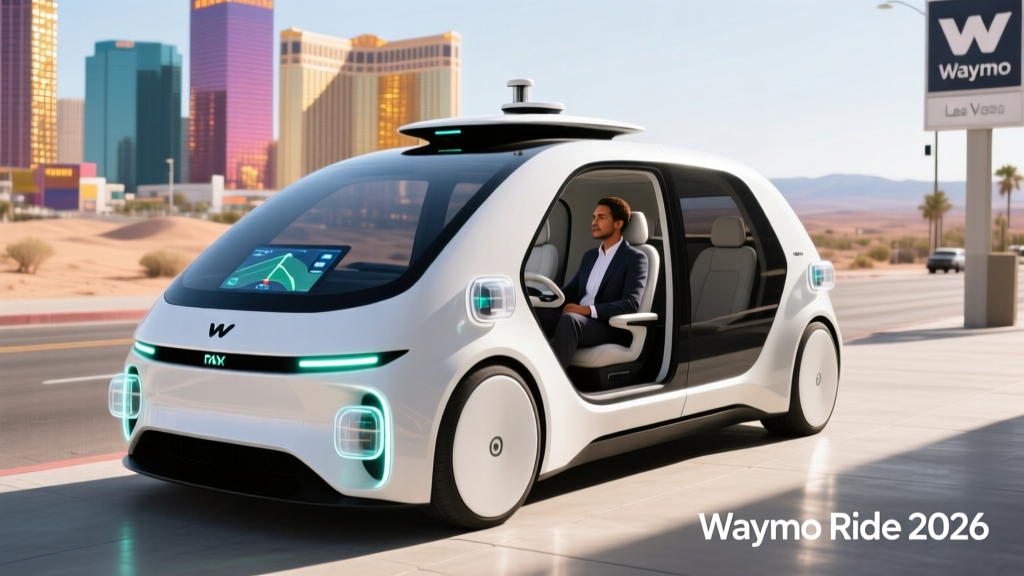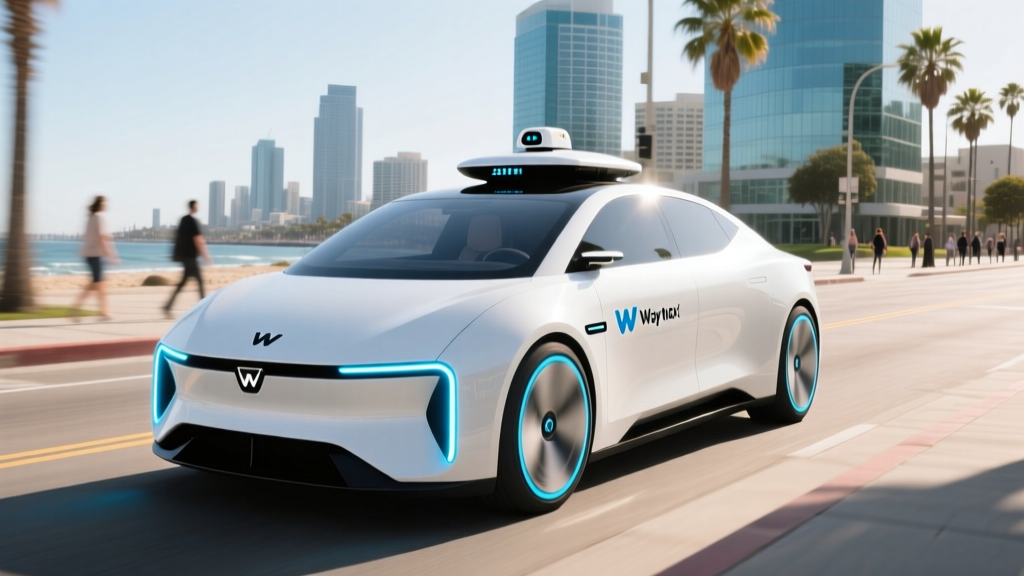
If you've watched Waymo's driverless taxis navigate San Francisco or Phoenix and wondered, is Waymo in San Diego? — the short answer in early 2026 is: not yet for the general public. Waymo has been mapping and testing in parts of the greater San Diego area, but fully driverless commercial rides are not currently available to everyday riders in the city. Below, we break down exactly where Waymo operates today, what San Diego's status is, how the service compares to Uber and Lyft on price, and what the real safety data shows.
Is Waymo in San Diego? The Current Status
As of 2026, Waymo's commercial robotaxi service — branded Waymo One — is not live for public ride-hailing in San Diego. The company has conducted mapping and limited testing in portions of the San Diego metro area, but San Diego has not been added to Waymo's roster of open commercial cities.
Waymo has historically expanded methodically, prioritizing cities with favorable regulatory environments, well-mapped road networks, and manageable weather conditions. San Diego's sprawling freeway system, dense tourist corridors (Gaslamp, Mission Beach), and occasional marine-layer fog present mapping and sensor challenges that require extended validation before a public launch.
Where Can I Use Waymo Right Now?
Waymo One is commercially available to the public in a growing but still limited set of metro areas. Here is the current operational footprint:
| City | Status | Service Area Notes |
|---|---|---|
| Phoenix, AZ | Fully operational | Largest coverage area (~225+ sq mi); airport service available |
| San Francisco, CA | Fully operational | City-wide coverage; freeway trips enabled |
| Los Angeles, CA | Fully operational | Expanding coverage across LA basin; freeway-capable |
| Austin, TX | Operational / expanding | Core city and select suburbs; growth ongoing |
| San Diego, CA | Not available | Mapping/testing conducted; no public ride-hailing |
Waymo has also announced intentions to expand to additional cities, but announced plans should not be confused with live service. Any new city launch requires regulatory approval, extensive geofence mapping, and safety validation — a process that typically takes 12–24 months from announcement to public availability.
Understanding Autonomy Levels: Why Waymo Is Different From Tesla FSD
A common source of confusion is the difference between consumer driver-assist systems and true robotaxi services. The SAE International J3016 standard defines six levels of driving automation, and the distinction matters enormously for safety and liability.
| Level | Name | Who Drives? | Examples |
|---|---|---|---|
| 0 | No Automation | Human always | Conventional vehicles |
| 1 | Driver Assistance | Human (system assists steering OR speed) | Adaptive cruise control, lane-keep assist |
| 2 | Partial Automation | Human must supervise at all times | Tesla Autopilot/FSD Supervised, GM Super Cruise, Ford BlueCruise |
| 3 | Conditional Automation | System in defined conditions; human on standby | Mercedes Drive Pilot (limited markets, low-speed traffic jams) |
| 4 | High Automation | System handles everything within its geofence — no human needed | Waymo One, Zoox |
| 5 | Full Automation | System everywhere, all conditions | Does not yet exist commercially |
How Much Does Waymo Cost vs. Uber and Lyft?
Where Waymo One is available, pricing is designed to be competitive with conventional rideshare — not dramatically cheaper or more expensive. Based on typical fares in Phoenix and San Francisco:
| Trip Type | Waymo One | UberX | Lyft Standard |
|---|---|---|---|
| Short (~3 mi, city center) | $8–$12 | $9–$14 | $8–$13 |
| Medium (~8 mi, cross-town) | $16–$24 | $18–$28 | $17–$26 |
| Airport (~15 mi) | $30–$45 | $32–$50 | $30–$48 |
| Surge pricing? | No dynamic surge | Yes (can 1.5–3x) | Yes (can 1.5–3x) |
Key pricing differences:
- No surge pricing: Waymo does not implement dynamic surge multipliers like Uber and Lyft. During peak demand, wait times may be longer, but the fare itself does not spike.
- Tipping: The Waymo app does not prompt for a driver tip — there is no driver. This effectively reduces the total trip cost by 15–20% compared to a tipped rideshare.
- Wait times: In high-demand periods, Waymo's fleet size can mean longer pickup waits (5–15 minutes) compared to the denser Uber/Lyft driver pools.
For San Diego riders currently using Uber or Lyft, the practical takeaway is that Waymo's pricing is comparable — the advantage is consistency and no surge, not dramatic per-ride savings.
How Safe Are Robotaxis? The Real Data
Safety is the single most scrutinized aspect of robotaxi operations. Waymo publishes safety data and is subject to reporting requirements in California (via the California DMV) and other jurisdictions. Here's what the numbers show:
- Total autonomous miles driven: Over 10 million fully driverless miles across all operational cities
- Contact rate: Waymo's published data shows a property-damage-contact rate approximately 40–50% lower than human benchmark drivers in comparable urban environments
- Injury-causing incidents: Significantly below human baseline rates per million miles in operational cities
- Disengagement data (CA DMV): Waymo reports disengagement rates measured in thousands of miles between interventions, though direct cross-company comparisons are unreliable due to differing ODD (operational design domain) definitions
Sources: Waymo Safety Report, CA DMV Disengagement Reports, NHTSA AV Safety Data
Context that matters: Robotaxi safety data is collected within geofenced, mapped areas during conditions the system is validated for. This is not directly equivalent to all human driving, which includes unmapped roads, severe weather, and impaired driving. The fairest comparison is urban driving in similar conditions — and by that measure, Waymo's data is strong.
That said, incidents have occurred. Waymo vehicles have been involved in low-speed collisions, typically in complex scenarios like construction zones or when other road users behave unpredictably. The NHTSA tracks these through standing general orders requiring crash reporting for Level 2+ and Level 4 systems. No robotaxi system is incident-free — the question is whether the rate is lower than human drivers in comparable conditions, and the available data suggests it is.
Under the Hood: Waymo's Technology Stack
Waymo's vehicles (currently the 6th-generation "Waymo Driver" system, integrated into the Zeekr-branded and Jaguar I-PACE platforms) use a sensor suite fundamentally different from camera-only approaches:
- LiDAR: Multiple solid-state and spinning LiDAR units providing a 360° real-time 3D point cloud of the environment, effective to 500+ meters. LiDAR works independently of ambient light — critical for night driving.
- Cameras: High-resolution camera array covering 360° with overlapping fields of view for redundancy, object classification, traffic-light state detection, and sign reading.
- Radar: Imaging radar units for velocity detection of moving objects, performance in rain and fog where LiDAR and cameras degrade.
- Audio detection: External microphones to detect emergency vehicle sirens and adjust behavior accordingly.
- HD Maps: Centimeter-precision pre-mapped road networks within the geofence. The vehicle localizes itself within this map in real time.
- Compute: Custom-designed onboard computing platform processing sensor fusion, prediction, and planning in real time.
LiDAR vs. camera-only — why it matters: Tesla's FSD relies exclusively on cameras (a "vision-only" approach). Waymo's multi-sensor stack provides redundancy: if one sensor modality is degraded (e.g., cameras blinded by sun glare, LiDAR scattered by heavy rain), others compensate. This redundancy is a core reason Waymo can operate without a human driver (Level 4), while camera-only systems currently require human supervision (Level 2).
The trade-off is cost. A Waymo sensor suite is estimated at tens of thousands of dollars per vehicle — viable for a fleet operator but not yet for consumer vehicles. This is why robotaxis operate as a service, not a product you buy.
Regulatory Landscape: Who Approves Robotaxi Operations?
Robotaxi deployment in the United States involves a patchwork of state and federal oversight:
- Federal (NHTSA): Sets vehicle safety standards (FMVSS) and issues crash-reporting requirements. NHTSA does not currently "approve" AV operations but investigates incidents and can issue recalls or enforcement actions.
- State level: This is where operational approval happens. In California, the California Public Utilities Commission (CPUC) and the California DMV jointly regulate testing and commercial deployment. Arizona (where Phoenix operates) has a more permissive framework via executive order. Texas regulates through the Texas Department of Licensing and Regulation and local authorities.
- Local/municipal: Cities often negotiate directly with operators on issues like curb access, pickup/dropoff zones, and emergency-response protocols.
For San Diego specifically, any future Waymo launch would require coordination with the California DMV (testing and deployment permits), the CPUC (commercial passenger service authorization), and the City of San Diego for local operating agreements. This multi-layer process is one reason expansion is measured rather than rapid.
Current Limitations: What Robotaxis Cannot Do
- Geofencing: Vehicles operate only within pre-mapped boundaries. Request a ride outside the geofence and the app will not allow it.
- Weather: Heavy rain, dense fog, and snow degrade LiDAR and camera performance. Waymo may restrict service or decline rides in severe conditions. San Diego's marine-layer fog could be a factor for future operations.
- Construction zones: Rapidly changing road layouts, temporary barriers, and flaggers present edge cases. Waymo handles many construction scenarios but may reroute or stop in highly complex ones.
- Unmapped areas: New developments, private roads, and parking structures not in the HD map are inaccessible.
- No highway service everywhere: While Waymo has expanded to freeway-capable operation in select cities, not all geofenced areas include highway segments. Trips that require freeway routing may be declined or routed on surface streets.
- Accessibility: Current vehicles require passengers to enter and exit independently. Wheelchair-accessible robotaxi options remain limited.
- No stops mid-ride: You cannot ask the vehicle to stop at a convenience store or wait for you. It is point A to point B only.
These limitations are not unique to Waymo — they apply to every Level 4 robotaxi operating today, including Zoox and Cruise (as operations resume). They are inherent to the current state of the technology and the geofenced ODD approach that makes driverless operation possible.
When Might Waymo Come to San Diego?
Waymo has not announced a specific launch date for San Diego. However, several signals suggest it is on the company's radar:
- Mapping activity: Waymo vehicles have been spotted mapping streets in the greater San Diego area, a prerequisite step before any testing or deployment.
- Southern California expansion: With Los Angeles now operational, San Diego is a logical next step — similar climate, regulatory environment, and road infrastructure.
- Fleet scaling: Waymo's expansion pace is constrained by vehicle production (the custom Zeekr robotaxi platform) and the time required to map and validate each new city. Expect 12–24 months from an official announcement to public availability.
Until then, San Diego residents interested in experiencing a Waymo ride will need to visit Phoenix, San Francisco, Los Angeles, or Austin.
Frequently Asked Questions
Is Waymo available in San Diego right now?
No. As of 2026, Waymo One is not available for public ride-hailing in San Diego. The company has conducted mapping in the area but has not launched commercial service.
Is Waymo truly self-driving, or is there a safety driver?
Waymo One rides in operational cities are fully driverless — there is no one in the driver's seat. This is SAE Level 4 automation. The vehicle handles all driving tasks within its geofenced service area without human intervention.
How do I hail a Waymo ride?
Download the Waymo One app (available on iOS and Android), create an account, and request a ride within an active service city. The app shows the geofenced boundary, estimated pickup time, and upfront fare. You can also hail Waymo through Uber's app in select cities via a partnership integration.
How much does a Waymo ride cost?
Fares are comparable to UberX and Lyft Standard — typically $8–$12 for short city trips and $30–$45 for airport-length rides. Waymo does not apply surge pricing, and no tip is expected since there is no driver.
Are Waymo robotaxis safer than human drivers?
Waymo's published data indicates lower property-damage and injury-causing contact rates per million miles compared to human benchmarks in comparable urban environments. However, robotaxis operate in geofenced, mapped areas under validated conditions — not the full spectrum of driving scenarios humans encounter. The data is promising but should be interpreted within that context.
What happens if something goes wrong during a Waymo ride?
Waymo vehicles are equipped with remote-assistance capabilities. If the vehicle encounters a scenario it cannot resolve, it will safely pull over and can connect with a remote support team. In-ride support is available through the app. The vehicle will not hand control to a passenger — there are no driver controls.
Will Waymo expand to more cities in 2026?
Waymo has signaled continued expansion but has not confirmed specific new city launches for 2026 beyond its existing operational areas. Any new city requires regulatory approval, mapping, and safety validation — a process that typically takes 12–24 months.