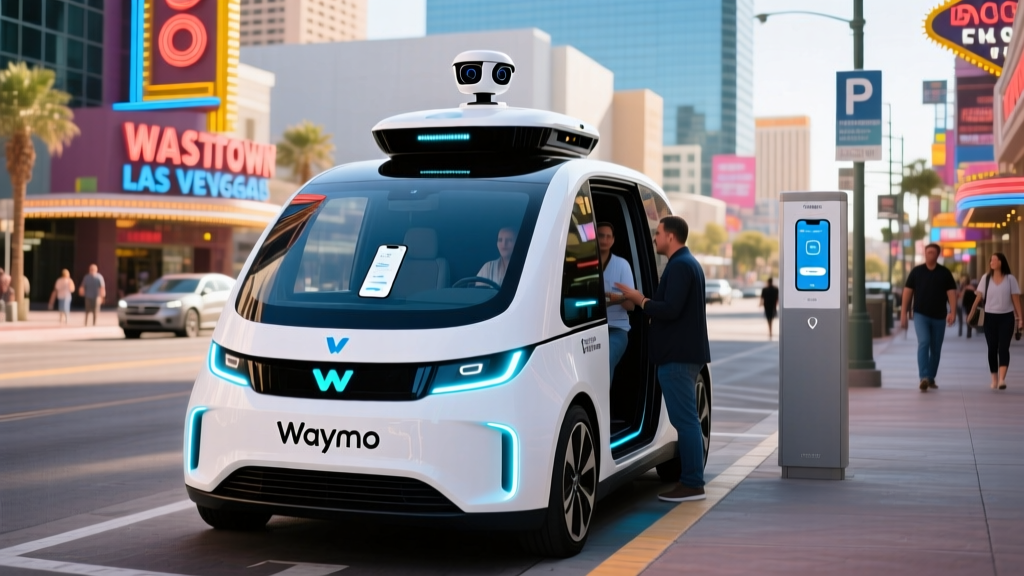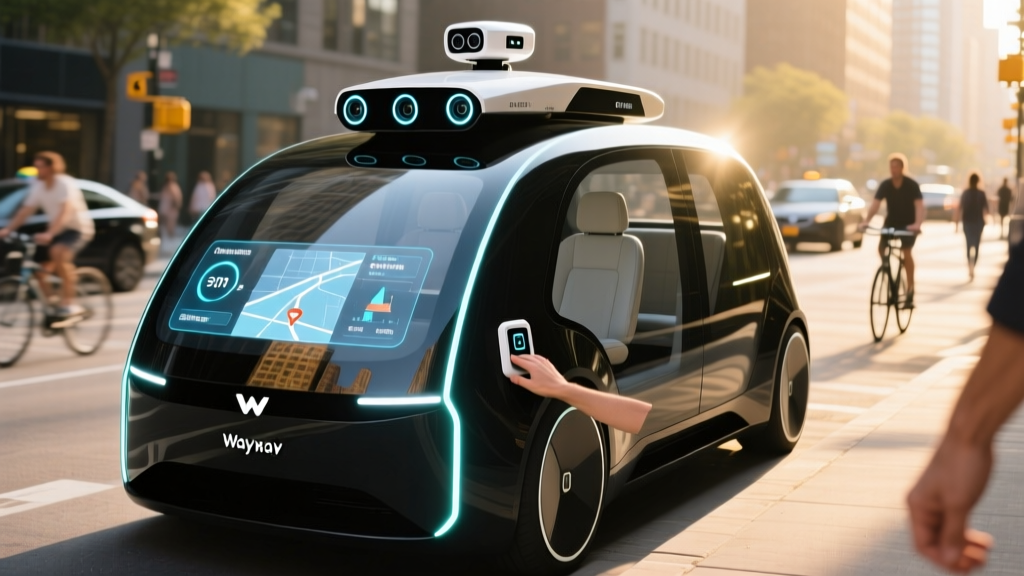
When a Waymo robotaxi pulls up to a curb in Phoenix or San Francisco with no one in the driver's seat, the passenger's trust rests on years of engineering work by a group most riders never think about: the Waymo safety team. This cross-functional organization — spanning systems engineering, simulation, real-world testing, and incident response — is the backbone of the world's most commercially deployed Level 4 autonomous driving service. As of early 2026, Waymo's 6th-generation Driver system has logged over 50 million fully autonomous miles across multiple U.S. cities. Here's a data-driven look at how the safety apparatus behind those miles actually works.
SAE Automation Levels: Why Waymo Is Level 4, Not Level 2
Before examining the safety team's work, it's essential to distinguish what Waymo actually is. Consumer driver-assist systems like Tesla's FSD (Supervised), GM's Super Cruise, and Ford's BlueCruise are SAE Level 2 — the human driver must remain engaged and supervise at all times. Waymo's robotaxi service operates at SAE Level 4, meaning the system handles all driving tasks within a defined operational design domain (ODD) with no human intervention expected or required. There is no steering wheel accessible to the passenger, and no fallback expectation that a rider will "take over."
| Level | Name | Driver Role | Examples |
|---|---|---|---|
| Level 2 | Partial Automation | Must supervise constantly | Tesla Autopilot/FSD, Super Cruise, BlueCruise |
| Level 3 | Conditional Automation | System drives; human takes over on request | Mercedes DRIVE PILOT (limited markets) |
| Level 4 | High Automation | No driver needed within geofenced ODD | Waymo One, Zoox |
| Level 5 | Full Automation | No driver needed anywhere, ever | Does not yet exist commercially |
This distinction matters for safety accountability. At Level 2, a crash is the driver's legal responsibility. At Level 4, Waymo — the company — assumes full liability for the driving task while the vehicle is in autonomous mode. That liability shift is precisely what makes the Waymo safety team's work so consequential.
The Waymo Safety Team: Structure and Responsibilities
The Waymo safety team is not a single department but a matrix of specialized groups that collectively ensure the 6th-generation Waymo Driver — the hardware and software stack mounted on vehicles like the Jaguar I-PACE and the purpose-built Zeekr robotaxi — performs safely across millions of miles. Key divisions include:
- Systems Safety Engineering: Defines safety requirements, performs failure-mode analysis (FMEA), and designs redundancy into critical systems like braking, steering, and compute.
- Simulation and Validation: Runs billions of simulated driving miles using Waymo's SimulationCity platform, testing edge cases that would take decades to encounter in real-world driving.
- Real-World Testing and Operations: Safety drivers (for test vehicles outside the commercial service), ride operations specialists who monitor the live fleet remotely, and incident responders.
- Safety Data Science: Analyzes field performance data, near-miss events, and disengagement reports to identify regression risks and prioritize software updates.
- Regulatory and Standards: Interfaces with NHTSA, state DMVs, and standards bodies like ISO and SAE to ensure compliance and shape evolving autonomous vehicle regulation.
The team's guiding framework is Waymo's publicly documented Safety Case — a structured argument, backed by evidence, that the Waymo Driver achieves an acceptable level of risk within its ODD. This isn't marketing material; it's an engineering artifact subject to internal and external review.
Where You Can Ride a Waymo Robotaxi in 2026
Waymo's commercial service, Waymo One, operates within tightly defined geofenced zones. Unlike Uber or Lyft, you cannot summon a Waymo to any address — the service is available only within approved operational areas that have been extensively mapped and validated.
| City | Service Area Size | Status | Hours |
|---|---|---|---|
| Phoenix, AZ (metro) | ~315 sq mi | Fully commercial, open to public | 24/7 |
| San Francisco, CA | ~47 sq mi (expanding) | Fully commercial, open to public | 24/7 |
| Los Angeles, CA | ~80 sq mi | Fully commercial, open to public | 24/7 |
| Austin, TX | Limited zones | Commercial launch phase | Limited hours |
Riders outside these geofences cannot request service. Waymo has announced planned expansion to additional cities, but any area not listed above should be considered not yet operational regardless of press coverage. Check the Waymo One page for the live service map before planning a trip.
Safety Data: What the Numbers Actually Show
Safety is the most contested question in autonomous driving, and the Waymo safety team has published more field data than any other Level 4 operator. The most rigorous independent analysis comes from a study conducted with the Insurance Institute for Highway Safety (IIHS) and a partnership with Swiss Re, one of the world's largest reinsurance companies.
- Total fully autonomous miles: 50+ million (no safety driver present)
- Injury-causing crash rate vs. human baseline: ~85% lower (Swiss Re analysis, 2024 peer-reviewed study)
- Property-damage crash rate vs. human baseline: ~57% lower
- NHTSA Standing General Order reports: Filed for every incident; publicly searchable
The Swiss Re study compared Waymo's claims data against a human-driver control group matched for geography, time of day, and road type. The key finding: Waymo vehicles were involved in significantly fewer at-fault injury crashes per million miles than the human benchmark. This is not a claim of perfection — Waymo vehicles have been involved in collisions, including incidents where other human drivers struck the robotaxi. But the data suggests the Waymo Driver's 360-degree sensor coverage and consistent adherence to traffic rules reduce the crash types most common in human driving: rear-end collisions, intersection conflicts, and distraction-related events.
For context, NHTSA requires all automated driving system operators to file Standing General Order (SGO) reports for crashes involving their vehicles. Waymo's SGO filings are publicly accessible and include incident descriptions, severity, and whether the ADS was engaged. This transparency is unique in the industry — most Level 2 operators report far less granular data.
Technology Stack: Lidar, Cameras, and Redundancy
The 6th-generation Waymo Driver represents a significant hardware evolution over earlier generations. Unlike camera-only approaches (most notably Tesla's vision-based FSD), Waymo uses a multi-modal sensor suite designed for redundancy — if one sensor modality is degraded, others compensate.
| Component | Specification | Purpose |
|---|---|---|
| Lidar | Custom-built, 360° coverage, improved range vs. 5th gen | Precise 3D mapping of surroundings, works in darkness |
| Cameras | High-resolution, multi-directional array | Traffic light state, signage, object classification |
| Radar | Improved imaging radar | Velocity detection, performance in rain/fog |
| Audio sensors | External microphone array | Siren detection, emergency vehicle awareness |
| Compute | Custom Waymo-designed platform | Real-time perception and planning, redundant channels |
The safety team's engineering philosophy centers on functional redundancy: independent braking, steering, and power systems that can bring the vehicle to a controlled stop if the primary system fails. This is a critical difference from Level 2 systems, where the redundant "system" is the human driver.
Geofencing is another deliberate safety constraint. Waymo's ODD excludes roads and scenarios the system has not been validated for — certain highway configurations, unpaved roads, or areas without adequate mapping. When conditions fall outside the ODD (e.g., severe weather), the vehicle will pull over safely rather than attempt to operate beyond its validated capabilities.
Pricing: Waymo vs. Uber and Lyft
One of the most practical questions for prospective riders: what does a driverless ride actually cost? Waymo One uses dynamic pricing similar to rideshare, but without a human driver's earnings factored in.
| Service | 3-Mile Ride (Off-Peak) | 5-Mile Ride (Off-Peak) | Surge/Dynamic Pricing |
|---|---|---|---|
| Waymo One | $10–$14 | $16–$22 | Moderate; less volatile than rideshare |
| UberX | $9–$15 | $15–$24 | High; can 2–3x during peak |
| Lyft Standard | $9–$14 | $14–$22 | Moderate to high |
In practice, Waymo pricing is competitive with UberX and Lyft — sometimes slightly cheaper during surge periods because Waymo's fleet size and utilization algorithms smooth out demand spikes. The service accepts the Waymo app, and rides can be requested, tracked, and rated just like traditional rideshare. Wait times vary by city and time of day but typically fall in the 3–8 minute range in core service areas like Phoenix and San Francisco.
Regulatory Landscape: Who Approves Robotaxi Operations
Waymo does not simply deploy vehicles and start charging riders. Each operational city requires approval from multiple regulatory bodies:
- State level: In California, the California DMV issues autonomous vehicle testing permits, while the California Public Utilities Commission (CPUC) grants commercial deployment permits. Arizona takes a lighter-touch approach, with executive orders enabling commercial operation without the same permit structure.
- Federal level: NHTSA oversees vehicle safety standards and mandates crash reporting via the Standing General Order. NHTSA does not currently "approve" ADS software but can issue recalls and enforcement actions.
- Local level: City transportation departments, fire marshals, and law enforcement coordinate on operational protocols — how a Waymo interacts with first responders, construction zones, and temporary road closures.
The Waymo safety team's regulatory group is responsible for maintaining compliance across this patchwork. When California's CPUC granted Waymo its statewide commercial deployment permit in 2023, it was the culmination of years of safety data submissions, public hearings, and operational demonstrations. Expansion to each new city requires a similar process.
Current Limitations: What Waymo Cannot Do
No honest assessment of the Waymo safety team's work is complete without acknowledging the system's constraints. Level 4 autonomy is impressive within its ODD, but the ODD is deliberately narrow.
- Geofence boundaries: Service is restricted to mapped, validated zones. Rides cannot start or end outside these areas.
- Heavy weather: Dense fog, heavy rain, and snow can trigger service suspension. The vehicle will pull over rather than drive in conditions exceeding sensor capability.
- Unmapped construction: Sudden road reconfiguration can cause the vehicle to stop and request remote assistance.
- No highway service (most markets): Most Waymo One rides are on surface streets. Limited highway routing exists in some Phoenix corridors but is not broadly available.
- Complex human interaction: Hand signals from a crossing guard, informal negotiation at a four-way stop with aggressive human drivers, or off-road detours remain challenging edge cases.
- Accessibility: While Waymo has made progress with wheelchair-accessible vehicles in some markets, availability is limited compared to standard rideshare options.
The safety team treats these limitations as features, not bugs. A system that refuses to operate when conditions exceed its capability is, by design, safer than one that attempts to push through. This conservative approach is a direct consequence of the safety team's risk framework: when in doubt, stop.
Frequently Asked Questions
Is Waymo truly self-driving, or is there a remote human controlling the car?
Waymo is truly self-driving within its operational domain. There is no remote human "driving" the vehicle via joystick or teleoperation. Remote assistance specialists can provide high-level guidance (e.g., confirming it's safe to proceed past an unusual obstacle), but they do not steer, brake, or accelerate the vehicle. The onboard AI handles all real-time driving decisions.
How much does a Waymo ride cost compared to Uber or Lyft?
Waymo One pricing is generally on par with UberX and Lyft Standard — typically $10–$14 for a short 3-mile ride off-peak. During rideshare surge periods, Waymo often remains more stable because its pricing model doesn't depend on incentivizing individual drivers to get on the road.
What happens if the Waymo vehicle encounters an emergency?
The vehicle is designed to execute a Minimal Risk Condition (MRC) — essentially, it will signal, pull to the side of the road, and stop. Riders can contact Waymo support through the in-app help feature or an in-vehicle button at any time. Emergency responders can interact with the vehicle using standardized protocols the safety team has developed with local fire and police departments.
Has a Waymo robotaxi ever caused a serious injury?
Based on publicly available NHTSA Standing General Order data and the Swiss Re analysis, Waymo's fully autonomous fleet has demonstrated a significantly lower rate of injury-causing crashes compared to human drivers in equivalent environments. Individual incidents have occurred — as with any vehicle on public roads — but the data does not show Waymo vehicles causing serious injuries at rates approaching human drivers. The NHTSA SGO database is the best public source for incident-level detail.
Can I use Waymo in any city?
No. As of early 2026, Waymo One is commercially available in Phoenix, San Francisco, Los Angeles, and in a limited launch phase in Austin. Service is restricted to specific geofenced zones within those metro areas. Expansion to additional cities is in progress but should not be assumed until officially launched.
What vehicle does Waymo use?
The current Waymo One fleet primarily uses the Jaguar I-PACE electric SUV equipped with the 6th-generation Waymo Driver sensor suite. Waymo has also partnered with Zeekr (a Geely brand) on a purpose-built robotaxi vehicle designed without a steering wheel, intended for future fleet deployment. The I-PACE provides a 75.5 kWh battery (usable), EPA-estimated range of approximately 234 miles when new, and supports DC fast charging — though Waymo's fleet operations handle charging at dedicated depots, so riders never encounter charging logistics.