The Real Cost of Riding in a Driverless Waymo
If you've searched "how much is a Waymo" and found only vague answers, you're not alone. Waymo One — the commercial robotaxi service operated by Alphabet's autonomous driving division — doesn't publish a fixed rate card the way a transit agency posts fares. Pricing is dynamic, calculated per trip based on distance, time, and demand, much like Uber or Lyft. But the numbers are concrete once you're in the app, and for many routes, Waymo is now cost-competitive with conventional rideshare — sometimes cheaper, occasionally more expensive during peak demand.
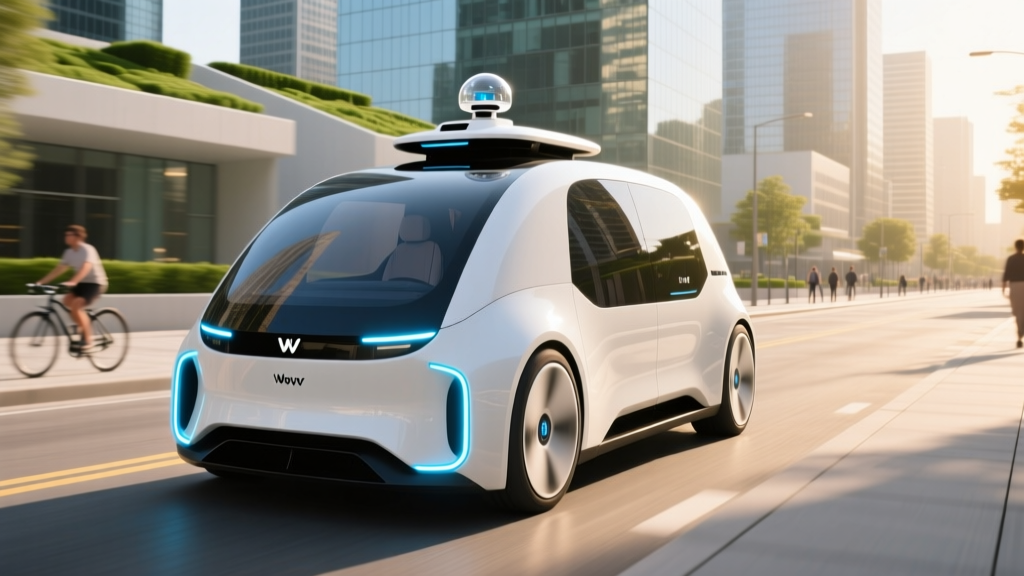
As of early 2026, Waymo One operates fully driverless commercial service in four U.S. metro areas, with a fifth in active expansion. The vehicles are predominantly Jaguar I-PACE electric SUVs retrofitted with Waymo's 6th-generation Driver hardware, supplemented by the newer Zeekr RT purpose-built robotaxi in select markets. There is no steering wheel in the Waymo Zeekr, no human behind the glass — just an empty driver's seat and a rider experience that feels, after the first 30 seconds, remarkably ordinary.
This guide breaks down exactly what a Waymo ride costs, where you can hail one, how the safety record stacks up against human drivers, and what the technology actually does — and doesn't — handle.
Where Can You Actually Use Waymo One Right Now?
Waymo's service footprint is defined by geofencing: the company maps every street, intersection, and construction zone in high-definition before allowing its vehicles to operate without a human driver. As of Q1 2026, fully driverless commercial rides (no safety operator in the vehicle) are available in the following areas:
| Metro Area | Service Zone Coverage | Hours of Operation | Status |
|---|---|---|---|
| Phoenix, AZ (East Valley + Downtown) | ~225 sq mi covering Chandler, Tempe, Mesa, Scottsdale, Phoenix Sky Harbor Airport | 24/7 | Fully driverless since 2020 |
| San Francisco, CA | ~47 sq mi covering most of SF proper; expanded to include parts of Daly City and South SF | 24/7 | Fully driverless since 2022 |
| Los Angeles, CA | ~80 sq mi covering Santa Monica, Hollywood, Downtown LA, West Hollywood, Beverly Hills, LAX | 24/7 | Fully driverless since mid-2024 |
| Austin, TX | ~45 sq mi covering Downtown, South Congress, East Austin, UT campus area, Austin-Bergstrom Airport | 6 AM – 2 AM | Fully driverless since late 2025 |
Waymo has announced plans to expand to additional cities, but announced expansion should not be confused with live service. If you open the Waymo One app outside these geofenced zones, you simply cannot request a ride — the app will not allow pickup or drop-off outside the mapped boundary.
Waymo One is a SAE Level 4 service — high driving automation within a defined operational design domain (ODD). The vehicle handles all driving tasks without human intervention inside its geofence. This is fundamentally different from Level 2 driver-assist systems like Tesla Autopilot, GM Super Cruise, or Ford BlueCruise, which require continuous human supervision. In a Waymo, there is no driver to supervise. The vehicle will pull over safely if it encounters a scenario it cannot handle.
How Much Does a Waymo Ride Actually Cost?
Waymo uses dynamic pricing similar to Uber and Lyft. You enter your pickup and drop-off in the Waymo One app, and it returns a fixed upfront fare before you confirm. There is no surge multiplier display the way Uber shows "2.1x," but demand-based adjustments are baked into the quoted price.
Based on aggregated rider reports and published fare data from Phoenix, San Francisco, and Los Angeles through early 2026, here is how Waymo pricing compares to equivalent rideshare options:
| Route Example | Distance | Waymo One | UberX | Lyft Standard |
|---|---|---|---|---|
| SF: Mission District → SFO Airport | ~12 mi | $28–$38 | $30–$45 | $28–$42 |
| Phoenix: Chandler → Sky Harbor Airport | ~18 mi | $32–$42 | $34–$50 | $32–$48 |
| LA: Santa Monica → LAX | ~6 mi | $18–$26 | $16–$28 | $15–$26 |
| SF: Financial District → Marina (short trip) | ~3 mi | $12–$17 | $11–$18 | $10–$17 |
| LA: Hollywood → Downtown LA | ~7 mi | $19–$28 | $18–$30 | $17–$28 |
Key pricing takeaways:
- Base fare structure: Waymo charges a combination of per-mile and per-minute rates plus a base pickup fee. For a typical 5-mile urban trip, expect $14–$22.
- No tipping required: There is no driver to tip. This alone saves 15–20% compared to a comparable Uber/Lyft ride where tipping is customary.
- Wait times: Average pickup wait is 3–7 minutes in core service zones during standard hours. You are not charged for wait time before the vehicle arrives.
- Cancellation: Free cancellation within 1 minute of requesting; $5 fee after that — consistent with rideshare norms.
- Promo codes and Waymo Pass: Waymo periodically offers first-rider promos and a subscription pass (Waymo Pass) in some markets that reduces per-ride cost by roughly 10–15% for frequent riders.
For most routine trips within a Waymo zone, the total out-of-pocket cost is within a few dollars of UberX or Lyft — and frequently less once you remove the tip. The novelty premium that existed when Waymo first launched in San Francisco has largely disappeared.
How Safe Are Waymo Robotaxis? The Actual Data
Safety is the most scrutinized question in autonomous vehicles, and Waymo is the only Level 4 robotaxi operator in the U.S. that publishes detailed safety performance data. Here is what the numbers show as of early 2026:
- Total autonomous miles driven: Over 40 million fully driverless miles across all markets (per Waymo's published safety reports)
- Injury-causing crash rate: Waymo's driverless vehicles were involved in injury-causing crashes at a rate approximately 85% lower than the human benchmark in comparable urban driving environments, based on Waymo's analysis submitted to NHTSA
- Police-reported crash rate: Approximately 57% lower than the human benchmark for comparable geographies
- Contact rate with other vehicles/objects: Significantly below human baselines, particularly for rear-end and side-impact collisions
- Fatalities: Zero passenger or pedestrian fatalities attributed to Waymo's driverless operation through early 2026
These figures come with important context. Waymo operates within geofenced, mapped areas and avoids the most complex highway interchanges and rural roads where many severe human-caused crashes occur. The comparison benchmark matters: Waymo compares its performance to human driving in the same urban environments, which is methodologically sound but should not be read as "Waymo is safer than humans everywhere." It is safer than humans within its operational domain.
California's DMV requires all autonomous vehicle operators to file annual disengagement reports. Waymo's disengagement rate (instances where a remote human operator must intervene) has steadily declined year over year, reflecting both software improvements and geofence optimization. In 2024, Waymo reported fewer than 0.02 disengagements per 1,000 autonomous miles — meaning a remote assist event roughly once every 50,000 miles.
It is worth noting that Waymo vehicles have been involved in minor incidents — fender-benders, curb contact, and encounters with erratic human drivers. These are reported to NHTSA under the Standing General Order for autonomous vehicle incidents. None have resulted in serious injury to passengers or pedestrians as of this writing.
Under the Hood: Waymo's Sensor Stack and Technology
Waymo's approach to autonomy is sensor-fusion heavy — a direct contrast to Tesla's camera-only (vision-based) strategy for its FSD Supervised system. Waymo's 6th-generation "Waymo Driver" hardware suite, deployed across its Jaguar I-PACE fleet since 2023, includes:
| Sensor Type | Count | Function |
|---|---|---|
| Lidar (custom-built, roof-mounted + side units) | 5+ | 360° 3D point cloud mapping up to 500m; detects shape, distance, and velocity of all objects regardless of lighting |
| Cameras (high-resolution, varying focal lengths) | 29 | Traffic light state, signage, lane markings, pedestrian intent recognition |
| External audio sensors | Multiple | Detects emergency vehicle sirens, horns; enables pre-emptive yielding |
| Radar (imaging radar units) | 6 | Velocity detection of moving objects; performs in rain and fog where lidar degrades |
This sensor array feeds into Waymo's proprietary perception, prediction, and planning stack. The system does not rely on HD maps alone for real-time decision-making — the maps provide a baseline understanding of the road geometry, but the vehicle perceives and reacts to live conditions (construction zones, temporary lane closures, jaywalking pedestrians) using its onboard sensors.
Geofencing vs. go-anywhere: Waymo's Level 4 system is constrained to its mapped operational design domain. The vehicle knows every curb height, speed limit, and school zone in its territory. If you ask it to drive outside the geofence, it simply will not. This is a deliberate trade-off: Waymo sacrifices universality for reliability within its zone. A Tesla on FSD Supervised (Level 2) can attempt to drive on any road, but the human driver remains legally and practically responsible at all times.
The newer Zeekr RT robotaxi, entering the fleet in 2025–2026, uses a similar sensor suite but is built from the ground up as a driverless vehicle — no steering wheel, no pedals, no driver's seat. It is designed exclusively for Waymo's Level 4 service and cannot be purchased by consumers.
The Regulatory Landscape: Who Approves Robotaxi Operations?
Robotaxi deployment in the U.S. is governed by a patchwork of state and local regulations — there is no single federal license that allows nationwide operation.
- California: The California Public Utilities Commission (CPUC) issues permits for commercial driverless passenger service. The California DMV separately issues testing and deployment permits. Waymo holds both. The CPUC can suspend or revoke permits — as it did temporarily to Cruise (a GM subsidiary) in October 2023 following a serious incident in San Francisco. Cruise subsequently ceased operations and was restructured.
- Arizona: Arizona has maintained a permissive regulatory environment since 2015, with no state-level permit required for testing or commercial operation beyond standard business licensing and insurance requirements. This is why Phoenix was Waymo's first commercial market.
- Texas: Texas passed autonomous vehicle legislation (HB 3026) allowing driverless commercial operations with a permit from the Texas Department of Licensing and Regulation. Austin became Waymo's fourth commercial city under this framework.
- Federal (NHTSA): NHTSA does not currently "approve" autonomous vehicles for sale or operation in the way it crash-tests consumer cars. It issues safety guidelines, mandates incident reporting under the Standing General Order, and can issue recalls for autonomous driving systems — as it has for both Tesla Autopilot and Waymo's software in specific instances.
The practical result is that Waymo must negotiate market entry city by city and state by state. Expansion is slow by design — each new geofence requires extensive mapping, validation driving (initially with safety operators), and regulatory approval before driverless commercial rides begin.
Current Limitations: What Waymo Cannot Do
Waymo's Level 4 system is genuinely driverless within its domain, but the domain has hard boundaries. Here are the current operational limitations as of 2026:
- Geofence boundaries: You cannot hail a Waymo outside its mapped service area. The boundary is strict — sometimes a single street separates "available" from "unavailable."
- Heavy rain and flooding: While Waymo vehicles operate in light rain and fog (the radar and lidar suite handles precipitation better than camera-only systems), service may be temporarily suspended during severe monsoon conditions in Phoenix or heavy atmospheric river events in California. The system will pull over safely if conditions degrade mid-trip.
- Snow and ice: Waymo does not currently operate in any market with regular snowfall. Lidar performance degrades in heavy snow, and the system is not validated for icy road surfaces.
- Highway driving: Waymo vehicles use highways within their geofence (for example, portions of the 101 and 280 in San Francisco, or the I-10 in Phoenix), but they do not perform long-distance interstate travel. Maximum operating speed is typically capped at 65–70 mph.
- Complex construction zones: While Waymo handles routine construction reroutes, highly complex or rapidly changing construction zones (multiple flaggers, temporary signals, unpaved detours) may cause the vehicle to request remote assistance or reroute.
- Accessibility: Waymo's Jaguar I-PACE fleet is not wheelchair-accessible. The newer Zeekr RT is designed with a lower floor and wider door opening, but full ADA-compliant wheelchair ramp access remains a work in progress across the fleet.
- No stops mid-trip: You cannot ask the vehicle to stop at a convenience store or make an unscheduled detour. The route is fixed at booking.
- Age restriction: Riders must be 18+ with a Waymo account. Unaccompanied minors are not permitted.
These limitations are not theoretical — they directly shape when and where Waymo is a practical alternative to rideshare or personal driving. For a routine airport run, a commute within the zone, or a night out in a covered neighborhood, Waymo works seamlessly. For a trip to the mountains, a drive through a blizzard, or a cross-state road trip, it is simply not an option.
How to Use Waymo One: A Practical Walkthrough
- Download the Waymo One app (iOS or Android) and create an account with your phone number and payment method.
- Enter your pickup and drop-off. The app will confirm whether both locations are within the service zone.
- Review the upfront fare. The price is fixed before you confirm — no meter running, no surprise surge after booking.
- Confirm and wait. Average pickup time is 3–7 minutes. The app shows the vehicle's approach in real time on a map, including the specific vehicle's license plate and a photo so you can identify it at the curb.
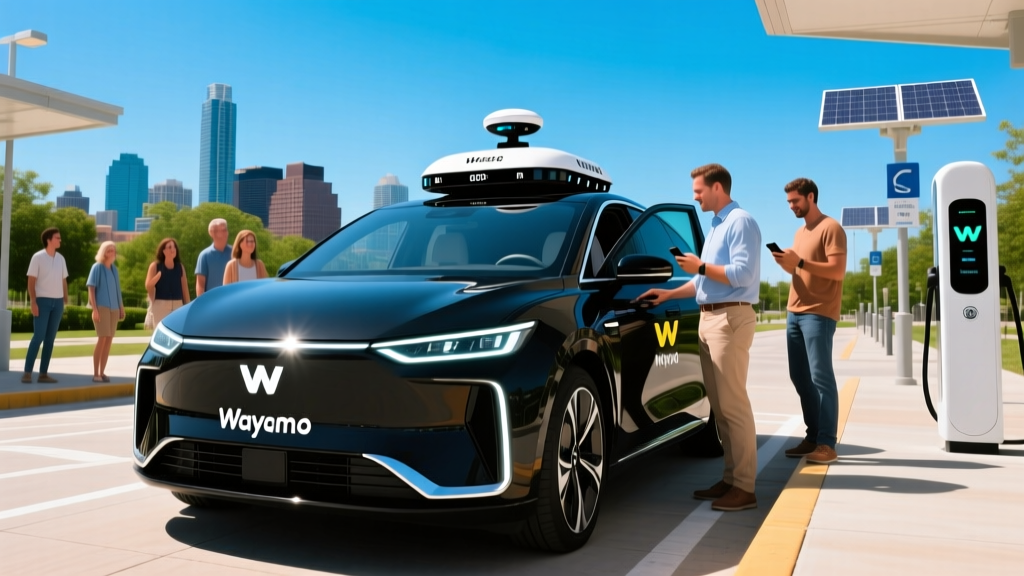
- Unlock the vehicle. When the Waymo arrives, you confirm your identity via the app (or by tapping your phone on the vehicle's door sensor). The doors unlock automatically.
- Start the ride. There is a screen in the back seat showing your route. You can adjust music and climate control from the screen. The vehicle pulls away from the curb on its own.
- Arrive and exit. The vehicle stops at your destination, the doors unlock, and you exit. Payment is automatic — no tipping interface, no interaction with a driver.
The experience is notably calm. The I-PACE cabin is quiet (electric powertrain), the driving style is conservative and deliberate — Waymo vehicles do not aggressively merge, do not roll through stop signs, and maintain following distances that many human drivers would consider excessive. Some riders find this reassuring; others find it slow. It is, objectively, the driving style that minimizes crash risk.
Frequently Asked Questions
Is Waymo truly self-driving or is there a human watching?
Waymo One is SAE Level 4 — fully driverless within its geofenced service area. There is no human safety operator in the vehicle. A remote assistance team monitors the fleet and can provide guidance if the vehicle encounters an unusual situation, but they do not "drive" the car remotely in real time. The vehicle makes its own driving decisions.
How much is a Waymo compared to Uber for the same trip?
For most trips within Waymo's service zone, the fare is within $2–$5 of an equivalent UberX or Lyft ride, and often slightly cheaper because there is no tip. For a typical 5-mile urban trip, expect $14–$22 on Waymo vs. $12–$20 on UberX before tip.
Where is Waymo available in 2026?
Fully driverless commercial service is live in Phoenix (East Valley + airport), San Francisco (most of the city + parts of Daly City/South SF), Los Angeles (Santa Monica to Downtown to LAX), and Austin (Downtown, South/East Austin, airport). Service is geofenced — you cannot ride outside the mapped zone.
Has anyone been hurt in a Waymo robotaxi?
Through early 2026, Waymo reports zero passenger or pedestrian fatalities in its driverless operation. Minor property-damage incidents (fender-benders, curb contact) have occurred and are reported to NHTSA. Waymo's published data shows injury-causing crash rates approximately 85% below the human benchmark in comparable urban environments.
Can I use Waymo in bad weather?
Waymo operates in light rain and fog. Service may be suspended during severe weather (heavy monsoons in Phoenix, major storms in California). Waymo does not operate in snow or ice conditions, and none of its current markets experience regular winter weather.
Can I buy a Waymo vehicle for personal use?
No. Waymo's vehicles (the Jaguar I-PACE retrofits and the Zeekr RT) are fleet-only and cannot be purchased by consumers. The technology is not available for personal vehicle installation.