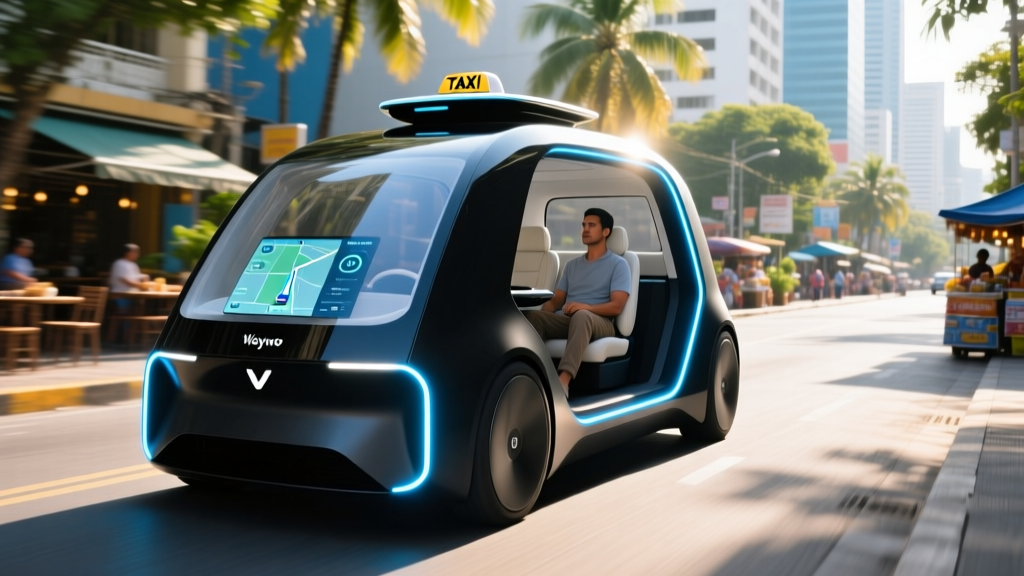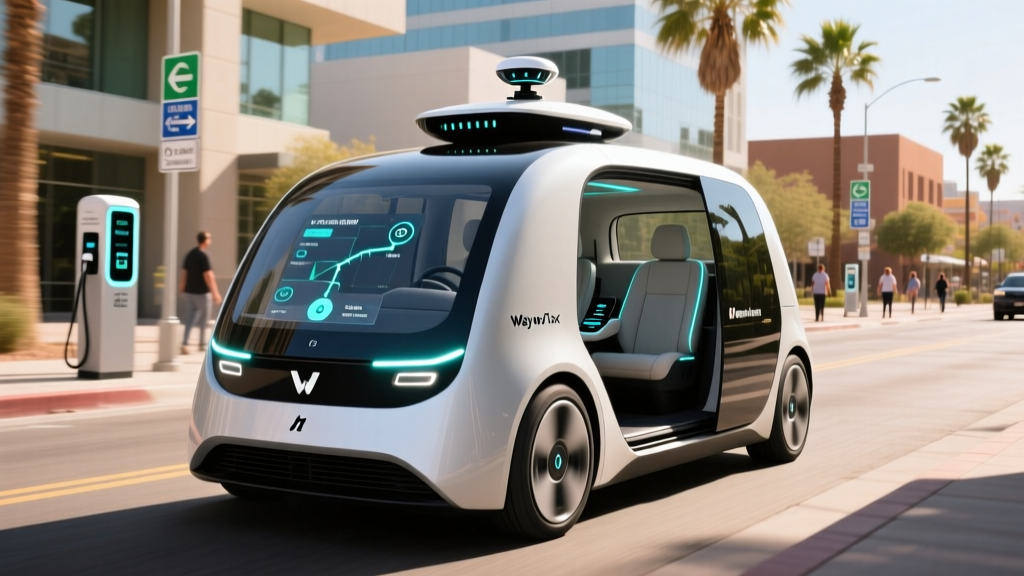
If you want to ride in a vehicle with absolutely no one behind the wheel, Phoenix remains the most mature market on the planet to do it. Waymo's commercial robotaxi service — branded Waymo One — has been operating across the Phoenix metropolitan area longer and at greater scale than any other driverless ride-hail platform in the United States. But "driverless" doesn't mean "limitless." Here's a data-driven breakdown of what the Waymo robotaxi Phoenix service actually offers in 2026, what it costs, how safe it is, and where the hard edges of the technology still show.
SAE Level 4: What "Driverless" Actually Means
Before dissecting Phoenix coverage, it's critical to place Waymo on the SAE International automation scale. Consumer driver-assist systems like Tesla's FSD (Supervised), GM's Super Cruise, and Ford's BlueCruise are SAE Level 2 — the human driver must remain engaged and is legally responsible for the vehicle at all times. Waymo One is categorically different.
Waymo One operates at SAE Level 4 within its geofenced service area. The vehicle handles all driving tasks — steering, braking, navigation, lane changes, unprotected left turns — with no human driver onboard and no expectation of human intervention. A remote assistance team can be consulted for edge-case routing decisions, but they do not "joystick" the car in real time. If the system encounters a scenario it cannot resolve, it executes a minimal-risk maneuver (typically pulling to the curb and stopping) rather than handing control to a passenger.
| Level | Name | Who Drives | Examples |
|---|---|---|---|
| Level 0 | No Automation | Human | Standard vehicles |
| Level 1 | Driver Assistance | Human (one axis aided) | Adaptive cruise OR lane-keep |
| Level 2 | Partial Automation | Human (must supervise) | Tesla FSD, BlueCruise, Super Cruise |
| Level 3 | Conditional Automation | System (human on standby) | Mercedes Drive Pilot (limited markets) |
| Level 4 | High Automation | System (no human needed in ODD) | Waymo One, Zoox |
| Level 5 | Full Automation | System (all conditions) | None commercially available |
The key phrase in Level 4 is "within its Operational Design Domain (ODD)." Waymo's ODD in Phoenix is defined by a geofence, weather constraints, and road-type limitations — all of which we'll detail below.
Where Can I Use the Waymo Robotaxi in Phoenix Right Now?
Waymo One's Phoenix service area has expanded steadily since its initial "early rider" program in 2017 and commercial launch in late 2020. As of early 2026, the live geofence covers a substantial portion of the East Valley and central Phoenix corridor.
| City / Zone | Coverage Status | Notes |
|---|---|---|
| Chandler | ✅ Full coverage | Original launch market; densest coverage |
| Tempe | ✅ Full coverage | Includes ASU corridor, Mill Ave district |
| Gilbert | ✅ Partial coverage | Western and central Gilbert; eastern edges excluded |
| Mesa | ✅ Partial coverage | West Mesa included; far east Mesa limited |
| Phoenix (Central / Downtown) | ✅ Expanded | Downtown, Biltmore, Arcadia, Sky Harbor airport |
| Scottsdale | ✅ Partial coverage | South and central Scottsdale; far north limited |
| Phoenix Sky Harbor (PHX) | ✅ Airport service | Curbside pickup at terminals; launched 2024 |
| Glendale / Peoria / Surprise | ❌ Not available | Outside current geofence |
| Far North Scottsdale / Cave Creek | ❌ Not available | Outside current geofence |
The total service area spans over 250 square miles — roughly the largest commercial robotaxi geofence in the U.S. You can check your exact pickup address in the Waymo One app, which will confirm whether a location falls inside the live zone before you request a ride.
How to Use Waymo One and What It Costs vs. Uber/Lyft
Riding in a Waymo robotaxi feels almost identical to a standard rideshare — with the obvious exception that the driver's seat is empty. Here's the workflow:
- Download the Waymo One app (iOS/Android) and create an account.
- Enter pickup and drop-off — the app confirms both are within the geofence.
- Request a ride. A nearby Jaguar I-PACE (Waymo's current 6th-generation sensor-equipped vehicle) is dispatched.
- Unlock via app. The car arrives, and you unlock it through the app — no one inside to greet you.
- Ride. A screen behind the front seats shows the vehicle's perception view (detected pedestrians, cars, cyclists, traffic lights) and your route.
- Arrive and exit. The ride ends automatically; you're charged to the payment method on file.
On pricing, Waymo positions itself as competitive with UberX and Lyft Standard — not as a premium service. Actual fares vary by distance, demand, and time of day:
| Route (approx.) | Waymo One | UberX | Lyft Standard |
|---|---|---|---|
| Sky Harbor → Downtown Chandler (18 mi) | $24–$32 | $26–$38 | $24–$36 |
| Tempe (ASU) → Scottsdale Fashion Square (9 mi) | $14–$20 | $15–$24 | $14–$22 |
| Gilbert → Phoenix Downtown (22 mi) | $28–$38 | $30–$44 | $28–$42 |
| Short hop: Chandler Mall → nearby (3 mi) | $8–$12 | $9–$14 | $8–$13 |
Key pricing notes:
- Waymo One does not currently implement surge pricing in the same aggressive manner as Uber/Lyft during peak demand, though wait times increase instead.
- No tipping is expected (there's no driver), which effectively saves riders 15–20% compared to tipped rideshare.
- Promotional credits and loyalty pricing are periodically available in-app.
- Waymo One does not currently offer a shared/pool option — every ride is private.
Safety Record: What the Data Actually Shows
Safety is the single most scrutinized aspect of robotaxi operations, and Waymo has published more third-party-verified data than any competitor. Here's what we know from NHTSA reporting and Waymo's own published safety data:
- Total autonomous miles driven (all markets): Over 50 million fully driverless miles as of late 2025, with Phoenix accounting for the largest share.
- Injury-causing crash rate: Waymo's published analysis (peer-reviewed and validated with insurance claim data) showed a 85% reduction in injury-causing crash rates compared to human-driven benchmarks in the same operating areas.
- Police-reported crash rate: Approximately 57% lower than comparable human drivers in urban environments.
- NHTSA Standing General Order incidents: Waymo has reported minor-contact incidents as required, most involving low-speed stationary or near-stationary contact (e.g., a human-driven vehicle reversing into a stopped Waymo). No fatalities have been attributed to Waymo's autonomous system in Phoenix operations.
- Remote assistance rate: Waymo does not publish exact remote-assist frequency, but industry estimates and regulatory filings suggest it occurs roughly once every 5,000–10,000 miles for routing clarification or construction-zone navigation — not for real-time driving control.
For context, the IIHS and NHTSA data consistently show that human drivers in U.S. urban environments experience approximately 1.5–2.0 police-reported crashes per million miles. Waymo's rate in Phoenix sits meaningfully below this benchmark, though direct comparison requires controlling for road type, time of day, and weather — conditions under which Waymo's ODD already filters out the most hazardous scenarios.
It's worth noting: a robotaxi getting "dinged" at low speed by a human-driven car is not a system failure. Waymo vehicles are, by design, more cautious than human drivers — they stop fully at four-way stops, yield conservatively, and never speed. This occasionally causes friction with aggressive human drivers but contributes to the strong safety record.
Technology Stack: Lidar, Cameras, and the 6th-Gen System
Unlike Tesla's camera-only approach to autonomy, Waymo uses a multi-sensor fusion stack. The current 6th-generation Waymo Driver, deployed on the Jaguar I-PACE (an all-electric SUV with a 90 kWh battery pack and EPA range of ~234 miles), includes:
- Lidar: Multiple spinning and solid-state lidar units providing 360° high-resolution 3D point clouds. Effective range exceeds 300 meters. Lidar works independently of ambient light — a key advantage for night driving.
- Cameras: High-resolution camera array (360° coverage) for traffic-light state detection, sign reading, lane-marking recognition, and object classification.
- Radar: Imaging radar units for velocity detection of moving objects, particularly useful in rain or fog where camera and lidar performance degrades.
- External audio sensors: Microphones to detect emergency vehicle sirens, triggering the vehicle to pull over or yield appropriately.
- HD mapping: Waymo pre-maps every road within its geofence to centimeter-level accuracy. The vehicle cross-references its real-time sensor data against this map for localization and route planning.
- Compute: Custom onboard computing platform handling sensor fusion, prediction (what other road users will do next), and planning (the vehicle's own trajectory) in real time.
The reliance on HD mapping and geofencing is both Waymo's greatest strength and its fundamental constraint. The system performs exceptionally well inside its known environment but cannot simply be "turned on" in an unmapped city. This is why expansion to new metro areas takes months of mapping, testing, and regulatory approval before commercial rides begin.
Regulatory Landscape: Who Approves Robotaxi Operations?
Robotaxi deployment in the U.S. is governed by a patchwork of state and local authorities — there is no single federal "robotaxi license." In Arizona, the regulatory environment has been notably permissive:
- Arizona Department of Transportation (ADOT): Arizona has allowed autonomous vehicle testing since a 2015 executive order and does not require a special permit beyond standard vehicle registration and insurance. This permissive stance is a primary reason Waymo chose Phoenix as its launch market.
- NHTSA (federal): Oversees vehicle safety standards. Waymo's Jaguar I-PACE is manufactured to standard FMVSS compliance. NHTSA also requires all ADS-equipped vehicles to report crashes under the Standing General Order.
- Arizona Department of Insurance: Waymo carries commercial insurance covering riders, third parties, and property damage. Riders are covered during the trip without needing personal insurance interaction.
- Local municipalities: Cities like Chandler, Tempe, and Phoenix have entered agreements with Waymo covering pickup/dropoff zones, curb management, and emergency-response protocols.
Contrast this with California, where the CPUC (Public Utilities Commission) and DMV both impose separate permitting requirements — a more complex path that has slowed deployment in San Francisco and Los Angeles compared to Phoenix's relatively frictionless regulatory environment.
Current Limitations: Where Waymo Can't Go (Yet)
Level 4 autonomy inside a geofence is not the same as Level 5 "anywhere, anytime" capability. Waymo's Phoenix service has well-defined limitations that riders should understand before booking:
- Geofence boundaries: If your pickup or drop-off falls outside the mapped service area, the app will not let you book. Expansions happen incrementally, but entire swaths of the metro area (West Valley, far North Phoenix) remain excluded.
- Heavy rain and monsoon conditions: Phoenix's summer monsoon season (July–September) can produce intense downpours. During heavy rain, Waymo may restrict service or pause operations in affected zones. Lidar and camera performance degrade in heavy precipitation.
- Dust storms (haboobs): Extreme dust events can ground the fleet entirely. Waymo will proactively suspend service and route active vehicles to safe pull-over points.
- Construction zones: Major road construction with shifted lanes, temporary barriers, or missing lane markings can challenge the system. Waymo may route around these areas or, in some cases, request remote assistance for navigation.
- Highway driving: Waymo's Phoenix operations include some highway segments (e.g., portions of the I-10 and Loop 202) as of 2024–2025 expansion, but not all freeway routes are available. Many rides still use surface streets even when a highway would be faster.
- No intercity trips: You cannot book a Waymo from Phoenix to Tucson, Flagstaff, or Sedona. The service is strictly intra-metro.
- Limited stops / multi-stop rides: Waymo One currently supports point-A-to-point-B rides only. You cannot add intermediate stops (e.g., "stop at the pharmacy on the way home").
- Accessibility: The Jaguar I-PACE fleet does not currently include wheelchair-accessible vehicles. Waymo has announced plans to integrate accessible vehicles (potentially via the Zeekr partnership), but these are not yet deployed in Phoenix.
- Rider capacity: Maximum of 3 passengers per vehicle (the front passenger seat is not available to riders).
- No pets (service animals excepted): Standard pet policy applies; only ADA service animals are permitted.
Is This Truly Self-Driving or Just Advanced Driver-Assist?
This is the question that causes the most public confusion, and the answer is unambiguous: Waymo One in Phoenix is genuinely self-driving within its operational domain. There is no human in the driver's seat. There is no steering wheel accessible to passengers. There is no expectation that you — the rider — will intervene, monitor the road, or take control.
This stands in stark contrast to every consumer-available system on the market today:
- Tesla FSD (Supervised): SAE Level 2. The driver must keep hands on or near the wheel and eyes on the road. The driver is legally liable for all driving actions.
- GM Super Cruise / Ford BlueCruise: SAE Level 2. Hands-free on pre-mapped highways, but the driver must remain attentive (monitored by cabin camera) and take over when prompted.
- Mercedes Drive Pilot (Level 3): Available only in limited markets (Nevada, California) at speeds up to 40 mph in traffic jams on specific highways. The driver can look away but must be ready to resume within seconds when prompted.
- Waymo One: SAE Level 4. No driver. No steering wheel for passengers. No monitoring of rider attention. The system and Waymo (not the rider) bear responsibility for the driving task.
The distinction matters for liability, insurance, and rider experience. In a Waymo, you are a passenger — full stop. In every other system available to consumers in 2026, you are a driver who happens to be receiving assistance.
Frequently Asked Questions
Can I hail a Waymo robotaxi on the street like a taxi?
No. Waymo One is app-based only. You must request a ride through the Waymo One app, which dispatches a vehicle to your exact GPS-confirmed pickup location. You cannot flag one down on the street.
What happens if the Waymo vehicle encounters an emergency?
The vehicle is programmed to execute a "minimal risk condition" — typically pulling to the nearest safe curb and stopping. Hazard lights activate automatically. Riders can contact Waymo support via an in-vehicle button at any time. In a medical emergency, riders should call 911 directly.
How does Waymo handle Phoenix's extreme summer heat?
The Jaguar I-PACE's battery thermal management system handles ambient temperatures well above 115°F. However, extreme heat can reduce the vehicle's effective range (from its EPA-rated ~234 miles to closer to ~190–200 miles under heavy A/C load). Waymo manages this through fleet logistics — vehicles return to charging depots before battery levels become limiting. Riders are not affected by this.
Is Waymo One available 24/7 in Phoenix?
Waymo One in Phoenix operates nearly around the clock, though there may be brief overnight windows for fleet maintenance. Service availability during late-night hours may be reduced in some zones, resulting in longer wait times.
Can I use Waymo to get to Phoenix Sky Harbor Airport?
Yes. Waymo added Sky Harbor airport service in 2024. You can request rides to and from the airport terminals with designated curbside pickup zones. Airport fares are comparable to Uber/Lyft airport trips from the same origin.
What vehicle will I ride in?
The current Waymo One fleet in Phoenix consists exclusively of the Jaguar I-PACE, a fully electric luxury SUV equipped with Waymo's 6th-generation sensor suite. The interior features a rider-facing display showing the vehicle's perception and route, climate controls for rear passengers, and a support button.
How does Waymo's safety record compare to Cruise or other robotaxis?
Waymo has the longest continuous commercial robotaxi operation in the U.S. and the largest published dataset. Cruise (GM's robotaxi division) suspended operations in late 2023 after a serious incident in San Francisco and has been gradually relaunching in limited markets with safety drivers before returning to driverless service. Waymo has not experienced a comparable operational suspension. For the latest incident data, check NHTSA's automated vehicle crash reporting portal.
Does Waymo plan to expand beyond the current Phoenix geofence?
Waymo has been steadily expanding the Phoenix geofence since 2020 and has added highway segments and airport service. Further expansion into the West Valley (Glendale, Peoria) and additional North Scottsdale coverage is expected, but Waymo does not publish firm timelines for geofence extensions. Check the Waymo One app for the most current coverage map.
The Waymo robotaxi Phoenix service is the closest thing to a mature, scaled, truly driverless ride-hail network that exists anywhere in the world as of 2026. It isn't perfect — geofence constraints, weather limitations, and the absence of wheelchair-accessible vehicles are real gaps. But for the millions of trips completed across the East Valley and central Phoenix corridor, the data shows a service that is measurably safer than the human-driven alternative, competitively priced, and genuinely autonomous in a way that no consumer car on sale today can match.