The Real Price Tag Behind a Driverless Ride
When you summon a Waymo One vehicle in Phoenix or San Francisco, you are stepping into a machine that represents hundreds of thousands of dollars in hardware, software, and infrastructure investment. The question — how much does a Waymo cost to build — has no single public line item, because Alphabet does not break out Waymo vehicle costs in its earnings reports. But through teardowns, supplier estimates, patent filings, and statements from Waymo leadership, we can construct a credible unit-economics picture for the 6th-generation Waymo Driver system deployed on the Zeekr RT (and retrofitted Jaguar I-PACE fleet) as of 2026.
This analysis covers the per-vehicle build cost, the technology stack that drives it, the cities where these vehicles actually operate, safety data, pricing for riders, and the hard limitations that still constrain the robotaxi model.
SAE Automation Level: What Level 4 Actually Means
Before discussing cost, it is essential to establish what Waymo's system is — and what it is not. Waymo operates at SAE Level 4 (High Automation) within defined operational design domains (ODDs). This is fundamentally different from the Level 2 driver-assist systems found in consumer vehicles like Tesla Autopilot, Ford BlueCruise, or GM Super Cruise.
| SAE Level | Name | Driver Role | Example |
|---|---|---|---|
| Level 0 | No Automation | Full control | Legacy gas cars |
| Level 1 | Driver Assistance | Hands on wheel, feet ready | Adaptive cruise control |
| Level 2 | Partial Automation | Must supervise at all times | Tesla Autopilot, FSD (Supervised), BlueCruise, Super Cruise |
| Level 3 | Conditional Automation | Can disengage in specific conditions, must take over on request | Mercedes DRIVE PILOT (limited markets) |
| Level 4 | High Automation | No driver needed within geofenced ODD | Waymo One, Zoox, Baidu Apollo Go |
| Level 5 | Full Automation | No driver needed anywhere, any condition | Does not exist commercially |
Level 4 means the vehicle handles all driving tasks within its geofenced service area without a human behind the wheel. There is no steering wheel intervention, no "takeover request" in normal operations. If the system encounters a situation it cannot handle, it executes a minimal-risk maneuver (pulling over safely) rather than handing control to a passenger. This is why the hardware and redundancy requirements — and therefore costs — are so much higher than a Level 2 consumer system.
Per-Vehicle Build Cost: Hardware, Sensors, and Compute
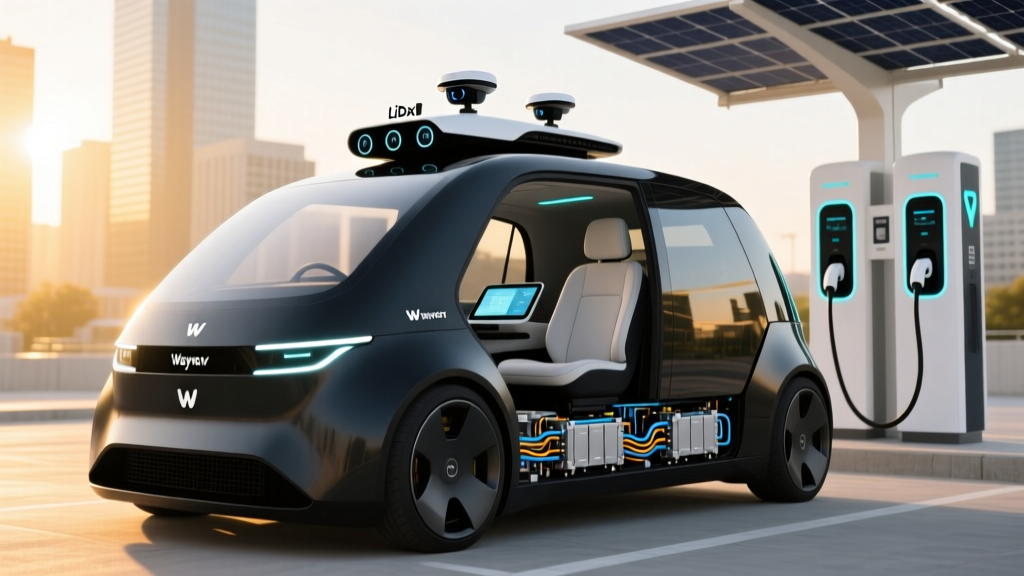
Waymo's 6th-generation Driver system, which began deployment in late 2024 and now equips the purpose-built Zeekr RT robotaxi, represents a significant cost reduction from earlier generations. Here is the best available breakdown of per-vehicle hardware costs based on industry analyst estimates and component teardowns:
| Component | Estimated Cost | Details |
|---|---|---|
| LiDAR array (4+ units) | $15,000 – $25,000 | Custom-designed by Waymo; earlier Halo units used Velodyne sensors at ~$75,000 per set |
| Camera system (29+ cameras) | $3,000 – $5,000 | 360-degree coverage, high-dynamic-range, heated housings |
| Radar array (6+ units) | $2,000 – $4,000 | 4D imaging radar for weather redundancy |
| Compute platform (custom) | $10,000 – $18,000 | Custom silicon + GPU/inference accelerators, redundant compute paths |
| Redundant steering/braking | $5,000 – $8,000 | Dual-redundant actuators for fail-operational control |
| Networking, cooling, integration | $4,000 – $7,000 | Automotive-grade wiring, thermal management for compute |
| Base vehicle (Zeekr RT) | $35,000 – $45,000 | Purpose-built EV platform, no driver controls |
| Estimated Total | $74,000 – $112,000 | Excludes software R&D amortization, mapping, fleet ops |
For context, Waymo's early fleet of Jaguar I-PACE vehicles retrofitted with 5th-generation hardware reportedly cost $150,000–$200,000+ per vehicle when accounting for low-volume retrofit labor and expensive off-the-shelf LiDAR. The shift to the 6th-generation system on a purpose-built platform has roughly halved the per-unit sensor cost, primarily through custom LiDAR manufactured at higher volume and designed in-house.
The software cost is enormous but difficult to allocate per vehicle. Waymo has invested an estimated $30+ billion in cumulative R&D since the project's inception as the Google Self-Driving Car Project in 2009 (per Reuters reporting on Waymo's funding rounds). Spread across a fleet of several thousand vehicles, that adds tens of thousands of dollars per unit in amortized software development cost.
Technology Stack: Why Waymo Uses LiDAR + Camera + Radar
Unlike Tesla's camera-only approach to autonomy, Waymo employs a multi-modal sensor fusion stack. Each sensor class serves a distinct physics-based purpose:
Waymo 6th-Gen Sensor Architecture
- LiDAR (Light Detection and Ranging): Emits laser pulses to build a real-time 3D point cloud of the environment. Provides precise depth measurement independent of lighting conditions. Critical for detecting pedestrians, cyclists, and obstacles at night or in glare. Range: ~500 meters.
- Cameras (29+): Provide color, texture, and semantic information — reading traffic lights, signs, lane markings, and hand signals. High-dynamic-range sensors handle tunnel-to-sunlight transitions.
- 4D Imaging Radar: Detects velocity and position of objects through rain, fog, and dust where LiDAR and cameras degrade. Lower resolution but weather-robust.
- External audio sensors: Detect sirens from emergency vehicles, even before they are visible.
This redundancy is expensive but necessary for Level 4 operation without a human fallback. A camera-only system (like Tesla FSD) relies on neural-network inference to estimate depth from 2D images — a fundamentally harder problem that has proven more difficult to validate for unsupervised operation. Waymo's approach trades higher hardware cost for higher confidence in edge cases.
The compute platform processes over 100 GB of sensor data per hour of driving, running perception, prediction, and planning models simultaneously. The custom silicon is designed to handle this throughput with redundant compute paths so that a single chip failure does not disable the vehicle.
Where Can You Actually Use Waymo One Right Now?
As of early 2026, Waymo One — the consumer-facing robotaxi service — operates in a defined set of metro areas. Expansion is deliberate and gated by regulatory approval and mapping completion, not by a simple software push.
| City | Status | Service Area Notes |
|---|---|---|
| Phoenix, AZ (Metro) | Fully operational, 24/7 | Largest service area; includes Chandler, Tempe, Mesa, Scottsdale, Sky Harbor airport. ~300+ sq mi geofence. |
| San Francisco, CA | Fully operational, 24/7 | Expanded to most of SF proper; includes SFO airport service as of late 2024. |
| Los Angeles, CA | Fully operational | Service area covers West LA, Hollywood, Downtown, Mid-Wilshire; expanding gradually. |
| Austin, TX | Operational (expanding) | Initial service area covers central Austin; growth ongoing through 2026. |
| Mountain View, CA | Testing / limited access | Waymo headquarters city; employee and trusted-tester rides active. |
Waymo has announced plans to expand to additional cities, but any market not listed above should be considered announced/preliminary — not yet available to the public. Each new city requires HD mapping, regulatory negotiation, and local fleet staging before a single paid ride occurs.
Rider Pricing: Waymo One vs Uber and Lyft
Waymo One pricing is structured to be competitive with UberX and Lyft standard rides in the same market, though it is not always cheaper. Pricing varies by city, time of day, and demand.
| Route | Waymo One | UberX | Lyft Standard |
|---|---|---|---|
| SF: Downtown → SFO (~14 mi) | $35 – $48 | $30 – $55 | |
| Phoenix: Chandler → Sky Harbor (~18 mi) | $30 – $42 | $28 – $50 | |
| LA: Santa Monica → LAX (~8 mi) | $22 – $34 | $20 – $40 | |
| Short urban trip (~3 mi) | $10 – $16 | $9 – $18 |
Key pricing observations:
- No surge pricing (currently): Waymo has generally avoided the aggressive surge multipliers that Uber/Lyft apply during peak demand, though wait times may increase instead.
- No tip expected: There is no driver to tip, which effectively reduces the total cost by 15–20% compared to a tipped rideshare ride.
- Promotional pricing: Waymo frequently offers first-ride credits and referral bonuses to build ridership in new markets.
From a unit-economics standpoint, Waymo must eventually achieve per-ride costs below rideshare to justify the capital expenditure. At current vehicle costs of ~$100,000 per unit and an estimated 3–4 years of operational life, each vehicle must complete tens of thousands of rides to amortize hardware alone — before accounting for remote-assistance operators, charging, maintenance, insurance, and fleet depot costs.
Safety Record: What the Data Actually Shows
Waymo has published safety data and submitted incident reports to regulators. As of early 2026, Waymo's fleet has accumulated over 50 million fully autonomous miles (no human driver behind the wheel) across its operational cities. The National Highway Traffic Safety Administration (NHTSA) requires reporting of all incidents involving automated driving systems.
Waymo Safety Data Summary (Through Early 2026)
- Total driverless miles: 50+ million (cumulative)
- Contacted police-reported crashes: Fewer per million miles than human benchmarks in comparable urban environments, per Waymo's published safety reports
- Most incidents: Low-speed, at-fault by other human drivers (rear-end, side-swipe at intersections)
- Serious injuries to Waymo riders: Extremely rare; no publicly reported fatalities in driverless operations
- Contact rate with remote assistance: Waymo does not publish exact rates; industry estimates suggest 1 remote-assist event per several hundred miles in complex urban environments, decreasing over time
It is important to contextualize these numbers. Waymo operates in geofenced, mapped urban areas that are generally well-structured. Comparing robotaxi safety to rural highway driving or unmapped suburban areas is not an apples-to-apples exercise. The Insurance Institute for Highway Safety (IIHS) has noted that the safety case for robotaxis is strongest in the specific environments where they are deployed — and remains unproven in the broader driving contexts that human drivers navigate daily.
Notable incidents have occurred — including minor collisions with construction-zone cones, encounters with improperly parked vehicles, and a small number of incidents near school buses — prompting iterative software updates and, in some cases, temporary service-area adjustments. Each incident is investigated and reported to state regulators (the California DMV in California, the Arizona Department of Transportation in Arizona).
Regulatory Landscape: Who Approves Robotaxi Operations?
Robotaxi deployment in the United States is governed by a patchwork of state and local regulations — there is no single federal license for autonomous vehicle operations.
- California: The California DMV issues testing permits and deployment permits. The California Public Utilities Commission (CPUC) regulates commercial passenger service (fare-charging). Waymo holds both a DMV deployment permit and a CPUC permit for Waymo One in San Francisco and Los Angeles.
- Arizona: Arizona has taken a permissive regulatory posture since 2015, requiring no specific state permit for testing or deployment beyond standard vehicle registration and insurance. Waymo's Phoenix operations benefit from this lighter-touch framework.
- Texas: Texas passed autonomous vehicle legislation (SB 2088) allowing deployment without a human driver, with registration and insurance requirements. Austin operations proceed under this framework.
- Federal (NHTSA): NHTSA sets vehicle safety standards (FMVSS) and requires incident reporting for ADS-equipped vehicles. NHTSA has granted limited exemptions for vehicles without steering wheels (relevant to the Zeekr RT and Zoox vehicles). NHTSA does not currently "approve" robotaxi services — that authority falls to states.
This fragmented regulatory environment means that Waymo must negotiate market entry city-by-city and state-by-state, adding time and cost to expansion that does not exist for traditional rideshare.
Current Limitations: Where Robotaxis Cannot Go
Level 4 autonomy is powerful but bounded. Waymo vehicles operate within strict operational design domains (ODDs), and stepping outside those boundaries is not possible without system redesign.
Hard Limitations of Current Waymo Operations
- Geofencing: Vehicles will not drive outside their mapped service area. If you request a ride to a destination beyond the geofence, the app will not allow it.
- Heavy weather: While the 6th-gen system handles light rain and fog better than predecessors, operations may be suspended or restricted during heavy monsoon rain (Phoenix), dense fog, or snow. Waymo does not currently operate in cities with regular snowfall.
- Construction zones: Major, unmapped road reconfigurations can challenge the system. Waymo vehicles may reroute or pull over rather than navigate complex temporary lane shifts.
- Unmapped roads: New developments, private roads, and parking garages are generally not in the HD map. Airport pickup/dropoff requires specifically mapped zones.
- No highway (limited): Waymo vehicles primarily operate on surface streets. Some freeway segments within the geofence are included (e.g., certain Phoenix freeway on/off-ramps and short highway stretches), but long-distance highway driving is not the system's design intent.
- Emergency scenarios: While the vehicle detects and yields to emergency vehicles, complex multi-vehicle accident scenes with human direction (e.g., an officer waving traffic through) remain challenging edge cases.
- Accessibility: The current fleet requires passengers to enter and exit independently. Wheelchair-accessible vehicle availability is limited and expanding slowly.
These limitations are not temporary software bugs — they reflect the fundamental challenge of Level 4 autonomy. Each edge case requires additional sensor validation, simulation testing, and regulatory sign-off before the system can handle it reliably. This is why expansion is measured in years, not months.
Unit Economics: Can the Robotaxi Model Work at Scale?
The question of how much a Waymo costs to build is ultimately a question about whether the per-ride economics can beat human-driven rideshare. Here is a simplified framework:
| Cost Factor | Estimated Per-Vehicle Annual Cost |
|---|---|
| Vehicle depreciation (5-year life, $100K cost) | $20,000/year |
| Charging (electricity, ~150 miles/day) | $3,500 – $5,000/year |
| Maintenance (tires, cleaning, sensor calibration) | $5,000 – $8,000/year |
| Insurance | $8,000 – $15,000/year |
| Remote assistance (shared cost per vehicle) | $10,000 – $20,000/year |
| Fleet depot / operations | $5,000 – $10,000/year |
| Total estimated annual cost per vehicle | $51,500 – $78,000 |
At an average fare of ~$20 per ride, a single vehicle would need to complete roughly 3,000–4,000 rides per year (8–11 rides/day, 365 days) just to cover direct operating costs — before software R&D amortization, corporate overhead, or profit. Utilization rates are the critical variable: a vehicle sitting idle at a depot costs the same as one earning fares.
Waymo's competitive advantage over Uber/Lyft is the elimination of driver pay (typically 60–75% of a rideshare fare). If utilization can be optimized through fleet management AI and demand prediction, the unit economics can work — but only at scale, in dense urban markets, and only after the massive upfront R&D investment is amortized across thousands of vehicles.
Frequently Asked Questions
Is Waymo truly self-driving, or is there a remote human controlling it?
Waymo vehicles drive themselves — there is no remote human "joystick" controlling the car in real time. The vehicle's onboard compute makes all driving decisions. However, Waymo employs remote fleet-assistance operators who can be consulted when the vehicle encounters an unusual situation (e.g., a complex construction zone). The remote operator does not drive the car; they provide high-level guidance (e.g., "it is safe to proceed around the cone") that the vehicle's system then executes. This is a key distinction from teleoperation.
How much does a Waymo ride cost compared to Uber or Lyft?
Waymo One fares are generally in line with UberX and Lyft standard rides — typically $10–$50 depending on distance and city. Without surge pricing and without the expectation of a tip, the effective cost can be lower than a comparable rideshare during peak demand. However, Waymo is not dramatically cheaper; it is priced to be competitive while the company prioritizes ridership growth and data collection over per-ride profit.
Where can I use Waymo One right now?
As of early 2026, Waymo One is operational in Phoenix (metro-wide), San Francisco, Los Angeles, and Austin. Phoenix has the largest and most mature service area. Other cities may be in testing or announced for future expansion but are not yet available to the general public.
How safe are Waymo robotaxis compared to human drivers?
Based on Waymo's published data and NHTSA reporting, Waymo vehicles have a lower police-reported crash rate per million miles than human drivers in comparable urban environments. The vast majority of incidents involving Waymo vehicles have been low-speed and at-fault by the other (human-driven) party. No publicly reported fatalities have occurred in Waymo's driverless operations. However, the total mileage (50+ million) is still small compared to the trillions of miles driven by humans annually, and the operational environments are limited to well-mapped urban areas.
What happens if a Waymo vehicle encounters something it cannot handle?
The vehicle is programmed to execute a "minimal risk condition" — typically pulling over to a safe location and stopping. It will not attempt a maneuver it is not confident in. The rider can contact Waymo support through the in-app interface or in-vehicle screen. In some cases, a remote fleet-assistance operator may provide high-level guidance to help the vehicle proceed.
Will Waymo come to my city soon?
Waymo's expansion is deliberate and gated by regulatory approval, HD mapping, and fleet logistics. Cities with favorable regulatory environments, dense urban cores, and mild weather are prioritized. Announcements of future cities should be treated as preliminary until paid service actually launches — regulatory approval can take 12–24 months after initial testing begins.
How much does a Waymo cost to build compared to a regular EV?
A Waymo robotaxi costs an estimated $74,000–$112,000 per vehicle (6th-generation system on the Zeekr RT platform), compared to roughly $35,000–$50,000 for a comparable consumer EV without autonomous hardware. The premium covers the LiDAR array, redundant compute, multi-sensor suite, and fail-operational steering/braking systems. Software R&D amortization adds significant additional cost per unit when spread across the fleet.