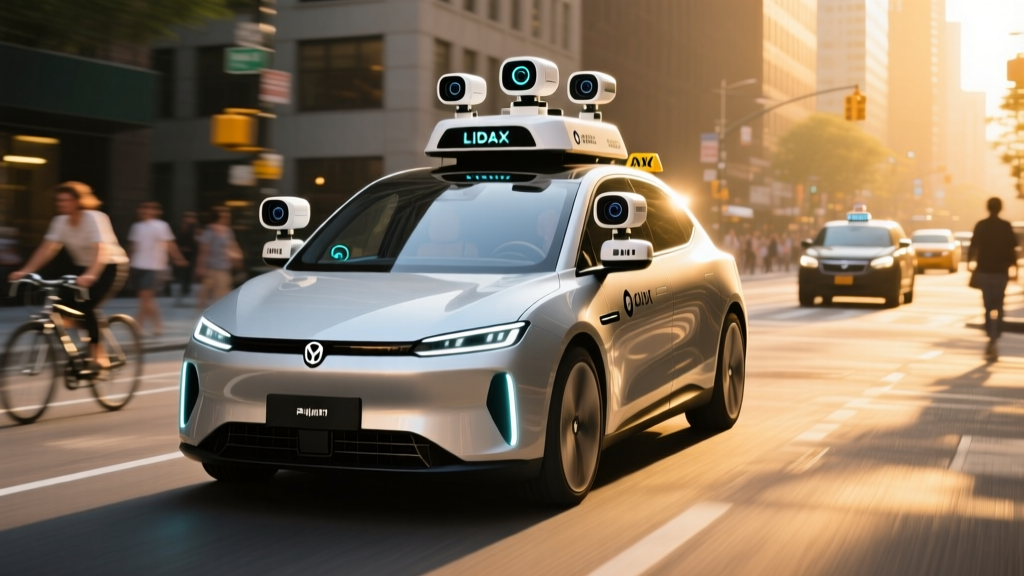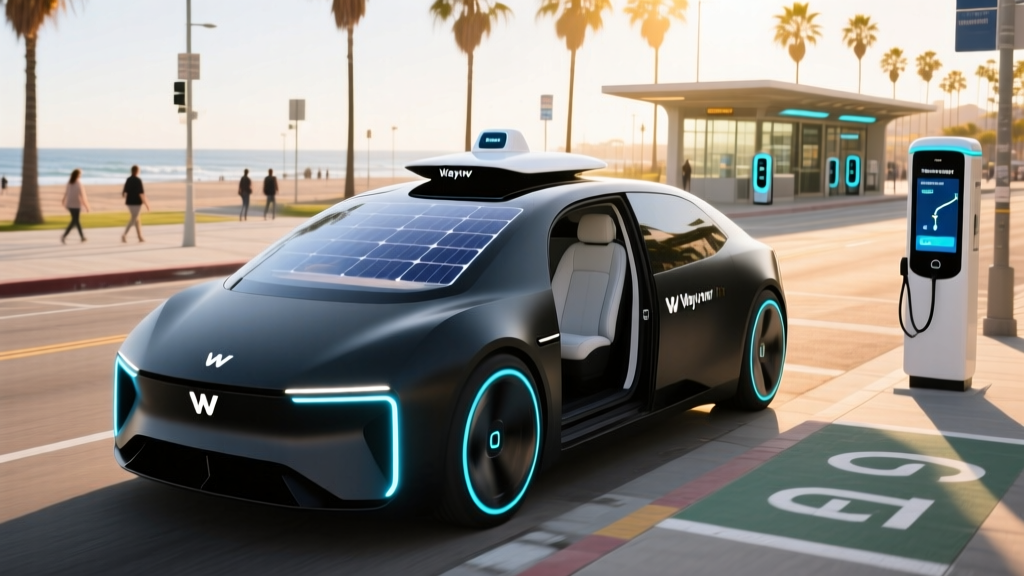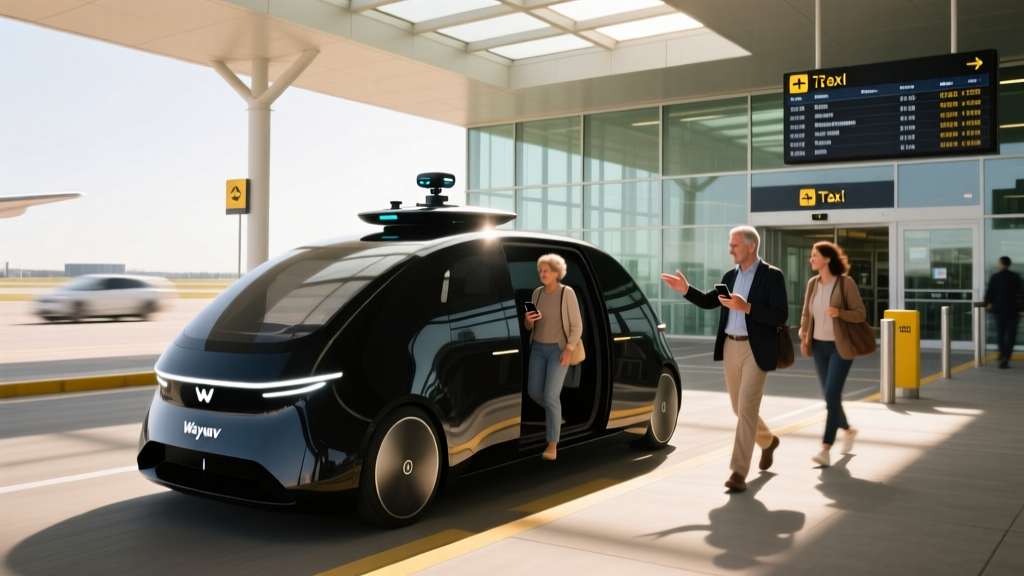
For frequent flyers in a handful of U.S. metro areas, the Waymo robotaxi airport service has shifted from a novelty to a legitimate ground-transport option. Waymo's fully driverless Jaguar I-PACE fleet — and its expanding Zeekr RT1 vehicles — now serve several major airports without a human behind the wheel. But availability is tightly geofenced, pricing is dynamic, and the technology has real-world limits you won't see in a marketing video.
This guide breaks down exactly where you can catch a Waymo to or from an airport in 2026, what it costs relative to Uber and Lyft, how the safety record stacks up with concrete data, and what the current technology and regulatory landscape actually look like.
Where Can You Use Waymo Robotaxi Airport Service Right Now?
Waymo operates its commercial ride-hail service, Waymo One, in a limited set of cities. Airport service is a subset of that footprint — not every airport in a Waymo city is inside the geofence, and some terminals require specific pickup zones.
| Metro Area | Airport(s) Served | Status | Notes |
|---|---|---|---|
| San Francisco Bay Area | SFO (all terminals) | Live — 24/7 | Designated Waymo pickup zones at each terminal; service also covers OAK via expanded geofence |
| Phoenix, AZ | PHX (Sky Harbor) | Live — 24/7 | One of the earliest airport-enabled markets; curbside pickup on Level 2 of each terminal garage |
| Los Angeles, CA | LAX (LAX-it lot) | Live — limited hours | Pickup at the centralized LAX-it lot, not terminal curbside; check app for operating window |
| Austin, TX | AUS (Austin-Bergstrom) | Announced — testing phase | Waymo One launched in Austin in 2025; airport service in limited testing as of early 2026 |
If you're flying into an airport outside these metros — or even into a secondary airport like San Jose (SJC) or Burbank (BUR) — Waymo is not an option. The geofence is precise: if your destination or origin falls outside the mapped operational design domain (ODD), the app will not let you book the ride.
Waymo's robotaxi service operates at SAE Level 4 within its geofenced service area. This means the vehicle performs all driving tasks without human intervention in defined conditions — no driver seat, no steering wheel accessible to passengers. This is fundamentally different from Level 2 driver-assist systems like Tesla Autopilot or GM Super Cruise, which require a licensed, attentive driver at all times. Waymo's remote-assistance team monitors the fleet but does not drive the vehicles in real time under normal operation.
How to Book a Waymo Airport Ride and What It Costs
Using Waymo for an airport trip follows the same flow as any rideshare app, with a few robotaxi-specific quirks:
- Download the Waymo One app (iOS/Android) and create an account. As of 2026, the service is open to the general public in live markets — no waitlist.
- Enter your airport terminal or destination as the pickup/drop-off. The app confirms whether the route falls inside the geofence.
- Walk to the designated Waymo pickup zone. At SFO, these are marked areas near each terminal. At LAX, you must take the shuttle to the LAX-it lot.
- Confirm your ride via the app when the vehicle arrives. The car unlocks automatically — no driver to greet you.
- Start the trip using the in-app button or the rear-seat screen. You can adjust climate and music but cannot alter the route mid-trip.
Pricing: Waymo vs. Uber vs. Lyft for Airport Runs
Waymo prices its rides dynamically, similar to Uber and Lyft surge pricing, but the base structure tends to be competitive — sometimes cheaper, sometimes slightly more — depending on time of day and demand.
| Route | Distance | Waymo One | UberX | Lyft Standard |
|---|---|---|---|---|
| SFO → Downtown SF | ~14 mi | $28–$42 | $25–$55 | $24–$50 |
| PHX Sky Harbor → Scottsdale | ~10 mi | $20–$32 | $18–$40 | $17–$38 |
| LAX → Santa Monica | ~16 mi | $32–$48 | $28–$60 | $26–$55 |
| SFO → Palo Alto | ~33 mi | $55–$78 | $50–$90 | $48–$85 |
Note: All prices are estimates based on typical off-peak and moderate-demand periods. Surge pricing during holidays, major events, or peak arrival windows can push all three services higher. Waymo does not currently offer a tipping mechanism — there's no driver to tip.
The pricing advantage for Waymo shows up most clearly during moderate surge periods on Uber/Lyft, when human-driver supply is thin. Waymo's fleet operates continuously, so its supply is more consistent — though fleet size is still smaller than Uber's, meaning wait times can stretch to 10–15 minutes during peak demand.
Waymo's Safety Record: What the Data Actually Shows
Safety is the single biggest question for first-time robotaxi riders. Waymo has published the most transparent safety data in the industry, and independent analyses from the National Highway Traffic Safety Administration (NHTSA) and insurance industry researchers back up key claims.
- Total autonomous miles driven: Over 30 million fully driverless miles across all markets
- Injury-causing crash rate: Waymo reports an 85% reduction in injury-causing crashes per million miles compared to a human-driver benchmark, based on a study co-authored with Swiss Re (2023–2025 data)
- Police-contactable incidents: Approximately 55% fewer per million miles vs. human baseline
- NHTSA Standing General Order data: Waymo vehicles have been involved in low-severity contact incidents (mostly low-speed, at-fault by the other party), with no passenger fatalities reported in driverless operation
- Disengagement rate: Waymo does not publish per-trip disengagement data for its commercial service, as the vehicles operate without a driver to "disengage" — remote assistance interventions are logged separately and are rare relative to total trips
For context, the human-driver fatality rate in the U.S. is approximately 1.35 per 100 million vehicle miles (per NHTSA FARS data). Waymo's operational scale — tens of millions of miles, not billions — means the statistical sample is still smaller than ideal for definitive fatality-rate comparisons. But the injury and property-damage data consistently trends better than human benchmarks in the geofenced urban environments where Waymo operates.
Notable incidents have occurred: in late 2023 and 2024, Waymo vehicles in San Francisco were involved in a small number of collisions with school buses and pedestrians in complex, multi-lane scenarios. Waymo issued software updates in response, and the California DMV — which regulates autonomous vehicle operations in the state — reviewed and approved continued operations. Transparency on these incidents, relative to the broader industry, remains a Waymo strength.
The Technology Stack: Lidar, Cameras, and Geofencing
Waymo's approach to autonomy differs sharply from camera-only systems (most notably Tesla's FSD). The robotaxi fleet relies on a multi-sensor fusion stack that provides redundancy across perception modalities.
| Sensor Type | Function | Specs (6th Gen) |
|---|---|---|
| Lidar | 3D spatial mapping, object detection at range | Custom-designed units; effective range 500m+; 360° coverage with overlapping fields |
| Cameras | Color/texture recognition, traffic signals, signage | High-resolution, improved low-light and high-dynamic-range performance over 5th gen |
| Radar | Velocity measurement, all-weather object tracking | 4D imaging radar; functions in rain, fog, and glare where cameras degrade |
| External audio sensors | Siren detection, emergency vehicle awareness | Microphone arrays tuned to detect sirens from multiple directions |
| HD mapping | Prior knowledge of road geometry, lanes, signals | Centimeter-precision maps of the geofenced service area, updated continuously |
The 6th-generation hardware, deployed on the Jaguar I-PACE fleet and the newer Zeekr RT1 vehicles entering service, reduced sensor count while improving performance — a cost and reliability win. The system's reliance on lidar as a primary sensor gives Waymo a perception advantage in edge cases that confuse camera-only systems: a pedestrian partially occluded by a parked truck, a cyclist at dusk in a shadowed bike lane, debris on the roadway that doesn't match a trained object class.
Geofencing is the other pillar. Waymo vehicles only operate within a pre-mapped Operational Design Domain (ODD). Every street, intersection, and lane in the service area has been mapped at centimeter resolution, and the vehicle's planning system uses this prior map alongside real-time perception. If a construction zone alters the road geometry beyond what the system can handle, the vehicle will pull over safely and request remote assistance or reroute.
Regulatory Landscape: Who Approves Robotaxi Operations?
Robotaxi operations in the U.S. sit at the intersection of state and federal regulation, with no single unified framework:
- California (CPUC + DMV): The California Public Utilities Commission (CPUC) issues permits for commercial passenger service. The DMV issues testing and deployment permits for the autonomous vehicles themselves. Waymo holds both. The CPUC can impose conditions — after a series of incidents in San Francisco in 2023–2024, the CPUC initially limited Waymo's fleet expansion before lifting restrictions as safety data improved.
- Arizona: The state has taken a permissive approach since 2015, with minimal state-level regulation and no specific autonomous vehicle permit requirement beyond standard business and vehicle registration. Phoenix is Waymo's longest-running commercial market.
- Texas: Austin's robotaxi operations fall under a mix of city transportation rules and state law. Texas passed autonomous vehicle legislation in 2017 allowing operation without a human driver, provided the vehicle meets federal motor vehicle safety standards.
- Federal (NHTSA): NHTSA regulates vehicle safety standards but does not currently approve or certify autonomous driving systems. Its Standing General Order requires manufacturers and operators to report crashes involving Level 2+ and Level 3–5 systems. NHTSA has investigated specific Waymo incidents but has not issued a blanket recall or operational restriction as of 2026.
The regulatory picture is evolving. Airport operations add another layer: each airport authority (SFO, PHX, LAX) negotiates ground-transport access separately, which is why LAX pickup is at a centralized lot rather than the terminal curb. Expect airport access to expand gradually as operators demonstrate safety records and negotiate commercial terms with airport authorities.
Current Limitations: Where Waymo Robotaxi Service Falls Short
For all its capability, the Waymo robotaxi airport service has real constraints that affect trip planning:
- Geofence boundaries: If your destination is outside the mapped ODD, the ride cannot be booked. Suburban areas beyond the core metro may not be served. The app shows the boundary — check before assuming coverage.
- Weather restrictions: Heavy rain, dense fog, and snow can trigger operational pullbacks. Phoenix handles monsoon downpours by pausing service temporarily. San Francisco fog is generally within the system's capability, but extreme weather events will reduce availability or halt operations.
- No highway-only long-haul trips: Waymo vehicles use highways within their geofence (e.g., US-101 between SFO and Palo Alto), but they don't do intercity trips like SFO to Sacramento. Maximum trip distances are bounded by the service area.
- Pickup precision at airports: You must walk to a designated zone. If you're at the wrong terminal or the wrong side of the curb, the vehicle cannot come to you. This adds 3–7 minutes to airport pickups vs. a human driver who can adapt.
- Luggage and accessibility: The Jaguar I-PACE has limited cargo space for large groups with heavy luggage. The Zeekr RT1 offers a more spacious interior, but fleet mix varies by market. Wheelchair-accessible vehicles are limited — check the app for WAV availability.
- No intermediate stops: You cannot add a stop (e.g., a pharmacy or a friend's house) mid-route. The trip is point A to point B.
- Wait times during peak demand: Fleet sizes are still in the hundreds per city, not the thousands. During post-holiday travel surges or major conventions, expect 10–20 minute waits or unavailability.
Waymo Airport Service vs. Alternatives: Decision Framework
- You're flying into SFO, PHX, or LAX and your destination is inside the geofence
- You prefer a consistent, no-surge-prone price during moderate demand
- You value a quiet, driverless cabin with no conversation obligation
- You're traveling solo or as a pair with moderate luggage
- Your destination is outside the Waymo geofence
- You need a large vehicle (XL/SUV) for 4+ passengers or heavy luggage
- You need intermediate stops or a multi-leg trip
- You're flying into an airport Waymo doesn't serve
- You need wheelchair-accessible transport on short notice
Frequently Asked Questions
Is Waymo truly self-driving, or is there a remote human driver?
Waymo's commercial service is SAE Level 4 — fully driverless within its geofenced service area. There is no human driver in the vehicle, and no steering wheel or pedals accessible to passengers. A remote-assistance team monitors the fleet and can provide guidance in unusual situations (e.g., an unmapped construction zone), but they do not "joystick" the car in real time. The vehicle's onboard system makes all driving decisions.
How much does a Waymo airport ride cost compared to Uber or Lyft?
For typical airport-to-downtown trips (10–20 miles), Waymo pricing falls in the $20–$50 range, comparable to UberX and Lyft Standard at non-surge times. Waymo's advantage is more consistent pricing during moderate demand spikes, since its fleet doesn't depend on individual drivers choosing to log on. During extreme surge events, all three services can push prices higher. Waymo does not have a tipping mechanism.
How safe are Waymo robotaxis in real-world operation?
Waymo has logged over 30 million fully driverless miles with no reported passenger fatalities. Their published data, validated by a Swiss Re insurance study, shows an approximately 85% reduction in injury-causing crashes per million miles compared to a human benchmark. NHTSA Standing General Order data shows Waymo vehicles have been involved in minor incidents — predominantly low-speed contacts where the other party was at fault — but the overall safety record trends significantly better than human drivers in comparable urban environments. The sample size (tens of millions of miles vs. trillions for human drivers) means long-tail statistical certainty is still building.
What airports does Waymo currently serve?
As of early 2026, Waymo offers live airport service at SFO (San Francisco, all terminals, 24/7), PHX (Phoenix Sky Harbor, 24/7), and LAX (Los Angeles, via the LAX-it lot, limited hours). Austin-Bergstrom (AUS) is in testing. Other Waymo markets may add airport access as geofences expand and airport authority agreements are finalized.
Can I use Waymo if I have a lot of luggage?
The Jaguar I-PACE used in Waymo's fleet is a midsize SUV with a rear cargo area, but space is limited compared to a full-size SUV or minivan. For two passengers with two checked bags and carry-ons, it works. For four passengers with heavy luggage, you may need to book an UberXL or Lyft XL instead. The newer Zeekr RT1 vehicles offer more interior volume, but availability varies by market.
What happens if the Waymo vehicle encounters a problem during my trip?
If the vehicle encounters a situation it cannot resolve — an unusual road closure, a sensor fault, or an accident — it will execute a safe stop (pulling to the shoulder or stopping in lane with hazards on) and connect with Waymo's remote assistance team. You can also contact support via the in-app help button or the rear-seat screen at any time. In the event of a collision, the vehicle contacts emergency services automatically.
Does Waymo operate in bad weather?
Waymo's 6th-generation sensor stack handles light to moderate rain, nighttime driving, and typical urban fog. However, extreme weather — heavy downpours, dense fog reducing visibility below operational thresholds, or snow/ice — can trigger service pauses. In Phoenix, monsoon-season storms occasionally cause temporary pullbacks. The app will show real-time availability; if service is paused, you'll need an alternative.
Sources: NHTSA Standing General Order and FARS data; Waymo Safety Reports; California CPUC autonomous vehicle permits. Pricing data reflects estimated ranges observed in early 2026 and may vary. Always confirm current service availability and pricing in the Waymo One app before planning airport transport around robotaxi availability.