If you've ever opened the Waymo One app and wondered how to plan a group ride, the core question is simple: how many people can go in a Waymo? The short answer is that Waymo's current fleet — primarily the Jaguar I-PACE and the newer Zeekr RT — accommodates up to three paying riders in most markets, though the exact number depends on the vehicle generation and local regulations. Below, we unpack capacity rules, pricing, safety data, and what separates a Level 4 robotaxi from the driver-assist systems you might confuse it with.
How Many Riders Fit in a Waymo Vehicle?
Waymo's fleet has evolved through several generations, and passenger capacity has shifted accordingly:
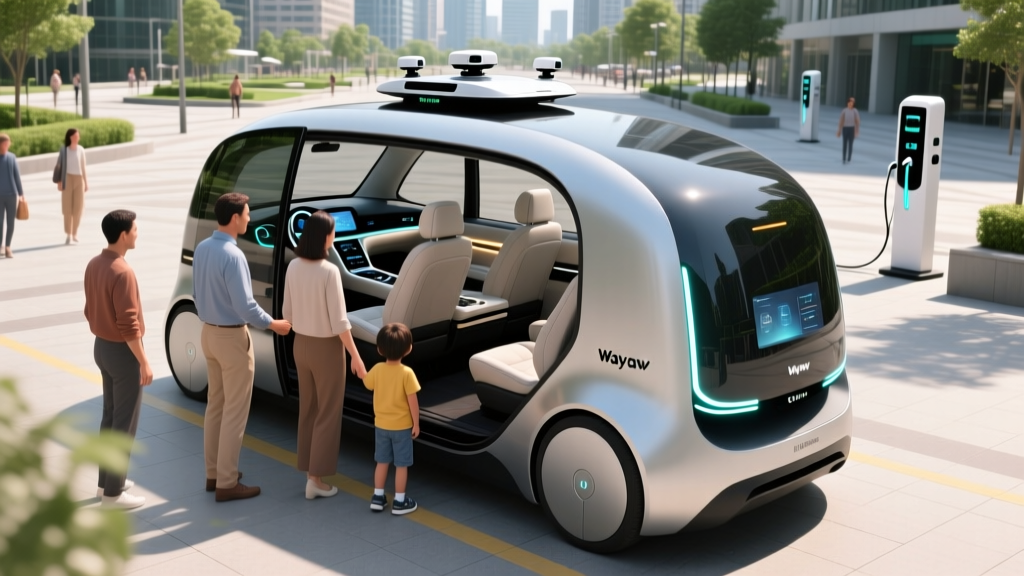
- Jaguar I-PACE (Gen 5/Gen 6 sensor suite): Up to 3 riders in the rear and front passenger seat. The driver's seat remains empty but is not available to passengers for safety and sensor-calibration reasons.
- Zeekr RT (custom robotaxi, rolling out 2025–2026): Designed without a steering wheel, this vehicle seats up to 4 passengers in a lounge-style configuration. Availability depends on market launch timing.
- Chrysler Pacifica (legacy, mostly retired): Previously allowed up to 3 riders; largely phased out of commercial service.
Children under a certain age (typically under 8 or under a specific height/weight) may require a car seat, which Waymo does not provide. This effectively limits family trips unless you bring your own restraint — a practical constraint worth knowing before booking.
Waymo operates at SAE Level 4 — high automation within a defined operational design domain (ODD). The vehicle handles all driving tasks without human intervention inside its geofenced service area. This is fundamentally different from Level 2 driver-assist systems like Tesla Autopilot or GM Super Cruise, which require continuous driver supervision. No consumer vehicle sold today is Level 4.
Where Can You Use Waymo Right Now?
Waymo One — the commercial ride-hailing service — operates in a limited but expanding set of metro areas. As of early 2026, confirmed live markets include:
| City | Service Area Scope | Status |
|---|---|---|
| Phoenix, AZ (East Valley) | ~225 sq mi, including Chandler, Tempe, Mesa, Gilbert | Fully open, no waitlist |
| San Francisco, CA | Most of SF proper, expanding to Daly City | Open to public |
| Los Angeles, CA | Santa Monica, Hollywood, Downtown LA, Beverly Hills | Open, phased expansion |
| Austin, TX | Downtown and South Austin corridors | Limited launch, expanding |
Announced expansion targets (such as additional cities in testing) are not yet open for commercial rides. Always check the Waymo One app for your exact pickup location — geofence boundaries are strict, and the app will not let you book outside the operational zone.
Waymo Pricing vs Uber and Lyft
Robotaxi pricing is dynamic, similar to rideshare surge models, but Waymo has generally positioned itself competitively to build ridership. Here's a representative comparison based on a ~5-mile urban trip:
| Service | Typical 5-Mi Fare | Surge/Dynamic Pricing | Tipping |
|---|---|---|---|
| Waymo One | $9–$16 | Yes, peak demand surges | Optional in-app |
| UberX | $11–$20 | Yes | Expected |
| Lyft Standard | $10–$19 | Yes | Expected |
Waymo frequently offers promotional credits for first-time riders, and wait times in established markets like Phoenix often run 3–7 minutes — competitive with human-driven rideshare. The absence of a human driver means no social pressure to tip, though the app includes the option.
Safety Record: What the Data Actually Shows
- Cumulative autonomous miles driven: Over 30 million fully driverless miles across all markets.
- Injury-causing crash rate: Waymo's published data shows a ~85% reduction in injury-causing crash involvement compared to human benchmarks in comparable urban environments, per Waymo's safety reports.
- Contact rate: Property-damage-only contact incidents occur at roughly 1 per 100,000+ miles — predominantly low-speed, minor-impact events (e.g., being rear-ended at a stop).
- NHTSA Standing General Order data: Waymo reports all Level 4 incidents as required; the vast majority involve other human-driven vehicles striking the robotaxi.
Context matters: Waymo's vehicles operate in dense urban environments at relatively low speeds (typically under 45 mph), which limits crash severity. The National Highway Traffic Safety Administration (NHTSA) requires all ADS-equipped vehicles to report crashes, providing a public record. No robotaxi fleet is incident-free, but the data consistently shows lower injury rates than human drivers in equivalent conditions.
Technology Stack: Lidar, Cameras, and Geofencing
Unlike Tesla's camera-only approach, Waymo uses a redundant sensor suite:
- Lidar: Custom-built, roof-mounted units providing 360° 3D point-cloud mapping up to ~500 meters. Lidar works independently of ambient light, giving reliable performance at night.
- Cameras: Multiple high-resolution units for lane markings, traffic signals, pedestrian gestures, and construction-zone signage.
- Radar: Forward and corner radars for velocity detection of other vehicles, especially in rain or fog where lidar and cameras degrade.
- HD Maps: Centimeter-precision maps of every operational zone, updated frequently. This is why Waymo cannot simply "drive anywhere" — it must have a mapped, validated geofence.
- Compute: Custom Waymo-designed processing units in the trunk area, handling sensor fusion and real-time path planning.
The combination of lidar + HD maps is what enables true driverless operation within the ODD. Without these, the system cannot guarantee the redundancy required for Level 4.
Current Limitations You Should Know
- Heavy snow or ice-covered roads: Lidar performance degrades in heavy precipitation; mapped lane references become unreliable. Service may be suspended during severe weather.
- Unmapped areas: If your destination falls outside the geofence, the app will not allow the booking. No manual override exists.
- Highway driving above ~65 mph: Most current ODDs are limited to surface streets and lower-speed highways.
- Complex construction zones: While Waymo handles many cone-and-barrel scenarios, major road reconfigurations can trigger a remote-assist pause, adding minutes to your trip.
- Car seats / accessibility: No provided child restraints; wheelchair-accessible vehicles remain limited in availability.
Regulatory Landscape: Who Approves Robotaxi Operations?
Robotaxi deployment in the U.S. requires approval at both state and local levels:
- California (CPUC & DMV): The California Public Utilities Commission issues permits for commercial driverless service; the DMV manages testing permits. Waymo holds both.
- Arizona: Among the most permissive states — no specific ADS permit required beyond standard business licensing and NHTSA compliance. This is why Phoenix launched first.
- Texas: Austin operations proceed under state ADS legislation requiring insurance and incident reporting.
- Federal (NHTSA): Sets vehicle safety standards (FMVSS) and mandates crash reporting. NHTSA does not "approve" ADS software but can issue recalls or investigations — as seen with Cruise's 2023 suspension.
The patchwork regulatory environment means expansion is city-by-city, not nationwide.
Frequently Asked Questions
Can I ride alone in a Waymo, or do I need a group?
You can absolutely ride solo. The app lets you book for 1 to 3 passengers (or 4 in the Zeekr RT). Solo rides are the most common use case — essentially identical to ordering an UberX for yourself.
Is Waymo truly self-driving, or is someone watching remotely?
The vehicle drives itself with no human behind the wheel. Waymo does employ remote fleet response agents who can assist if the vehicle encounters an ambiguous scenario (e.g., a police officer directing traffic with non-standard gestures). These agents do not "joystick" the car in real time — they provide high-level guidance, and the vehicle executes the maneuver autonomously.
How does Waymo compare to Cruise or Zoox?
Cruise (GM-backed) suspended operations in late 2023 after a serious incident in San Francisco and has been slowly resuming limited testing. Zoox (Amazon-backed) operates a custom bidirectional vehicle but has a smaller commercial footprint. Waymo currently has the largest operational rider base and longest continuous commercial service record.
What happens if the Waymo gets in a crash while I'm riding?
The vehicle is programmed to pull over safely, contact emergency services if needed, and connect you with Waymo support via the in-app and in-vehicle interface. All riders are covered under Waymo's commercial insurance policy. You are not liable for vehicle damage.
Can I bring luggage or groceries?
Yes, within reason. The Jaguar I-PACE has rear cargo space, but oversized items (e.g., full suitcases for airport runs) may not fit comfortably alongside 3 passengers. For airport trips with heavy luggage, consider booking for fewer passengers or using a traditional rideshare.