A persistent rumor circulates in EV forums, Reddit threads, and ride-hailing comment sections: Waymo's self-driving taxis are secretly operated by remote human drivers sitting in call centers in the Philippines. It's a compelling narrative — one that implies the entire robotaxi industry is a kind of mechanical Turk illusion. But is there any truth to it?
The short answer is no, Waymos are not driven by remote operators in the Philippines or anywhere else. But the longer answer reveals something far more interesting about how Level 4 autonomous vehicles actually work, where human oversight fits in, and why the confusion exists in the first place.
Let's break down exactly how Waymo's driverless technology operates in 2026, what role humans actually play, and what the real data says about safety and reliability.
The Philippines Remote-Driver Myth: Where It Came From
The rumor appears to stem from a conflation of several different things:
- Content moderation and data labeling: Waymo, like most AI companies, uses global workforces (including contractors in the Philippines and India) for data annotation — labeling images, classifying objects in driving footage, and training machine learning models. This is back-office AI training work, not real-time vehicle operation.
- Competitor controversies: Some autonomous vehicle startups (notably Starsky Robotics in the trucking space) experimented with remote teleoperation concepts. Critics sometimes lump all AV companies together.
- Skepticism about autonomy: After high-profile incidents involving Cruise and other operators, public trust eroded. The idea that "there's a human secretly driving" became a convenient explanation for any robotaxi that appeared to navigate competently.
None of these amount to Waymo vehicles being remotely piloted. Here's what's actually happening.
SAE Automation Levels: Why Waymo Is Level 4, Not Level 2
SAE Level 4 — High Automation (Waymo One): The vehicle performs all driving tasks within its operational design domain (geofenced areas, specific conditions) with no human driver required — not behind the wheel, not remotely. If the system encounters a situation it cannot handle, it executes a safe fallback (pulling over, stopping) rather than handing control to a remote human.
This is fundamentally different from SAE Level 2 systems like Tesla Autopilot, GM Super Cruise, or Ford BlueCruise, where a human driver must remain engaged and ready to take over at all times.
| Level | Name | Who Drives | Example |
|---|---|---|---|
| Level 0 | No Automation | Human | Any conventional car |
| Level 1 | Driver Assistance | Human (with steering OR speed assist) | Adaptive cruise control |
| Level 2 | Partial Automation | Human (must supervise) | Tesla Autopilot, GM Super Cruise |
| Level 3 | Conditional Automation | System (human on standby) | Mercedes Drive Pilot (limited markets) |
| Level 4 | High Automation | System (no human needed in ODD) | Waymo One, Zoox |
| Level 5 | Full Automation | System (all conditions, everywhere) | Does not yet exist commercially |
Waymo's vehicles have no steering wheels, no pedals, and no remote-control link that would allow a human to drive the car from afar. The onboard computer — running Waymo's "Driver" software stack — makes all real-time driving decisions.
What Remote Assistance Actually Looks Like
Waymo does employ remote fleet response specialists, but their role is categorically different from driving:
- They don't steer, accelerate, or brake the vehicle. There is no joystick, no remote driving interface.
- They provide high-level guidance in edge cases. For example, if a construction zone creates an ambiguous path, a remote specialist might confirm which lane the vehicle should use — essentially answering a multiple-choice question the AI presents.
- They handle customer support. If a rider has an issue mid-trip, a human agent can communicate via in-car screen and audio.
- They monitor fleet health. Specialists watch for sensor faults, tire pressure issues, or other vehicle-health problems and can direct a car to return to a depot.
Think of it less like a remote pilot and more like air traffic control: the aircraft flies itself, but a human can suggest a different route if weather demands it. The key distinction is that the Waymo vehicle retains full authority over its driving actions at all times. A remote specialist cannot override the car's safety systems or force it into an unsafe maneuver.
What remote assistance does NOT do:
- Remotely steer, brake, or accelerate the vehicle
- Take over driving in real-time like a teleoperated drone
- Allow humans in other countries to control US-based vehicles
- Replace the onboard AI driving system for any portion of a trip
Waymo Service Availability in 2026: Where Can You Ride?
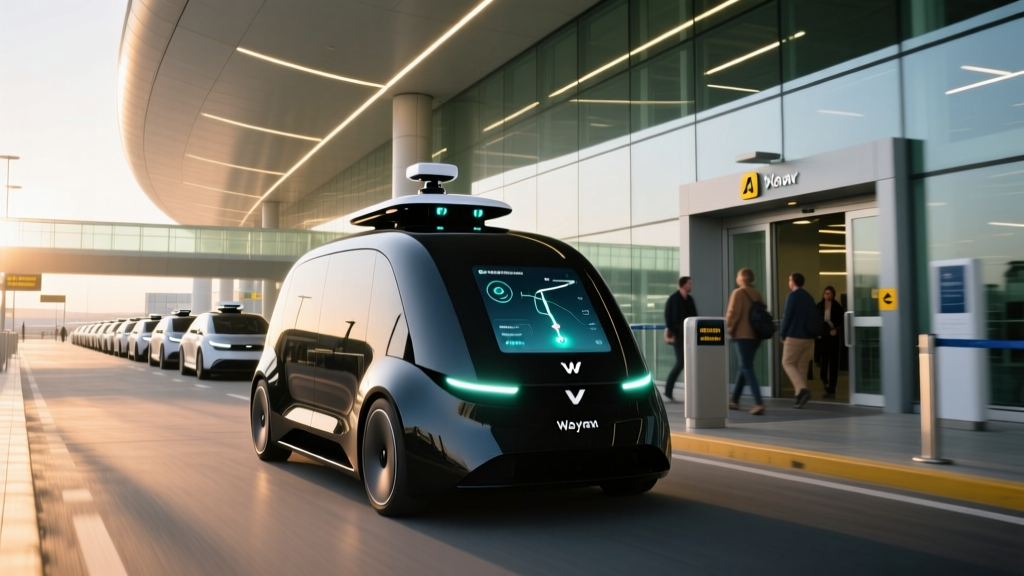
As of early 2026, Waymo One — the company's commercial ride-hailing service — operates in a limited but expanding set of US metro areas. Service is geofenced, meaning the car will only operate within pre-mapped zones that Waymo has extensively tested.
| City | Status | Coverage Notes |
|---|---|---|
| Phoenix, AZ | Fully operational | Largest service area; covers most of metro Phoenix including suburbs, airport |
| San Francisco, CA | Fully operational | City-wide coverage after regulatory approval; some restrictions on highways |
| Los Angeles, CA | Operational (expanding) | Downtown LA, Hollywood, Santa Monica, Westside; expanding coverage |
| Austin, TX | Operational | Central Austin service area; launched commercially in 2025 |
| Mountain View, CA | Limited/testing | Headquarters city; select employee and invited-rider programs |
If you're outside these geofenced zones, you cannot hail a Waymo. The service is not available via Uber or Lyft apps in most markets — you download the dedicated Waymo One app, enter your pickup and destination, and the system confirms whether both points fall within the operational zone.
Pricing: Waymo vs. Uber and Lyft
Waymo positions its pricing to be competitive with UberX and Lyft standard rides, though costs vary by city, time of day, and trip distance. Here's what riders typically see:
| Route | Waymo One | UberX | Lyft Standard |
|---|---|---|---|
| Short trip (~3 mi, Phoenix) | $9–$13 | $8–$14 | $8–$13 |
| Medium trip (~8 mi, SF) | $18–$26 | $16–$28 | $15–$25 |
| Airport trip (~15 mi, PHX) | $30–$42 | $28–$45 | $26–$40 |
| Surge pricing | Minimal/rare | Common (1.5x–3x) | Common (1.5x–2.5x) |
One advantage Waymo riders consistently note: no surge pricing in the traditional rideshare sense. Because Waymo controls its fleet directly and doesn't rely on gig-economy driver supply, you won't see 3x pricing during a rainstorm or post-concert rush. However, wait times may be longer during peak demand because the fleet size is fixed.
Waymo also offers no tipping — there's no driver to tip. Some riders find this makes the total cost more predictable and often lower than a comparable Uber or Lyft ride once tip is factored in.
Safety Record: What the Data Actually Shows
Waymo Safety Data (as reported through 2025):
- Over 50 million fully driverless miles completed across Phoenix, San Francisco, Los Angeles, and Austin
- Fatalities: 0 in driverless commercial operations
- Insurance-reported crash rate: ~85% lower than human benchmarks for property-damage-only crashes, per Waymo's published safety studies
- Injury-causing crash rate: ~90% lower than human benchmarks in comparable geographies
- Source: NHTSA Standing General Order crash reporting data and Waymo's peer-reviewed safety analysis
These numbers require context. Waymo operates in geofenced, well-mapped urban areas — often in favorable weather (Phoenix being the prime example). The comparison benchmark matters: Waymo compares its data to human drivers in the same cities, using insurance claim data and police reports.
That said, Waymo vehicles have been involved in incidents:
- Low-speed contact events: Most commonly, a Waymo vehicle makes contact with a stationary object (parked car, construction barrier) at very low speeds. These are typically classified as property-damage-only.
- Pedestrian incidents: In 2024, a Waymo vehicle in San Francisco struck a pedestrian who stepped into traffic from behind a double-parked vehicle. The pedestrian sustained minor injuries. NHTSA investigated, and the incident underscored that Level 4 vehicles still face the same physics challenges as human drivers in occluded-scenario crashes.
- Recall events: In early 2024, Waymo issued a voluntary recall (as all AV manufacturers must under NHTSA rules) to update software after two low-speed collisions with a towed pickup truck. The fix was deployed over-the-air.
The honest assessment: Waymo's safety record is strong relative to human drivers in comparable conditions, but the sample size, while growing, is still small relative to the billions of miles humans drive annually. And the system's limitations in edge cases remain real.
The Technology Stack: Lidar, Cameras, and Geofencing
Waymo's 6th-generation "Driver" system — deployed on the Zeekr-built Waymo Olli and retrofitted Jaguar I-PACE vehicles — uses a sensor-fusion approach that differs sharply from Tesla's camera-only philosophy.
| Sensor Type | Count | Purpose |
|---|---|---|
| Lidar (custom-built) | 4+ units | 360° 3D point cloud; detects objects 500m+ away; works in darkness |
| Cameras (high-res) | 8+ units | Traffic light state, sign reading, lane markings, pedestrian intent |
| Radar | 6+ units | Velocity detection of moving objects; redundancy in rain/fog |
| External audio sensors | Multiple | Detects sirens from emergency vehicles |
| IMU + GPS + HD maps | Integrated | Centimeter-level localization within pre-mapped geofence |
The geofencing component is critical. Waymo maps every road in its service area to centimeter-level precision, including curb heights, lane widths, traffic signal positions, and speed limits. The vehicle cross-references its sensor data against this HD map in real time. If it leaves the mapped zone, it will not operate.
This is why Waymo's approach scales more slowly than Tesla's vision-based FSD: every new city requires extensive mapping, testing, and validation before commercial service can begin. But it also means the vehicle has a much richer understanding of its specific environment.
Regulatory Landscape: Who Approves Robotaxi Operations?
Robotaxi operations in the US require a patchwork of approvals:
- State level: Each state sets its own rules. California requires permits from the California Public Utilities Commission (CPUC) and the California DMV. Arizona has taken a lighter-touch approach, allowing Waymo to operate with fewer regulatory hurdles. Texas passed AV-enabling legislation that facilitated Waymo's Austin launch.
- Federal level: NHTSA oversees vehicle safety standards and crash reporting (Standing General Order requires AV operators to report crashes within 24 hours). There is no comprehensive federal AV regulatory framework — a gap that the industry and safety advocates have repeatedly flagged.
- Local level: Cities can impose operating restrictions. San Francisco's Board of Supervisors has debated caps on robotaxi fleet sizes and operating hours. Local fire departments and police must be consulted on emergency-vehicle interaction protocols.
This fragmented regulatory landscape means expansion is slow and city-by-city. Waymo cannot simply "turn on" service in a new metro area — it needs state permits, local agreements, and often months of driverless testing with empty vehicles before carrying paying passengers.
Current Limitations: What Waymo Cannot Do
Waymo's current operational constraints include:
- Weather: Heavy rain, fog, and snow degrade lidar and camera performance. In Phoenix monsoon conditions, Waymo may pause service or limit operating areas. Snow-covered roads remain a significant challenge.
- Geofence boundaries: If your destination falls outside the mapped zone, Waymo cannot take you there. Expansions happen incrementally, not all at once.
- Construction zones: While Waymo can navigate some construction, major road reconfigurations can cause the vehicle to stop and request remote guidance or reroute.
- Highway driving: Limited. Waymo has begun highway testing and limited highway-capable trips, but most commercial rides are surface-street only.
- Unprotected left turns in complex intersections: A known edge case where the vehicle may take a conservative (long) wait or choose an alternate route.
- Emergency vehicle interactions: Waymo vehicles pull over for emergency vehicles, but there have been documented cases of the vehicle stopping in positions that inadvertently blocked emergency responders.
- Wheelchair/walker detection: Improving but not perfect. Advocates for disabled pedestrians have raised concerns about detection reliability for mobility devices.
These limitations are not theoretical — they affect real rides. If you hail a Waymo during a San Francisco fog event, expect longer wait times or service restrictions. If you need to go 20 miles on a freeway, Waymo may not be an option yet.
The Bottom Line: Truly Self-Driving, With Caveats
Waymo vehicles are genuinely self-driving within their operational design domain. No human — in the Philippines, in a Mountain View office, or anywhere else — is remotely piloting the car. The onboard AI system makes all real-time driving decisions, from steering and braking to lane changes and intersection navigation.
Humans are involved in fleet monitoring, remote guidance for edge cases, customer support, and the back-office AI training pipeline (including data labeling work that may indeed be performed by contractors globally). But this is fundamentally different from "a person driving the car from far away."
The robotaxi industry still faces real challenges: limited service areas, weather constraints, regulatory fragmentation, and the ongoing task of proving safety at scale. But the notion that it's all a wizard-of-oz illusion? That doesn't match the technology, the data, or the regulatory reality.
Frequently Asked Questions
Are Waymo vehicles really driverless, or is someone controlling them remotely?
Waymo One vehicles are truly driverless — SAE Level 4. There is no human in the driver's seat and no remote operator controlling the vehicle's steering, braking, or acceleration. Remote fleet specialists can provide high-level guidance (e.g., confirming a route around construction) but cannot drive the car.
Does Waymo use any workers in the Philippines?
Waymo, like many tech companies, likely uses global contractors for data labeling and AI training tasks — classifying objects in driving footage, annotating road scenes, etc. This is back-office machine learning work, not real-time vehicle operation. No one in the Philippines (or anywhere else) is driving a Waymo vehicle remotely.
How safe are Waymo robotaxis compared to human drivers?
Waymo's published data (supported by NHTSA reporting) shows injury-causing crash rates approximately 85-90% lower than human benchmarks in comparable geographies. Over 50 million driverless miles have been completed with zero fatalities. However, the fleet is small relative to total US driving miles, and the operating conditions (geofenced, mostly fair-weather cities) are less challenging than the full spectrum of human driving.
Where can I ride a Waymo in 2026?
Waymo One is commercially operational in Phoenix (AZ), San Francisco (CA), Los Angeles (CA), and Austin (TX). Service is geofenced — you must be within the mapped operational zone for both pickup and drop-off. Additional cities are in testing but not yet open to the public.
How much does a Waymo ride cost?
Waymo pricing is comparable to UberX and Lyft standard fares — roughly $9–$13 for a short 3-mile trip and $30–$42 for a 15-mile airport run. A key advantage: Waymo does not apply traditional surge pricing, though wait times may increase during peak demand. No tipping is required.
Is Waymo the same as Tesla's Full Self-Driving?
No. Waymo is an SAE Level 4 robotaxi service — no human driver is needed within its operating area. Tesla's Full Self-Driving (Supervised) is an SAE Level 2 driver-assistance system that requires a fully engaged, licensed human driver behind the wheel at all times. They are fundamentally different categories of technology with different regulatory approvals.
What happens if a Waymo encounters a situation it can't handle?
The vehicle executes a "minimal risk condition" — typically pulling over safely, stopping in a travel lane with hazards on, or completing the current maneuver and then stopping. A remote fleet specialist may then provide guidance (e.g., "proceed around the obstacle on the left") or dispatch roadside assistance. The car does not hand control to a remote driver.