Waymo — Alphabet's autonomous driving subsidiary — has spent over a decade and billions of dollars moving from Google's self-driving car project to operating the world's largest commercial robotaxi fleet. But "largest" still means something specific and bounded: a handful of US metro areas, geofenced zones within those metros, and a vehicle platform purpose-built for driverless operation. For consumers and industry watchers alike, understanding where Waymo partnerships actually translate into rideable service — and where they remain pilot programs or announced intent — is essential.
This guide maps Waymo's operational partnerships as of 2026, examines the technology stack behind the Jaguar I-PACE and Zeekr-based fleet, reviews publicly available safety data, and clarifies what Level 4 autonomy actually means in practice versus the Level 2 driver-assist systems you might see on a Tesla or Ford.
SAE Automation Levels: Where Waymo Sits vs. Consumer EVs
Before evaluating any robotaxi service, it is critical to understand the SAE International automation framework. Marketing language frequently blurs these distinctions, but the engineering and legal realities differ enormously.
| Level | Name | Who Drives | Example |
|---|---|---|---|
| Level 0 | No Automation | Human does everything | Basic cruise control |
| Level 1 | Driver Assistance | Human drives; system assists steering OR speed | Adaptive cruise control, lane-keep assist |
| Level 2 | Partial Automation | Human drives; system assists steering AND speed simultaneously | Tesla Autopilot, FSD (Supervised), GM Super Cruise, Ford BlueCruise |
| Level 3 | Conditional Automation | System drives in limited conditions; human must take over on request | Mercedes DRIVE PILOT (limited markets/conditions) |
| Level 4 | High Automation | System drives fully within its operational design domain (ODD); no human needed | Waymo One, Zoox, Cruise (pre-suspension) |
| Level 5 | Full Automation | System drives everywhere, all conditions | Does not exist commercially |
Waymo operates at SAE Level 4. This means the vehicle handles all driving tasks — steering, braking, navigation, obstacle avoidance — within a defined geographic and environmental envelope (its Operational Design Domain, or ODD). There is no driver behind the wheel. A remote fleet operations team monitors vehicles and can intervene via teleoperations if the vehicle encounters a scenario it cannot resolve, but the vehicle does not require a human to take control.
This is fundamentally different from Tesla's FSD (Supervised), GM's Super Cruise, or Ford's BlueCruise, all of which are Level 2 systems requiring continuous driver attention and hands-on or eyes-on engagement. Conflating Level 2 driver-assist with Level 4 robotaxi operation is one of the most common errors in EV and autonomous vehicle coverage.
Where Can You Actually Ride a Waymo Robotaxi Right Now?
Waymo's commercial service, Waymo One, is available to the general public (no waitlist as of early 2026) in several major US metro areas. The company has also expanded through partnerships with rideshare platforms and other mobility providers. Here is the current operational map:
| City / Region | Service Status | Access Method | Operating Hours |
|---|---|---|---|
| Phoenix, AZ (East Valley, Downtown, Airport) | Live — fully commercial | Waymo One app, Uber (select rides) | 24/7 |
| San Francisco, CA (city-wide + SFO airport) | Live — fully commercial | Waymo One app, Uber (select rides) | 24/7 |
| Los Angeles, CA (Downtown, Hollywood, Santa Monica, LAX) | Live — fully commercial | Waymo One app | 24/7 |
| Austin, TX | Live — expanding zones | Waymo One app, Uber | Limited hours initially, expanding |
| Atlanta, GA | Announced — pilot / early access | Waitlist / partner programs | Limited |
Key partnership: Uber. Waymo and Uber announced a multi-city partnership allowing Uber users to request a Waymo vehicle for eligible rides within the geofenced service area. If a Waymo is available and your trip falls within the ODD, Uber's app surfaces a Waymo option alongside traditional rideshare. This partnership is significant because it integrates robotaxi service into an app with tens of millions of existing users, rather than requiring a separate download.
Key partnership: Hyundai / Ioniq 5. Waymo has been testing a fleet based on Hyundai's Ioniq 5 platform alongside its legacy Jaguar I-PACE vehicles and newer Zeekr-built custom robotaxis. The Ioniq 5 integration signals Waymo's strategy to diversify its vehicle platform beyond a single OEM, which matters for fleet scalability and maintenance costs.
Other partnerships: Waymo has long-standing collaborations with Stellantis (formerly FCA, the source of the Chrysler Pacifica minivans used in early testing) and has worked with commercial logistics partners for its Waymo Via trucking and delivery division, though Via operations have been scaled back relative to the robotaxi focus.
How to Use Waymo One and What It Costs vs. Uber/Lyft
Using Waymo One is straightforward if you are within a service area:
- Download the Waymo One app (iOS/Android) or use the Uber app in supported cities.
- Set your pickup and drop-off locations. The app confirms whether your trip falls within the geofenced ODD.
- If a Waymo vehicle is available, you receive an ETA and a vehicle identifier (license plate or a visual marker on the car).
- The vehicle arrives driverless. You unlock it via the app (tap your phone or enter a PIN on the rear-door screen).
- Start the ride via the in-car screen. The vehicle handles the entire trip autonomously.
- Payment is processed through the app — no tipping option, as there is no driver.
| Service | Base Fare | Per-Mile Rate | Per-Minute Rate | Typical 5-Mile Trip |
|---|---|---|---|---|
| Waymo One | ~$3.00 | ~$1.10–$1.30 | ~$0.30–$0.40 | $8–$12 |
| UberX (human driver) | ~$2.50 | ~$1.00–$1.25 | ~$0.25–$0.35 | $7–$11 |
| Lyft (human driver) | ~$2.50 | ~$0.95–$1.20 | ~$0.25–$0.35 | $7–$10 |
| Uber Comfort / Lyft Lux | ~$4.00 | ~$1.50–$1.80 | ~$0.45–$0.55 | $12–$17 |
Pricing reality: Waymo One pricing is generally competitive with standard UberX or Lyft rides — not cheaper, but not dramatically more expensive. Waymo has run promotional pricing and loyalty credits in newer markets to build ridership. The absence of a driver tip (typically 15–20% on rideshare) can make the total cost slightly lower than a comparable UberX ride with tip, though Waymo's per-mile rates sometimes run higher to recoup the substantial hardware and operations cost of each vehicle.
Expect surge pricing during peak demand, just like traditional rideshare. Waymo's fleet size in each city is still limited (estimated hundreds to low thousands of vehicles per metro), so availability can be constrained during rush hours or major events.
Technology Stack: Lidar, Cameras, Radar, and HD Maps
Waymo's autonomous driving system — branded the Waymo Driver — uses a multi-sensor fusion approach that differs fundamentally from Tesla's camera-only (Tesla Vision) strategy. Understanding this distinction explains both the capabilities and the limitations of each system.
Waymo Driver Sensor Suite (5th/6th Generation)
- Lidar: Multiple roof-mounted and body-integrated lidar units providing high-resolution 3D point clouds up to ~500 meters. Lidar works independently of ambient light and provides precise distance measurement — critical for detecting pedestrians, cyclists, and debris at night or in complex urban scenes.
- Cameras: A surround-view camera array covering 360 degrees with overlapping fields of view. Cameras handle lane detection, traffic signal recognition, construction zone interpretation, and reading signs.
- Radar: Multiple radar units for velocity detection and all-weather performance. Radar penetrates rain, fog, and dust better than lidar or cameras and provides redundant object tracking.
- External audio sensors: Microphones to detect emergency vehicle sirens and adjust behavior accordingly (pulling over, yielding).
- HD Maps: Waymo relies on centimeter-accurate pre-mapped routes within its ODD. The vehicle localizes itself against these maps in real time. This is a key reason Waymo is geofenced — the system requires mapped roads to operate.
Why lidar matters for Level 4: Tesla's camera-only approach (no lidar, no radar in current hardware) has not achieved Level 4 operation. The redundancy of lidar + camera + radar gives Waymo's system multiple independent ways to detect and classify objects, which is essential when no human driver is available as a fallback. The trade-off is cost: each Waymo vehicle carries an estimated $100,000–$150,000+ in sensor and compute hardware (though costs have declined significantly with each generation).
Vehicle platforms:
- Jaguar I-PACE: Waymo's primary fleet vehicle since 2018. All-electric SUV with a 90 kWh battery (EPA range ~234 miles in stock form, though Waymo's heavy sensor and compute load reduces effective range). Estimated fleet size: 600+ vehicles across Phoenix and SF.
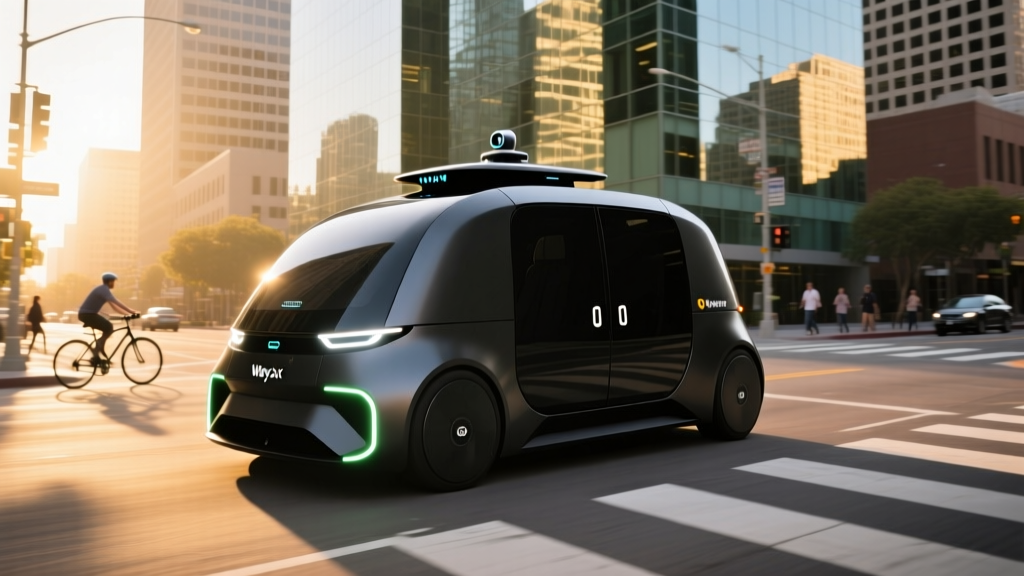
- Zeekr custom robotaxi: Purpose-built vehicle designed by Geely's Zeekr brand with a low floor, wide doors, no steering wheel, and sensor integration from the factory. Entered fleet testing in 2024–2025.
- Hyundai Ioniq 5: Testing began in 2024; signals Waymo's intent to add a mainstream, globally available EV platform to its fleet options.
Safety Record: What the Data Actually Shows
Robotaxi safety is the most scrutinized — and most contentious — topic in autonomous vehicles. Waymo has published safety data and has been subject to regulatory incident reporting requirements. Here is what we know from verifiable sources:
Waymo Safety Data Points (Through 2025/Early 2026)
- Total autonomous miles driven: Over 50 million fully driverless miles (Waymo's published figure, updated periodically).
- Contact-rate comparison: Waymo's internal analysis (peer-reviewed and published in partnership with insurance data firm Swiss Re) reported a 76% reduction in injury-causing crash rates compared to human baseline drivers in the same geographies, based on over 25 million driverless miles analyzed.
- Property-damage-only crashes: Approximately 50% reduction compared to human baseline, per the Swiss Re study.
- NHTSA Standing General Order (SGO) reports: Waymo, like all ADS operators, must report crashes to NHTSA under the Standing General Order. These reports are publicly accessible and include incidents ranging from minor contact to more significant events. Most reported Waymo incidents involve low-speed contact with other vehicles (often human-driven vehicles rear-ending or side-swiping the Waymo), not the Waymo initiating the crash.
- Notable incidents: Waymo vehicles have been involved in incidents including a 2024 collision with a pedestrian in SF who entered the roadway from between parked cars (the vehicle braked but could not avoid contact at low speed); multiple incidents of vehicles entering active construction zones or crossing police tape; and a software recall affecting ~1,200 vehicles after a pickup truck collision in Phoenix. Each incident prompted software updates and operational adjustments.
Context matters: Robotaxi safety data must be interpreted carefully. Waymo operates in geofenced, mapped urban areas, avoids the worst weather, and drives conservatively (speeds at or below limits, wide margins around obstacles). This is not the same operating envelope as a human driver who may drive 80 mph on an unmapped rural highway in a snowstorm. The comparison is useful but not apples-to-apples for all driving scenarios.
For the latest crash data, check the NHTSA SGO crash reporting database, which logs all reported ADS and ADAS incidents by manufacturer.
Regulatory Landscape: Who Approves Robotaxi Operations?
Robotaxi deployment in the United States is governed by a patchwork of state and local regulations — there is no single federal license to operate a driverless vehicle nationwide.
- California (CPUC + DMV): The California Public Utilities Commission (CPUC) issues permits for commercial passenger service (the "driverless pilot" and "deployment" permits). The California DMV issues testing and deployment permits for the vehicle technology itself. Waymo holds both, enabling commercial fares in San Francisco and Los Angeles. The CPUC can impose restrictions (speed limits, service area boundaries, incident reporting).
- Arizona: Arizona has taken a permissive regulatory approach since 2015, with executive orders enabling autonomous vehicle testing and commercial operation with minimal state-level barriers. Waymo's Phoenix operation benefits from this framework. Local city permits and airport authority agreements still apply.
- Texas: Texas passed autonomous vehicle legislation (HB 3932) enabling operation without a human driver, with requirements for insurance, registration, and compliance with traffic laws. Austin's launch proceeded under this framework.
- Federal (NHTSA): NHTSA regulates vehicle safety standards (FMVSS). Current FMVSS rules assume a human driver (steering wheel, mirrors, pedals), which requires exemptions or rule changes for vehicles like the Zeekr robotaxi with no steering controls. NHTSA also oversees the SGO crash reporting mandate and can issue recalls for ADS software defects.
Why this matters for expansion: Every new city requires navigating that state's regulatory framework, securing local permits, mapping the ODD, and building fleet operations infrastructure. This is why Waymo's expansion, while accelerating, is measured in single-digit new cities per year rather than a nationwide rollout.
Current Limitations: What Waymo Cannot Do
Level 4 autonomy within a defined ODD is a remarkable engineering achievement, but it comes with specific, important limitations that riders and observers should understand:
Operational Limitations
- Geofencing: Waymo vehicles will not operate outside their mapped service area. If you request a ride to a destination outside the ODD, the app will not offer a Waymo. Expansion of the geofence is gradual and requires mapping, testing, and regulatory approval.
- Weather restrictions: Heavy rain, fog, snow, and ice degrade lidar and camera performance. Waymo vehicles in Phoenix rarely face this issue, but San Francisco fog and Los Angeles rain events can trigger service slowdowns, route restrictions, or temporary suspension. Waymo does not currently operate in cities with significant snowfall.
- Construction zones and road closures: While Waymo's system can handle many construction scenarios, complex or rapidly changing work zones can cause the vehicle to stop and request remote assistance (teleoperations). This can add delays to your trip.
- Emergency scenarios: Waymo vehicles are programmed to pull over safely when emergency vehicles are detected. However, incidents have occurred where vehicles did not correctly interpret police-directed traffic or emergency scene boundaries (e.g., crossing police tape). These edge cases remain an active area of software development.
- No highway operation (most markets): In most current service areas, Waymo operates on surface streets and lower-speed roads. Limited highway operation has been tested (e.g., Phoenix freeway segments to reach the airport), but extensive highway driving is not a primary use case.
- Fleet availability: With hundreds to low thousands of vehicles per city, wait times can exceed traditional rideshare during peak demand. You cannot "reserve" a Waymo far in advance — it operates on-demand.
- No car seats or accessibility accommodations (yet): Waymo vehicles do not currently provide child car seats. Riders with mobility devices should check current accessibility options, as the Jaguar I-PACE fleet has limited accommodation compared to the purpose-built Zeekr vehicle (which features a low floor and wide opening).
Waymo Partnerships and What They Signal for Expansion
Waymo's partnership strategy reveals where the company is headed and how it plans to scale beyond its current fleet of Jaguar I-PACE vehicles:
- Uber: The Uber integration is Waymo's highest-leverage distribution partnership. Rather than building a standalone rider base from scratch, Waymo gains access to Uber's existing demand network. For Uber, Waymo vehicles reduce driver supply constraints and position the company for a future where autonomous vehicles are a significant portion of rideshare volume. Uber's CEO has publicly stated a goal of having autonomous vehicles represent a meaningful share of rides by the late 2020s.
- Hyundai: The Ioniq 5 testing partnership signals Waymo's interest in diversifying beyond Jaguar (a low-volume luxury brand) and Zeekr (a Chinese brand facing geopolitical and import complexities). Hyundai's global manufacturing scale and the Ioniq 5's proven EV platform (84 kWh battery, ~303-mile EPA range, 800V fast-charging architecture) make it a practical fleet candidate.
- Zeekr (Geely): The purpose-built robotaxi vehicle is designed from the ground up for driverless operation — no steering wheel, low floor for easy entry, and factory-integrated sensor mounts. This reduces the cost and complexity of retrofitting sensors onto consumer vehicles.
- Nissan-Renault: Waymo has an existing agreement with the Renault-Nissan-Mitsubishi Alliance to explore autonomous mobility services in France and Japan, though commercial operations in those markets have not launched as of 2026.
Frequently Asked Questions
Is Waymo truly self-driving, or is there a human involved?
Waymo operates at SAE Level 4, meaning the vehicle drives itself fully within its mapped service area with no human driver present. A remote fleet operations team monitors vehicles and can provide guidance via teleoperations if the vehicle encounters an unfamiliar scenario, but there is no human behind the wheel, and no human can "take over" steering or braking in real time. This is fundamentally different from Level 2 systems like Tesla FSD (Supervised) or GM Super Cruise, which require continuous driver attention and engagement.
How much does a Waymo ride cost compared to Uber or Lyft?
Waymo One pricing is generally comparable to standard UberX or Lyft fares — typically $8–$12 for a 5-mile urban trip. The absence of a driver tip (15–20% on rideshare) can make the total cost slightly lower, though Waymo's per-mile rates sometimes run higher. Surge pricing applies during peak demand. Waymo does not offer a "pool" or shared-ride option at this time.
How safe are Waymo robotaxis based on real data?
Based on Waymo's published analysis with Swiss Re (over 25 million driverless miles), Waymo vehicles showed a 76% reduction in injury-causing crash rates compared to human baseline drivers in the same areas. Most NHTSA-reported incidents involving Waymo vehicles are low-speed contacts initiated by other (human-driven) vehicles, not the Waymo. However, edge cases — construction zones, emergency scenes, unusual pedestrian behavior — remain active challenges, and the total mile count, while large, is still a fraction of total US driving miles.
What cities can I use Waymo in right now?
As of 2026, Waymo One is commercially available to the public in Phoenix (metro-wide including airport), San Francisco (city-wide including SFO), Los Angeles (major zones including LAX), and Austin (expanding zones). Atlanta has been announced but is in early pilot stages. Each city has a geofenced service area — you cannot ride outside the mapped zone.
Why doesn't Waymo operate in more cities?
Each new city requires: (1) centimeter-accurate HD mapping of every road in the service area, (2) extensive testing and validation of the ADS in local traffic patterns, (3) state and local regulatory approvals, (4) fleet operations infrastructure (charging, cleaning, maintenance depots), and (5) building a local teleoperations team. This is a capital-intensive, time-consuming process that limits expansion to a handful of new metros per year.
Can I use Waymo if I need a car seat or wheelchair accessibility?
Waymo does not currently provide child car seats — riders must bring their own if required by state law. Wheelchair accessibility is limited in the current Jaguar I-PACE fleet. The purpose-built Zeekr robotaxi, designed with a low floor and wide door opening, is expected to improve accessibility as it enters fleet service, but availability varies by city.
What happens if a Waymo vehicle gets into a crash?
Waymo vehicles are insured, and the company assumes liability for crashes caused by its autonomous driving system (as opposed to crashes caused by another driver hitting the Waymo). All crashes are reported to NHTSA under the Standing General Order. Riders can contact Waymo support via the in-car screen or app. The vehicle is designed to pull over safely and contact emergency services if a collision is detected.
Sources: Waymo safety data via Waymo's published safety reports; NHTSA Standing General Order crash data at nhtsa.gov; SAE International automation levels framework (SAE J3016).